The 2025 Africa Cup of Nations will move into the quarter-finals, as the remaining teams compete for a place in the the semi-finals of the football tournament.
The quarter-final matches will be played from 9-10 January 2026, with the semi-finals to follow on 13 January.
The tournament concludes with the final in Rabat on 18 January, when the champions will be crowned.
Scroll down for the complete list of teams in the quarter-finals.
Kwame Nkrumah may have died and been buried many years ago but the recurrence in the telling of stories surrounding him are testament of one undeniable, almost unquantifiable proof that he was not ordinary.
The man was a legend who placed Ghana on the path that has led it to where it is today.
And the story about how he was displaced from his constitutional position as Ghana’s president is very much a well-known public information, but have you thought carefully about the engineers of that plot and the people who, literally, opened up Nkrumah’s chest of skeletons for his opposers to capitalise on?
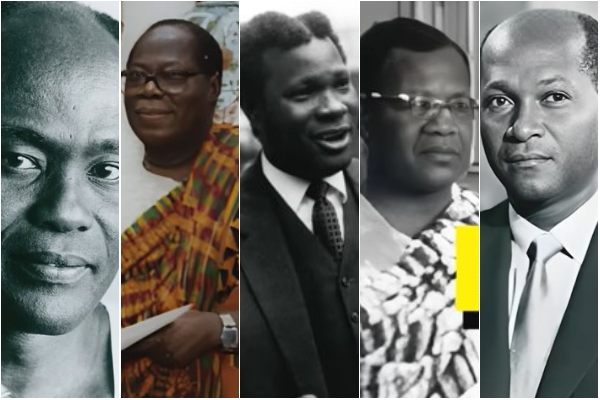
Well, in this GhanaWeb article, we reflect on the names and the personalities of the people who betrayed Kwame Nkrumah; people who were mostly very close to the country’s first president.
Their names and the brief details about what they did in support of the coup plotters who got Nkrumah ousted have been teased from a video shared on YouTube by Talking Africa. Here they are, in no particular order:
Alex Quayson-Sackey, Nkrumah’s Minister of Foreign Affairs
He was appointed Ghana’s Minister of Foreign Affairs by Osagyefo Dr Kwame Nkrumah in 1965 and remained in this position until the coup that deposed the Nkrumah government on February 24, 1966.
Right after the coup, Quayson-Sackey returned to Accra and pledged his loyalty to the men who had illegally seized power. This happened only days after the coup. At the time, Quayson-Sackey was supposed to be in Addis Ababa, not Accra.
That was the agreement he had with Nkrumah.
To fully understand the situation, it is worth stating that Dr Kwame Nkrumah was on his way to Hanoi, Vietnam, at the invitation of President Ho Chi Minh as the Vietnam War was ongoing, and Nkrumah had been invited to help mediate peace.
The plane carrying Nkrumah and his entourage had barely reached Beijing — then called Peking — when the coup was carried out in Ghana. The plotters deliberately waited until he was far from the country before striking.
Nkrumah later described the situation in these words:
“The cowards who seized power by force of arms behind my back knew they did not have the support of the people of Ghana and therefore thought it wise to wait until I was not only out of the country but well beyond the range of a quick return.”
Upon his arrival in China, Nkrumah was officially informed of the coup by Chinese leaders. There was uncertainty surrounding his next move, with conflicting reports suggesting he might return immediately to Accra.
Nkrumah’s first instinct was indeed to return to Ghana at once. However, this proved impractical. The Ghana Airways VC10 aircraft he had used was left behind in Myanmar, and he believed it was vital to return within 24 hours of the coup but at the time, the flight duration from Beijing to Accra made this impossible.
As a result, Nkrumah issued a public statement asserting that he remained the constitutional Head of State of Ghana and called on the army to return to their barracks. He then discussed developments in Ghana with officials in his entourage. Their reaction, however, alarmed him.
Instead of displaying courage, many of them were frightened.
According to Nkrumah, Alex Quayson-Sackey developed severe diarrhoea and reportedly visited the lavatory about twenty times that day. While everyone was understandably anxious about the safety of their families, Nkrumah observed that many officials were also preoccupied with their bank accounts and properties.
As he put it, “A man’s heart lies where his treasure is.” Even allowing for the fact that they had more to lose than others, he found it difficult to understand how easily they lost their composure. It was as though they had surrendered at the first sign of danger.
Nevertheless, they managed to regain enough composure for Nkrumah to discuss his next steps with them. These plans included assigning Alex Quayson-Sackey an important mission.
As foreign minister, he was to travel to Addis Ababa to represent the legitimate Ghanaian government at an upcoming OAU Foreign Ministers’ Conference.
That mission, however, was never carried out. Instead of going to Addis Ababa, Quayson-Sackey flew first to London and then on to Accra.
Nkrumah later described this act as a betrayal.
“Instead of rising to the occasion and accepting this great challenge and responsibility, he went to Accra and offered his services to the new colonialist puppets, the so-called National Liberation Council. The latter, it seems, made little use of him. Traitors have no friends,” he said.
In a later interview, Quayson-Sackey explained his actions.
He said he returned to Ghana because he had been dismissed, all ministers had been detained, and he believed it was necessary to submit himself to the new government.
He repeated his claim that upon his arrival, he sensed a fresh wave of change in the country.
He argued that there had been pent-up frustrations among the population for years, driven by the high cost of living, shortages of goods, and rising food prices. Having returned to Ghana in November after eleven years abroad to take up the role of foreign minister, he said he could sense widespread discontent.
Parliamentary debates, particularly criticism of the Minister of Agriculture, convinced him that serious upheaval was inevitable, but this is the same man Nkrumah had appointed Ghana’s Ambassador and Permanent Representative to the United Nations from 1959 to 1965, making him the first Black African to serve as President of the UN General Assembly between 1964 and 1965. He also served as Ghana’s ambassador to Cuba and Mexico during that period.
Yet, despite his prominent roles, he had no hesitation in pledging loyalty to the coup makers. Critics have said that if he genuinely believed the Nkrumah government was leading the country into crisis, why did he not resign from office before February 24, 1966?
J E Bossman, Ghana’s High Commissioner to the UK
J E Bossman, one of the men who quickly defected after the overthrow of Kwame Nkrumah, is one of several early nationalists figures whose relationship with Nkrumah deteriorated during the consolidation of power by the Convention People’s Party (CPP) after independence.
Like others from that era, his story is often told through partisan lenses, especially by CPP loyalists who equated dissent with betrayal.
After the coup, he defected and quickly declared his unqualified support for the coup plotters.
Fred Arkhurst, Ghana’s Permanent Representative to the UN
Fred Arkhurst, who had replaced Quayson-Sackey as Ghana’s Permanent Representative to the United Nations, was also one of the people who quickly turned their backs on Nkrumah.
Fred Arkhurst (often referred to in Ghanaian political history as Frederick Grant Bantama Arkhurst) was an early associate of Dr Kwame Nkrumah and a member of the Convention People’s Party (CPP) during the formative years of Ghana’s independence struggle.
His later political choices, however, placed him among figures Nkrumah and the CPP regarded as traitors or defectors.
Like many early CPP figures, he benefited from the party’s mass support and revolutionary appeal in the late 1940s and early 1950s.
After leaving the CPP, Arkhurst aligned himself with opposition forces, which were later associated with the National Liberation Movement (NLM) and the United Party (UP) tradition.
From Nkrumah’s perspective, this was not merely dissent but active collaboration with forces seen as working against the nationalist project.
Eric Otoo, a senior civil servant entrusted with national security while Nkrumah was abroad
Eric Otoo reportedly provided critical information to the coup plotters. Nkrumah later remarked that without Otoo’s cooperation, the coup might not have succeeded.
Eric Otoo appears in accounts of early CPP politics as one of the figures who fell out with Kwame Nkrumah during the turbulent years after independence. Unlike more prominent defectors, Otoo is less extensively documented, which has allowed politics and memory to shape how his role is described.
Otoo later became critical of Nkrumah’s governance, particularly the suppression of internal dissent within the CPP, the Preventive Detention Act (PDA), and the gradual transformation of Ghana into a de facto one-party state.
His disagreements reportedly led to a break with the CPP leadership, placing him on the opposite side of Nkrumah politically.
After leaving the CPP fold, Otoo aligned himself — directly or indirectly — with anti-Nkrumah political forces, both at home and abroad.
Komla Agbeli Gbedemah, Nkrumah’s Minister of Finance
Long before all these events, another profound betrayal had already taken shape. This involved Nkrumah’s longtime friend and Finance Minister K A Gbedemah.
Though instrumental in the CPP’s early successes and a key figure in government, Gbedemah’s conservative economic views and pro-Western stance increasingly clashed with Nkrumah’s vision.
By 1961, tensions had escalated. After disputes over economic policy and the creation of a budget bureau under the presidency, Gbedemah was moved from finance to health.
Around the same time, investigations into corruption among ministers led to forced resignations, including Gbedemah’s.
Declassified US documents later revealed that even before his resignation, Gbedemah had contemplated overthrowing Nkrumah and sought American support. Though those plans failed, he continued efforts abroad to undermine the government.
There were other names such as Enoch Okoh, Head of Ghana’s Civil Service; and Michael Dei-Anang, Ambassador Extraordinary in charge of the African Affairs Secretariat.
There was also Kwesi Armah, Minister of Foreign Trade, who had left Nkrumah in Moscow to attend to what they described as urgent private matters and promised to return so that they will travel together with Nkrumah to Conakry, Guinea, never returned.
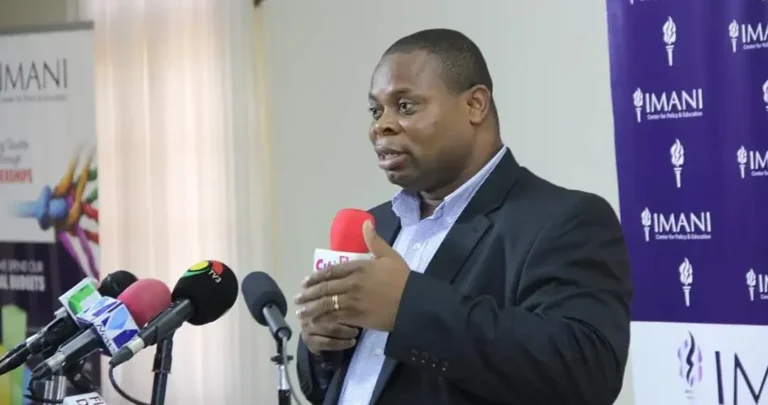
President of IMANI Africa, Franklin Cudjoe, has acknowledged what he describes as clear improvements in the government’s management of Ghana’s gold trading architecture but insists that reported losses under the Ghana Gold Board (GoldBod) system must be transparently accounted for and explained.
His comments add to an ongoing national debate over transparency, risk management and accountability in Ghana’s gold trading and reserve-building strategies, amid denials by GoldBod that it has incurred operational losses.
In a Facebook post reflecting on both the erstwhile Gold-for-Oil initiative and the current GoldBod framework, Mr Cudjoe said lessons had evidently been learnt by the Mahama administration to avoid repeating past policy missteps, commending GoldBod, the Bank of Ghana (BoG) and the Ministry of Finance for reforms introduced so far.
“Having followed the Gold-for-Oil and GoldBod programmes, it is clear significant lessons have been learned by the current government in order not to repeat past mistakes. And GoldBod, the Bank of Ghana and the Finance Ministry deserve enormous commendation,” he wrote.
However, Mr Cudjoe cautioned that despite the structural improvements, losses are almost inevitable under the current GoldBod operational model due to currency conversion risks involved in gold purchases and sales.
“However, it is clear the way the current GoldBod system is structured there would always be transaction losses as a result of the conversion of dollars to cedis and vice versa in the purchase of gold,” he noted.
He said he understood why GoldBod may be reluctant to formally classify such losses in its books, given its intermediary role between gold aggregators and the central bank.
“I can understand why GoldBod wouldn’t acknowledge that the losses should be classified as such on their books, because it thinks they are just playing an intermediate role between Bank of Ghana and the aggregators of gold since it is the bank that provides the cedis for gold purchases and ultimately receives proceeds of gold sold abroad in dollars,” Mr Cudjoe explained.
Nevertheless, he was emphatic that the losses, whether described as transactional or trade-related, remain losses and must be treated with the seriousness they deserve, especially given the reported scale.
“But they are losses, transactional or trade losses. $214m loss is large enough for us to understand how it occurred, the period it occurred and where they occurred (as in with which buyers of our gold and the quantum of loss per buyer),” he stated.
According to him, providing such clarity would serve two critical purposes: helping authorities minimise future losses and preventing any potential abuse of privileged information within the system.
“This helps in two ways – 1. In order to minimise them if they were genuinely incurred and to help prevent a gaming / rigging due to privileged information or as it is commonly called, insider information, regardless of whether the spot and onward sale price of gold are displayed by GoldBod,” he said.
Mr Cudjoe further called on the Bank of Ghana to publicly account for the reported losses and outline measures being taken to prevent a recurrence.
“And I think the Bank of Ghana should provide answers to how the $214m loss happened and what they will do to minimise it in future transactions,” he added.
He also expressed concern that details of the alleged losses only came to public attention through disclosures linked to the International Monetary Fund (IMF), rather than proactive communication by domestic institutions.
“My worry though is that it had to take the IMF to receive this information and then publish for us to knock our heads discussing what name to call it. Not good!” he concluded.
The government has suspended the registration of new members into the “Boona Bagigahare Nyekundire” poverty alleviation group in the Kigezi region following formal complaints from the Catholic Church in Kabale Diocese.
The group is headed by Senior Presidential Advisor on Agriculture and Local People, Peace Rugambwa.
The suspension was announced on Saturday by Parliament Deputy Speaker Thomas Tayebwa after a closed-door reconciliation meeting involving Rugambwa, Kabale Diocese leaders led by Vicar General John Vianney Sunday, security officials led by Kabale Resident District Commissioner (RDC) Retired Major Godfrey Katamba, and National Resistance Movement (NRM) leaders.
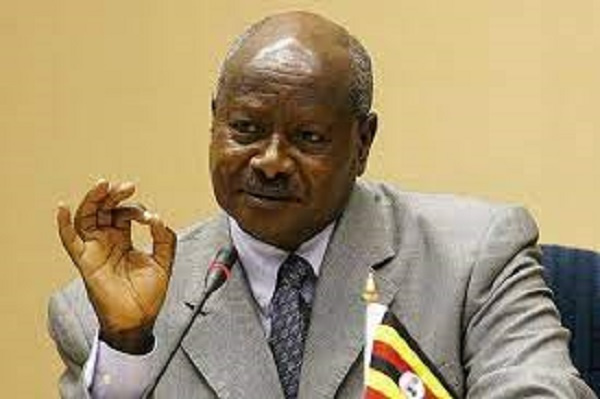
Addressing journalists at Rushoroza headquarters, Tayebwa said he acted on a directive from President Museveni to resolve tensions between Rugambwa and the Catholic Church that had escalated on social media.
“Yesterday morning, I received a call from the President instructing me to meet with the Kabale Diocese team and Peace Rugambwa to resolve issues circulating on social media regarding the Catholic Church’s complaints about Madam Rugambwa’s conduct and operations,” Tayebwa said.
He said the government decided to halt the registration exercise because it was being misinterpreted during the election period.
“Due to widespread misconceptions and a lack of detailed stakeholder consultation, we have decided to suspend Peace Rugambwa’s poverty alleviation registration program. Because we are currently in an election cycle, the program was being misinterpreted as a voter registration exercise,” Tayebwa said.
“To avoid further confusion, operations will remain suspended and will resume only after the elections,” he added.
Tayebwa said the program would only restart after broad consultations with stakeholders and welcomed what he described as reconciliation between Rugambwa and the Church.
“I was encouraged by Peace Rugambwa’s apology to the Catholic Church and its leadership, and equally pleased by their gesture of forgiveness. This marks the beginning of a new chapter as we work toward a lasting, collaborative relationship in Kigezi,” he said.
He also rejected claims that the Catholic Church in Kigezi was opposed to Museveni.
“There is a persistent misconception that the Catholic Church in Kigezi does not support President Museveni. Contrary to rumours claiming he received only a handful of votes at Rushoroza, the President actually won that polling station with 63% in 2021,” Tayebwa observed, urging unity and rejection of sectarianism.
The dispute arose after Kabale Diocese issued a letter dated December 31, 2025, warning Catholics against participating in what it described as an unverified exercise that collected names, National Identification Numbers (NINs), and contact details.
Rev. Fr. Christmas Philip Austen, Rector of Rushoroza Cathedral Parish, stated that the Diocese had received complaints alleging that individuals were moving through villages, targeting Catholic-majority areas, particularly Kyanamira Sub-county in Ndorwa East Constituency.
“Ms. Rugambwa confirmed the exercise was intended to support people financially after the elections. However, no official communication was provided to the Diocese or the public to clarify the purpose, legality, or timing,” Fr. Austen said.
Vicar General John Vianney Sunday thanked Museveni for intervening and confirmed that the Church had forgiven Rugambwa.
“The teachings of the Catholic Church foster reconciliation,” he said, adding that the Church remains committed to unity and supporting government programs that improve livelihoods.
Rugambwa thanked the Church for its forgiveness and ordered all group leaders across the 12 districts to immediately halt registration, while urging them to continue mobilizing support for Museveni ahead of the January 15 Presidential election, where the incumbent faces seven opposition candidates.
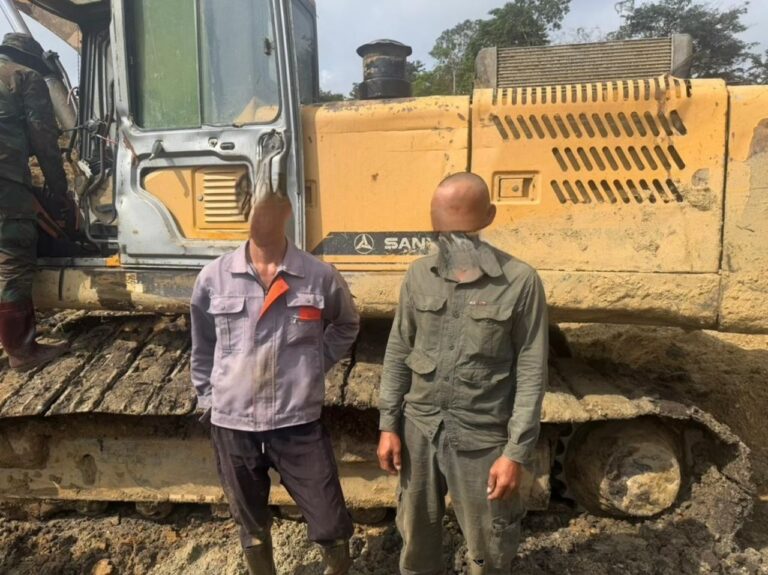
A NAIMOS taskforce deployed in the Eastern Region arrested two Chinese nationals, Li Yongjin and Nou Chin Haw, at Pankese in the Birim North District.
The arrest took place on Saturday, January 3, 2026, at approximately 9:45 a.m. due to their active engagement in illegal mining.
The illegal activities of the two foreign illegal miners have caused significant destruction of forests and cocoa farmlands in the area and severely polluted local streams, including the Birim River.
The taskforce immobilized two excavators used by the Chinese nationals by removing their monitors and control boards to render them inoperative, as lowbed towing services were not immediately available to the team.
The taskforce also destroyed several pieces of illegal mining equipment and installations and burned all makeshift structures erected at the site to facilitate the illegal mining operations.
Additionally, the team seized one Toyota Tundra pickup, with registration number AS 8120-20, which was found at the site and had been used by the two Chinese illegal miners.
DISCLAIMER: The Views, Comments, Opinions, Contributions and Statements made by Readers and Contributors on this platform do not necessarily represent the views or policy of Multimedia Group Limited.
DISCLAIMER: The Views, Comments, Opinions, Contributions and Statements made by Readers and Contributors on this platform do not necessarily represent the views or policy of Multimedia Group Limited.
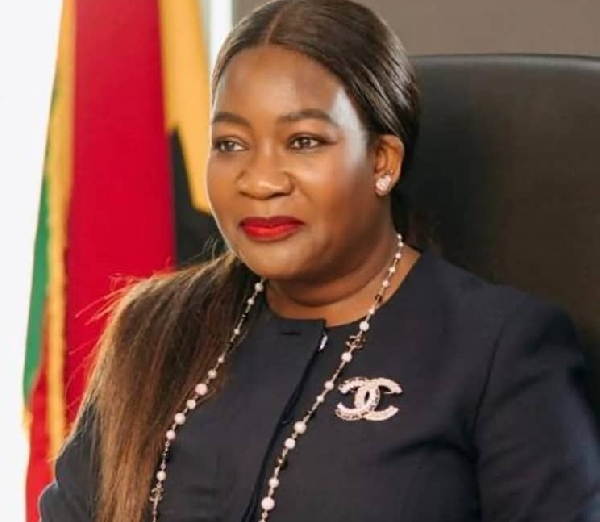
Justina Nelson is the Chief Executive Officer of the MIIF
The Minerals Income Investment Fund (MIIF) is set to consolidate the gains made in 2025 to position the fund as one of the best world-class sovereign wealth funds in the world.
This was disclosed by the Chief Executive Officer of the MIIF, Justina Nelson.
According to her, this initiative will be done together with stakeholders of the MIIF, which in return will secure value for both present and future generations.
In her 2026 New Year message to Ghanaians, Nelson stated:
“Last year marked a defining phase in our transformational journey, delivering strong institutional reforms aligned with the standards of a world-class sovereign wealth fund.
”… In 2026, together with our stakeholders, we will build on the successes of 2025; strong financial performance, robust internal systems, sound compliance and risk management, and strategic investments that secure value for both present and future generations.”
She further wished Ghanaians a Happy New Year, saying ” Wishing you a Happy and Prosperous New Year.”
The message comes amidst a successful year for the fund after it embarked on major institutional reforms which culminated in some significant performance in terms of royalties receipts.
Ghana’s mineral revenue outlook showed strong momentum in 2025, with new data revealing significant growth in royalty payments across all major mining segments for the first three quarters of 2025.
The figures highlight strengthened regulatory compliance, improved production in key minerals, and sustained investor confidence in the country’s mining sector.
Large-scale gold mining remained the dominant driver, posting royalties of US$291.87 million as of the end of September 2025, a 40.18% increase from the US$208.20 million collected within the same period in 2024.
The mid-tier gold mining segment also recorded impressive growth, with royalties rising from GH₵40.61 million between January and September 2024 to GH₵59.44 million in 2025, representing a 46.38% jump.
A standout performer was the manganese sector, which achieved a remarkable 170% surge in royalty inflows.
Payments increased from US$4.72 million in 2024 to US$12.75 million in 2025, driven by improved production and stronger compliance by operators.
The quarry industry added to the positive trend, recording a 13.12% rise in royalties from GH₵11.62 million to GH₵13.15 million, while the sand mining sub-sector saw a 21.48% increase, climbing from GH₵364,998.58 to GH₵433,406.41 in the same periods under review.
Gospel singer, Eben has revealed how a church pulled him from a scheduled performance after seeing him wearing shredded denim jeans on his album cover.
Naija News reports that he revealed this in a recent podcast interview.
Eben said he was shocked because all arrangements for the event were already set.
He explained that the jeans did not expose his skin or seem inappropriate, but the church committee decided he could not perform.
They told him the outfit was not suitable for a Christian minister.
He recalled, “They had already invited me for their convention, and everything was arranged. Then they saw my album artwork where I wore a shredded denim jean.”
“The organiser called me, very upset, and mentioned that the committee felt they could not accept me as a minister due to the type of jeans I was wearing. They said it wasn’t suitable for a Christian,” Eben shared.
Having served in ministry for more than 20 years, Eben reflected on how people sometimes focus on appearances instead of faith or message.
He said he has always chosen to live authentically, staying true to himself rather than presenting a double image.
He credited his success to God’s grace rather than to personal efforts.
Despite the disappointment, Eben said he holds no grudges and sees the experience as part of his growth.
He urged churches to value genuine worship and spiritual guidance over clothing choices, saying that true ministry is about leading people to God, not judging how someone dresses.
Why not try these science-backed tips to get more happiness in your life?
Some people are born to be happier than others. But whether you’re the kind of person who sings in the shower and dances in the rain, or of a more dour inclination, contentment isn’t just something that happens to us. We can all change our habits to coax more of it into our lives.
So, here are our top tips for a happier 2025.
Embrace friendship as we age
Friendship benefits people across all ages, but in later life, it can become an especially important source of happiness. While older people typically shrink their social networks to prioritise spending time with those who know them well, research shows that it’s a good idea to remain open to new friendships, as they give us slightly different benefits to our relationships with family, which can be based on obligation. As friendships are voluntary, non-obligatory relationships that can begin or end at any time, they tend to be more fun and less tense or fraught.
Although older adults may face a number of hurdles which can make meeting new people difficult, in some ways, it should be easier for us to make friends: our personalities mature, we gain more social skills, our outlook becomes more joy-oriented and we tend to become more agreeable. And the effort of maintaining quality friendships as we age is worth it, as the advantages stretch beyond just psychological wellbeing – it also improves our cognitive functioning and physical health. In fact, research consistently suggests that friendships are as important as family ties in predicting wellbeing in adulthood and old age.
And if you are the sort of person who finds making friends difficult – sharing an awe-striking moment, such as the total solar eclipse that passed across North America last year, is one way to help make you feel closer to the people around you while also inspiring some positive emotions along the way.
Practice “confelicity”
Compassion is a well-known foundation of true friendship. Derived from the Latin for “shared pain”, this empathy helps us form strong connections when our friends need help. But there’s an opposite state that is relatively unknown and equally important – “confelicity”, as David Robson wrote for the BBC.
Meaning “shared happiness”, it’s an undervalued facet of good relationships and could be just as important as compassion for maintaining friendships, multiple studies suggest.
Enthusiastically supporting a friend’s good news – and asking questions about it – is a basis of being a good friend. Respond too passively – or actively underplay your friend’s success – and you run the risk of damaging the relationship.
Do some volunteering
It’s almost a cliché to say that doing something for someone else makes you feel better than rewarding yourself, but the more learned about altruism, the more it seems to ring true.
In fact, studies have found that volunteering can even help with series conditions like chronic pain and depression. A 2002 study, for example, found peer volunteers assigned to help others struggling with chronic pain saw their pain intensity scores drop while they were volunteering. Other studies have shown that looking after animalscan improve our healthand taking care of houseplants can help us thrive, especially in old age.
Some healthcare providers are now even prescribing volunteering as one particularly effective form of “social prescribing”: prescriptions which connect people to community resources and activities. Sending people to everything from art classes to cycling groups to groups, and helping them with foodand heating bills, are all increasingly proven to be valid health interventions which could also reduce pressure on health services.
Connect with your ancestors
There is another way the past could help you in the present. Research suggests that engaging with our ancestry can have profound psychological benefits. Family stories about overcoming adversity, for example, can be empowering when passed down to new generation.
Susan M Moore, an emeritus professor of psychology at Swinburne University of Technology, in Melbourne has found that people who know more about their family history have higher levels of satisfaction and wellbeing. Engaging in the task of researching your family tree can lead to feeling more in control of their lives, alongside a deeper understanding of your place in the world.
It can also give you an affirming sense of perspective and gratitude – knowing your life today has been made possible by the struggles and fortitude of your predecessors on behalf of those who come after them.
Write a list
Counting your blessings is an age-old piece of advice, but it underpins a simple but well-evidenced intervention. It turns out that writing a list of three good things that have happened to us can help to boost our mood. Whether that is a life-changing event like passing an important exam or having a baby, or something seemingly inconsequential, like bumping into an old friend, or enjoying some beautiful early evening light while out for a walk – there is a growing body of research that suggests it can improve our wellbeing.
Look forward to fun activities
There’s nothing quite like a scenic drive – the wind in your hair, some tunes on the stereo, the freedom of the open road ahead. Well, now rats can enjoy a slice of this vehicular heaven, after researchers at the University of Richmond, Virginia, taught their furry, wriggly-nosed subjects to drive small Perspex automobiles in the laboratory.
The rats mastered this new skill quickly, and were soon jumping into the cars enthusiastically, in preparation for their next trip. Eventually the researchers noticed some rats doing excited little jumps as though they were enjoying the anticipation of pleasure.
This led to a whole new avenue of research. Could the expectation of fun be as rewarding as the activity itself? In another experiment, the scientists trained some rats to wait for rewards – while others were given them immediately. Later, they assessed the rats for optimism and found that those who had been trained to wait for rewards were more optimistic.
The researchers speculated that this could work for humans too – by routinely anticipating pleasurable activities or events we could reprogram our brains to be more optimistic.
Do nothing
If you have made it this far down the list, this one might come as something of a surprise. But research suggests that worrying too much about being happy can actually be a block to feeling it.
Experiments that primed people to desire greater happiness – perhaps by reading about how happy they can be – before watching an uplifting film ended up feeling more disappointed than elated. The theory is that by raising their expectations, reading and worrying about the importance of happiness can actually leave people feeling deflated.
You might have experienced this yourself during a big event or party you have been looking forward to that doesn’t quite live up to those expectations.
Iris Mauss, a psychologist at the University of California, Berkeley, has also shown that the desire and pursuit of happiness can also increase feelings of loneliness and disconnection. She recommends adopting a more stoic attitude and being more accepting of life’s ups and downs.
Don’t drink too much caffeine
During the cold, dark winter days, a cup of coffee might give your brain and body a much-needed boost. Consuming caffeine can make us feel alert as it is quickly absorbed into the bloodstream where it outcompetes adenosine, a chemical that makes us feel tired.
But timing is key when it comes to caffeine as it can take a while to kick in and a long time to wear off. Scientists recommend having your last caffeine dose eight hours and 48 minutes before you go to bed. We also shouldn’t consume too much caffeine – no more than 400mg or around two to three cups of coffee, depending on the strength – to avoid disrupted sleep, headaches, nausea and anxiety.
DISCLAIMER: The Views, Comments, Opinions, Contributions and Statements made by Readers and Contributors on this platform do not necessarily represent the views or policy of Multimedia Group Limited.
DISCLAIMER: The Views, Comments, Opinions, Contributions and Statements made by Readers and Contributors on this platform do not necessarily represent the views or policy of Multimedia Group Limited.
The violence stemmed from an earlier misunderstanding between the two youth groups
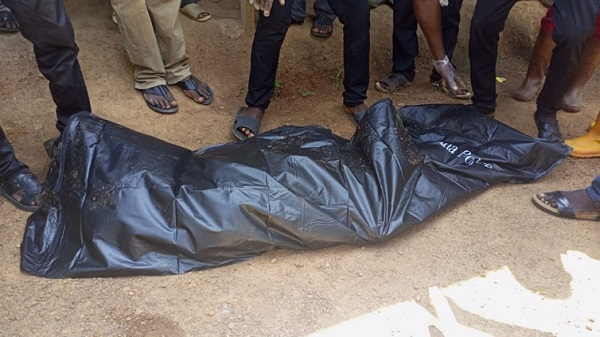
One person has been confirmed dead and several others injured following a violent clash between youth from Mankesim and Ekumfi Eyisam in the Mfantseman Municipality of the Central Region.
According to a report by adomonline.com dated January 4, 2026, the violence, which began on Thursday, January 1, 2026, is believed to have originated from an earlier misunderstanding between youth from the two communities at the Saltpond Beach.
Police sources indicate that tensions escalated when three young men from Ekumfi Eyisam were allegedly heckled at the Mankesim Shell Filling Station near Pizza Man, reportedly as retaliation for the earlier dispute.
“The victims called for reinforcement from Ekumfi Eyisam, leading to the arrival of armed youth and a violent confrontation,” the report said.
23-year-old woman dies after alleged poisoning over GH¢100
The clash reportedly involved the use of firearms, cutlasses, and corrosive substances.
One individual, identified only as Wisdom, was allegedly shot dead, while several others sustained injuries, including acid burns and cutlass wounds.
The violence caused widespread panic at Mankesim, forcing residents to flee to safety as disturbances spread across parts of the town, the report added.
Police personnel from the Mankesim District Command were deployed to the area to restore calm.
Authorities say efforts are ongoing to contain the situation and investigate the circumstances surrounding the incident.
No arrests have been officially confirmed as investigations continue.
MRA/AE
Meanwhile, watch President John Dramani Mahama’s 2026 full New Year Message below: