
The recent disclosure that some traders in Ghana are allegedly using chemicals to accelerate the ripening of plantain has renewed concerns about food safety, consumer protection and market integrity.
Advocacy organisation Communication for Development and Advocacy Consult (CDA CONSULT) says the development highlights the urgent need to empower consumers to identify and reject potentially unsafe products.
CDA CONSULT Executive Director, Francis Ameyibor, said consumer empowerment should become a key component of Ghana’s food safety efforts, arguing that regulation alone cannot monitor every market stall and trading point.
“It’s not enough to be seen to be protecting the consumer,” Mr Ameyibor said. “It is paramount in the new market age to empower the consumer as the first line of defence for food safety. When buyers can identify, question, and reject unsafe food, the incentive for bad actors collapses.”
He said informed consumers could help transform the market from one based on blind trust to one built around verification and accountability.
“Consumer empowerment is a major game changer. It shifts the market dynamic from one of blind trust to verified trust. That is the foundation of the trust economy,” he added.
The concerns follow reports raised by some market women at a public durbar in Accra about the alleged use of unapproved substances, suspected to include industrial ripening agents, to speed up the yellowing of plantain.
According to CDA CONSULT, while the use of such substances may make plantain appear ready for sale within 24 to 48 hours, consumers could face potential health risks if unapproved chemicals are used.
The organisation said food safety concerns surrounding substances such as calcium carbide and other unregistered ripening agents warrant greater public awareness, proper investigation and strict enforcement of food safety standards.
Mr Ameyibor called for stronger support from stakeholders to expand CDA CONSULT’s consumer protection campaign across the country.
“You cannot join us throughout the campaign across the regions, districts, markets, shops and across major sectors, but the resources you support us with will enable us save lives and sanitize the system,” he said.
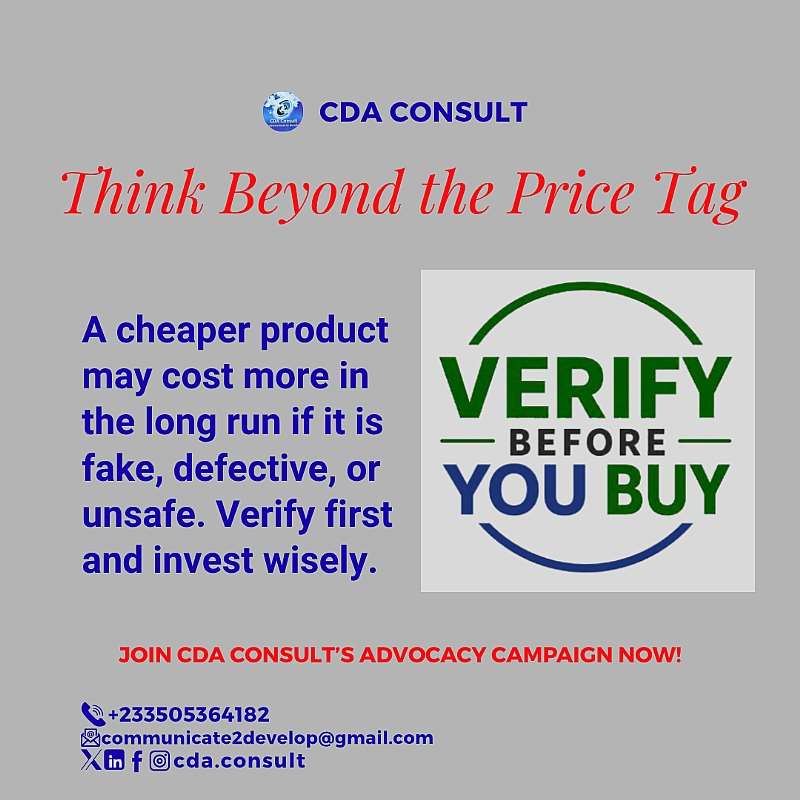
‘Verify Before You Buy’
The concerns form part of CDA CONSULT’s broader “The Trust Economy: Verify Before You Buy” campaign, which seeks to encourage consumers to play a more active role in protecting themselves against unsafe, counterfeit and substandard products.
Mr Ameyibor said the campaign was designed to move consumers from passive purchasing to active verification.
“Let us work together and shift from passive consumption to active verification — Verify Before You Buy — and help build a safer marketplace for everyone; don’t just pay for goods, check and check again before you hand over the cash or press that send button,” he said.
He described verification as an essential consumer skill, comparable to literacy and financial management.
He encouraged consumers to authenticate products, validate sellers and certifications, use traceable payment methods where possible and report suspicious products or businesses to the appropriate authorities.
“Verification is no longer optional; it is a core consumer competency, similar to literacy or financial management. In practice, this means authenticate, validate, secure, and report,” he said.
Mr Ameyibor urged consumers to check product codes, serial numbers and certifications against official sources, cross-check seller information and business registration details, and report fraudulent listings to regulators, online platforms and consumer protection agencies.
Economic benefits
According to him, the Trust Economy concept goes beyond consumer protection and represents an economic strategy aimed at strengthening businesses, improving regulatory enforcement and reducing fraud.
“For consumers, verification reduces financial loss, health hazards from fake pharmaceuticals and electronics, and time wasted on disputes; for legitimate businesses, it creates a competitive advantage based on quality and reputation, not on who can imitate the fastest,” he said.
He added that stronger verification systems could also help government and digital platforms reduce enforcement costs, improve tax compliance and strengthen the integrity of market data.
Mr Ameyibor stressed that the initiative would require collaboration among consumers, businesses, regulators and law enforcement agencies.
“Regulation sets the floor, technology provides the tools, and people provide the judgment. When judgment becomes culture, markets become resilient,” he said.
He said a culture of verification could strengthen Ghana’s reputation among investors, encourage businesses to compete on quality and assure households that their health and finances were better protected.
“Choose verification, choose safety, choose trust. The future of commerce is not just about what we buy; it’s about how we buy,” he added.
CDA CONSULT is therefore calling on stakeholders to support efforts to combat substandard and counterfeit products through its nationwide consumer empowerment and protection campaign.
The initiative seeks to redistribute consumer protection responsibilities among three key actors — consumers, regulators and law enforcement — and is built around four pillars: education, awareness, action and protection.
The campaign is being rolled out across all 16 regional capitals and 60 district capitals, combining public education with product traceability tools and collaboration with regulatory agencies.
CDA CONSULT has also been conducting public education on counterfeit products since 2017 through workshops, exhibitions and media engagements.