


Dr. Rens Twijnstra
The Netherlands has called for a strong shift from climate policy discussions to concrete action as governments meet in Accra to accelerate adaptation efforts.
Speaking at the opening of a four-country peer learning workshop on Tuesday, Dr. Rens Twijnstra, First Secretary and Head of Economic Affairs at the Embassy of the Kingdom of the Netherlands in Ghana, said the event marked an important step toward implementing National Adaptation Plans.
Dr. Twijnstra noted that no country is immune to climate impacts. He cited the Netherlands’ current drought and Ghana’s coastal erosion as examples. He commended Ghana for launching its first National Adaptation Plan document earlier this year.
He highlighted Dutch-funded projects in Ghana, including the Blue Deal programme implemented by the Water Resources Commission and a solar-powered aquaponics project for smallholder youth and women farmers by Green Fresh Aquaponics.
Director of Adaptation at the Environmental Protection Authority (EPA) and Chair of the African Group of Negotiators, Dr. Antwi-Boasiako Amoah, said identifying climate risks and developing National Adaptation Plans (NAPs) is no longer enough.
Speaking at the stakeholders’ engagement, he indicated that in tackling the challenges of climate change, nations need strong institutions and community involvement in implementing climate actions to reverse its effects on the environment.
“The real challenge now is ensuring those plans translate into investments and actions that strengthen the resilience of communities, ecosystems and economies. Moving to implementation requires strong institutions, cross-sector coordination, good policies, credible projects, reliable data, and the involvement of communities most affected by climate change,” he said.
For Ghana, he added, integrating adaptation into budgeting and development planning remains a key priority.
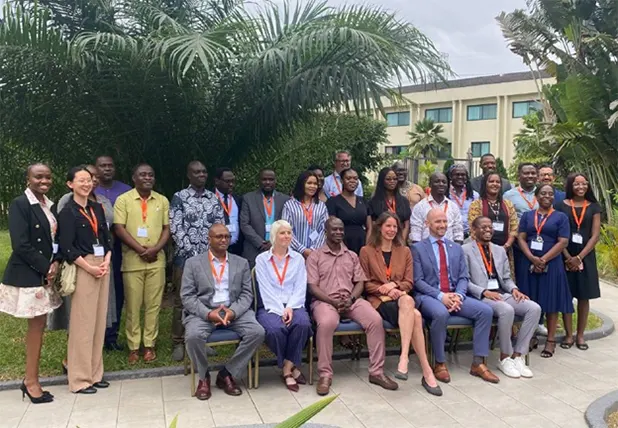
Co-organised by the Government of Ghana and the NAP Global Network, under the theme, “Accelerating the Transition from Planning to Implementation in National Adaptation Plan Processes”, the event brings together government decision-makers and adaptation project implementers to share experiences on moving from climate planning to real action.
Thabang Phago of South Africa’s Department of Forestry, Fisheries and Environment, stressed that financing and stakeholder collaboration are crucial to close the gap between planning and implementation.
Dr. Orville Grey of the NAP Global Network said despite global challenges, momentum on NAP processes is growing. “We aim to help countries decide, act, and adjust in uncertain times,” he said. The NAP process was established under the United Nations Framework Convention on Climate Change (UNFCCC) in 2010 to help countries address medium- and long-term climate adaptation priorities.
By Prince Fiifi Yorke
