


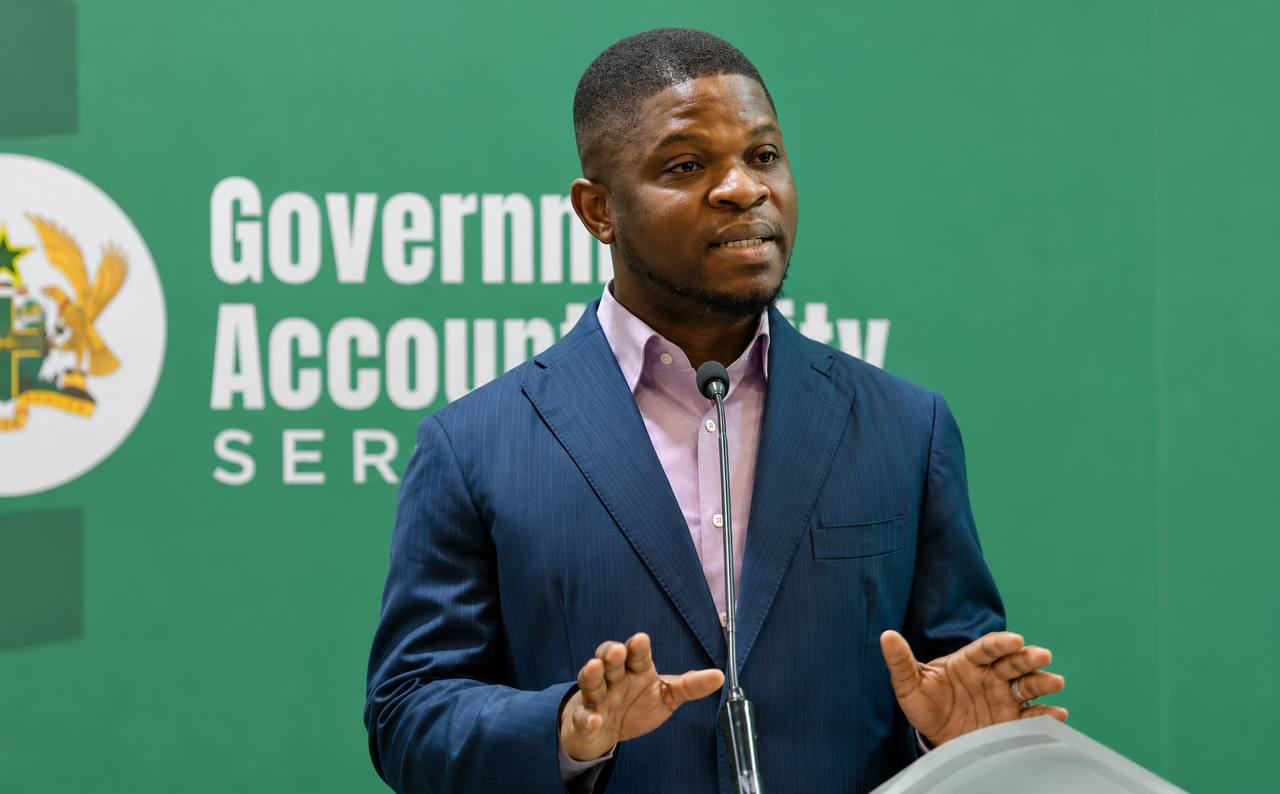
By Amoako Kwame
The Chief Executive Officer of the Ghana Gold Board (GoldBod), Sammy Gyamfi, has challenged Minority Leader Alexander Afenyo-Markin to explain who was responsible for the alleged US$1.7 billion loss recorded under the Bank of Ghana’s Domestic Gold Purchase Programme in 2025.
Mr Gyamfi rejected claims that GoldBod was responsible for the reported losses, describing the Minority’s narrative as a misrepresentation of the facts and findings of the International Monetary Fund (IMF).
“The new false narrative of Afenyo and his followers that GoldBod is to blame for the losses incurred by the Bank of Ghana is bereft of facts and common sense,” he said.
The comments come amid an intensifying political dispute over the financial implications of Ghana’s domestic gold purchasing programme. The Minority, led by Mr Afenyo-Markin, has argued that GoldBod must account for the costs associated with the gold transactions from which it benefits.
The Minority’s position followed an IMF report indicating that the Bank of Ghana’s Domestic Gold Purchase Programme, implemented through GoldBod, recorded losses exceeding US$1.7 billion in 2025, equivalent to about 1.5% of Ghana’s gross domestic product (GDP).
However, Mr Gyamfi insisted that the IMF did not attribute the US$1.7 billion loss directly to GoldBod.
“Minority grossly misrepresented the IMF’s findings,” he said, arguing that the reported loss should not be presented as a loss incurred by GoldBod itself.
He further pointed to the timing of the reported losses, saying it raised questions about the Minority’s claims.
“There was no GoldBod in 2024, who then caused that loss? Can Afenyo-Markin answer the question?” he asked.
GoldBod was established in 2025, meaning the institution did not exist during the period preceding its establishment.
Mr Gyamfi also explained that the losses recorded in the Bank of Ghana’s accounts were associated with the broader gold trading arrangement rather than a direct operational loss by GoldBod.
“Losses accrued on gold trades are a combination of service and passive fees paid to GoldBod, discounts on goods sold to off-takers and exchange rate losses,” he explained.
His comments come after Mr Afenyo-Markin questioned why GoldBod should take credit for foreign exchange gains generated through the programme while distancing itself from losses linked to the same transactions.
The Minority Leader has also demanded greater transparency over the identities of GoldBod’s off-takers and the rationale behind discounted gold sales, arguing that the full costs of the transactions should be accounted for.
Mr Gyamfi, however, maintained that the Minority’s interpretation of the IMF report was misleading and sought to distinguish GoldBod’s financial performance from losses recorded on the Bank of Ghana’s balance sheet.
GoldBod’s audited 2025 financial statements show that the institution recorded an overall surplus of GH¢5.44 billion, although critics argue that costs borne by the central bank are not fully reflected in GoldBod’s accounts.
The dispute has placed GoldBod’s operations and the accounting treatment of Ghana’s domestic gold purchase programme at the centre of a growing political and economic debate, with both sides calling for greater clarity over who ultimately bears the cost of the programme.
More Stories Here
