


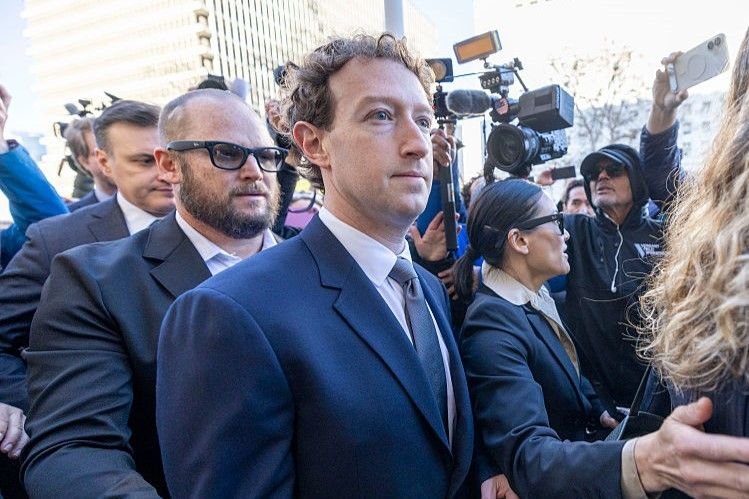
Meta has been hit with successive losses in court over how its platforms have targeted and harmed young users, but a jury trial set to begin on Tuesday may pose the biggest threat yet to its operations.
The trial stems from a lawsuit filed in 2023 by 30 US states, including California and New York, in which they claim numerous violations of federal and state privacy laws for children.
Not only are the states seeking upwards of $1 trillion from Meta, but they are also demanding that it make changes to Instagram and Facebook, including ending “like” counts and infinite scroll.
Should Meta ultimately lose a case of this scale, it could force fundamental changes in how young people experience social media.
The states suing Meta are also asking for many more changes to how Instagram and Facebook operate for young people.
They want Meta to:
- implement a process of parental verification for teenage users
- change its “dopamine-manipulating recommendation algorithms”
- remove many image filters that change one’s appearance in photos
- end autoplay of video content
- prohibit the creation of multiple accounts
- end disappearing or “ephemeral” posts, such as Instagram Stories
All of these features are central to the current user experience on Meta’s platforms.
These features are also designed to keep users, including teenagers and children, on the platforms as often and for as long as possible, the states contend. They claim Meta even makes it difficult for young people to use the platform less, through things like frequent notifications designed to get young people back on the apps.
By allegedly targeting child users, Meta “chose to exploit” young people in order to hook them on its platforms, so it could grow its user base and expand its business. Today, Meta’s value on the stock market is about $1.5tn.
Meta has consistently denied such claims.
“We strongly disagree with these allegations and are confident the evidence will show our longstanding commitment to supporting young people,” a company spokeswoman said in a statement.
The states are putting their claims to Judge Yvonne Gonzalez Rogers, a chief federal judge in California. She was the judge in the high-profile Elon Musk v Sam Altman trial and has built a reputation from the bench over the course of nearly 20 years for being incisive and direct.
Social media turned ‘public nuisance’
In a recent ruling against Meta, a judge in New Mexico fined the company a collective $942m and ordered it to make changes similar to those that the additional states are now demanding.
Judge Bryan Biedscheid’s ordered changes include the elimination on Instagram and Facebook of like counts for users younger than 18, a ban on teenagers sending or receiving nudity through the platforms, and limiting push notifications from the apps to certain hours of the day.
The judge also declared Meta a “public nuisance” akin to a factory that was polluting the air people breathe, causing “harmful effects” that impacted an entire population. Meta said it would appeal against the ruling.
While Judge Biedscheid’s order only demands Meta make changes in New Mexico, should the 30 states prevail in their separate lawsuit against Meta, it would almost certainly need to enact platform changes across the US.
The states involved in the lawsuit represent nearly two-thirds of the country’s population.
If Meta did enact such changes, it would mark a significant alteration to the experience of its platforms.

“Like” counts, for instance, have been part of Meta since its early years, when it was still called Facebook and that was its only platform.
Today, likes are omnipresent on social media platforms. It is the main way in which people engage with text, photos and videos they see online.
Yet, likes are increasingly viewed as a way to foster negative feelings, particularly among young people.
Kaley, a young woman who prevailed in her lawsuit against Meta earlier this year, described during court testimony how she created dozens of accounts on YouTube and Instagram.
She would use the system of accounts to create likes on her own posts, hoping to drive engagement with other users and her own feelings of validation and self-worth. Kaley was only nine years old at the time. She said she remembered feeling depressed, something she was later diagnosed with, aged 10.
Research over the last several years has shown that engagement metrics such as like counts can drive feelings of rejection and depression in teenagers.
In the states’ lawsuit against Meta, in which the company said it has handed over more than 2 million documents, lawyers pointed to Meta’s own research that showed like counts drove “social comparison”, or the mental act of marking one’s self worth against images of someone else.
That social comparison driven by Instagram was linked to “increased loneliness, worse body image, and negative mood or affect”, according to Meta’s internal research.
As Judge Biedscheid put it in his order, which was the first time a social media company has been deemed a “public nuisance”, the way Meta’s platforms have operated for over a decade has been part of a growing “youth mental health crisis” in New Mexico and elsewhere.
Now, attorneys from 30 more states will be pushing Judge Gonzalez Rogers to reach the same conclusion.
DISCLAIMER: The Views, Comments, Opinions, Contributions and Statements made by Readers and Contributors on this platform do not necessarily represent the views or policy of Multimedia Group Limited.
DISCLAIMER: The Views, Comments, Opinions, Contributions and Statements made by Readers and Contributors on this platform do not necessarily represent the views or policy of Multimedia Group Limited.
