


By: Amoako Kwame
President John Dramani Mahama has recalled Northern Ghana’s industrial past, saying the establishment of the Northshore Apparel Hub represents the beginning of a new era of industrialisation in the region.
The President said Northern Ghana was once a major industrial and agro-processing hub, with factories supporting agriculture, creating jobs and producing goods for both domestic consumption and export.

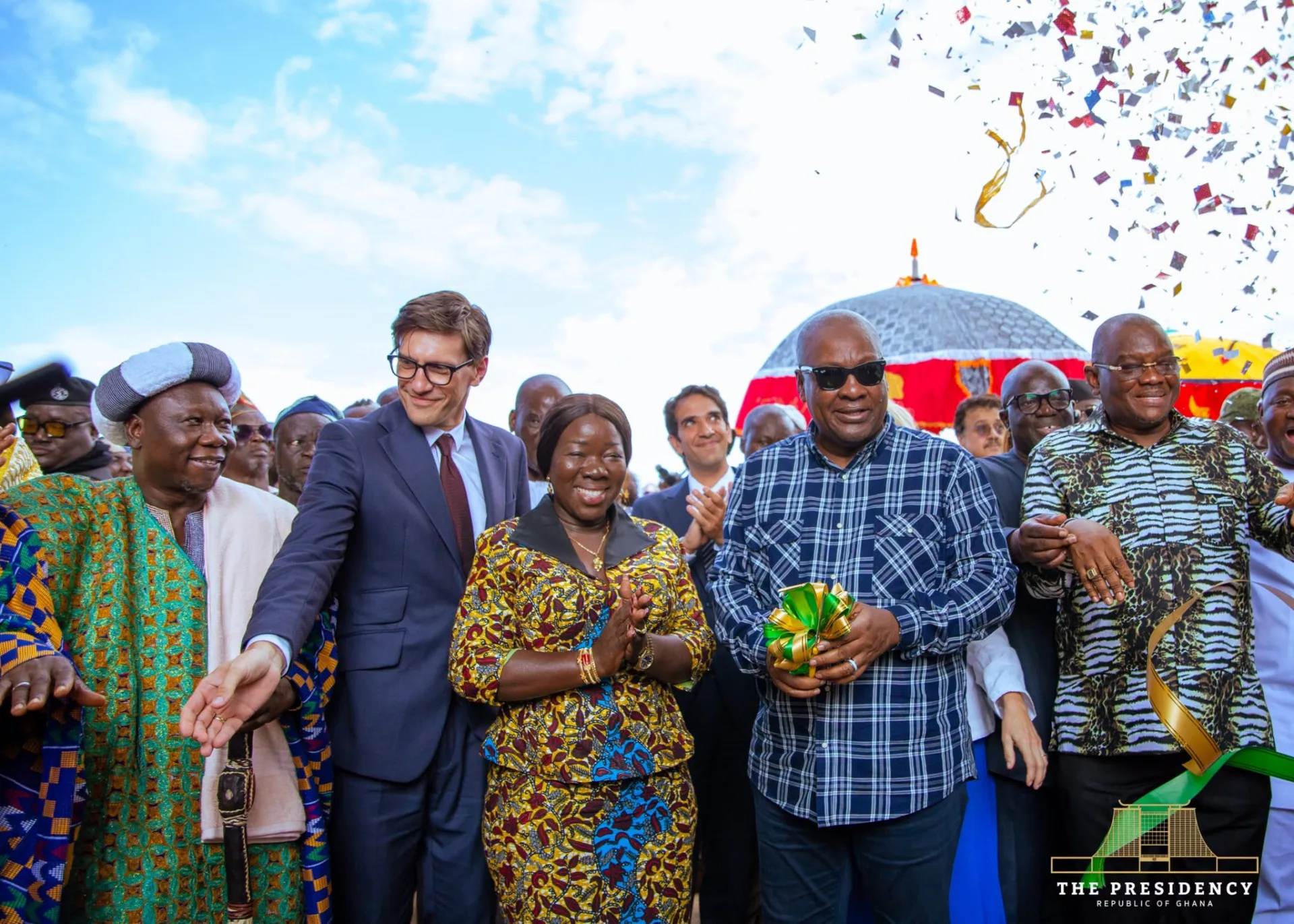
He made the remarks at the commissioning of the NorthShore Apparel Hub, where he expressed optimism that the project could help restore the North to what he described as its “glorious industrial past.”
“My father established the first rice processing plant which was right here in Tamale, and they produced rice enough to feed the whole of Ghana and even export to Burkina Faso,” President Mahama recalled.
He said Northern Ghana was “humming with industry” in the 1970s, with several agro-processing and manufacturing businesses operating across the region.

According to the President, the region had rice-processing mills, vegetable oil mills and facilities producing quality groundnut oil for the Ghanaian market and for export.
He also recalled the role of the Ghana Cotton Company in supporting cotton farmers in Northern Ghana by purchasing their produce and providing quality seed cotton.
The cotton value chain, he explained, was linked to textile manufacturing in the south, particularly the Juapong Textiles Company, which spun cotton into yarn and produced grey baft used in the manufacture of wax prints.
“GTP and other textile companies bought from Juapong Textiles Company,” he said, describing the arrangement as an integrated industrial system.
He further cited the Tiger Pito factory as another major industrial establishment that contributed to the region’s economy.
Industry created jobs for young people
President Mahama said the industrial activity of the period provided employment opportunities for young people, including those leaving school.
He said the industrial ecosystem created opportunities along the agricultural and manufacturing value chains, helping to provide livelihoods for communities across the region.
“Unfortunately, various factors led to the collapse of this industry,” he said.
Why Northern industries collapsed
The President attributed the decline of Northern Ghana’s industrial base to a combination of infrastructure, economic and international challenges.
He said inadequate electricity supply was a major constraint because the national power grid had not yet been extended to the North at the time.
Factories therefore had to rely on generators operated by the Electricity Corporation of Ghana, making production expensive.
He also cited international economic crises, weak value chains and poor transport links between Tamale and Accra in the 1990s as factors that contributed to the collapse of industries in the region.
“The glorious industry of the Northern Region collapsed,” he said.
NorthShore offers hope for revival


President Mahama said the establishment of NorthShore Apparel Hub gave him hope that Northern Ghana could once again become an important industrial centre.
“I have a pleasant feeling in my heart. I believe we’ve planted the first seed that will restore the North back to its glorious industrial past. That’s what NorthShore Apparel Hub [represents],” he said.
He said the project demonstrated that the region could support modern industry if its natural and infrastructural advantages were properly harnessed.
The President cited the availability of land, improved electricity supply, solar energy potential, lower labour costs, better air transport and ongoing road development as factors that could support renewed industrialisation.
He said the government’s efforts to improve water supply in Tamale and surrounding areas would further strengthen the region’s industrial potential.
Part of 24-Hour Economy vision
President Mahama linked the revival of Northern Ghana’s industrial base to his government’s 24-Hour Economy policy.
He said the policy was designed to create employment and accelerate exports, adding that NorthShore Apparel Hub aligned with both objectives.
He also pointed to the role of Ghana EXIM Bank in providing financing for productive enterprises capable of generating jobs and supporting exports.
The President expressed confidence that with the right investment and infrastructure, Northern Ghana could reclaim its position as an important centre of agriculture, agro-processing and manufacturing.
He urged investors to take advantage of the region’s emerging opportunities and contribute to what he described as a new chapter in Northern Ghana’s industrial development.

More Stories Here
