



IFC Warns Ghana: Integration Key to Digital Growth
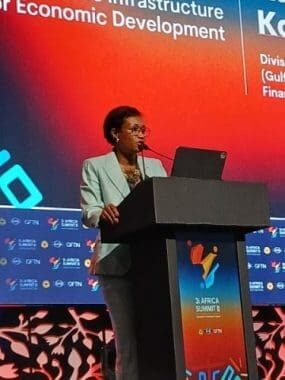

The International Finance Corporation (IFC) has warned that Ghana’s digital transformation risks stalling unless fragmented payment systems, identity platforms, and data frameworks are woven into a single connected ecosystem, saying interoperability will determine whether the country’s digital finance gains translate into broad economic growth.
Nathalie Kouassi-Akon, Divisional Director for West Africa at the IFC, made the remarks at the 3i Africa Summit 2026 in Accra, where she outlined three priorities for scaling Africa’s digital economy: urgent integration of existing platforms, the structural conditions for sustainable success, and the critical role of public-private partnerships.
She argued that despite rapid expansion across the continent, digital ecosystems remain deeply fragmented. Payment systems frequently fail to communicate with each other, data cannot move securely across platforms, and small businesses struggle to scale beyond local markets even where digital tools are available.
“Without integration, Africa risks scaling silos rather than scaling growth,” she said, warning that innovation disconnected from interoperability would fail to deliver productivity or meaningful economic expansion.
The IFC official called for digital public infrastructure built on interoperable payments, shared digital identity systems, trusted data exchange frameworks, and reliable connectivity. She described these as the invisible rails needed to unlock cross-border trade, strengthen regional value chains, and operationalise the ambitions of the African Continental Free Trade Area (AfCFTA). When such systems connect, she argued, Small and Medium-sized Enterprises (SMEs) become more visible to lenders, enabling faster credit decisions, business formalisation, and job creation at scale.
Kouassi-Akon was equally direct about the obstacles. Infrastructure deficits, unreliable electricity, limited digital skills, and regulatory fragmentation across African markets must be addressed alongside digital investments. Strong governance, cybersecurity, and data protection frameworks are also essential to build citizen trust and attract investor confidence.
On financing, she stated that governments alone cannot deliver digital infrastructure at the required pace and scale, advocating instead for a model where governments set enabling policies, development finance institutions de-risk investments, and the private sector contributes capital and operational expertise. She cited the IFC’s $9.6 billion investment in digital infrastructure globally over the past decade, including a $100 million commitment to Raxio Group to expand carrier-neutral data centres across several African countries.
Turning specifically to Ghana, she praised the country’s mobile money success and growing technology ecosystem while stressing that the next phase of transformation depends on connecting Ghana’s systems with regional markets. She described a vision where an entrepreneur in Kumasi could use a digital identity to access credit, trade across borders, and build a scalable business.
“The real question is who builds it, who owns it, and who benefits,” she concluded. “If we get integration right, the answer can be our people and our continent.”
 WhatsApp
Comments (0)
No comments yet. Be the first to share your opinion!