


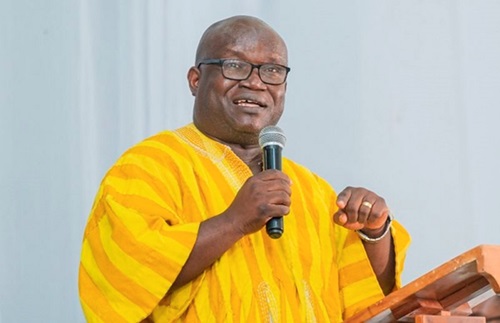
The Ghana Chamber of Mines (GCB) has pushed back strongly against recent assertions by the Institute of Economic Affairs that described the country’s mining fiscal framework as a “royalty-based regime” and a “colonial relic,” insisting that Ghana operates a modern royalty-tax model aligned with global best practice.
In a response issued on April 20, 2026, the Chamber took issue with the IEA’s characterisation of the mining sector’s fiscal arrangements, particularly following the Institute’s press briefing on 25th March 2026, which also questioned the rationale for reducing the Growth and Sustainability Levy from 3 per cent to 1 per cent.
Ghana operates a royalty-tax regime, not royalty-only
The Chamber clarified that Ghana’s mining fiscal framework follows the royalty-tax model, not a royalty-only regime as the IEA suggested. The distinction, it argued, is material. A royalty-tax model extracts mineral rents through multiple fiscal instruments applied across gross revenue, profits, and dividends, whereas a royalty-only regime relies almost exclusively on royalties charged on production.
In Ghana, the principal fiscal instruments applicable to the mining sector include a mineral royalty rate of 5 per cent to 12 per cent levied on mineral revenue; a Growth and Sustainability Levy of 1 per cent levied on mineral revenue; a corporate income tax of 35 per cent imposed on taxable income; and dividends from Free Carried Interest of 10 per cent where declared.
Collectively, these instruments ensure that the government captures value at different stages of the mining value chain, irrespective of profitability. The Chamber described it as inaccurate to portray royalty as the sole or dominant fiscal stream accruing to the state.
Effective tax rate nearly 60 per cent
The Chamber noted that the reduction in the GSL must be assessed within the context of a significant upward revision in mineral royalties, from 5 per cent to a price-linked range of 5 per cent to 12 per cent. This places Ghana among jurisdictions with comparatively high royalty rates, particularly under elevated price conditions.
The cumulative effect of these fiscal measures is substantial, as the effective tax rate in Ghana’s mining sector is nearly 60 per cent under prevailing assumptions, positioning the country among the highest-tax mining jurisdictions globally.
In this context, the Chamber argued that the adjustment of the GSL from 3 per cent to 1 per cent, while directionally appropriate, is inadequate to offset the cumulative burden imposed by the current fiscal structure. Both royalties and the GSL are levied on gross revenue and are cost-insensitive, thereby compounding the pressure on mining operations, particularly for high-cost, mature, or marginal mines.
‘Colonial relic’ characterisation misleading
The Chamber dismissed the IEA’s description of Ghana’s royalty-tax regime as a colonial relic, stating that the royalty-tax framework is the dominant and globally accepted fiscal model for mining taxation and is applied in several jurisdictions cited by the IEA as exemplars of reform, including Botswana, Chile, and Burkina Faso.
Mineral ownership not transferred to investors
The Chamber also rejected the IEA’s implication that Ghana has ceded ownership of its mineral resources to investors. Under Ghanaian law, mineral rights are vested in the state, and the principal legal instrument governing mining operations is a mining lease.
A mining lease, by definition, confers the right to mine, not ownership of the mineral resource. The grant of a lease, therefore, does not constitute a transfer of sovereign ownership, the Chamber emphasised.
Non-renewal of mining leases a flawed policy
The Chamber described the IEA’s recommendation that the government refrain from renewing expiring mining leases as ill-conceived and economically damaging. Taken to its logical conclusion, this approach would imply that all mining leases, large-scale and small-scale, foreign-owned and Ghanaian-owned, across all minerals, from sand to lithium, should lapse, with the state assuming operational responsibility.
Such an outcome, the Chamber argued, would be counterproductive and paradoxically inconsistent with the IEA’s call for greater indigenous participation. In practice, it would limit nationals to operating merely as contractors to the state rather than as independent mining entrepreneurs.
Current arrangements already delivering outcomes
The Chamber agreed with the IEA that local capacity exists to undertake mining responsibly, noting that some large-scale mines are owned exclusively by Ghanaian nationals, more than 99.4 per cent of employees in large-scale mining operations are Ghanaians, and existing mining operations already deliver mining services, value addition, and technology transfer.
State participation possible but risk must be acknowledged
While nothing precludes the state from participating directly in mining, the Chamber noted that Ghana’s historical experience with state-owned mining enterprises in the post-independence period coincided with a near-collapse of the mining industry and a contraction of the broader economy.
Mining begins with high-risk exploration, and the prevailing international practice is for private investors, both local and foreign, to assume this risk, with the state sharing in the rewards once value is created.
Chamber calls for further fiscal reform
The Chamber reiterated its appeal to the government to strike a balance between short-term revenue objectives and the sustainability of the mining sector by recalibrating the fiscal regime. It argued that the 1 per cent GSL should be reduced to zero and that a broader review of the GSL and sliding scale royalty regime remains imperative to safeguard both investment viability and long-term revenue sustainability.
“The Chamber reiterates that fiscal stability, predictability, and competitiveness are essential to sustaining investment in a capital-intensive and globally mobile industry such as mining,” the statement concluded.
