



The formal ceremony was scaled back. The people showed up anyway.
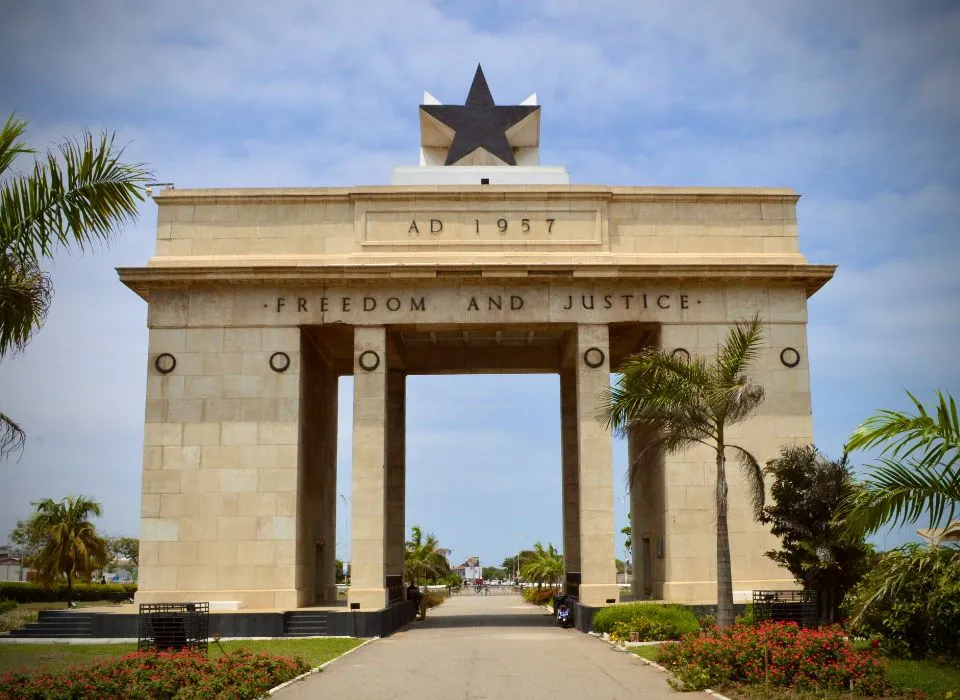
For the second consecutive year, Ghana’s Independence Day parade was held at the forecourt of Jubilee House rather than the iconic Black Star Square, a deliberate shift driven by fiscal prudence. Government figures indicate that hosting the celebration at Jubilee House cost approximately GH₵1.5 million, compared to an estimated GH₵15 million that would have been required for a full-scale event at the traditional venue. The grand formations of school children, military bands, and the sweeping spectacle of the parade grounds gave way to a smaller, quieter ceremony attended by fewer participants.
But something the government did not plan for happened beyond the official gates.
Independence Day moved into the streets.
Across the country, the red, gold, and green took over neighbourhoods, entertainment centres, restaurants, and social gatherings. The Black Stars football jersey, in particular, became the unexpected uniform of the nation. No official campaign drove the trend. It spread organically through social media posts, influencer culture, and peer-to-peer digital inspiration, with young Ghanaians filming dances, posting skits, and remixing songs that turned Independence Day into a distinctly digital celebration.
The jersey’s rise had an unexpected backstory. Thousands of units had been produced ahead of an Africa Cup of Nations (AFCON) campaign that never materialised, after Ghana finished bottom of their qualifying group without a single win. With AFCON gone as a sales driver, traders were left holding large unsold stock. Then Independence Day arrived, and social media transformed the surplus into a cultural movement overnight. Prices surged, with jerseys that would normally retail around GH₵80 fetching close to GH₵350, and Ghanaians were still buying.
The fugu told a different but equally powerful story. The surge in the garment’s visibility began after President John Dramani Mahama wore one during a state visit to Zambia in early February, prompting ridicule from some social media users. Ghanaians responded with fierce cultural pride, and Tourism Minister Abla Dzifa Gomashie formalised the moment by declaring Wednesdays as National Fugu Day. By the time March 6 arrived, the smock had crossed from northern cultural identity into mainstream national fashion, worn proudly by young and old across the country.
What emerged was something the state did not organise and could not have manufactured: a spontaneous, citizen-driven celebration of Ghanaian identity.
This year’s celebration unfolded under the theme “Building Prosperity, Restoring Hope,” which President Mahama described as more than ceremonial, calling it “the blueprint that guides our administration and actions.” The theme resonated differently on the streets, where it was expressed not in speeches but in the quiet optimism of people who chose, for one day, to set aside the weight of economic hardship and simply celebrate the country they belong to.
That choice deserves to be taken seriously.
The enthusiasm on display this Independence Day was not naive. Ghanaians are acutely aware of the pressures that define daily life, from the cost of living to unresolved challenges in public healthcare. The celebrations did not erase those realities. What they revealed, instead, was that the attachment to this country runs deeper than its current difficulties.
That depth of feeling is a national asset. But it cannot be left to jerseys and smocks.
Even the fugu’s resurgence carries an economic lesson. Smock weavers are struggling to meet the surge in demand. The secretary of Ghana’s smock weavers and sellers association, Abigail Naki Gabor, has pointed out that hand weaving limits production capacity, calling for investment in industrial equipment to help artisans scale up. The cultural moment, if harnessed properly, could become an economic one too.
At 69, Ghana is a country whose citizens clearly love it. The work ahead is to build a country that loves them back, with institutions that function, services that reach people, and an economy that creates real opportunity in everyday life.
The real test of independence is not what fills the streets on March 6.
It is what fills them on every other day of the year.
