
Ghana is poised to take a historic step in marine conservation, with the government expected to designate twenty-one coastal communities as Marine Protected Areas (MPAs).
The move is aimed at safeguarding biodiversity, restoring fish stocks, and strengthening fisheries management. The first declaration, at Greater Cape Three Points in the Western Region, will be made by the President in the coming weeks. Fishing activities in the designated zones will be restricted, allowing ecosystems to recover and spawning grounds to flourish.
This initiative forms part of Ghana’s commitment to the “30×30” global target, a landmark pledge adopted under the Kunming-Montreal Global Biodiversity Framework to conserve at least 30 per cent of the world’s land, inland waters, and oceans by 2030. More than 190 countries signed onto this vision, but progress has been slow: only 2.9 per cent of the ocean is currently fully or highly protected, far below the 30 per cent benchmark.
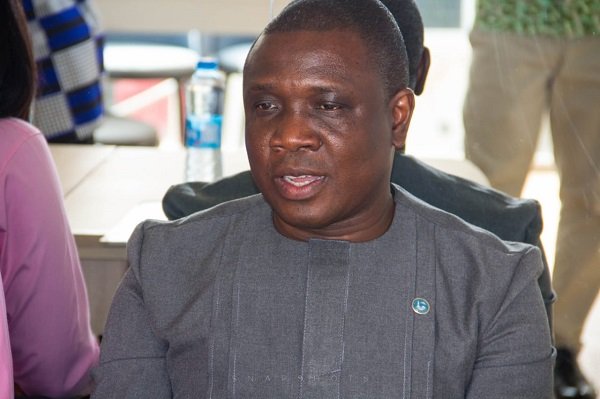
Speaking to The Ghanaian Times at the launch of the “Save Our Sea” (SOS) campaign in Kumasi on Wednesday, the Acting Executive Director of the Fisheries Commission, Professor Kwadwo Berchie Asiedu, underscored the urgency of Ghana’s marine protection agenda.
“We are starting this one by implementing the first Marine Protected Area. The declaration is going to happen this year, maybe this month. The MPA has so many benefits. It’s for the fish to lay their eggs and also for the fish to rest. In that sense it would increase our catch per unit effort,” he explained.
Professor Asiedu, who also serves on the National Blue Economy Strategy Technical Committee, revealed that the Ministry of Fisheries and Aquaculture (MoFA) was drafting legislative instruments under the Fisheries and Aquaculture Act 2025 (Act 1146).
“These will introduce stiffer penalties for marine habitat destruction and grant the Commission greater autonomy in enforcing conservation mandates,” he said. Beyond enforcement, MoFA is spearheading mangrove restoration projects across lagoons, recognising them as vital carbon sinks and nurseries for fish.
Innovative financing mechanisms such as blue bonds and debt-for-nature swaps are also being explored to sustainably fund Ghana’s 30×30 targets without overstretching the national budget.
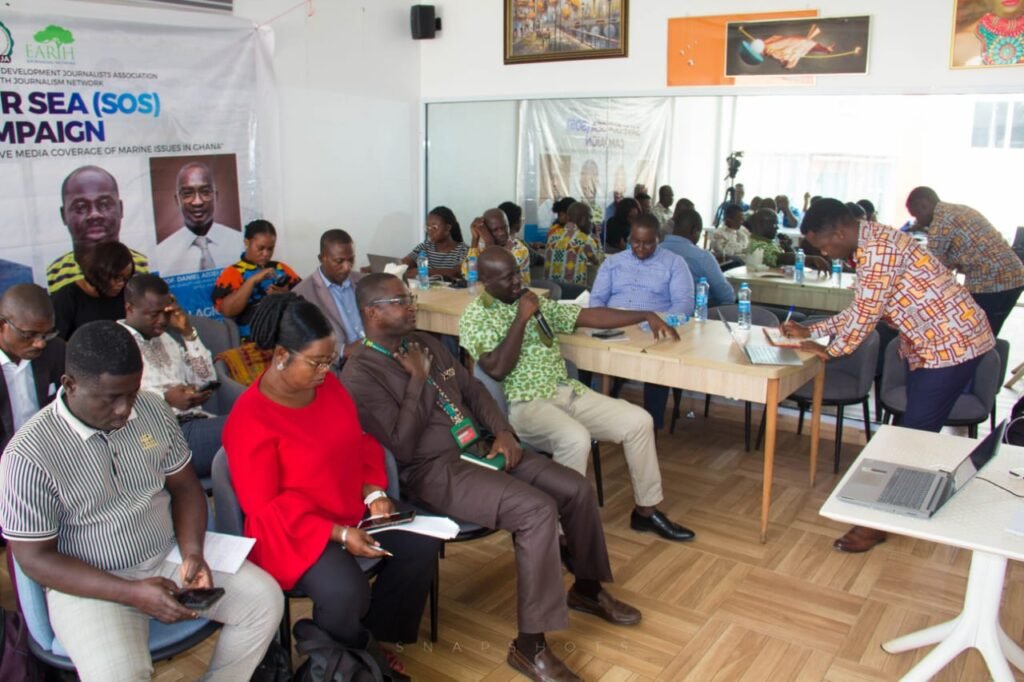
The SOS campaign, organised by the Ghana Agricultural and Rural Development Journalists Association (GARDJA) in partnership with the Earth Journalism Network, trained journalists on effective coverage of marine issues.
“Our nation’s identity is inevitably linked to the Atlantic Ocean. From the active shores of Keta to the vibrant landing beaches of Half Assini, the ocean is not merely a resource, it is our lifeblood. It provides food security for millions, sustains over 14,000 fishing vessels, and supports the livelihoods of approximately 10 per cent of our population.”
Yet this lifeblood faces tripartite threats: climate change, plastic pollution, and illegal, unreported, and unregulated (IUU) fishing.
“As we look toward 2030, let it be said that Ghana did not just witness the decline of the oceans but led the West African sub-region in its restoration,” he declared. “Protecting our marine environment is not a choice between fish or no fish; it is a choice between a legacy of abundance or a legacy of empty nets.”
Ghana’s commitment to the Kunming-Montreal Global Biodiversity Framework, adopted at COP15 in 2022, is more than a pledge, it is a survival strategy. By declaring MPAs, restoring mangroves, and empowering journalists, the nation is positioning itself as a leader in West Africa’s marine restoration.
The Country Coordinator for the Earth Journalism Network, Charles Smith, emphasised the role of the media saying that “This project is to support journalists through training and grants so they can report on efforts being undertaken across Ghana, Mexico, and the Philippines.”
FROM KINGSLEY E. HOPE, KUMASI
Join our WhatsApp Channel now!
Follow our WhatsApp Channel now!


