
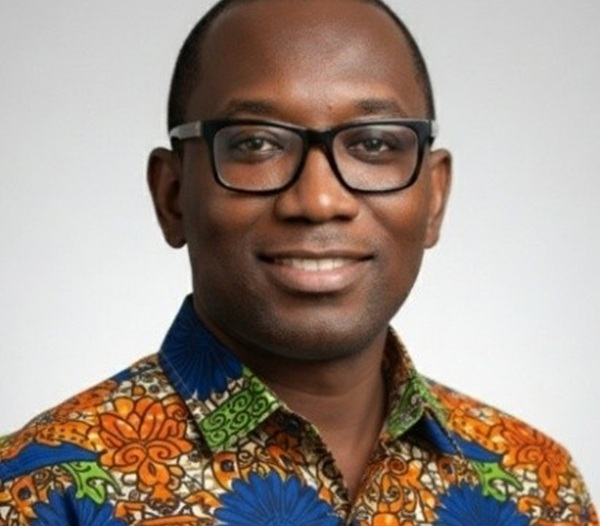
 Dr Jerome Emmanuel Abaka-Cann is an eye specialist
Preventable vision loss remains one of Ghana’s most pressing yet under-discussed public health challenges, according to Ghanaian optometrist, Dr Jerome Emmanuel Abaka-Cann.
In an interview with GhanaWeb, Dr Abaka-Cann revealed that an estimated 230,000 people in Ghana are blind, with many more living with severe visual impairment that significantly limits their ability to work, learn and fully participate in daily life.
“Conditions such as glaucoma, diabetic eye disease and hypertensive retinopathy often develop without early symptoms. By the time vision changes are noticed, permanent damage has frequently occurred,” he said.
Dr Abaka-Cann recounted how he established his first clinic in Takoradi in 2011 in response to the growing unmet need for accessible eye care services.
From that single facility, he has developed what health sector registration records describe as the largest indigenously owned, optometrist-led private clinical network in West Africa.
“I did not enter an established market. We created the category,” he told GhanaWeb, noting that no other indigenously owned, optometrist-led private network in Africa has reached 20 or more clinics within a single country.
While multinational chains operate across borders, he emphasised that his network is uniquely concentrated within Ghana, with locally managed facilities providing comprehensive clinical services rather than retail-only operations.
Beyond expanding physical infrastructure, Dr Jerome Abaka-Cann said he recognised the need to standardise and modernise clinical processes.
This led to the development of FOVEA, Ghana’s first optometry-specific electronic medical record (EMR) system.
Today, FOVEA is used by 71 eye care facilities, including 49 independent clinics that voluntarily adopted the platform.
“FOVEA allows for standardized documentation and long-term patient tracking. It supports better disease monitoring and evidence-based care across multiple sites,” he explained.
Investing in Training and Research
Dr Abaka-Cann also highlighted his commitment to workforce development. His facilities run Ghana’s largest private pre-registration residency programme for optometrists, with all enrolled trainees passing the Ghana Optometry Board examinations since 2022.
The clinics serve as accredited training sites for students from Kwame Nkrumah University of Science and Technology, University of Cape Coast, and the Optical Technician Training Institute.
In 2020, he established the Imperial Eye Award at KNUST to promote locally generated research and inform national eye health policy.
In November 2024, Dr Abaka-Cann was inducted as a Special Category Fellow of the American Academy of Optometry (AAO), becoming the first Ghanaian and one of only two Africans at the time to receive the distinction.
Unlike the traditional fellowship pathway earned through peer-reviewed research, the Special Category recognises practitioners who expand access to care and transform the profession through leadership and institution building.
Following his induction, he became an official mentor of the AAO African Chapter and the only Ghanaian Structured Oral Examination evaluator, contributing to a record induction of 35 new African Fellows in 2025.
A Call for Early Detection
A product of Mfantsipim School and KNUST, Dr Abaka-Cann said he continues to work with policymakers and professional bodies to strengthen early detection systems and promote routine eye examinations nationwide.
His message, he stressed, is simple but urgent.
“You cannot prevent what you do not examine for. That is the whole argument for getting your eyes checked regularly and for building the systems that make it possible,” he added.
According to him, regular eye examinations should be viewed not as a luxury, but as an essential preventive health measure capable of catching silent and treatable conditions before they cause irreversible harm.

