


 A study conducted indicates that a closed fishing season is imposing greater hardship on fishers
A study conducted by a research team from the University of St Andrews, Scotland, has revealed that Ghana’s closed fishing season policy is imposing greater hardship on coastal fishers than the intended benefits the measure seeks to achieve.
According to the findings, many fishers believe the closed season has negatively affected their livelihoods, increasing household pressures—particularly on women—and contributing to stress, low school attendance, and a rise in social vices within fishing communities.
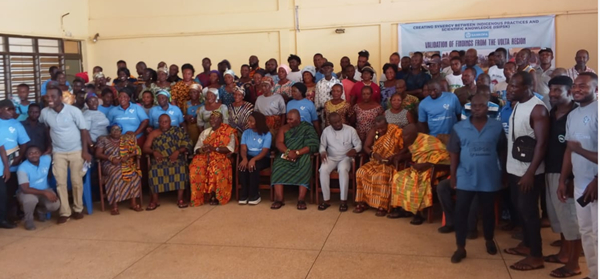
The results were presented at a stakeholders’ validation forum held at the Ketu South Municipal Assembly Hall on the theme: “Creating Synergy between Indigenous Practices and Scientific Knowledge.”
Presenting the report, Dr Ifesinachi Okafor-Yarwood, lead researcher from the University of St Andrews, said the engagement sought to share findings with the communities and stakeholders who contributed to the research, enabling them to engage policymakers using evidence from their lived experiences.
She explained that the study forms part of the Indigenous and Scientific Knowledge Integration for Policy and Sustainable Fisheries (ISIPSK) project, led by the School of Geography and Sustainable Development at the University of St Andrews.
The project is being implemented in collaboration with the Fisheries Commission (FC), the Fisheries Committee for the West and Central Gulf of Guinea (FCWC), and the Canoe and Fishing Gear Owners Association of Ghana (CaFGOAG), with support from Josephine Asare, as part of her PhD research.
Dr Okafor-Yarwood noted that the project aims to bridge indigenous knowledge systems and scientific approaches to advance sustainable fisheries governance in Ghana and the West African sub-region.
She said the study showed that the closed fishing season had created significant livelihood challenges for fishing households, especially those without alternative sources of income.
“We found that those who did not report negative impacts from the closure had supplementary livelihood sources to fall back on,” she added.
The study involved 207 men and women from Abeliakope and Abutiakope in the Ketu South and Keta municipalities of the Volta Region, all of whom acknowledged the importance of fisheries conservation.
However, respondents suggested that if a closed season must be implemented, it should be observed in June rather than July, aligning with the natural sea closure period traditionally recognised by their communities.
Fishers also called for the revival and recognition of indigenous conservation practices, including traditional rituals such as animal sacrifices to sea deities—locally known as nudedefu—which they believe historically contributed to improved fish harvests.
They further expressed strong support for reinstating traditional “rest days,” typically Wednesdays and Sundays, as additional conservation measures.
Dr Okafor-Yarwood urged policymakers to integrate local knowledge and socio-economic realities into fisheries management policies to ensure that conservation measures are both effective and socially sustainable.
She warned that neglecting indigenous systems risks undermining compliance and worsening poverty in fishing communities.
William Agbenu, Volta Regional Director of Fisheries, encouraged fishers to collectively reject illegal fishing practices, which continue to threaten sustainable fisheries.
He stressed the need for adherence to government-approved fishing nets and methods, noting that sustainable practices are vital to safeguarding the long-term future of the sector.
He said that although concerns about the closed season policy were valid, combating illegal, unreported, and unregulated (IUU) fishing required the full cooperation of all stakeholders.
The study contributes to enhancing understanding of the gendered socio-economic impacts of Ghana’s closed fishing season, harmonising indigenous marine conservation practices with scientific approaches, and developing innovative information dissemination strategies to support sub-regional fisheries conservation and sustainable livelihoods.
