


Total revenue of State-Owned Enterprises (SOEs) increased by 28.1 per cent to GH¢176.4 billion, from 137.6 billion, while profit before interest and tax rose from 5.8 billion in 2024 to GH¢25.5 billion, the latest State Ownership Report (SOR) has revealed.
The report showed that SOEs recorded a consolidated net profit after tax of GH¢19.8 billion, reversing a GH¢2.3 billion net loss in 2024, thus making 2025 a major financial turnaround year for SOEs.
The report released by the State Interests and Governance Authority (SIGA) identified that the stronger performance by the SOEs was supported by growth in agriculture, manufacturing and infrastructure, improved foreign exchange earnings and a 42.5 per cent reduction in finance costs.
In relation to Specified Entities (public bodies where the state holds an interest), the report showed that employment across the entities increased by 5.5 per cent to 98,724, while women’s representation rose to 30.02 per cent of all employees.
The 2025 SOR, released last Friday, is the 10th edition of the country’s assessment of Specified Entities and the fifth published since SIGA’s establishment in 2019.
The report covers 162 out of 175 approved Specified Entities, comprising 53 State-Owned Enterprises (SOEs), 36 Joint Venture Companies (JVCs) and 73 Other State Entities (OSEs).
It provides an assessment of their financial and operational performance and highlights key reforms affecting Ghana’s state-owned sector.
Details
Despite the improvement in the performance of SOEs, the SIGA report indicated that there were still significant challenges that needed to be dealt with to consolidate the gains.
For instance, the report showed that five SOEs recorded losses consistently from 2021 to 2025, while six entities maintained negative equity. Additionally, the government dividend receipts from SOEs declined, with only Ghana Reinsurance Company Ltd and TDC Company Ltd paying a combined GH¢16 million in dividends.
The report also revealed a strong performance by JVCs, with their net profit rising by 36.6 per cent to GH¢3.1 billion and total assets increasing by 26 per cent to 96.7 billion.
Also, JVCs with minority government interests generated GH¢1.2 billion in dividends, representing 97.1 per cent of total dividends received across the portfolio.
The report also presented a contrasting picture where OSEs experienced considerable financial pressure, recording a net deficit of GH¢10.5 billion, with liabilities exceeding assets and the accumulated fund falling into a negative position, driven by the Bank of Ghana’s negative equity.
Positive development
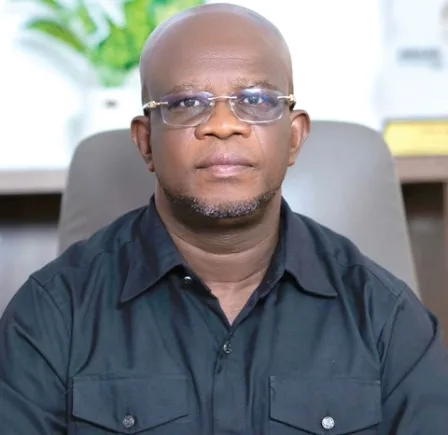
In an interview with the Director-General of SIGA, Professor Michael Kpessa-Whyte, yesterday, he said the strong performance by the SOEs last year was a clear indication that with strong leadership, enhanced corporate governance frameworks and effective oversight, state institutions would become more profitable and relevant to the country’s development.
“For my team at SIGA and me, it is heart-warming that our efforts in the past year are yielding results, although it is early days yet.
We are of the belief that with stronger support for SIGA, a collective desire to protect public funds, we can make our SOEs more profitable,” he said.
Prof. Kpessa-Whyte said the improved performance by SOEs was partly attributable to “a more supportive macroeconomic environment as evident in the country’s real gross domestic product (GDP) growth rising to 6.0 per cent, while the monetary policy rate of the Bank of Ghana fell from 27 per cent to 18 per cent, with average lending rates declining significantly.
Again, he said, the strong leadership demonstrated by President John Dramani Mahama in tying the continuous stay in office of Chief Executive Officers (CEOs) of SOEs to their performance had ensured enhanced operations of the public entities.
“The other element that led to this improved performance is that SIGA spent a lot of time providing corporate governance training to the boards of many of the SOEs because profit or loss; performance or non-performance; compliance or non-compliance, all emanate from the ability of the boards to manage the entities in line with the President’s vision,” Prof. Kpessa-Whyte said.
The SIGA Director-General added that other notable developments that contributed to the improved performance included recapitalisation of state-owned banks, the establishment of the Ghana Gold Board (GoldBod), reforms in the railway sector, and progress in climate and gender commitments.
Challenges
Touching on the challenges of the SOEs, Prof. Kpessa-Whyte said the debt levels of some of the entities were worrying, explaining that while revenue was increasing, expenditure was also higher.
“Although some of the entities are raking in more revenue, they are also spending a lot of money paying legacy debts. Some of them also have capacity issues that need to be looked at carefully,” he said.
The SIGA Director-General said some of the SOEs did not follow good strategic plans that wove well into the larger agenda of the President to drive transformational change.
Again, Prof. Kpessa-Whyte said there was a worrying development where some entities had refused to be overseen by SIGA, “and this is worrying because Ghanaians have no means of knowing what is happening in those entities by way of their performance, corporate governance, and profitability.”
Prof. Kpessa-Whyte said most of the errant state institutions were the OSEs such as the Environmental Protection Authority (EPA), the Ghana Standards Authority (GSA), the National Service Authority, and the Food and Drugs Authority (FDA).
“Most of the errant ones are coming from these OSEs because they feel that SIGA is about the profit-making entities and they are not profit-making; and this is a wrong interpretation of the SIGA Act.
“It baffles my mind that such institutions do not want to be overseen because oversight only shines a light on their performances and points to what should be done differently,” he said.
The SIGA Director-General said the process had begun to review the SIGA Act to make it “sharper and clearer” so that all ambiguity would be cured.
In that regard, Prof. Kpessa-Whyte said the authority would continue to work with the SOEs and other public entities to ensure stronger accountability, disciplined capital allocation, decisive action on chronically underperforming entities and performance-driven governance.
He stressed that to consolidate the gains, SIGA would focus on providing stronger oversight, ensuring major governance and institutional reforms, including strengthened public financial management controls, and a sharp reduction in procurement infractions.
“SIGA will escalate the principles of good corporate governance across all the entities to become the standard operating procedure for both management and staff,” he said.
