


By Amoako Kwame
Ghana’s State-Owned Enterprises (SOEs) recorded a consolidated net profit after tax of GH¢19.80 billion in 2025, ending four consecutive years of losses, according to the State Interests and Governance Authority (SIGA).
The strong turnaround represents a significant improvement from the GH¢2.25 billion net loss recorded in 2024, as total revenue across the SOE sector increased by 28.12 per cent, from GH¢137.64 billion to GH¢176.43 billion.
The figures are contained in SIGA’s 2025 State Ownership Report, released on Sunday, August 30, 2026. The report, the 10th edition of Ghana’s flagship assessment of specified entities, reviewed the performance of 162 out of 175 approved entities.
The entities assessed comprised 53 SOEs, 36 joint venture companies and 73 other state entities.

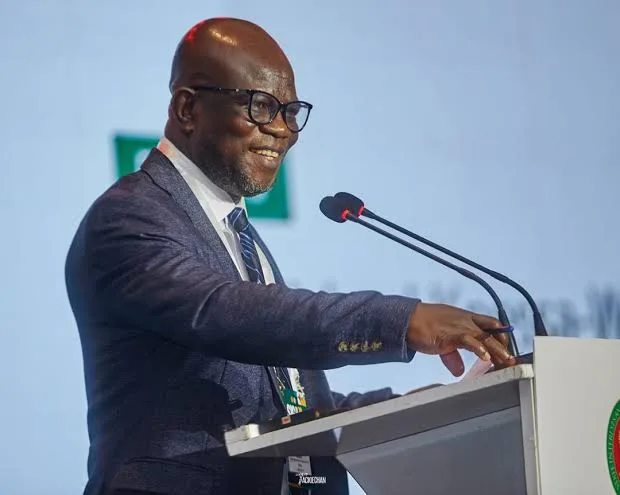
SIGA Director-General, Prof. Michael Kpessa-Whyte, said the report provides an assessment of the contribution of state-owned entities to the government’s broader economic reset agenda.
He described the 2025 edition as significant because it captures the first year of President John Dramani Mahama’s second administration and provides a basis for discussions on improving the performance of state-owned enterprises and other state entities.
SOE revenue rises to GH¢176.43bn
SIGA said the SOE sector recorded the strongest performance among the categories assessed, supported by substantial growth in the agriculture, manufacturing and infrastructure subsectors.
Revenue from the agriculture subsector surged by 203.71 per cent, while manufacturing and infrastructure recorded increases of 114.74 per cent and 92.24 per cent, respectively.
Profit before interest and tax also increased to GH¢25.49 billion, continuing the sector’s recovery from a GH¢502 million loss in 2023 and GH¢5.80 billion profit in 2024.
Ten SOEs maintained profitability throughout the five-year assessment period. They included the Ghana Ports and Harbours Authority, Bui Power Authority, Ghana National Gas Company, BOST Energies Company, Minerals Income Investment Fund and TDC Company Limited.
The appreciation of the cedi further strengthened the sector’s financial position, resulting in net foreign-exchange earnings of GH¢11.72 billion, compared with a GH¢12.01 billion foreign-exchange loss in 2024.
Finance costs also fell by 42.49 per cent.
Despite the improved performance, total SOE assets declined by 5.86 per cent to GH¢407.84 billion, with the reduction mainly attributed to the Electricity Company of Ghana (ECG), Volta River Authority and COCOBOD.
Total liabilities also fell by 4.31 per cent to GH¢281.99 billion, with ECG accounting for GH¢82.31 billion.
Five SOEs remain loss-making
SIGA cautioned that significant financial risks remain concentrated in a number of state-owned enterprises.
Five SOEs — ECG, Ghana Cylinder Manufacturing Company Limited, GNPA Limited, Graphic Communications Group Company and Ghana Digital Centres Limited — recorded losses in every year from 2021 to 2025.
Six other entities, including AirtelTigo Ghana Limited, GIHOC Distilleries and Tema Oil Refinery, also recorded negative equity throughout the five-year period.
Meanwhile, dividend payments from SOEs to government declined by 29.36 per cent in 2025. Only Ghana Reinsurance Company Limited and TDC Company Limited paid dividends, contributing a combined GH¢16 million.
Joint ventures record stronger profits
Joint venture companies continued to record positive growth, with net profit excluding minority interests rising by 36.55 per cent, from GH¢2.29 billion in 2024 to GH¢3.14 billion in 2025.
Their total assets also increased by 25.99 per cent to GH¢96.69 billion.
Minority-interest joint ventures recorded an even stronger increase in net profit, rising from GH¢21.06 billion in 2024 to GH¢61.32 billion in 2025.
The companies paid GH¢1.19 billion in dividends to government, accounting for 97.12 per cent of total dividends received across the state-owned portfolio.
Other state entities record GH¢10.48bn deficit
The performance of other state entities was considerably weaker, with their combined net deficit widening from GH¢2.18 billion in 2024 to GH¢10.48 billion in 2025.
Although their total assets increased by 60.15 per cent to GH¢310.62 billion, liabilities also rose by 41.83 per cent to GH¢323.17 billion.
The subsector’s accumulated fund deteriorated from a positive GH¢15.47 billion to a negative GH¢41.14 billion.
SIGA attributed the reversal largely to the Bank of Ghana’s GH¢93 billion negative equity position.
Improved macroeconomic conditions
SIGA said the specified entities operated in a more favourable macroeconomic environment in 2025.
Real gross domestic product grew by 6 per cent, the fastest expansion since 2019 and an improvement from the 5.8 per cent recorded in 2024.
The Monetary Policy Rate declined from 27 per cent to 18 per cent, while the Ghana Reference Rate fell from 29.31 per cent to 15.9 per cent.
The average lending rate also dropped from 30.25 per cent to 20.4 per cent by December 2025.
Although Ghana’s public debt increased nominally to GH¢640.99 billion, the debt-to-GDP ratio improved to 45.28 per cent, supported by the appreciation of the cedi, lower borrowing costs, a strong primary surplus and improved debt management.
SIGA, however, warned of continuing fiscal risks, including GH¢3.03 billion in outstanding government loan guarantees and GH¢14.73 billion in on-lent loans.
It also identified US$3.7 million in contingent liabilities that crystallised from public-private partnership agreements during the year.
Procurement infractions fall
SIGA reported a significant reduction in procurement infractions, following the introduction of new Public Financial Management Implementation Guidelines by the Ministry of Finance in May 2025.
The guidelines required specified entities to submit quarterly internal audit and commitment-control reports, while centrally approved procurement activities were subjected to commitment authorisation by the Finance Minister.
Procurement infractions subsequently declined from GH¢18.4 billion in 2024 to GH¢2.2 billion in 2025.
SIGA noted, however, that the authorisation requirements contributed to delays in some capital projects and procurement activities.
The Authority assessed 70 entities that had executed 2024 performance contracts through its Annual Governance and Institutional Performance Assessment Reports and intensified engagements with entities that had persistently failed to comply with statutory reporting requirements.
SIGA recommends liquidation of Ghana Railway Company
SIGA has recommended the liquidation of the Ghana Railway Company Limited following prolonged financial, operational and labour challenges that resulted in the suspension of its operations.
The Authority proposed that the company’s employees be absorbed into the Ghana Railway Development Authority, which it further recommended should be transformed into a combined commercial and regulatory institution.
The 97-kilometre Tema-Mpakadan railway line commenced commercial operations under the Ghana Railway Development Authority in October 2025.
Government subsequently introduced a phased support package to address salary arrears and refurbish critical railway infrastructure.
The financial sector also recorded the recapitalisation of the National Investment Bank and Agricultural Development Bank, alongside continued government support for Consolidated Bank Ghana.
State entities implement 24-hour economy
Several specified entities began implementing aspects of the government’s 24-Hour Economy Policy during 2025.
The initiatives included a 24-hour customer call centre at TDC Company Limited, three-shift operations at Ghana Publishing Company and extended production at GIHOC Distilleries.
The Driver and Vehicle Licensing Authority also expanded its services, while the Environmental Protection Authority introduced continuous online services and environmental monitoring.
Architectural and Engineering Services Limited, meanwhile, worked on 24-hour markets across 33 metropolitan, municipal and district assemblies.
SIGA said such initiatives would be incorporated into future performance contracts and monitoring frameworks.
The GH¢62.86 billion Big Push Programme also adopted a corridor-based approach to upgrading trunk roads, bridges, interchanges and highways under the Ghana Highway Authority. However, most projects remained at an early stage of implementation at the end of 2025.
State-sector workforce grows
Employment across the specified entities increased by 5.45 per cent to 98,724 workers, representing an additional 5,104 jobs.
SOEs accounted for 48.62 per cent of the workforce, followed by other state entities with 39.92 per cent and joint venture companies with 11.47 per cent.
Women accounted for 30.02 per cent of the workforce, up from 29.30 per cent in 2024. Female employment increased by 8.02 per cent, compared with a 4.39 per cent increase in male employment.

SIGA also reported improvements in climate-related disclosures, with 42 of the 162 reporting entities disclosing climate-related projects, programmes or initiatives in 2025.
The Authority described 2025 as a turning point for Ghana’s State-Owned sector but cautioned that persistent losses, negative equity, fiscal risks and governance weaknesses could threaten the gains made.
SIGA stressed that the improvements recorded in 2025 must be sustained and transformed into the foundation for a more efficient, competitive, inclusive and sustainable state-owned sector capable of creating greater value for taxpayers and contributing meaningfully to national development.
This version keeps the report’s key figures and structure while making the story more readable and suitable for publication on a news website.
More Stories Here
