


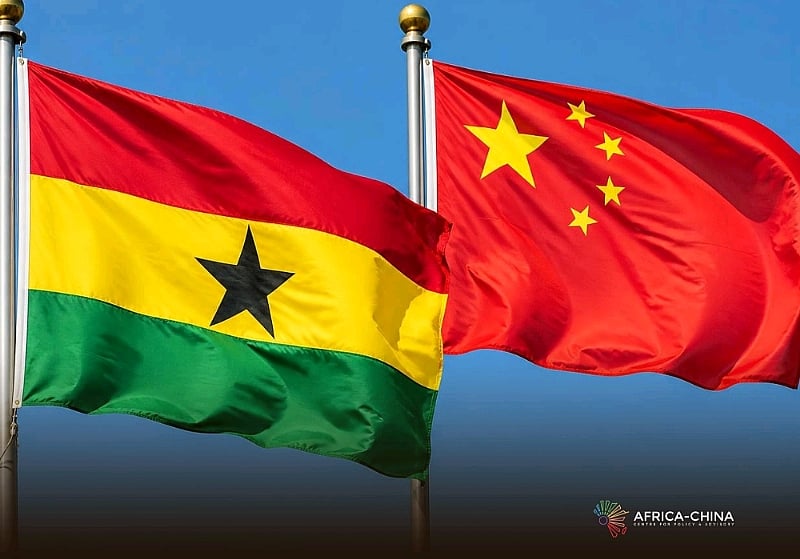
China’s decision to grant zero-tariff treatment to Ghana and 52 other African countries presents a major opportunity for Ghanaian exporters, but taking full advantage of the initiative will require more than simply having cheaper access to the Chinese market.
Effective May 1, 2026, China is extending zero-tariff treatment across 100 per cent of tariff lines to 53 African countries with diplomatic relations with Beijing. The initiative, developed within the broader framework of China-Africa economic cooperation, is intended to deepen trade ties and improve the competitiveness of African products in the Chinese market.
For Ghana, the policy could provide an important opening to diversify exports and increase foreign exchange earnings. China remains one of Ghana’s most important trading partners, but the relationship has largely followed a familiar pattern: Ghana exports commodities and imports higher-value manufactured products.
Gold, cocoa, crude oil, timber and cashew have traditionally featured prominently among Ghana’s exports, while machinery, electronics, textiles, manufactured goods and industrial inputs flow in the opposite direction.
The removal of tariffs creates an opportunity to change that structure by encouraging Ghana to move beyond exporting raw materials towards processed and finished products with greater value.
However, tariff-free access does not automatically translate into market success.
Ghanaian companies seeking to enter or expand in China will still have to satisfy rules of origin, product certification requirements, sanitary and phytosanitary standards, customs procedures, packaging and labelling regulations, and other Chinese regulatory requirements.
This is particularly important for exporters of food, beverages, cosmetics, pharmaceuticals and other regulated products.
In practical terms, a Ghanaian product may attract no import tariff but could still fail to reach consumers if it does not satisfy China’s technical and regulatory standards. The real competition will therefore increasingly shift from tariffs to quality, consistency, certification, logistics and the ability to supply commercial quantities on time.
This makes the new policy an important test of Ghana’s export readiness.
The opportunity extends beyond traditional commodities. Ghana has significant potential to expand exports of processed cocoa products, cashew products, shea butter and cosmetics, tropical fruit products, textiles, pharmaceuticals, beverages and selected light-manufactured goods.
Capturing these opportunities could help Ghana create jobs, strengthen local manufacturing and earn more foreign exchange from every tonne of raw material produced.
Instead of exporting cocoa beans alone, for example, Ghana can strengthen its position in cocoa powder, butter, confectionery and other processed products. Cashew, fruits and shea could similarly generate greater economic returns when processed, packaged and branded locally before export.
Government agencies, including the Ghana Export Promotion Authority, the Food and Drugs Authority and other standards and regulatory institutions, therefore have an important role to play in helping businesses understand and meet Chinese market requirements.
The private sector must equally respond by investing in quality assurance, modern packaging, production capacity, certification and reliable supply chains.
Market intelligence will also be critical. Access to a market does not necessarily mean demand exists for every product. Ghanaian businesses need to understand Chinese consumer preferences, identify credible distributors and importers, participate in trade exhibitions and establish partnerships that can move products from Ghanaian factories to Chinese shelves.
The wider lesson is that trade agreements create opportunities, but domestic industrial capacity determines who benefits from them.
If Ghana continues exporting predominantly unprocessed commodities, the zero-tariff arrangement may increase trade without fundamentally changing the country’s position in the value chain. If businesses and policymakers use the opening to accelerate processing and manufacturing, however, the initiative could become an important catalyst for export-led industrialisation.
China has lowered the tariff barrier. Ghana’s next challenge is to ensure that its products can meet the standards, volumes and competitiveness required to cross the remaining barriers.
The door may be open, but what Ghana sends through it will ultimately determine the economic value of the opportunity.
