


Solar energy off the grid reached over 2,000 shacks in Enkanini, South Africa, with panels, batteries, and lighting. The project served families waiting for the public grid, trained residents to install and maintain the equipment, and revealed the scope and limits of a temporary solution.
More than 2,000 shacks lacking regular electricity connections received solar panels, batteries, and lighting points in Enkanini, an informal settlement located in Stellenbosch, South Africa. Installations took place between 2013 and 2022, without depending on the completion of conventional power grid constructions.
The iShack Project, a South African social initiative focused on solar electrification, coordinated the effort. The small systems allowed lighting in homes, charging mobile phones, and running a television, while residents learned to install, charge for the service, and maintain the equipment.
Families were awaiting a regular electricity connection
Providing electricity to an informal settlement involves more than just running wires to homes. The conventional grid requires planning, poles, cables, meters, protective equipment, and suitable conditions for connections.
While this infrastructure was not yet established, families remained without regular electricity inside their homes. Simple activities, such as studying at night, charging a phone, or getting news from the television depended on limited alternatives.
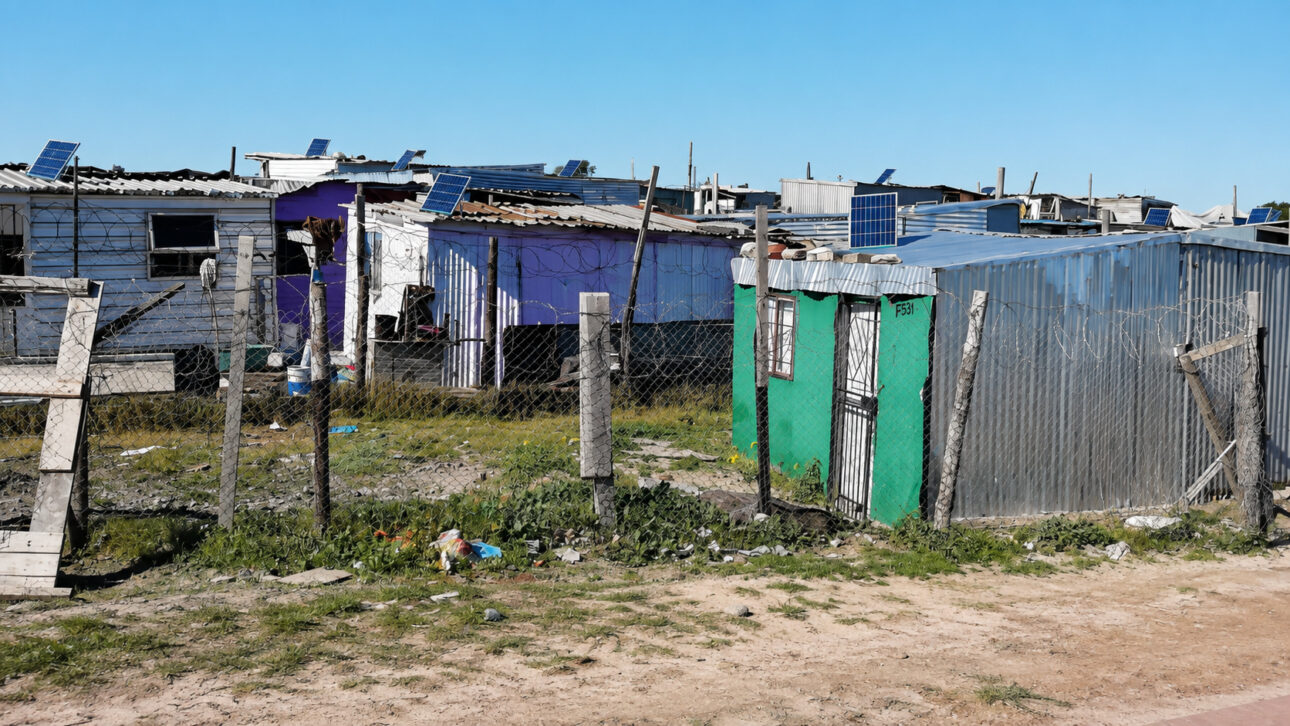
The project was created to operate during this waiting period. Each household served received a small self-contained generation and storage system, installed without needing to connect the shack to the public grid.
The solar kit installed in each shack
The system included a solar panel placed on the rooftop, a battery, and a box responsible for distributing electricity. The equipment operated with approximately 50 to 75 peak watts, a measure representing the highest power produced under optimal sunlight conditions.
During the day, the panel converted sunlight into electricity. The battery stored some of this energy to allow the use of lamps and other devices when sunlight was no longer available.
The capacity was sufficient for lighting, mobile phone chargers, television, and small low-consumption equipment. This made the home more functional at night and facilitated residents’ communication.
The power had limits within the homes
The systems did not provide the same amount of energy as found in a conventional connection. Electric stoves and high-consumption appliances were excluded from the proposal because they required much more power than the small panel could produce.
The available quantity also depended on the energy stored in the battery. If consumption was high or solar generation was low, the family needed to manage their device usage carefully to preserve lighting.
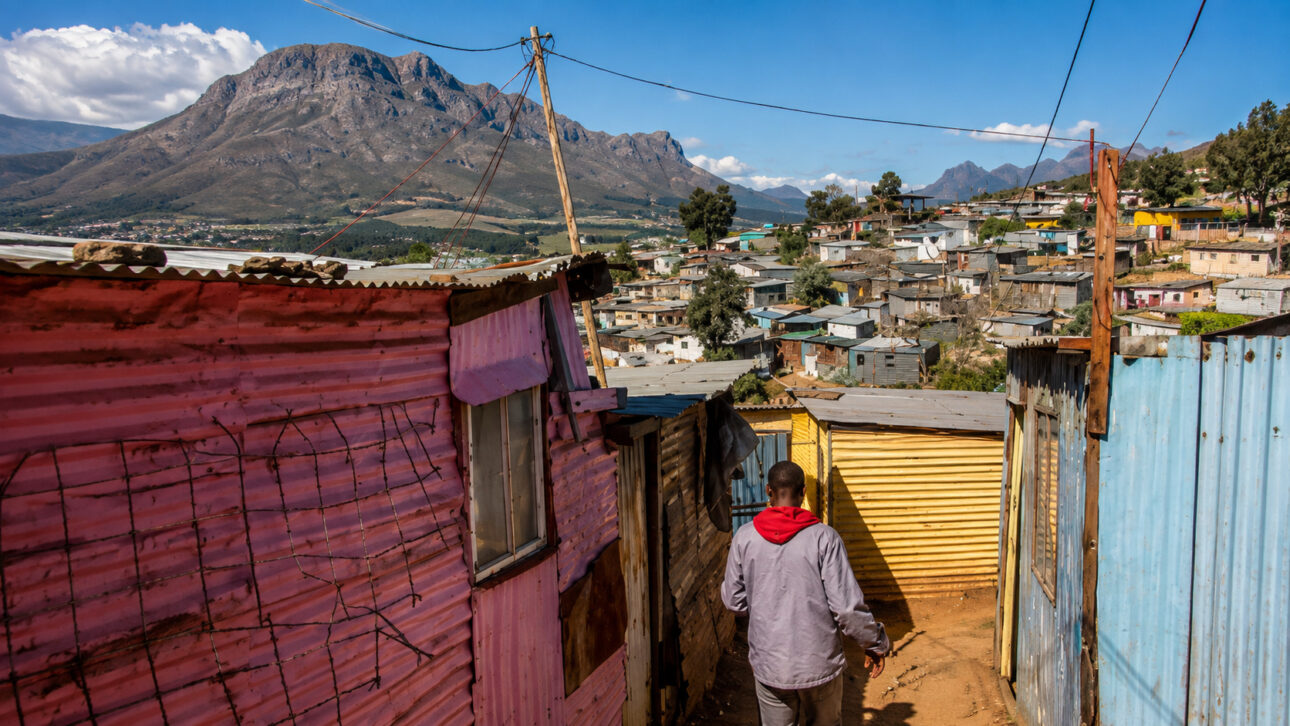
Thus, the equipment was designed to ensure basic electricity services, rather than powering every appliance in a home. The solution addressed an urgent need, but did not eliminate the wait for a public grid.
How the service billing worked
The project utilized various financing methods during its operation. In Enkanini, the period from 2013 to 2022 is recorded as providing free solar electricity to more than 2,000 households.
This service required funding to cover equipment, travel, maintenance, and labor costs of local teams. In other formats tested by the initiative, families participated in financing through monthly payments.
The iShack Project, a South African social enterprise focused on solar electrification, features a model where residents pay for the system’s cost in monthly installments kept at the lowest operational level possible.
There is no published uniform fee for all communities and stages of the project. Therefore, it would not be accurate to assign the same monthly fee to all served families or claim that all received the service under an identical rule.
Residents took charge of installation, billing, and maintenance
The work did not end when the panel was placed on the shack. Residents were trained as local agents, responsible for installing systems, registering families, monitoring payments, and identifying equipment issues.
This training reduced dependency on external teams. When a battery malfunctioned, a light stopped working, or a panel needed evaluation, there were community workers prepared to begin addressing the issue.
The activities also created local job and income opportunities. The institutional page does not compile a total number of jobs generated throughout the entire period, making it impossible to present a singular figure without blending different phases.
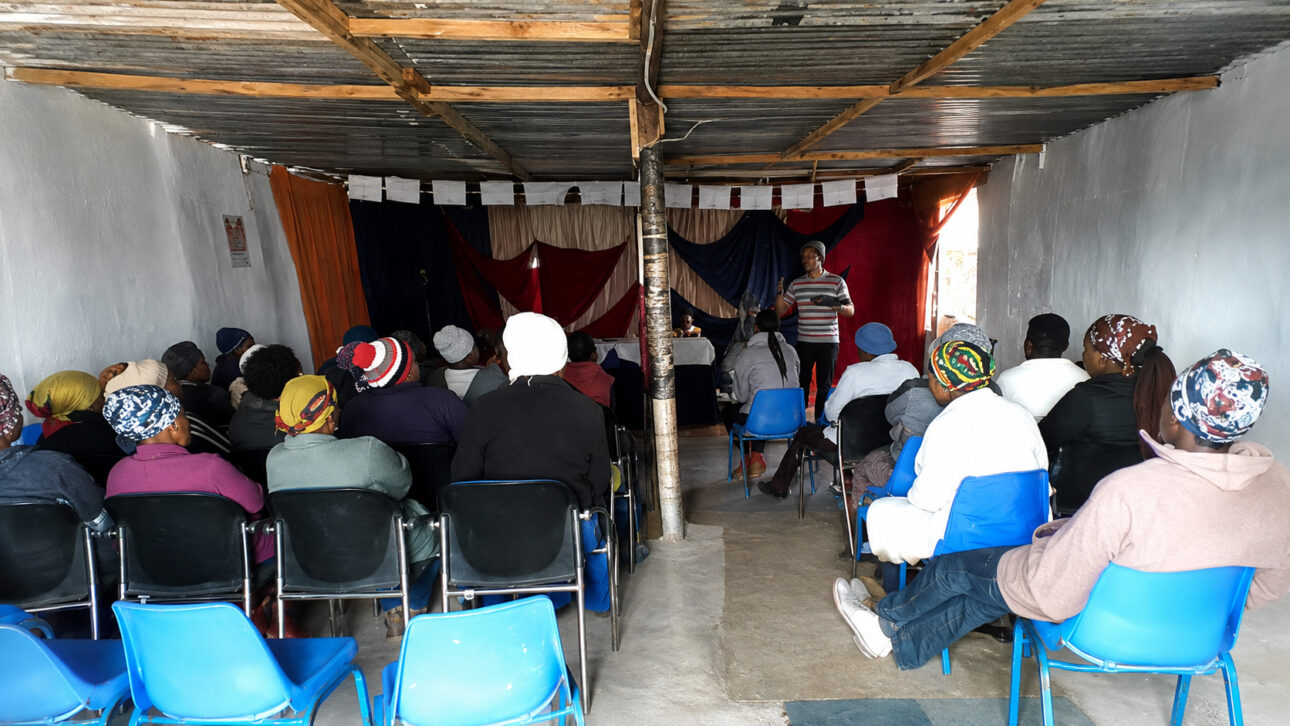
The result was a structure that combined technology and community participation. Residents were no longer just users; they became part of the daily operation of the service.
Solar power was a bridge, not a definitive solution
The project treated solar energy as an incremental improvement. This means addressing an immediate need while the complete infrastructure is still unavailable.
The panel installed on the roof brought lighting and communication into the home, but it did not resolve sanitation, drainage, land regularization, or construction safety. It also did not provide enough power for all household uses.
Off-grid electrification should not be used as a justification to halt public investments. Its role was to function as a bridge during the wait, without relieving authorities of the responsibility to expand conventional infrastructure.
This distinction is essential because a quick solution can improve families’ routines while still being insufficient for the comprehensive needs of an informal settlement.
What happened after 2022
The year 2022 marks the end of the documented free period in Enkanini. The available information does not confirm whether all panels were removed, whether the equipment stopped working, or if the entire initiative ended at that moment.
The exact continuity of the free service after this milestone was not detailed on the indicated institutional page. The project also outlines monthly payments as part of its financial model but does not publish a complete balance regarding the fate of each system installed in Enkanini.
Between 2013 and 2022, more than 2,000 households received basic solar electricity without waiting for network completion. Residents also gained knowledge to install, bill, and maintain an energy service within their own community.
The experience demonstrated that small solar systems can quickly bring light and generate local jobs. At the same time, it made clear that temporary energy does not replace safe housing, sanitation, and adequate public electrification.
If solar energy can light up a home before the grid arrives, how can we prevent this temporary solution from becoming an excuse to delay definitive infrastructure? Share your opinion.
