


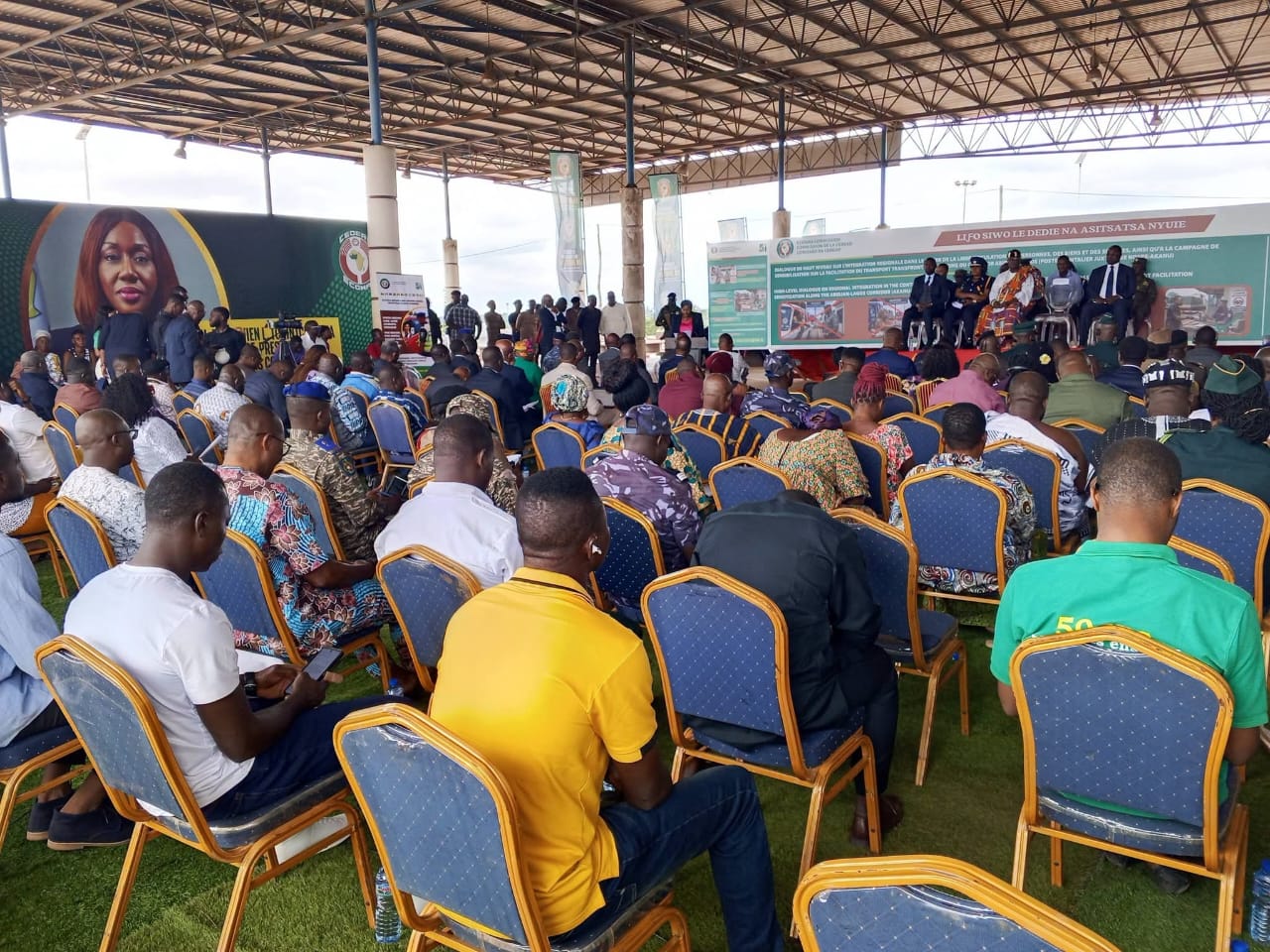
 The ECOWAS Commission has engaged stakeholders at the Akanu-Noepe Joint Border Post in the Ketu North Municipality of the Volta Region and Togo, to sensitise border communities on the ECOWAS Protocol on the Free Movement of Persons, Goods and Services along the Abidjan-Lagos Corridor.
The engagement, which brought together stakeholders from Ghana, Togo, Benin and Nigeria, focused on deepening public understanding of the free movement protocol and addressing challenges confronting traders, travelers and other users of the international corridor.
Mrs Damtien L. Tchintchibidja, the Vice President of the ECOWAS Commission, urged border communities and other residents to take advantage of the opportunities provided by the ECOWAS free movement protocol to enhance trade, investment, tourism and people-to-people relations among member states.
She said the free movement regime remained an important instrument for achieving regional integration and improving economic activities among communities along the borders.
The Vice President encouraged residents to acquaint themselves with the provisions of the protocol and use the established channels to address challenges they encountered in their movement across member states.
Mr Samuel Basintale Amadu, the Comptroller-General of Ghana Immigration Service, urged travelers and other border users to remain security-conscious while taking advantage of the opportunities provided by the free movement regime.
He said effective border management required cooperation between security agencies and communities, particularly in identifying and reporting suspicious activities that could undermine the security of the sub-region.
Madam Nana Birago Owusu-Ansah, the Deputy Commissioner in charge of the Suspense Regime, Free Zones, Warehousing and Transit of the Customs Division of the Ghana Revenue Authority, advised traders and travelers to ensure that they possessed the requisite documents before attempting to cross international borders.
She said proper documentation would facilitate smooth movement and reduce delays and other challenges at the borders.
The engagement also highlighted plans for the construction of a proposed six-lane highway linking Côte d’Ivoire, Ghana, Togo, Benin, Niger and Nigeria, aimed at boosting trade and reducing travel time along the corridor.
The proposed project is expected to improve connectivity among the participating countries, facilitate the movement of goods and people, and strengthen economic activities along the Abidjan-Lagos Corridor.
Participants were informed that discussions on the proposal had already taken place and that it was currently before the ECOWAS Parliament for the necessary consideration and action.
The stakeholders also called for continuous sensitisation of border communities, traders, transport operators, and travelers on the rights and responsibilities associated with the ECOWAS free movement protocol.
They said sustained education would help reduce misunderstandings at border points and enable residents to fully benefit from regional integration initiatives.
The Akanu-Noepe Joint Border Post is an important crossing point between Ghana and Togo and forms part of the Abidjan-Lagos Corridor, which connects several West African countries and serves as a major route for regional trade and movement.
Source: GNA
