


A Symbol of Unity: Military Chaplains from the U.S. and Africa Walk Together in Ghana
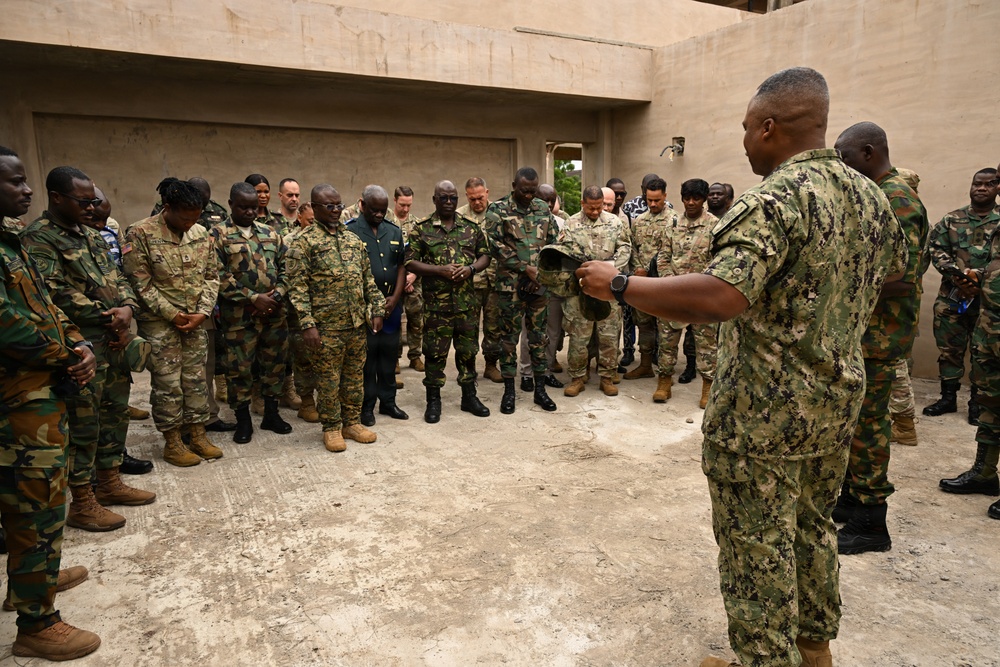
Photo by Airman 1st Class Alexandra Dale | U.S. and African military chaplains participate in a prayer walk during the West Africa Religious Affairs Symposium (WARAS) in Accra, Ghana, July 16, 2026. The event brought together spiritual leaders from 11 nations to foster interfaith dialogue and resilience in military service.
In the bustling heart of Accra, Ghana, an extraordinary gathering took place on July 16, 2026, where military chaplains from the United States and 10 African nations united for a three-day symposium focused on spiritual resilience, pastoral care, and interfaith harmony. The West Africa Religious Affairs Symposium (WARAS) was not just an event—it was a testament to the power of unity across faiths, proving that even in the most diverse environments, shared values can bridge cultural and religious divides.
At the center of the symposium was a peace and prayer walk across Burma Camp Air Force Base, where chaplains from Christian, Muslim, and other faith traditions walked side-by-side, visiting chapels, mosques, and other spiritual centers. This symbolic journey was more than a ritual—it was a living demonstration of mutual respect and collaboration, reinforcing the idea that spiritual leadership in military settings must be inclusive, understanding, and deeply rooted in cultural context.
Beyond Doctrine: The Cultural Imperative of Interfaith Chaplaincy
The symposium’s discussions were far from abstract. Participants delved into critical operational and pastoral challenges that military chaplains face, including:
- Combat Ministry & Moral Injury – How spiritual leaders can support soldiers grappling with the psychological toll of war.
- Post-Traumatic Stress Disorder (PTSD) & Trauma Care – Tailoring spiritual guidance to address mental health struggles.
- Leadership & Family Care – Strengthening bonds between service members and their families through faith-based support.
- Ethical Dilemmas in Modern Warfare – Navigating moral complexities in an era of global conflict.
But what made this symposium unique was its unwavering focus on interfaith understanding. Sgt. Maj. Herinah Asaah, the U.S. Africa Command’s religious affairs senior enlisted leader, emphasized that in West Africa—and indeed, across the continent—religion is not a peripheral aspect of life but its very foundation.
“Religion and spirituality are woven into the fabric of daily life, culture, and identity here. You cannot build resilience in a military force without acknowledging and respecting that reality.”
This sentiment was echoed by CH (Brig. Gen.) Benjamin Kumi-Woode, the Director General of Religious Affairs for the Ghana Armed Forces, who framed interfaith collaboration as a divine mandate.
“Religious pluralism reflects God’s manifold wisdom and love. When we develop mutual respect as people of faith, we strengthen our witness—not just to our own communities, but to the world.”
The physical act of walking together—from a Christian chapel to a Muslim mosque—was a powerful visual representation of this principle. It showed that even in the most structured and hierarchical of institutions (the military), faith is not a divider but a unifier.
The Practical Impact: Chaplains as Cultural Mediators in a Pluralistic Military
Military chaplains operate in an inherently diverse environment. Troops come from different religious backgrounds, secular beliefs, and cultural traditions, and chaplains must be equipped to serve all of them effectively.
This is where interfaith understanding becomes a strategic necessity. When chaplains acknowledge and honor the spiritual beliefs of service members—whether they are Christian, Muslim, Hindu, Atheist, or of another faith—they build trust, reduce conflict, and enhance overall mission readiness.
During the symposium, participants explored best practices for interfaith chaplaincy, including:
- Cultural Sensitivity Training – Ensuring chaplains understand the historical, social, and theological nuances of different faiths.
- Shared Ethical Frameworks – Finding common ground in moral principles that transcend denominational boundaries.
- Trauma-Informed Spiritual Care – Adapting pastoral support to individual beliefs while addressing universal human struggles.
- Family & Community Engagement – Extending spiritual care beyond the battlefield to spouses, children, and extended families.
One of the most compelling takeaways from WARAS was the realization that military chaplains are not just spiritual guides—they are cultural mediators. Their ability to navigate religious diversity directly impacts unit cohesion, morale, and operational effectiveness.
A Model for Global Military Chaplaincy
The West Africa Religious Affairs Symposium stands as a beacon for military chaplaincy worldwide. In an era where geopolitical tensions, religious extremism, and cultural clashes dominate headlines, the symposium proved that unity is possible when faith leaders prioritize dialogue over division.
Ghana, as a nation with deep religious diversity—home to Christianity, Islam, traditional African spirituality, and other belief systems—served as the perfect setting for this exchange. The Ghana Armed Forces’ commitment to interfaith collaboration sets a high standard for military institutions globally.
As CH (Brig. Gen.) Kumi-Woode noted, this work is not just about religious harmony—it’s about strengthening the very fabric of military service.
“When chaplains from different faiths walk together, they send a message: that even in the most challenging circumstances, humanity’s shared search for meaning can bring people closer.”
Looking Ahead: The Future of Interfaith Chaplaincy in Africa
The lessons from WARAS extend far beyond Accra’s borders. As military cooperation deepens across Africa, the need for interfaith chaplaincy models will only grow.
Future symposiums may explore:
– Digital interfaith dialogue – Using technology to connect chaplains across continents.
– Youth chaplaincy programs – Training the next generation of spiritual leaders in pluralistic settings.
– Disaster response chaplaincy – How faith leaders can support communities in crises with unified, faith-sensitive approaches.
One thing is clear: The military chaplaincy of the future will not be defined by dogma, but by dialogue.

Chaplains from multiple nations engage in discussion during the West Africa Religious Affairs Symposium, emphasizing shared strategies for spiritual resilience in military service.

A service member reflects during a moment of quiet prayer at a base chapel, illustrating the personal impact of interfaith chaplaincy.

Participants in the prayer walk pose together, symbolizing unity across faiths during the symposium.

CH (Brig. Gen.) Benjamin Kumi-Woode addresses the gathering, highlighting the importance of interfaith respect in military leadership.

U.S. and African military personnel observe a moment of silence during the symposium, reinforcing the theme of shared spiritual values.
This symposium was not just an event—it was a movement. A movement proving that even in the most complex of environments, faith can be a bridge, not a barrier. As the chaplains walked together through Burma Camp, they carried with them a message for the world: Unity is possible when we choose to walk side-by-side.
