


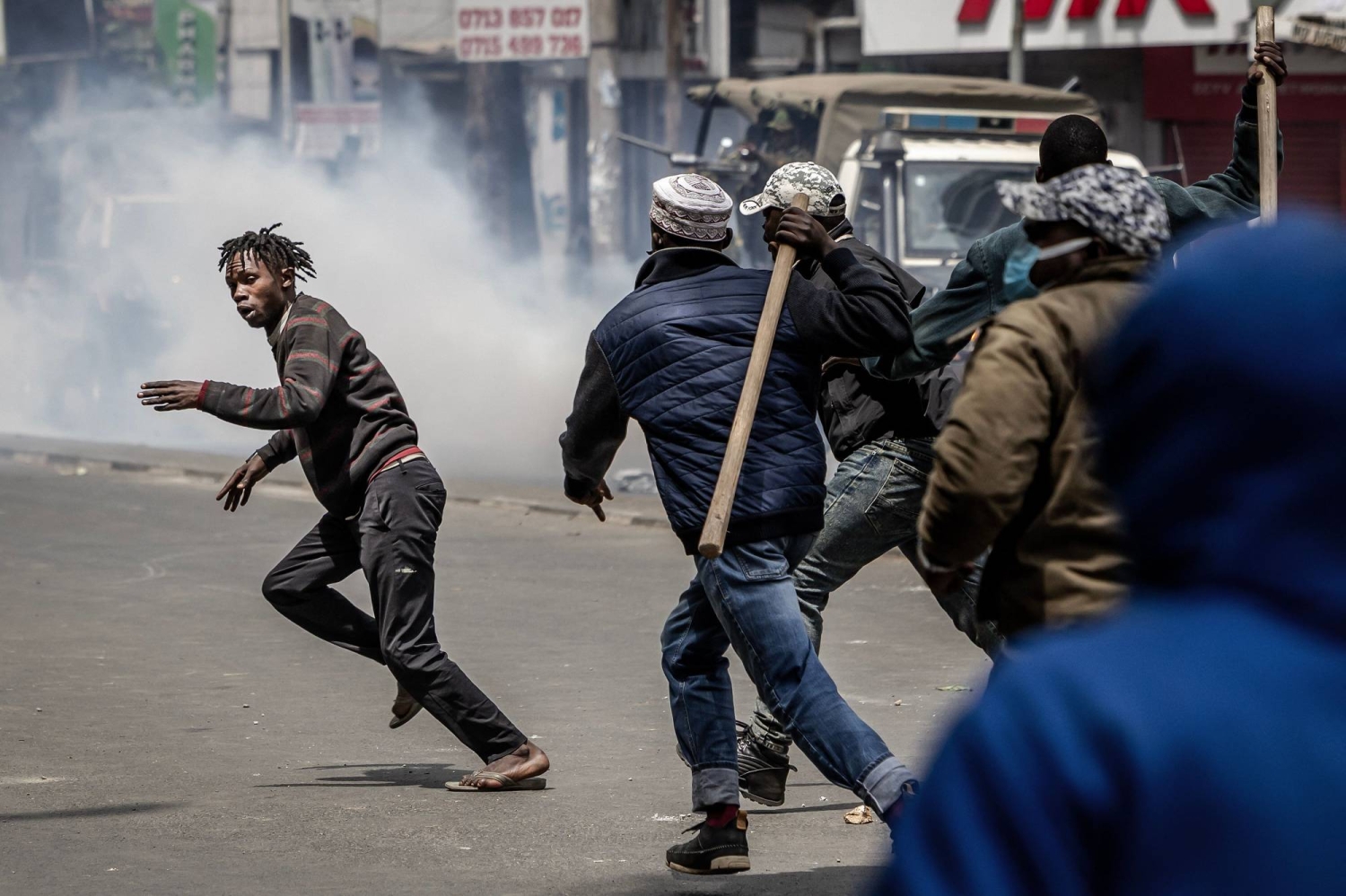
Kenya has long been celebrated as a beacon of stability and economic promise in East Africa, yet beneath its vibrant surface lies a persistent undercurrent of political violence, fueled by armed factions known colloquially as “goons.” These armed groups, often linked to political parties, have become a defining feature of Kenya’s electoral landscape, particularly during election periods. Their presence reflects deeper systemic issues—ranging from deep-seated ethnic divisions and economic inequality to the erosion of democratic norms. This article explores the origins, dynamics, and consequences of political violence in Kenya, with a focus on the role of these armed goons in perpetuating cycles of conflict and desperation.
The Rise of Political Goons: A Historical Context
The phenomenon of political goons in Kenya is not new. It traces its roots back to the country’s colonial past, where ethnic tensions were exacerbated by British policies that favored certain communities. However, the modern iteration of these armed factions gained prominence in the early 2000s, particularly during the 2007 post-election violence, which left over 1,200 people dead and displaced more than 600,000. This period exposed the fragility of Kenya’s democratic transition and the role of armed militias in exacerbating ethnic divisions.
Since then, goons have become a permanent fixture in Kenya’s political ecosystem. They operate as private security forces for political leaders, often recruited from marginalized communities in exchange for promises of economic and social benefits. Their primary role is to intimidate opponents, disrupt rival rallies, and enforce party loyalty through violence. While some goons are paid directly by politicians, others are motivated by personal grievances, land disputes, or a desire for protection in an environment where state security is perceived as unreliable.
The Structure and Operations of Political Goons
Goons in Kenya are highly organized, often structured along ethnic or regional lines to align with the political interests of their sponsors. Their operations are typically divided into several tiers:
- Recruitment and Training
- Goons are often recruited from rural areas, informal settlements, or unemployed youth, who are vulnerable to manipulation. Political parties and their allies use charismatic local leaders to mobilize these groups, offering incentives such as jobs, land, or cash.
- Training is informal but effective, focusing on basic combat skills, the use of improvised weapons (e.g., machetes, pangas, and firebombs), and psychological tactics to instill fear in opponents.
Some groups receive limited military training, either from former soldiers or through informal networks tied to security forces.
Logistics and Armament
- Weapons for goons are often smuggled across borders from neighboring countries like Sudan, Somalia, or Uganda, where arms trafficking is rampant. Local arms dealers play a crucial role in supplying these groups.
- Firearms range from AK-47s and rifles to machetes and homemade explosives, depending on the group’s resources. Some goons also use motorcycles fitted with heavy-duty exhausts to conceal weapons.
Funding for these operations comes from political party coffers, foreign donors, or even criminal enterprises that benefit from the chaos.
Tactics and Strategies
- Goons employ a multi-pronged approach to intimidate and control opposition:
- Rioting and Mob Violence: They orchestrate pre-planned attacks on political rallies, media outlets, or rival party strongholds. For example, during the 2017 election, goons were accused of burning down opposition party offices in Nairobi and other counties.
- Assassinations and Kidnappings: High-profile opponents, journalists, or activists are often targeted for elimination to silence dissent. The 2018 murder of journalist Mohammed Adow and the kidnapping of opposition leader Raila Odinga’s son are stark examples.
- Land Grabs and Displacement: Goons are accused of seizing land from perceived “enemies” of their political patrons, further deepening ethnic tensions. This was a major factor in the 2007-2008 violence, where entire villages were ethnically cleansed.
- Cyber Harassment and Disinformation: In addition to physical violence, goons and their political backers use social media to spread hate speech, fake news, and misinformation to polarize communities.
The Human Cost: Violence, Displacement, and Trauma
The impact of political goons on Kenyan society is devastating and far-reaching:
- Loss of Life and Injury
- Elections in Kenya have increasingly become battlegrounds, with violence peaking in the weeks leading up to and following polling day. The 2013 and 2017 elections saw hundreds of deaths and thousands of injuries, primarily due to goon-led attacks.
Civilians, particularly in rural and marginalized areas, bear the brunt of this violence. Women and children are often targeted for sexual violence and abduction, adding to the trauma of displacement.
Mass Displacement and Humanitarian Crises
- Entire communities are forced to flee their homes due to threats from goons. The 2007-2008 violence displaced over 600,000 people, many of whom remain internally displaced or live in informal settlements with limited access to basic services.
The UN and humanitarian agencies have repeatedly warned that goon-led violence disproportionately affects women and girls, who face rape, forced marriages, and economic exploitation in displacement camps.
Erosion of Democratic Norms
- The presence of goons undermines the legitimacy of elections, as voters are intimidated into supporting a particular candidate. This has led to contested results, court battles, and political stalemates, as seen in the 2017 election dispute between Uhuru Kenyatta and Raila Odinga.
Journalists and civil society activists are silenced, making it difficult to hold politicians accountable. The 2020 murder of journalist Peter Ben Sacco and the assassination of human rights lawyer Paul Kihara highlight the dangers of reporting on political violence.
Economic Consequences
- Violence disrupts trade, agriculture, and tourism, sectors that are critical to Kenya’s economy. For example, Mombasa and Lamu counties have seen declining tourism due to goon-related attacks.
- Businesses in high-risk areas suffer from looting, arson, and loss of revenue, further deepening poverty. Small-scale farmers, who rely on seasonal harvests, are particularly vulnerable to land grabs and crop destruction.
The Political Economy of Goons: Who Benefits?
The persistence of political goons is not merely a law-and-order issue—it is deeply embedded in Kenya’s political economy. Several factors sustain their existence:
- Ethnic Politics and Clientelism
- Kenya’s post-colonial political system has reinforced ethnic-based patronage networks, where leaders exchange jobs, land, and resources for political loyalty. Goons are often ethnic proxies for politicians seeking to control specific regions.
For instance, President Uhuru Kenyatta’s Jubilee Alliance has been accused of arming Kikuyu-dominated goons to suppress opposition in Central Kenya, while Raila Odinga’s Azimio coalition has faced allegations of emboldening Luhya and Luo militias in Western and Nyanza regions.
Weak State Institutions
- Kenya’s security forces, including the police and military, have been accused of complicity in goon-led violence. In some cases, officers have been seen protecting goons rather than arresting them.
The Judiciary and Electoral Commission (IEBC) have also faced criticism for failing to curb violence, with some judges and officials allegedly taking bribes to ignore abuses.
Foreign Interests and Arms Trafficking
- Kenya’s geopolitical location makes it a hub for arms smuggling from the Red Sea, Horn of Africa, and beyond. Some goons are believed to be funded by foreign actors, including regional powers with competing interests in East Africa.
The lack of strict gun control laws further enables the proliferation of weapons among goons. While Kenya has firearm regulations, enforcement is weak, and corruption in law enforcement allows illegal arms to circulate freely.
Economic Desperation and Youth Unemployment
- Kenya’s youth unemployment rate exceeds 30%, with many young Kenyans desperate for work. Political parties exploit this by offering jobs, cash, or land in exchange for violence.
- In informal settlements like Kibera and Mathare, where poverty and gang culture are rampant, goons often recruit from already criminalized youth, further entrenching cycles of violence.
Government Responses and International Efforts
Kenya’s government has made multiple attempts to curb goon violence, though with limited success:
- Legal Reforms and Crackdowns
- In 2010, Kenya passed the Public Order Management Act (POMA), which criminalizes riotous assemblies and public nuisance. However, enforcement remains selective, with goons often operating with impunity.
The government has arrested and prosecuted some goons, but corruption and political interference frequently lead to weak convictions or acquittals.
Disarmament and Demobilization Programs
- Efforts to disarm goons have been sporadic and ineffective. The 2008 National Disarmament Campaign saw some weapons surrendered, but stockpiles remain.
Some goons have been integrated into formal security forces, such as the National Youth Service (NYS), though this has not reduced violence—instead, some ex-goons have joined other militias.
International Pressure and Peacekeeping
- The African Union (AU) and the UN have monitored elections in Kenya to prevent violence, but their influence is limited due to lack of enforcement mechanisms.
Neighboring countries, particularly Ethiopia and Uganda, have condemned goon violence but have done little to stop arms trafficking across their borders.
Civil Society and Media Advocacy
- Organizations like Human Rights Watch, Amnesty International, and local groups such as the Kenya Human Rights Commission (KHRC) have documented abuses by goons and called for accountability**.
- Independent media outlets continue to expose goon activities, though self-censorship and threats remain significant challenges.
The Way Forward: Breaking the Cycle of Violence
Ending the scourge of political goons in Kenya will require multi-pronged, sustained efforts from government, civil society, and international partners:
- Strengthening Democratic Institutions
- Reforming the judiciary to ensure independent and impartial courts that can prosecute goon leaders and politicians who fund them.
Empowering the IEBC with transparency measures to prevent election-related violence by ensuring fair and credible polls.
Disarming and Reintegrating Goons
- Expanding disarmament programs with community-based approaches, such as truth and reconciliation processes to address grievances.
Providing alternative livelihoods for ex-goons through youth employment programs, vocational training, and land redistribution to reduce economic desperation.
Addressing Ethnic and Regional Imbalances
- Promoting inclusive governance by decentralizing power and ensuring fair representation in local governments.
Encouraging inter-ethnic dialogue through community-based peace initiatives to reduce mistrust.
Combating Arms Trafficking
- Strengthening border security and enhancing cooperation with neighboring countries to stop the flow of illegal weapons.
Implementing stricter gun control laws and penalizing corruption in law enforcement agencies that facilitate arms smuggling.
Protecting Journalists and Civil Society
- Ensuring media freedom by investigating attacks on journalists and holding perpetrators accountable.
Supporting human rights defenders who document abuses and advocate for reform.
International Support and Accountability
- Pressuring Kenya’s political elite through diplomatic channels to end impunity for goon violence.
- Encouraging foreign investors to conditionally support Kenya based on progress in democratic reforms.
Conclusion: A Nation at a Crossroads
Kenya’s struggle with political goons is more than just a pre-election phenomenon—it is a symptom of deeper systemic failures. The erosion of democratic norms, ethnic divisions, economic inequality, and weak institutions create an environment where armed militias thrive. Without bold reforms, strong leadership, and international support, Kenya risks becoming a failed state, where violence becomes the norm rather than the exception.
The path forward requires collective action—from government officials to ordinary citizens—to reject the culture of impunity and build a more inclusive, peaceful, and prosperous future. Only then can Kenya fulfill its potential as a stable and democratic leader in East Africa.
