


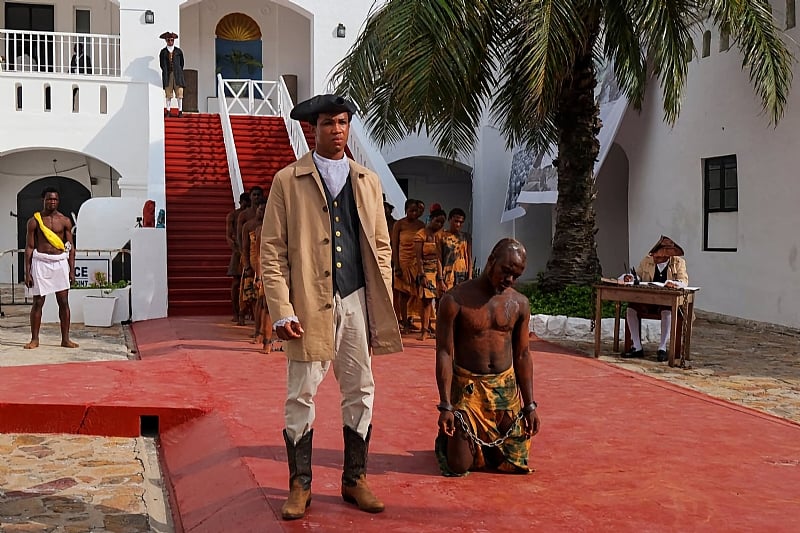

The transatlantic slave trade remains one of history’s most profound injustices, yet for descendants of enslaved Africans, a formal apology—no matter how heartfelt—often feels like an empty gesture. As global reparations movements gain momentum, survivors and their descendants argue that words alone cannot undo centuries of suffering, displacement, and systemic exploitation. The recent Next Steps Conference on Slavery and Reparatory Justice (June 17–19, 2026) in Accra, which convened world leaders, legal scholars, and diaspora representatives, underscored this tension. While the event produced a 19-point framework calling for apologies, reparations, debt relief, and cultural restitution, many descendants remain skeptical, insisting that true justice requires concrete reparations, not just symbolic acknowledgment.
The Limits of Symbolic Apologies
For many, a formal apology is seen as a political maneuver—a way for nations and institutions to absolve guilt without real accountability. Yaw Owusu Akyeaw, founder of African Diaspora 126+, a group advocating for diaspora residency and citizenship in Ghana, told Al Jazeera that apologies often serve as a legal or diplomatic shortcut, allowing perpetors to avoid meaningful compensation. He compared it to a criminal apologizing to reduce punishment, arguing that such gestures do little to restore lost lives, stolen wealth, or broken communities.
Marvin Walker, a Guyanese entrepreneur now based in Ghana, echoed this sentiment. He described apologies as “shallow gestures” that fail to address the intergenerational trauma still felt by descendants. “Words cannot replace the land, the knowledge, or the lives taken,” he said. “If reparations are to mean anything, they must be tied to tangible change—economic, social, and cultural.”
The Unseen Legacy of Slavery
The transatlantic slave trade didn’t just remove millions of Africans from their homelands—it erased entire generations, shattered families, and left deep scars on African societies. David Adofo, a member of the African Chamber of Content Producers, highlighted how colonial-era propaganda, like the Bantu Educational Kinema Experiment (1935–1937), still influences African self-perception today. This British film initiative, which depicted Africans through a paternalistic lens, reinforced colonial narratives that persist in media and education. “To truly heal, we need Western-funded, African-led initiatives to rewrite these stories,” Adofo argued, emphasizing the need for investment in indigenous storytelling and education.
For many descendants left behind in Ghana, the trauma is still unspoken. A descendant of enslaved laborers, who requested anonymity due to the sensitivity of the topic, shared how he cannot trace his ancestral roots, leaving him with no way to reconcile with history. “An apology won’t bring back my ancestors or restore what was stolen,” he said. “It won’t even tell me where my family came from.”
The Stolen History of Ghana’s Slave Routes
Historical records reveal how captives from present-day Ghana—including regions like Salaga, Pikworo, and the Central Coast—were marched to infamous forts like Cape Coast Castle and Elmina Castle. Many took their “last bath” at Assin Manso, a sacred site where enslaved Africans were prepared for shipment across the Atlantic. Today, these places remain silent witnesses to history, with many younger Ghanaians avoiding discussions about slavery due to deep-seated taboos.
Yet, the psychological and economic scars of slavery persist. Descendants report lost trust in institutions, disrupted family lineages, and a broken connection to ancestral lands. “We were not just stolen from—we were stolen from our future,” said one participant at the Accra conference. “An apology doesn’t undo that.”
Beyond Symbolism: What True Reparations Look Like
The reparations debate is deeply divided. Some argue that formal acknowledgment is a necessary first step, while others insist it’s meaningless without action. Ghanaian President John Dramani Mahama, a key advocate for the UN’s 2026 resolution recognizing the slave trade as a crime against humanity, framed the Accra conference as a push toward concrete solutions. He announced the creation of three international bodies focused on:
– Reparatory justice mechanisms
– Cultural restitution (including the return of stolen artifacts and human remains)
– Legal frameworks for accountability
Yet, for many descendants, justice isn’t measured in resolutions or committees. “We don’t want empty promises,” said a Ghanaian activist. “We want land restitution, economic empowerment, and the return of cultural heritage—things that were stolen from us.”
The Moral Debt Remains Unpaid
The demand for reparations isn’t just about compensation for past wrongs—it’s about restoring dignity and agency to a people whose ancestors were brutally exploited. As Mustapha Bature Sallama, a conflict management expert, noted, “Slavery didn’t just end—it was replaced by systems that still exploit the descendants of those who suffered.”
For descendants in Ghana, true reparations must include:
✔ Land and resource restitution (returning ancestral territories)
✔ Economic empowerment programs (job creation, education, and business support)
✔ Cultural restitution (return of artifacts, human remains, and historical records)
✔ Debt cancellation (acknowledging colonial-era economic exploitation)
✔ Mental health and trauma healing initiatives (addressing intergenerational pain)
Until these demands are met, many believe, apologies will remain just that—words on paper, unable to heal the wounds of history.
This article was written for Ghanamma.com, providing an in-depth analysis of the reparations debate in Ghana.
