



Nigeria’s $40 Billion Dangote Refinery IPO: How a Security Guard, a Tycoon, and Global Investors Are Betting on Africa’s Energy Future
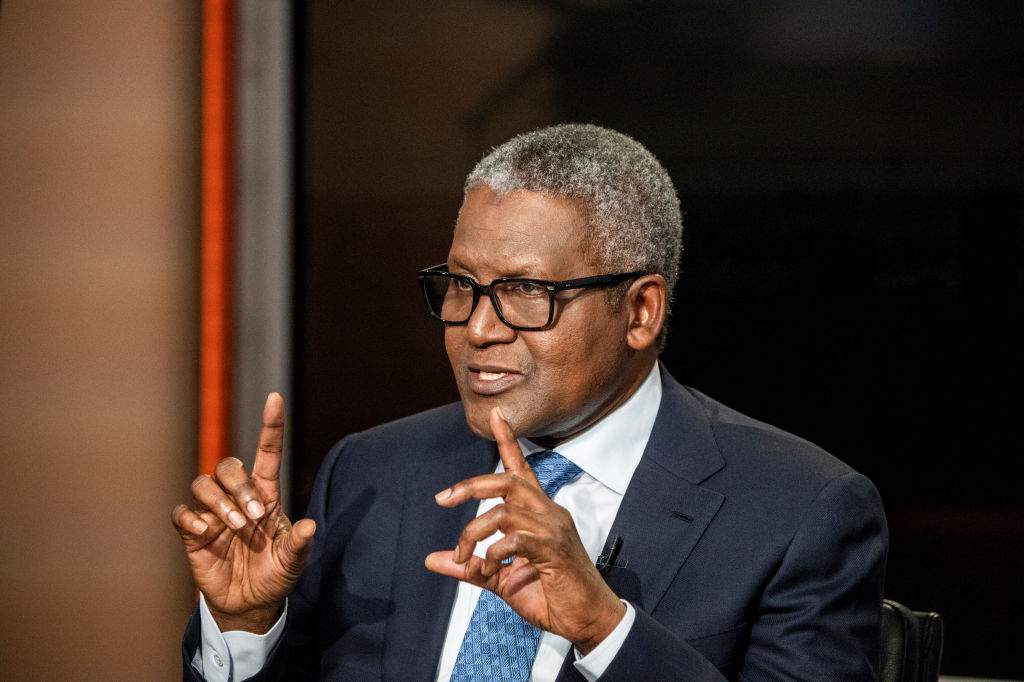
A Rare Opportunity: The Dangote Refinery IPO and Nigeria’s Capital Market Renaissance
Nigerian billionaire Aliko Dangote’s $40 billion Initial Public Offering (IPO) for his Dangote Petroleum Refinery and Petrochemicals has ignited an unprecedented wave of investor enthusiasm across the continent. From Femi Otedola, a Nigerian tycoon preparing to invest $100 million, to Wuroyda Danke, a 28-year-old security guard borrowing $150 from his grandmother, and Galahard Woghiren, a Nigerian expat in Texas planning a $3,000 stake—millions are lining up to claim a piece of Africa’s most ambitious industrial project.
This historic IPO, set to become Africa’s largest-ever, is not just a financial milestone but a test of Nigeria’s capital market depth and a potential catalyst for long-overdue economic diversification. With the refinery already operating at 650,000 barrels per day (expanded by 8% since completion), Dangote’s IPO could redefine Nigeria’s energy landscape while offering retail and institutional investors a rare opportunity to participate in a globally competitive industrial asset.
Why the Dangote Refinery IPO Is a Game-Changer for Nigeria
The $20 billion refinery, now fully operational since January 2024, is more than just a processing plant—it is a strategic asset with far-reaching implications for Nigeria’s economy and Africa’s energy security.
- Energy Independence and Regional Dominance
- Nigeria, once a net importer of refined petroleum products, now stands on the brink of becoming a net exporter. The refinery’s jet fuel exports to Europe—already secured through mid-2024—demonstrate its immediate commercial viability.
-
With Middle East geopolitical tensions disrupting global fuel supplies, Dangote’s refinery has become a lifeline, ensuring Africa’s largest economy avoids the $100+ per barrel price spikes seen in 2022.
-
A $40 Billion Valuation: What Does It Mean?
- Dangote’s IPO aims to exceed $40 billion, positioning the refinery as one of the most valuable industrial assets in Africa.
- Proceeds will fund further expansion, including additional refining capacity, petrochemical plants, and fertiliser production, reinforcing Nigeria’s role as a regional energy hub.
-
The $2 billion private placement demand—double the initial target—underscores the overwhelming investor confidence in the project.
-
Dollar-Denominated Dividends: A Rare Incentive for Nigerian Investors
- Unlike most Nigerian stocks, which pay dividends in naira, Dangote has pledged to distribute dollar-denominated returns, a major draw for investors weary of currency devaluations and inflation.
- This move aligns with global best practices and could attract foreign institutional investors, further deepening Nigeria’s capital markets.
The Retail Investor Rush: From Security Guards to Expatriates
The IPO has sparked a retail investing frenzy, with brokerages reporting record account openings and credit lines extended to first-time investors.
- Femi Otedola’s $100 Million Stake
- The Nigerian shipping magnate and former power sector investor has already secured a private placement with Dangote, signaling elite confidence in the refinery’s prospects.
-
Otedola’s move reflects a broader trend: high-net-worth individuals (HNWIs) are diversifying into industrial assets, seeing Dangote as a safer bet than speculative tech stocks.
-
Wuroyda Danke: The Security Guard’s Gambit
- Living in a northern Nigerian town, Danke, a 28-year-old security guard, plans to invest $150—$100 borrowed from his grandmother and $50 from savings.
- “Dangote is a billionaire; he knows what he’s doing,” Danke says. “If he can make money, so can I.”
-
His story is emblematic of Nigeria’s emerging retail investor class, many of whom are first-time participants in the stock market.
-
Felix Kama (32) and the Dollar Dividend Appeal
- A Standard Chartered employee, Kama sees the IPO as his first Nigerian equity investment, driven by the prospect of dollar returns.
-
“After years of naira depreciation, this is a rare chance to lock in foreign currency earnings,” he explains.
-
Galahard Woghiren (Texas) and Imoh Okoronkwo (Glasgow): The Diaspora’s Stake
- Nigerian expatriates, including Woghiren in Texas and Okoronkwo, a university research assistant in Scotland, are actively seeking brokers to participate.
- “The scale of this project is unmatched in Africa,” Okoronkwo says. “It’s not just about profits; it’s about supporting a homegrown industrial giant.”
Challenges and Risks: Can Nigeria Avoid Past Mistakes?
While the IPO’s potential is undeniable, historical market volatility and structural weaknesses in Nigeria’s capital markets pose risks.
- The 2008 Banking Crisis: A Warning
- During Nigeria’s 2005 banking recapitalisation, retail investors borrowed heavily to buy bank stocks, only to face massive losses when the market crashed in 2008.
-
The central bank had to bail out eight banks, leading to a decade-long retreat from equities by cautious investors.
-
Market Shallowness: Why Nigeria Lags Behind
- Nigeria’s market capitalisation stands at just 22% of GDP, compared to 131% in India and 245% in South Africa.
-
Economists warn of “shallowness and limited breadth”, meaning liquidity risks could emerge if too many investors rush in.
-
Regulatory Crackdown: SEC’s Pause on IPO Promotion
- The Nigerian Securities and Exchange Commission (SEC) has temporarily halted broker promotions for the IPO, citing unverified demand.
-
This move aims to prevent speculative bubbles but may delay retail participation.
-
Profitability Uncertainty: Can the Refinery Sustain High Margins?
- Dangote Refinery posted a 23% EBITDA margin in 2023, placing it among the world’s most profitable refiners.
- However, refining margins are cyclical, influenced by:
- Crude oil price fluctuations
- Global fuel demand shifts
- Regulatory changes (e.g., carbon taxes, import restrictions)
- Ambrose Omorodion, COO of Investdata Consulting, advises caution: “A year of operation is not enough. Five years is the minimum to assess durability.”
The Brokerage Boom: How Nigeria’s Stock Market Is Evolving
The IPO has revitalised Nigeria’s capital markets, with brokerages reporting unprecedented activity:
- Meristem Securities saw new account openings jump fivefold in 2024.
- Cowry Securities CEO Nkoli Edoka reports individual investors seeking credit lines to avoid missing out.
- Onyeka Alika, Head of Retail Trading at Meristem, notes: “This is a new generation of investors—many are driven solely by Dangote.”
With 6 million registered investors in Nigeria (as of 2023), the IPO could accelerate financial inclusion, but education and risk management remain critical.
The Long-Term Impact: Wealth Creation and Economic Growth
If successful, the Dangote Refinery IPO could have multiplier effects:
- Deepening Nigeria’s Capital Markets
- The $40 billion valuation will increase market liquidity, attracting more foreign direct investment (FDI).
-
Pension funds, previously restricted from IPOs, are now allowed to participate, injecting $17 billion into the market.
-
Boosting Nigeria’s GDP and Industrial Base
- The refinery’s export earnings will reduce the trade deficit, while petrochemical and fertiliser production will diversify the economy.
-
Aigboje Aig-Imoukhuede, Chairman of Access Holdings, calls it a “potential game-changer” that could attract international investors to Nigeria.
-
Wealth Effect: Millions Gaining Disposable Income
- Finance Minister Taiwo Oyedele envisions a positive feedback loop:
- “If a million people invest and see their wealth grow, they’ll have more spending power, stimulating the economy.”
The Bottom Line: A Once-in-a-Generation Opportunity
The Dangote Refinery IPO is more than a financial event—it is a test of Nigeria’s economic resilience and a symbol of Africa’s industrial ambitions.
- For retail investors, it offers a chance to own a piece of Nigeria’s future.
- For policymakers, it presents an opportunity to strengthen capital markets and reduce reliance on naira-denominated assets.
- For Africa, it signals that local industrial giants can compete globally.
Yet, as Ambrose Omorodion warns: “Patience is key. Five years of performance will tell the real story.”
One thing is certain: Nigeria’s IPO frenzy has only just begun.
Final Note: The success of this IPO will not only determine the fate of Dangote’s refinery but also shape Nigeria’s economic trajectory for decades to come. Whether it becomes a blueprint for Africa’s industrialisation or a cautionary tale of overhyped expectations remains to be seen. One thing is clear—the stakes could not be higher.
 WhatsApp
Comments (0)
No comments yet. Be the first to share your opinion!