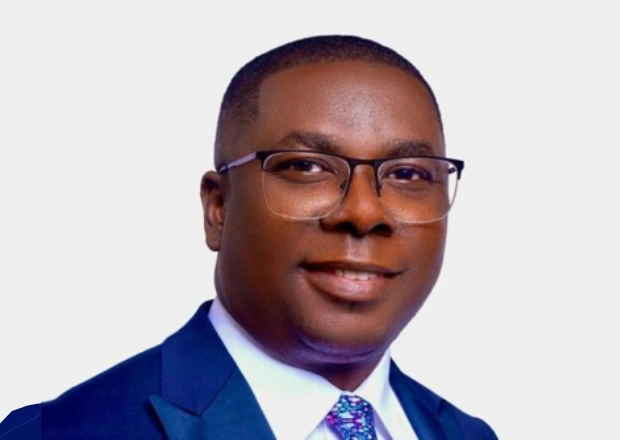
The Unseen Courage of Two NDC Leaders: A Bold Critique of Ghana’s Justice System and the Silence of the Ruling Party

For three weeks, Ghana’s political and legal landscape has remained largely silent on two pivotal incidents that exposed systemic flaws within the country’s justice delivery system. These incidents, occurring on the same day—Thursday, May 28, 2026—involved two high-ranking members of the ruling National Democratic Congress (NDC) publicly challenging practices they deemed unjust. Yet, despite the gravity of their remarks, the party has remained conspicuously silent, leaving observers to question whether this silence signals agreement, indifference, or a calculated avoidance of controversy.
The events unfolded in two distinct yet thematically connected settings: Parliament House in Accra and a funeral in Tamale. Both incidents marked a rare moment where NDC stalwarts—Interior Minister Mohammed Mubarak Muntaka and Education Minister Haruna Iddrisu—boldly dissented from the party’s official stance, exposing what they described as abuses of power by state institutions, particularly in the handling of remand procedures and bail conditions. Their critiques were not merely observations but scathing indictments of a system they argued was being weaponized against innocent individuals, often for political motives.
The Interior Minister’s Call for Reform: A Critique of Remand Abuse
In a forceful address to Parliament, Minister Muntaka laid bare the systematic misuse of remand by law enforcement and judicial authorities. He highlighted how excessive bail conditions were being imposed arbitrarily, making it nearly impossible for accused persons to secure their release. His remarks were particularly damning when he accused police officers of remanding individuals with minimal provocation, effectively turning detention into a pre-trial punishment.
“Currently, it is massively abused. With the least provocation, they say they’ve remanded somebody. You go to the police, and they remand people anyhow. Sometimes they give terrible bail conditions that people are not able to meet.”
Muntaka’s solution? A constitutional amendment to restrict remand practices and reduce prison congestion, a proposal he had been collaborating on with Justice Minister Dominic Ayine. He emphasized that if these reforms were implemented alongside the Community Service Bill, they could decongest prisons and police cells, thereby alleviating a crisis that has long plagued Ghana’s judicial system.
His speech was not just a critique of procedure but a direct challenge to the authority of his own ministry, suggesting that even high-ranking officials within the NDC were aware of—and dismayed by—the arbitrary enforcement of justice.
The Education Minister’s Unflinching Verdict: Bail as Political Punishment
If Muntaka’s remarks were a systemic critique, then Haruna Iddrisu’s intervention was a personal and legal indictment. Speaking at the funeral of his friend, Dr. Mahama Sayibu, in Tamale, the former Minority Leader—who is also a qualified lawyer—delivered a blistering attack on the abuse of bail conditions by the Police, Courts, and the Economic and Organised Crime Office (EOCO).
His words were uncompromising:
“In Ghana today, we have seen excesses; excesses from the Police, excesses from the Courts, excesses from EOCO denying persons bail and using bail as punishment for accused persons. That is not law!”
Iddrisu’s argument was rooted in constitutional principles: innocent until proven guilty. He argued that denying bail or imposing punitive conditions was not just unfair but illegal, as it violated the presumption of innocence—a cornerstone of Ghana’s legal framework. His critique extended beyond individual cases, warning that such practices eroded public trust in the justice system and undermined the rule of law.
He called for professionalism, fairness, and human rights compliance from all state institutions, urging authorities to treat all citizens equally, regardless of their political or social standing. His remarks were not just a legal analysis but a moral condemnation of a system that appeared to be selectively enforced.
The Silence of the NDC: Agreement, Complicity, or Avoidance?
Three weeks after these unprecedented public dissents, the NDC has remained silent. This absence of response has sparked two critical questions:
-
Does the party’s silence imply agreement with the ministers’ criticisms?
If the NDC leadership shares these concerns, why has there been no official rebuttal or corrective action? Such silence could be interpreted as endorsement, suggesting that the party may privately acknowledge the issues but is publicly avoiding controversy to maintain party unity. -
Is this silence a sign of complicity, or is the party strategically avoiding a divisive debate?
Some observers argue that the NDC may be playing to the gallery, prioritizing party loyalty over legal reform. However, the other side of the coin is that such selective enforcement of justice—where bail and remand are politically motivated—damages the government’s credibility and alienates the public.
The lack of a response is particularly striking when considering the high-profile nature of the dissenters. Both Muntaka and Iddrisu are longtime NDC figures, and their public break with party orthodoxy is rare in Ghanaian politics. Typically, such rank-breaking is met with either condemnation or internal reprimand, but not ignored silence.
The Power of the President: Why Has Mahama Not Intervened?
One of the most intriguing aspects of this situation is the absence of presidential intervention. President John Mahama, as the head of state, holds significant influence over governance, including the justice system. Given that remand and bail policies are executive and judicial matters, one would expect the President to either address the concerns publicly or take corrective action privately.
Last year, Mahama demonstrated his willingness to intervene when he vetoed attempts by Parliament to abolish the Office of the Special Prosecutor, a move that protected an independent investigative body. If he can assert authority in one area, why not in justice reform?
Some speculate that:
– The President may privately acknowledge the issues but is avoiding public conflict within the party.
– The ministers may have discussed their concerns with the President, but no action has been taken yet.
– The NDC leadership may prefer to handle the matter internally, fearing that public debate could destabilize the party.
However, if the President remains silent, it raises questions about accountability within the executive branch. After all, if high-ranking ministers are speaking out, but the President does not respond, what does that say about governance transparency?
A Matter of Principle, Not Politics
What makes this situation exceptionally notable is that both Muntaka and Iddrisu risked their political careers by publicly challenging their own party. In a system where loyalty to the party often outweighs legal or moral principles, their courageous stance deserves recognition.
Their criticisms were not partisan attacks but legally grounded concerns about a system that is failing Ghanaians. Whether their remarks were timely or not is a secondary debate—what matters is that they stood up for justice, even at the risk of party backlash.
The Broader Implications for Ghana’s Justice System
The abuse of remand and bail is not a new phenomenon in Ghana. For years, suspects have been detained indefinitely, bail conditions have been punitive, and political motivations have influenced legal proceedings. The public dissents of Muntaka and Iddrisu—while rare—highlight a growing frustration among even party insiders with the current state of justice delivery.
If the NDC continues to ignore these concerns, it risks:
– Further eroding public trust in the justice system.
– Encouraging more arbitrary enforcement by law enforcement.
– Strengthening the perception that the government is selectively targeting individuals based on political affiliations.
On the other hand, if the President takes meaningful action, it could signal a commitment to reform, proving that accountability is possible even within a politically charged environment.
Conclusion: A Moment of Truth for the NDC
Three weeks after their unprecedented public criticisms, the NDC’s silence remains deafening. Whether this silence is a sign of agreement, fear, or strategic avoidance, one thing is clear: Mohammed Muntaka and Haruna Iddrisu have demonstrated extraordinary courage in speaking out against systemic injustices.
Their remarks were not just political statements but legal and moral interventions that challenged the very foundations of Ghana’s justice system. If history is kind to them, it will be because they prioritized principle over party loyalty—a rare and admirable act in a country where political survival often trumps justice.
The question now is: Will the NDC respond? If not, the silence itself may become the most damning indictment of all. If yes, it could mark the beginning of long-overdue reforms—a salute to those who dared to speak truth to power.
 WhatsApp