


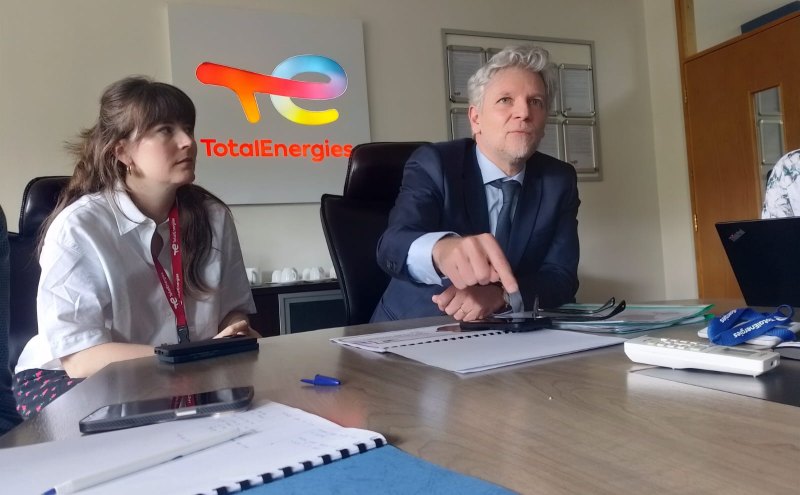
TotalEnergies has committed to inject Sh1 billion into the
Kenyan market annually as part of its clean cooking strategy, with a
keen focus on LPG.
This will mainly go into cooking gas cylinders with the company
seeking to inject at least 180,000 into the market annually, even
as it notes rampant illegal filling of cylinders as a major sector.
The drive is part of the $400 million (Sh51.8 billion) earmarked
for investment in Liquefied Petroleum Gas (LPG) in Africa and India, targeting
at least 100 million people by 2030.
“The priority is not only to supply LPG but also address barriers
to adoption which includes affordability, accessibility, logistics, awareness
and partnership,” the firm said.
TotalEnergies Marketing Kenya managing director, Thibault
Flichy, yesterday said Kenya remains key in driving the
Oil Marketing Company’s clean energy strategy and expansion in Africa, where it
also targets Rwanda, Tanzania, Mozambique and Namibia.
“We are convinced that Kenya has put in place
policies and continues to implement structures that drive LPG penetration hence
it remains a key part of our journey. We believe we can change lives,” Flichy
said.
The company targets to have reached more than
four million households, on cooking gas cylinders, by end of this year.
“However, the company still faces the challenge
of rampant illegal filling of cylinders,” he said, which has seen it introduce
a tagging and tracking project to follow its cylinders.
Illegal filling is a major safety and economic menace that
the government is aggressively dismantling through multi-agency crackdowns, led
by the Energy and Petroleum Regulatory Authority (EPRA).
Rogue operators bypass safety laws by cross-filling branded
cylinders without the owner’s consent, skipping critical maintenance, and
operating hidden depots in residential neighborhoods.
Meanwhile, Total has committed to support Kenya’s
government plans of increasing LPG penetration from the current 24 per cent to
70 per cent by the year 2028.
Latest data by the Petroleum Institute of East Africa (PIEA)
shows that LPG consumption rose by 14.7 per cent to 475,943 metric tonnes in
2025, building on an equally strong 15.1 per cent growth recorded in 2024, when
demand reached 414,861 tonnes.
“Key drivers included government zero-rating of LPG and the
National LPG Growth Strategy as well as household shift from kerosene or
biomass,” PIEA notes.
Kerosene consumption has declined sharply in recent years
for instance a 41 per cent drop in 2024 period.
The government is banking on the planned introduction of an
Open Tender System for imports and common user facilities to drive down costs
and make the commodity cheaper.
This, as it also continues to implement the National Clean
Cooking Transition Programme 2024-2028 that includes transitioning 11,000
schools and other public institutions from biomass to LPG.
TotalEnergies Marketing Kenya PLC commercial specialties
and LPG manager Henry Kwame said the company is aligning its strategy with
government efforts aimed at transitioning millions of households from
traditional cooking fuels such as firewood and charcoal to cleaner
alternatives.
Kwame, the transition to clean cooking is critical in
addressing health, environmental and social challenges associated with
traditional cooking methods.
“LPG is more available, affordable and scalable. We are
able to reduce household emissions by up to 98 per cent when families switch to
LPG, making it one of the most effective clean cooking solutions available
today,” he said.
The firm’s clean cooking strategy is also supported by a
partnership with M-Gas under a pay-as-you-cook model, that allows customers to
access LPG without the high upfront costs associated with purchasing cylinders,
burners and accessories.
Under the arrangement, households can make small
payments based on their cooking needs, lowering the barrier to entry for low-income
consumers.
