


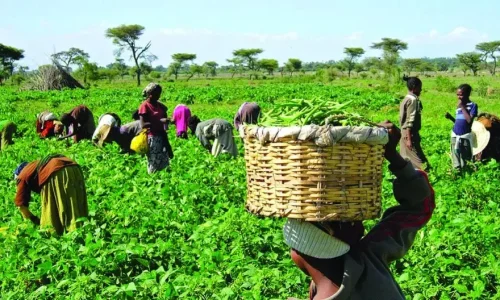
Ghana’s two major agricultural programmes, Planting for Food and Jobs (PFJ) and the Feed Ghana programme launched in April 2025, have demonstrably lifted crop production, yet smallholder farmers across key value chains continue to face income pressure, exposing a structural gap between output and economic benefit that policy interventions have so far failed to close.
The disconnect is rooted not in what farmers grow but in what happens after harvest. Ghana loses approximately $1.9 billion annually from post-harvest losses, which diminishes the benefits of even successful harvests, with limited access to markets hampering smallholder farmers’ ability to sell their produce at competitive prices.
That figure represents a systemic failure across storage, transport and market access, and it persists regardless of how well input subsidies or extension services perform upstream. When produce cannot reach buyers at viable prices, higher yields translate into lower farmgate returns, particularly during peak harvest periods when supply surges and middlemen effectively set prices.
Reports indicate that the National Buffer Stock Company (NAFCO), established to stabilise prices, has provided inconsistent support, with public institutions including Senior High Schools being supplied with imported parboiled rice from Burkina Faso, undercutting a guaranteed market for local producers.
That policy contradiction runs through the entire agricultural system. The Ministry of Food and Agriculture (MoFA) has invested in warehousing, with 65 of 80 planned warehouses completed and operational by late 2022, adding 80,000 metric tonnes to national grain storage capacity. But cold chain deficits for perishables and weak logistics networks continue to constrain value retention, particularly for fruits and vegetables where losses are most acute.
Farmers in northern Ghana have described the current environment as “a direct path into debt,” with maize and soya prices failing to cover production costs after inputs and labour.
The problem extends to export markets. Ghana’s Planting for Export and Rural Development initiative positions agricultural exports as a revenue driver, but without robust quality infrastructure, processors and standards compliance capacity, most smallholders remain locked into lower-value domestic channels. The African Continental Free Trade Area (AfCFTA) offers a theoretical 1.3-billion-person market, but border and trade policy decisions at home have at times severed regional demand that previously stabilised farmgate prices.
Research confirms that while PFJ participation positively affects maize productivity, limited fertilizer access and restricted market access remain the major challenges that work against the programme’s income objectives.
Policy analysts now argue that the next phase of Ghana’s agricultural transformation cannot be built primarily on input subsidies and yield targets. Strengthening farmer cooperatives to improve bargaining power, expanding structured trading through the Ghana Commodities Exchange, building aggregation centres in production zones and improving real-time market information systems represent the downstream work that production policy alone cannot accomplish.
The fundamental challenge for Feed Ghana and any successor programme is ensuring that what works at the farm level translates into income rather than simply volume. Until value chains are structurally reformed, productivity gains will continue to benefit intermediaries more than the farmers who produce the food.
