
Wednesday 04th March, 2026 06:45 AM|

Kenya’s ambitious plan to deepen tea exports to Iran is facing mounting uncertainty as escalating conflict in the Middle East threatens to derail a proposed Ksh5.6 billion trade arrangement and disrupt a region that has become increasingly central to Nairobi’s export strategy.
Trade Cabinet Secretary Lee Kinyanjui has warned that the ongoing hostilities, punctuated by joint US and Israeli strikes on Iran in February 2026, are already straining logistics networks and financial channels that underpin Kenya’s commercial ties with the Gulf and wider Middle East. For a country whose export basket relies heavily on agricultural commodities, the risks are both immediate and structural.
Over the past five years, Kenya’s trade with the Middle East has expanded sharply. Imports from the region rose from Ksh196.48 billion in 2020 to a peak of Ksh616.33 billion in 2023, before easing to Ksh554.45 billion in 2024. Exports followed a similar upward trajectory, nearly tripling from Ksh59.46 billion in 2020 to Ksh164.65 billion in 2024.

The data show the region has evolved into both a key source of fuel and manufactured goods and a crucial destination for Kenyan tea, coffee and horticultural exports.
Against this backdrop, negotiations over a Ksh5.6 billion tea supply deal with Iran were seen as part of a broader strategy to diversify markets beyond traditional buyers.
According to data from the United Nations COMTRADE database, Kenya’s exports to Iran in 2024 totalled approximately Ksh7.9 billion, with coffee, tea and spices accounting for about Ksh7 billion of that figure.
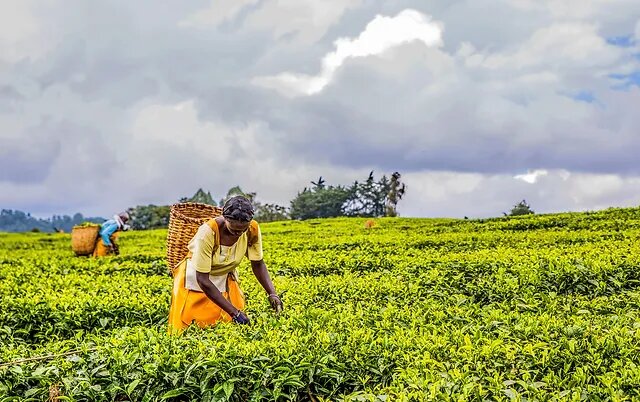
The Tea Board of Kenya has previously indicated that Iran ranked among the top ten importers of Kenyan tea, purchasing roughly 13 million kilograms valued at Ksh4.26 billion in 2024.
While Pakistan remains Kenya’s largest tea market, absorbing 34.7 per cent of total export volume, markets such as Egypt, the United Kingdom, the United Arab Emirates and Iran form a critical secondary tier.
These destinations help stabilise prices by absorbing surplus output, particularly in years of strong production.
Logistics under strain
The conflict’s immediate impact is logistical. Airspace restrictions across Iran, Iraq and parts of the Gulf have forced cargo rerouting and flight suspensions.
Several airlines and freight operators have scaled back services, citing safety risks and higher insurance premiums. Even where routes remain technically open, uncertainty has lengthened delivery times and inflated costs.
Shipping lanes are also under pressure. The Strait of Hormuz, a vital maritime corridor that handles a significant share of global oil flows and regional cargo traffic, has seen heightened security concerns. Any sustained disruption could raise fuel prices and freight charges, further eroding exporters’ margins.
For tea exporters, timing is critical. Delays in shipment can affect quality perception and contract performance, especially in markets where buyers operate on tight replenishment cycles.
Higher freight and insurance costs may either squeeze Kenyan producers or make their product less competitive relative to suppliers from Asia.

Financial and geopolitical headwinds
Beyond physical logistics, financial transactions pose another layer of risk. Sanctions regimes and heightened scrutiny of cross-border payments involving Iran complicate settlement mechanisms.
Kenyan exporters may face delays in receiving payments or be forced to use more costly intermediary banking channels.
The broader geopolitical environment also introduces demand-side uncertainty. Economic strain within Iran, combined with currency volatility, could reduce import capacity.
For Kenya, which has been seeking to broaden its market footprint amid fluctuating global commodity prices, a contraction in Iranian demand would remove a valuable growth outlet.
Kinyanjui has signalled that the government is closely monitoring developments and assessing contingency plans. However, diversification takes time.
Replacing a top-ten tea buyer is not straightforward, particularly in a global market characterised by intense competition and price sensitivity.
