
1
It did not come as a rude shock when Bayo Ojulari, the Group Chief Executive Officer of the Nigerian National Petroleum Company Limited, admitted that government-owned refineries were running on political oil!
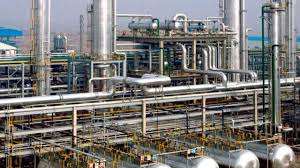
His words: “The first thing that became clear was that we were running at a monumental loss… We were pumping cargo (of crude petroleum) into the (Port Harcourt) refinery (for instance), but utilization was around 50 to 55 per cent (of installed capacity).
“These cargoes had value, and we were losing that value. We were spending a lot of money on operations and contractors (for many years). But when you look at the net outcome, we were just leaking value, and there was no clarity on how to turn those losses into positive returns.”
When former President Muhammadu Buhari approved yet another whopping sum (of $1.5 billion) for what was described as a Turn Around Maintenance in 2021, we were alarmed at another wilful decision to throw money down the drains.
No one, Ojulari especially, would have been surprised that after the unnecessary expenditure on a fruitless exercise, the government of President Bola Tinubu failed on several occasions to deliver on its promises to run the Port Harcourt refineries.
The refineries are no more than money guzzlers that their operators or government bureaucrats did not seem to be interested in running successfully. It looked as if NNPCL and its predecessor companies were designed to deliberately run at a loss ab initio.
In 1975, the military government of General Yakubu Gowon introduced the Petroleum Equalisation Fund, but it was the successor governments of Generals Murtala Mohammed and Olusegun Obasanjo that begun the implementation before handing it over to subsequent governments.
The scheme, called bridging, was to ensure that petroleum products were sold for the same price throughout Nigeria regardless of where it was refined locally or whatever port of entry that it got into Nigeria, if it was imported.
The Federal Government paid the transporters who freighted the products from the point of loading to the point of delivery anywhere in the country, even though there was a refinery in Kaduna State and pipelines existed to deliver petroleum products within the country.
It is an understatement to say that the scheme was thoroughly abused and that many “emergency moneybags” emerged from the financial drainpipe that it later became. It has been storied that erstwhile transporters were paid for freight that they did not carry, and they became so stupendously rich to the extent that they were able to establish airlines.
But the bigger calamity of Nigeria’s midstream and downstream sector came with the massive importation of petroleum products that was accompanied with the subsidy, which operated in the mode of an opaque black hole that was never quite audited for many years.
When late Frank Kokori led the Nigerian Union of Petroleum and Natural Gas Workers into a prolonged strike in a bid to compel the actualisation of the June 12, 1993 presidential election presumed to have been won by Bashorun MKO Abiola, the military government of General Sani Abacha decided to import petroleum products to augment whatever quantity could be eked out of the local refineries.
This scheme eventually became another obvious leaking pipe that was exploited to the hilt. But the baffling part is that those in government knew about it, but they kept indulging both the importers that were inflating importation figures and the staff who were earning fabulous salaries and allowances while pretending to be working in the NNPCL refineries.
We regret to admit that the big losses sustained via the unconscionable running of the refineries at a loss, almost without repentance, was not only in the stealing of money that could have been used for development purposes, but also in the dangerous depreciation of the naira. Roughly 40 per cent of Nigeria’s foreign exchange was spent on the importation of petroleum products.
This dangerous trend would have continued if the Dangote Refinery had not fortuitously taken over the grave responsibility that NNPCL and its moribund refineries left underserved. We must borrow the words of Ojulari to say “Thank God for Dangote Refinery… that gave (Nigeria) breathing space, because we now have a refinery that is working.”
We agree, in principle, with his plan to partner with experienced investors: those with the financial, managerial and technical operational competence, who are prepared to buy shares in the NNPCL refineries and run them profitably.
In addition to this new trajectory, we hope that those redundant workers that kept the refineries moribund should be allowed to go. Nigerians have subsidized their expensive lifestyles long enough. The time to run the refineries more competently has come.

