
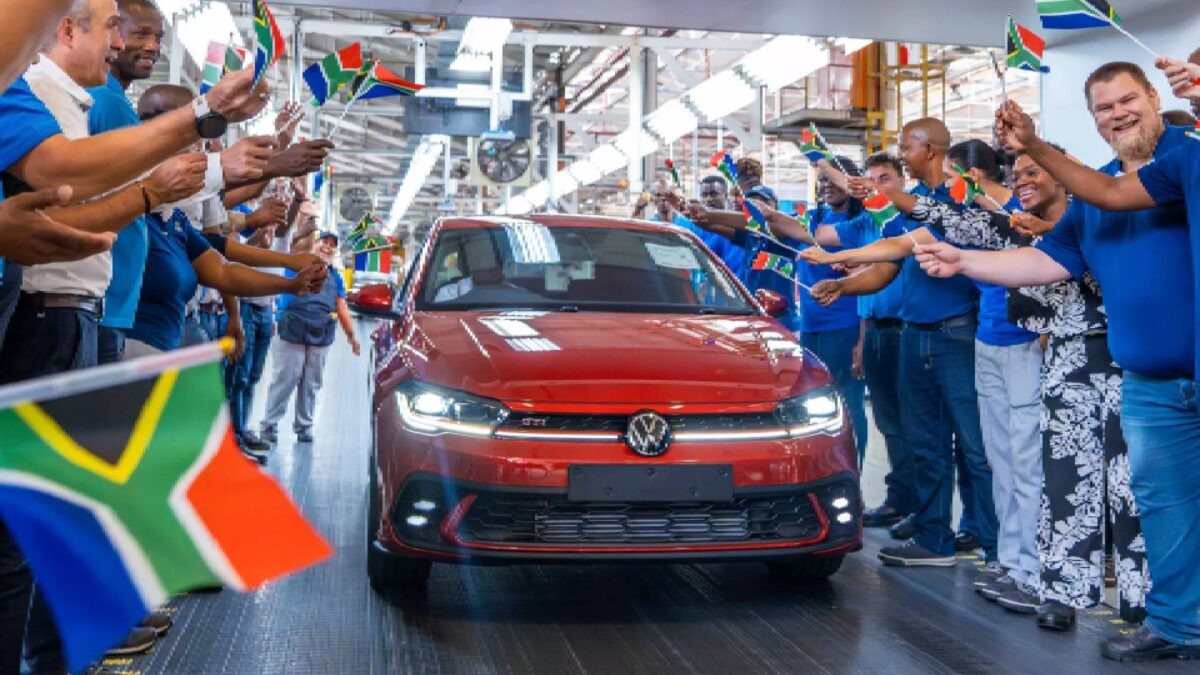
Volkswagen Group South Africa managing director Martina Biene opposes increased import duties on cars as a way to protect the local vehicle manufacturing industry, Sunday Times reports.
The Department of Trade, Industry, and Competition is reviewing possible measures to curb the flood of car imports, especially from China and India, which it argues undermines local manufacturing.
The International Trade Association Commission recently told Parliament that one option on the table was increasing the current general vehicle import duty from 25% to 50%.
Speaking at Volkswagen’s annual Indaba event, Biene explained that the slow pace of government reform in the automotive sector was the bigger issue choking local car factories.
Among Biene’s primary concerns is a lack of urgency in finalising new energy vehicle (NEV) policies and reducing ad valorem taxes for local carmakers to make their models more competitive with imports.
Biene explained that these delays had created uncertainty among automakers’ key decision-makers about the potential of further investment into their South African factories.
2026 will be especially crucial for Volkswagen South Africa as it awaits its head office’s decision on an investment into local production of its planned Tarok half-tonne bakkie.
Volkswagen’s Kariega Plant in the Eastern Cape currently produces the Polo, Polo Vivo, and Polo GTI. Its Vivo model has long been South Africa’s top-selling passenger car.
However, most of the plant’s output is exported, and two of its key markets — Europe and the United Kingdom — are increasingly moving away from conventional petrol and diesel cars.
Aside from a 150% tax refund for investments in NEV assembly, which will only be effective in March 2026, the government has done nothing to stimulate electric and hybrid manufacturing in South Africa.
Biene and other senior automotive executives, including those from BMW and Toyota, have called for adjustments in the automotive production and development programme.
One major issue is the tax benefits granted to semi-knockdown (SKD) operations, which benefit from near duty-free component imports.
That allows these SKD companies to bring cars to market at highly competitive prices without contributing as meaningfully to job creation and economic growth as full-scale manufacturers.
“For every job created by an SKD facility, a completely knocked-down plant, such as VW’s in Kariega, created eight,” Biene said.
Higher import duties would hurt entry-level market — as well as local carmakers

BMW South Africa CEO and National Association of Automobile Manufacturers of South Africa president Peter van Binsbergen has also cautioned against higher import tariffs.
Van Binsbergen said that a 50% maximum tariff would make all imported cars radically more expensive, with entry-level models especially hard hit.
Vehicles built in India and China make up 23 of the top 25 most affordable passenger cars in the country. The most affordable South African model — the Vivo — ranks 25th.
Van Binsbergen said that increasing the duty to 50% would also be detrimental for the many models that carmakers with local factories still needed to import.
“I would have to use double the incentives to import my cars and probably run out of offsetting mechanisms for the import duties on those cars as well,” Van Binsbergen said.
“That is the unintended consequence; it would affect all of us, and it would hurt the consumer as well, as it would make cars more expensive for everybody. That’s not what we want. That’s a blunt instrument.”
The Motor Industry Staff Association (Misa) has also urged the government to consider the broader vehicle industry when it comes to adjusting import tariffs.
Misa operations CEO Martlé Keyter explained the sale of Chinese- and India-made models had stimulated the local market and created massive competitiveness, creating more jobs in the process.
“The result, new vehicle sales records for three consecutive months at the end of 2025, not only surpassing pre-pandemic levels for the first time but also reaching highs not seen in a decade,” she said.
Don’t miss the latest news


