
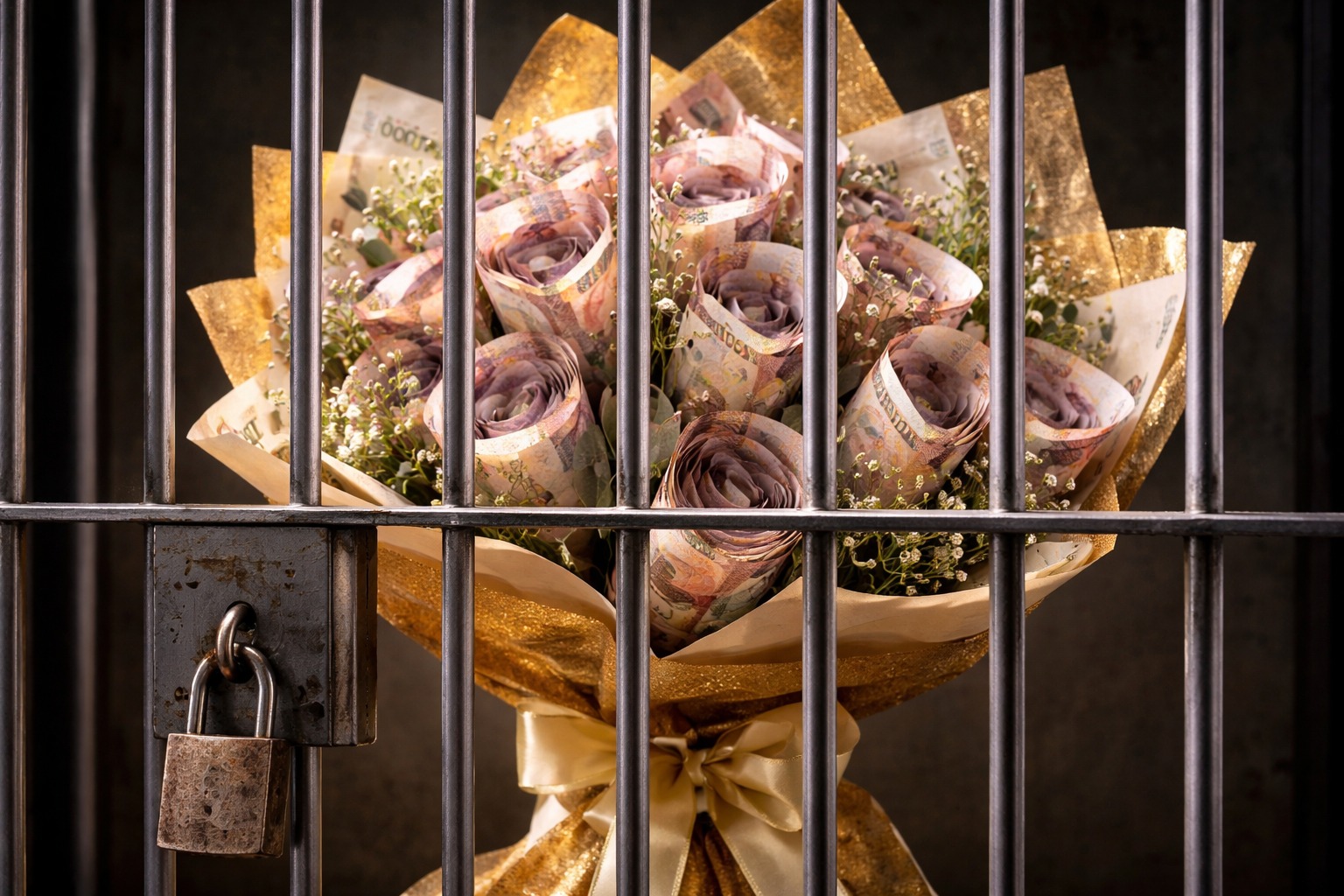
As February 14, 2026, approaches, the air in East Africa is thick with the scent of roses and the rustle of banknotes.
For years, the “money bouquet”, a lavish arrangement where currency is folded, glued, and pinned into floral shapes, has been the ultimate social media status symbol for birthdays, weddings, and Valentine’s Day.
However, this year, the romantic gesture has hit a cold wall of legal reality. In a coordinated effort to protect national currencies, the central banks of Kenya, Uganda, and Tanzania have launched a massive crackdown, turning what was once a viral gifting trend into a potential criminal offense.
In Kenya, the Central Bank (CBK) recently issued a stern directive citing Section 367 of the Penal Code.
The bank clarified that the process of creating these bouquets constitutes “mutilation” and “defacement” of the Kenya Shilling.
According to the CBK, the use of adhesives, staples, and the tight folding required to mimic flower petals ruins the physical integrity of the notes.
This damage makes the currency unfit for circulation and causes significant mechanical errors in ATMs and high speed counting machines.
Consequently, the bank has warned that anyone caught making, selling, or gifting these arrangements face heavy fines or even imprisonment, effectively banning the practice just in time for the Valentine’s rush.
Across the border, the Bank of Uganda (BoU) has taken an even more aggressive stance, labeling the trend a “war on the Shilling.”
Ugandan authorities have long been vocal about this issue, but 2026 has seen a surge in enforcement. The BoU emphasizes that banknotes are public property and that the destruction of security features through pinning and gluing is an act of economic sabotage.
In Kampala, the bank has gone as far as warning “gifting stylists” and florists that they are being monitored.
The bank’s message is clear: the Uganda Shilling is a medium of exchange, not a craft material, and those who treat it as the latter will be prosecuted for rendering legal tender unfit for use.
In Tanzania, the Bank of Tanzania (BoT) has reinforced its “Clean Money Policy” to align with its East African neighbors.
The BoT has recently begun to emphasize the high cost of printing and replacing currency.
They argue that the shortened lifespan of banknotes due to decorative handling imposes an unnecessary burden on taxpayers.
By monitoring social media platforms where these bouquets are often advertised in Dar es Salaam and Arusha, the Tanzanian authorities are sending a signal that the “money flower” industry is under the radar.
Like its neighbors, Tanzania views any act that deliberately devalues the physical state of the currency as a violation of the national central bank act.
This regional crackdown has left many small business owners and lovers in a difficult position.
Florists, who often charge a premium for the labor of “money styling,” are now forced to cancel lucrative Valentine’s Day orders to avoid legal trouble.
However, the authorities are not discouraging generosity; they are simply demanding a change in method.
The move has sparked a shift toward “bank-safe” alternatives, such as presenting crisp, flat notes in decorative glass boxes or using non-damaging clips to display cash.
As the region moves toward stricter financial discipline, the message for this season of love is unmistakable: be generous, but keep the Shilling intact.
Written by by Neville Wekesa, student – Mount Kenya University

