
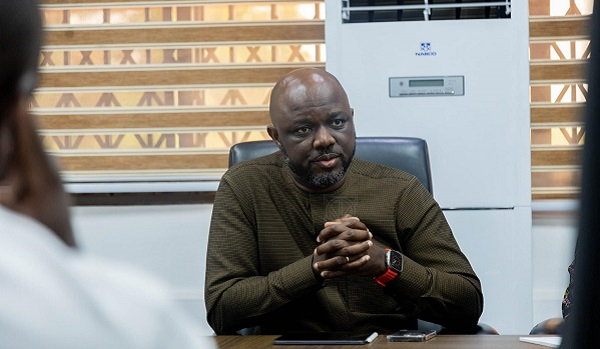
 Ben Boakye is the Executive Director of ACEP
The Executive Director of the Africa Centre for Energy Policy (ACEP), Ben Boakye, has said that the government’s decision to suspend the controversial Agyapa Royalties deal has been vindicated by rising global gold prices.
He argued that the deal would have disadvantaged the country, with private investors benefiting at the expense of the state.
Responding to a post on X by private legal practitioner Kow Essuman on January 24, 2026, regarding the Agyapa deal, Boakye noted that if Agyapa had been implemented, private shareholders holding 49 percent would have emerged as the main beneficiaries of today’s elevated gold prices, while Ghana’s long-term fiscal interests would have been undermined.
How OSP actions stopped Agyapa and TOR deals – Sammy Darko details
He stated that Ghana currently produces about three million ounces of gold annually from large-scale mining.
At a minimum royalty rate of three percent, Boakye explained, this yields approximately 90,000 ounces in royalties, translating into more than US$450 million each year at current prices.
“Under Agyapa, Ghana would not have received 51 percent of total royalties. It would have received 51 percent of whatever dividends the Agyapa board chose to declare. The remaining 49 percent of royalty flows would have permanently accrued to private shareholders,” he stated.
He criticised the inclusion of non-producing concessions and future mines in the deal, noting that investors would have secured nearly half of royalties from projects that had not yet been developed, in exchange for a one-off payment of about US$500 million.
Boakye argued that even under optimistic valuations, Ghana’s returns would have been limited by operating costs, reinvestment decisions, and management expenses, making the model inferior to the direct receipt of full royalty revenues.
“Start with basic arithmetic. Using 2025 large-scale output of about three million ounces, at a minimum royalty rate of three percent, Ghana earns roughly 90,000 ounces. At current prices, this translates into more than US$450 million in annual royalty revenue,” he added.
He dismissed claims that opposition to Agyapa was ideological, stating that halting the deal protected Ghana’s fiscal future.
He also stressed the fundamental difference between sovereign royalties and private royalty streaming companies, warning that listing state royalties would have compromised Ghana’s control over its mineral resources.
“The key correction occurred when Ato Forson restored royalties fully into the budget, where they now support socioeconomic investment. People now ask where the money for projects like the Accra–Kumasi expressway will come from. It was already there, sitting with MIIF, gambled away and undermining the very rationale for charging royalties in the first place.”
Check the full post below:
Respectfully, this is exactly why Agyapa was stopped. Had Agyapa gone ahead, the main beneficiaries of today’s global gold prices would have been the 49% private shareholders. Your numbers simply do not add up:
1. Start with basic arithmetic. Using 2025 large scale output of… https://t.co/8STSiaybeR
— Benjamin Boakye (@benboakye) January 25, 2026
SP/MA
DVLA set to go global with licensing services in USA, Germany, other countries
DVLA boss hits back at VEMAG over cancellation of alleged contract

