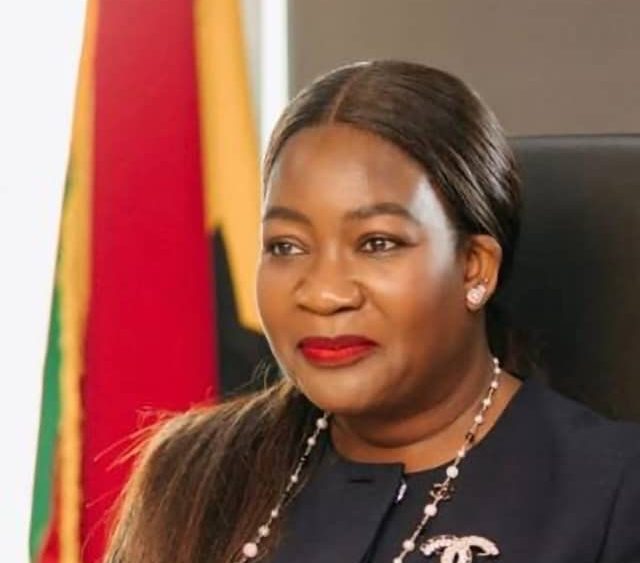
The arrest and subsequent remand of Ms Sarah Bireete, a prominent human rights defender and governance expert, has sent shockwaves through Uganda’s civil society. For years, Ms Bireete has been a vocal critic of government excesses, a tireless advocate for transparency, and a defender of civic freedoms.
Her sudden detention has not only rattled her colleagues but has also cast a chilling shadow over the country’s fragile democratic space. In the days following her arrest, whispers spread quickly among activists, journalists, and governance experts.
The message was clear: if someone as prominent and respected as Bireete could be taken, then no one was safe. Human rights advocates began speaking in hushed tones, avoiding public gatherings, and limiting their online presence.
“We are scared,” one activist admitted, requesting anonymity. “We know more arrests are coming. They want to scare us into silence.” The fear is not unfounded. Sources close to civil society organisations revealed that security agencies have compiled lists of outspoken critics, particularly those active on social media platforms. These individuals are accused of “undermining national stability” or “spreading falsehoods,” charges that critics say are vague and politically motivated.
Yusuf Sserukuma, an academic, said the entire idea behind the arrest of Bireete is to intimidate members of civil society into silence by targeting the most prominent among them.
“Uganda is not a democracy, though it claims to be one. Her arrest does not speak to the strength of Uganda’s democracy, but rather re-emphasises the point that such claims are nothing more than pretension,” Sserukuma said.
Winnie Kiiza, a former Leader of the Opposition in Parliament (LoP), said in a social media post that she is “deeply and seriously concerned about the direction in which our country is heading.”
She is not alone. Ndebesa Mwambutsya, a lecturer at Makerere University’s College of Humanities and Social Sciences, said the arrest of Bireete and other critical voices is damning.
“You cannot pretend to be running a democracy and then refuse the existence of political dissent. You either embrace what is called Democratic Centralism, like in China, where dissent is criminalised and citizens are coerced into silence, or you open up for dissenting voices,” Mwambutsya explained.
“As for human rights and human dignity, the government is undermining both. Imagine beating people the way the army does, undermining human dignity in the process. The consequences are clear: citizens suffer, but the State also loses legitimacy both among its people and within the international community. When legitimacy erodes, and trust between citizens and State institutions collapses, the State becomes weak,” he added.
Who is Bireete?
Bireete has been outspoken on the human rights violations inflicted on Ugandans and the misuse of public funds. She is a founding partner and executive director for the Center for Constitutional Governance (CCG), a Ugandan constitutional watchdog (non-governmental organisation) based in Kampala.
Previously, she was the deputy executive director of the same NGO from 2011 to 2019. Before 2011, she was working as a public defender at the Public Defenders Association of Uganda.
A lawyer by profession, the human rights activist is a member of several boards of organisations, as well as governing committees of schools and students bodies.
Bireete also chairs national coalitions, including the national coalition on civic space in Uganda, and she is the coordinator of the international human rights defenders group known as Vuka Allies for Uganda.
She has enriched knowledge and understanding of governance issues, especially in areas of constitutionalism, human rights, civic space, electoral democracy, land rights, research and advocacy, public interest litigation, and conflict transformation.
Robert Kyagulanyi, alias Bobi Wine, the National Unity Platform (NUP) presidential candidate, said every electoral cycle, the regime targets civil society leaders, journalists, and human rights activists with arrests, abductions, torture, and even deportation.
He said Bireete’s arrest “follows her consistent and loud condemnation of the regime’s excesses and brutal conduct.” The chairperson of the Uganda Human Rights Commission (UHRC), Mariam Wangadya, said: “I don’t believe Bireete’s arrest arose from her human rights activism. She has been very critical of government work for a long time, but she is not the only one.
Others are equally vocal in criticising the government on issues of human rights and democracy, and they have not been arrested. I wonder why Bireete has been singled out.”
Wangadya noted that she had convened a meeting with her senior staff to discuss the matter. “I don’t believe Bireete’s words, whether verbal or written, were threats to this government.”
Fear of the unknown
Sources told Monitor that one prominent human rights advocate fled the country after anticipating his arrest. His departure underscores the gravity of the situation. For many, exile has become the only option to avoid detention or harassment.
The advocate, who had been instrumental in documenting abuses and mobilising grassroots campaigns, left quietly, without public announcement. His colleagues said he feared being picked up in the middle of the night, a tactic often used to instil terror.
The experts said the arrest of Bireete has created a ripple effect across civil society. This self-censorship is precisely what authorities seek, according to governance experts. By instilling fear, they weaken the collective voice of civil society, making it harder to mobilise against corruption, abuse, or authoritarianism.
“Fear is the most effective weapon,” noted Charity Aketch, a political expert. “It doesn’t require mass arrests. Just one or two high-profile cases, and the rest will fall silent.”
Wangadya further called for calm among human rights defenders in the country.
“Nobody should fear that they will be picked up or arrested simply because of their activism or for speaking out on issues. Otherwise, if that were the case, half of the country would be arrested. Bireete’s arrest should not be treated as a crisis. Human rights defenders should not run away; this is our country.”
A new phase
The arrest of Bireete marks a turning point in Uganda’s civic struggle. It signals a new phase of repression, one that targets the intellectual and moral leaders of civil society. For governance experts, the challenge is immense. They must find ways to continue their work under surveillance, harassment, and threat of arrest.
For human rights advocates, the task is even harder: to defend freedoms while their own are under attack. The road ahead is uncertain, but one thing is clear: the struggle for civic space in Uganda is far from over. As long as voices remain, however faint, the fight continues.
The governance experts said the arrest of Bireete is seen as part of a broader strategy to intimidate those who use digital platforms to challenge authority.
Aketch said Uganda has a long history of clamping down on dissent.
“From the harassment of Opposition politicians to the beating of journalists, the State has often resorted to heavy-handed tactics. Yet the current wave of arrests feels different.” The focus this time is firmly on human rights defenders and governance experts, individuals who provide the intellectual backbone of civic resistance.
Their removal from the public sphere weakens the capacity of citizens to demand accountability. Observers warn that this trend could erode democratic institutions further, leaving citizens with fewer avenues to express grievances or seek justice. Aketch said the arrest has not gone unnoticed beyond Uganda’s borders. International human rights organisations have expressed concern, calling for her immediate release and urging the government to respect civic freedoms.
Bireete’s case
Bireete was on Friday charged and remanded to prison over allegations of unlawfully obtaining or disclosing national voters’ data belonging to the Electoral Commission (EC), contrary to Section 35 (1) and (2) of the Data Protection and Privacy Act. Prosecution alleges that Bireete, together with others still at large, between January 2025 and December 2025, at various places within Uganda, including Kampala, Mukono, and Wakiso districts, unlawfully obtained or disclosed National Voters’ Information.
The data is said to be controlled or processed by the Electoral Commission and was allegedly accessed or shared without its prior consent. Chief State Attorney Joan Keko told the Buganda Road Court that the matter was before it for plea.
After Bireete pleaded not guilty, Keko informed the court that investigations were still ongoing, adding: “We seek an adjournment and shall inform the court of the status of investigations on the next date.” The defence team, led by Jude Byamukama, did not object to the adjournment but immediately applied for bail.
In his bail application, Byamukama cited Article 23(6)(a) of the Constitution, which grants an accused person the right to apply for bail, and the presumption of innocence. He asked the court to take judicial notice of the Bail Guidelines for Courts of Judicature. Byamukama told the court that Bireete is a 49-year-old mother of two biological children and an adoptive mother of four. He said she is the director of a civil society organisation actively engaged in governance work and suffers from hypertension, for which a medical report had been presented.
He also introduced several sureties, including Joseph Beyanga, a managing director of Power FM and Bireete’s brother; former LoP Kiiza; activist Joseph Ochieno; and retired ambassador to the United States Edith Sempala. In her ruling, Grade One Magistrate Winnie Nankya Jatiko held that the prosecution was entitled to respond to the bail application.
The magistrate granted the prosecution time to respond and adjourned the bail application to January 21, 2026.
She ordered that Bireete be remanded until then. As a remand prisoner, Bireete will not be able to participate in voting while in custody.