


The High Commissioner of South Africa to India, Professor Anil Sooklal, had a touching homecoming after visiting his ancestral home in Saidpur Tehsil, Ghazipur district.
The emotional visit marks the return of the descendants of Ram Lakhan Yadav, who had migrated from India to South Africa in 1860. November 15 is set to mark the 165th anniversary of Indentured Indians leaving the provinces of Uttar Pradesh, Bihar, Tamil Nadu and Andhra Pradesh for South Africa.
Sooklal had the opportunity to reconnect with his roots as part of the Ghazipur Literature Festival (GLF) 2025, organised by Bharat Dialogues, in a landmark cultural and intellectual celebration.
The festival, which ran until Sunday, took place in the very heartland from where thousands of indentured labourers, or Girmitiyas, began their journey to faraway lands, including South Africa, Fiji, Mauritius, Suriname, and Trinidad.
This year’s festival theme, “Going Back to Roots – The Girmitiya Identity and the Future of Indigenous Culture”, shines a special spotlight on the Girmitiya experience. This includes the stories of resilience, identity, and heritage that bind India with its global diaspora communities.
Sooklal, whose ancestors migrated from Ghazipur to Durban in 1893, and HRH Zolani Mkiva, Poet Laureate of South Africa, were among the festival’s dignitaries.

During the visit, Professor Sooklal and his wife offered prayers at the historic Deeh Babatemple, paying tribute to their forefathers and interacting warmly with the local villagers.
Reflecting on the visit, Professor Sooklal expressed deep emotion at standing on the soil of his ancestors, highlighting the enduring power of heritage and the connection to one’s origins.
“The 3-day programme was really packed with very eminent speakers, and artists, and I think for me what was also special was that the Lieutenant Governor of Jammu and Kashmir, Manoj Sinha, is from Ghazipur, even though he is now stationed in Jammu and Kashmir.
“And he heard that I’m coming to Ghazipur for the first time and that my roots are there. So he also joined as a special guest and very warmly welcomed me. The welcome was all-embracing. They were so happy that they had one of their people coming back to the city, and they referred to me as the son of Ghazipur,” Sooklal said.
Sooklal was gifted awards, and also treated to a visit to the village where his great-grandparents left from.
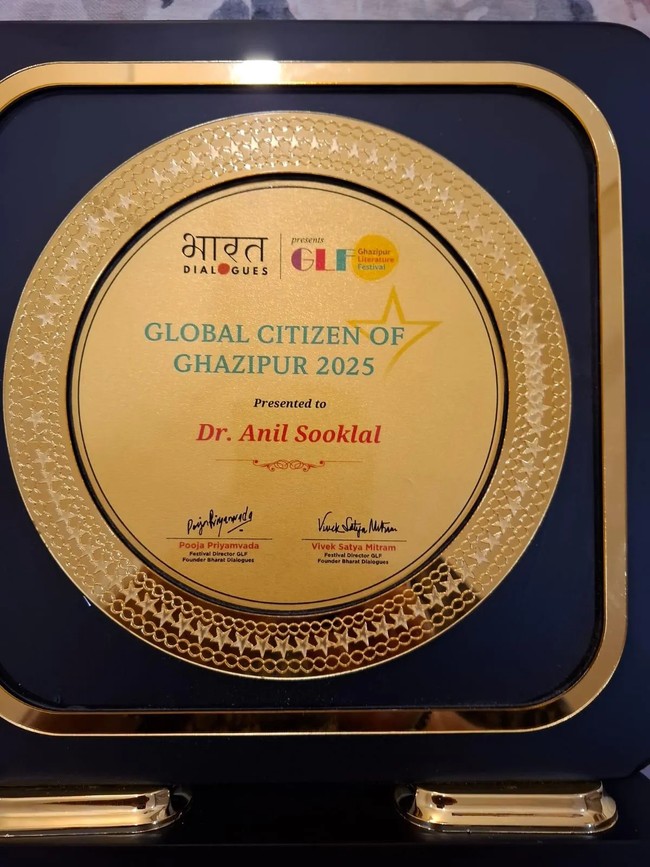
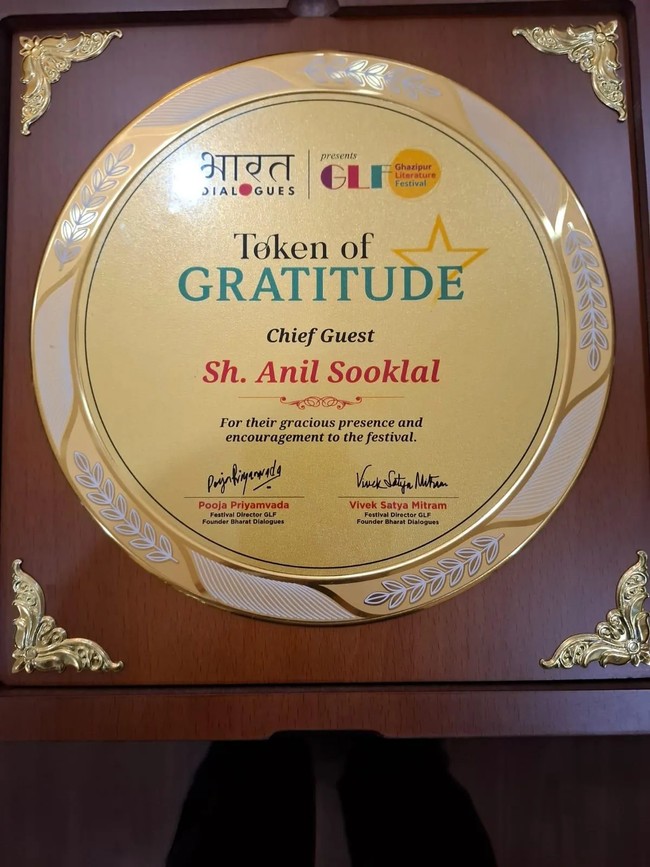
“They managed to trace it, and they took my wife and me there. It was a very emotional experience to go to the very place from where my ancestors left for South Africa for the first time.
“Apart from the richness of the festival, which was so well attended with eminent speakers, writers, it had a very nice South African flavour to it, with the participation of Mkiva.
“It was quite a well-attended international presence as well, I think, not only reflecting on the historical movement of labour, but also the cultural roots.
“You had artists from the Netherlands and from Suriname that were part of the indentured system, and have kept alive the culture and tradition and participated in a music festival.
“It was looking at the multi-dimensional aspect of the movement of labour from India,” Sooklal said.
He explained that many of the people found it easy to identify with them with the passing of traditions, such as basketweaving, and in terms of the cuisine.
“You can see the roots here because it’s still very vibrant and alive. And it gives you a better perspective and understanding that even though they went as labourers, they took with them the religious scriptures, practices, and foods.
“It’s so similar that after about 150+ years, you have these practices thousands of kilometres away that still bind us. They were absolutely fascinated that we still have all of these traditions that we practise and that we have preserved. For them, it was a revelation as well.
“But it was very emotional when we went to the village, and we met some very elderly people, and they were explaining why we had come there, and who I was. Some of them started weeping and said that we’re so happy to see our child coming back to the roots,” he said.
“Once the village heard that we were there, they all started more and more people started coming. They were fascinated that someone from so far away originated from their village, and they felt so proud and like they almost took ownership of us.”
Professor Sooklal expressed his gratitude to the Festival Directors of GLF, Pooja Priyamvada and Vivek Satya Mitram, and also to the Chief Patron GLF, Upendrra Rai, whose leadership guided such a successful international event in Ghazipur.
Upendrra Rai said, “If Ghazipur is ready and supportive, Bharat Express and Bharat Dialogues are committed to continuing to do this annual event and scaling this globally.”

