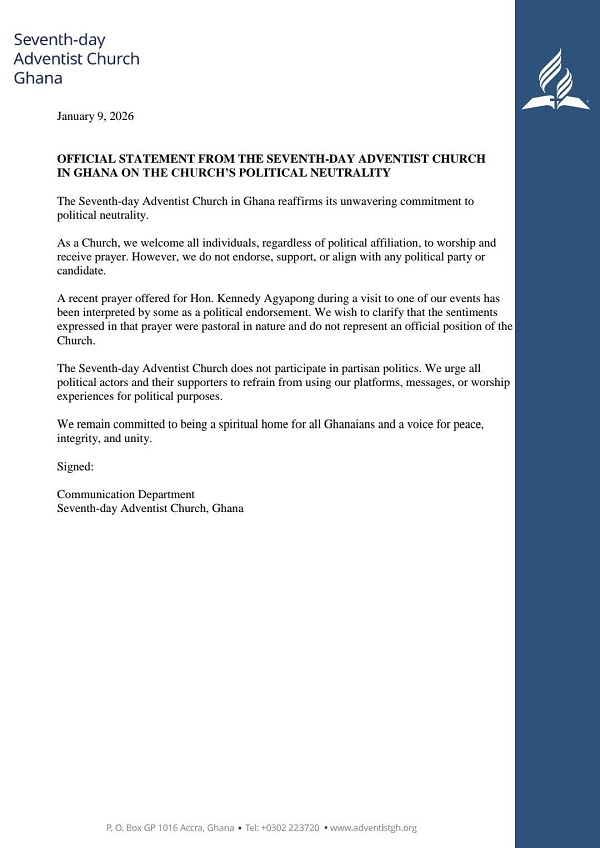
The Seventh-day Adventist Church in Ghana (SDA) has strongly rejected claims that it has endorsed the candidature of Kennedy Agyapong to become the New Patriotic Party (NPP) flagbearer.
Some members of the Kennedy Agyapong campaign recently shared a video of a prayer session involving the politician and a pastor of the SDA Church, claiming it showed the Church’s backing for his candidacy.
However, in a swift rebuttal, the SDA Church dismissed the claims as false, clarifying that the video reflected the personal sentiments of the pastor involved and not the official position of the Church.
“A recent prayer offered for Hon. Kennedy Agyapong during a visit to one of our events has been interpreted by some as a political endorsement. We wish to clarify that the sentiments expressed in that prayer were pastoral in nature and do not represent an official position of the Church,” the SDA said in a statement.
“As a Church, we welcome all individuals, regardless of political affiliation, to worship and receive prayer. However, we do not endorse, support, or align with any political party or candidate,” the statement added.
The SDA Church reiterated its neutrality in Ghanaian politics and restated its open-door policy for all.
“The Seventh-day Adventist Church does not participate in partisan politics. We urge all political actors and their supporters to refrain from using our platforms, messages, or worship experiences for political purposes.
“We remain committed to being a spiritual home for all Ghanaians and a voice for peace, integrity, and unity.”
You can also watch more videos from Naser Toure’s funeral below:
The Ghana Education Service (GES) has warned heads of Senior High Schools and Technical Schools over the unauthorised registration of students for the West African Senior School Certificate Examination (WASSCE).
In a statement signed by Daniel Fenyi, Head of the Public Relations Unit of the Ghana Education Service and issued in Accra on January 8, 2026, Management of the GES expressed concern over reports that some school heads are registering Form Two students and private candidates for the examination, allegedly in exchange for fees.
According to the Service, such actions violate established regulations governing WASSCE registration. Management clarified that only Form Three students whose academic progression from Year One to Year Three can be properly traced in a school’s database are eligible to be registered by school authorities.
The statement emphasised that no Head of School or school official has the authority to register Form Two students or private candidates for the examination under any circumstances. GES described the practice as misconduct and an abuse of office, particularly where monies are charged for the illegal registration.
GES has therefore cautioned all heads and school officials to desist from engaging in the practice, warning that anyone found culpable will face severe sanctions. The Service noted that disciplinary action will be taken in line with GES and West African Examinations Council (WAEC) regulations, and that no exceptions will be made.
Read also
NUGS: Exclusion from Scholarship Authority Board a betrayal of trust
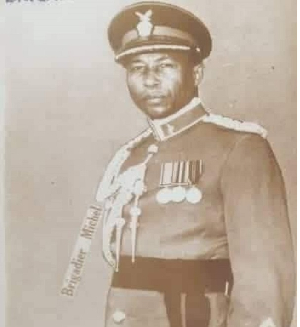
Michel Camp was named after the late Brigadier Joseph Michel who died in an air crash
Michel Camp is a key Ghana Armed Forces base that also serves as a living tribute to a soldier who helped shape Ghana’s early military and international reputation.
Many have wondered how the camp got its name. Well, it is named after Brigadier (now Brigadier-General) Joseph Michel, one of the most senior Ghanaian soldiers in the years following independence, whose life and career, though cut short, were marked by exceptional service at both national and international levels.
From Queues to Coffins: The tragedy of Ghana’s military recruitment
Brigadier Michel was born to a French father and a mother from the Volta Region in Ghana. Before putting on a military uniform, he was a trained teacher who taught at the Kpando Presbyterian School.
His transition from the classroom to the military reflected a deep commitment to service and leadership, qualities that quickly distinguished him within the Ghana Army.
His professionalism earned him appointment as Aide-de-Camp to Ghana’s first President, Dr Kwame Nkrumah, placing him at the centre of the country’s early post-independence administration.
In 1959, his reputation extended beyond Ghana when he was selected as Equerry to Queen Elizabeth II and stationed at Buckingham Palace.
He was also scheduled to accompany the Queen and Prince Philip on their 17-day tour of Ghana, Sierra Leone, and The Gambia.
However, it was his role in international peacekeeping that firmly etched his name into history. Brigadier Michel served with distinction as leader of the Ghanaian contingent under the United Nations Operations in the Congo (UNOC).
His leadership was so highly regarded that the United Nations, with the approval of President Nkrumah, selected him to become Chief of Staff of the UN Forces in the Congo, a rare honor for a Ghanaian officer at the time.
Tragically, Brigadier Michel never assumed the role.
In 1961, as he prepared to depart for the Congo assignment, he died in an air crash in Kumasi at the age of 44.
In recognition of his outstanding service and the promise of a career that symbolised Ghana’s early contribution to global peacekeeping, the Ghana Armed Forces named Michel Camp in his honour.
Suspended military recruitment exercise in Accra set to resume
The camp stands today as a reminder of a soldier whose dedication transcended borders and whose legacy continues to inspire generations of officers and men.
In ancient Rome, going to the arena was not only about watching gladiators fight.
For thousands of spectators packed into amphitheatres such as the Colosseum, entertainment also meant witnessing real people die, sometimes in carefully staged scenes that resembled dramatic performances.
Historians say that during the midday portion of Roman games, known as the meridiani, condemned criminals were brought into the arena to be executed in front of the crowd.
These executions were not always carried out simply or quietly. Instead, they were often designed as theatrical spectacles, with the prisoners forced to take part in reenactments of famous myths or symbolic stories.
In some cases, a prisoner might be dressed as a legendary figure from Roman or Greek mythology, such as Orpheus or Hercules, and made to act out the character’s final moments.
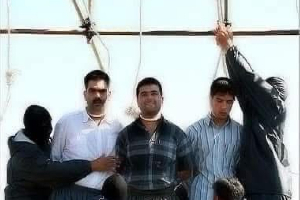
But unlike in a stage play, the ending was real. The person would be killed by wild animals, burned alive, or executed by soldiers, all while the audience watched.
Roman writers, including the poet Martial, recorded scenes in which criminals were punished in this way. These performances blurred the line between punishment and entertainment, turning executions into dramatic shows meant to shock, impress and please the crowd.
Experts explain that this was part of a broader Roman culture that celebrated public spectacle.
Executions were used not only to punish crime, but also to send a message about the power of the state. By turning death into entertainment, the authorities reinforced their control and reminded citizens what happened to those who broke the law.
However, historians stress that this was not the same as normal theatre, where trained actors performed scripted plays. Professional theatre existed separately in Roman society.
The arena spectacles were more brutal, combining punishment, violence and storytelling into a form of mass entertainment.
Today, the idea that people were forced to die as part of a public “performance” continues to shock modern audiences.
But in ancient Rome, it was seen as a normal and even exciting part of public life.
President John Dramani Mahama has announced plans to establish a 24-Hour Authority to drive the implementation of the government’s flagship 24-Hour Economy policy, a move aimed at stimulating economic activity, expanding job creation, and attracting investment across the country.
The President made the disclosure on Thursday, January 8, during a visit to the Ghana Publishing Company, where he commended management for adopting forward-looking operational strategies, including a two-shift system, in anticipation of the policy’s rollout.
According to him, the proposed Authority will serve as the central coordinating body for the 24-Hour Economy, with responsibility for registering participating businesses, setting operational guidelines, and administering incentives to encourage round-the-clock economic activity.
President Mahama said the initiative is expected to boost productivity, unlock employment opportunities, and position Ghana as a competitive hub for continuous business operations.
“I like the innovative thinking that you have brought into this establishment. Of course, the 24-Hour Initiative is one of the flagship economic policies of this government. I am happy to note that the committee has finished considering it and it is supposed to go to the floor of parliament to set up the 24-Hour Authority which would then open the way for implementation and registration of businesses that would be involved in the 24-Hour Economy. It will also spell out what kind of incentive that can be given,” he stated.
The 24-Hour Economy policy is a central pillar of the Mahama administration’s economic agenda, targeting growth in both the formal and informal sectors. Once established, the 24-Hour Authority is expected to play a regulatory and facilitative role in ensuring the effective and sustainable implementation of the policy nationwide.
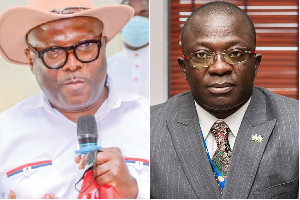
Fred Opare Ansah (L) has accused Bryan Acheampong of hurting NPP’s fortunes in the Eastern Region
Former Member of Parliament for Suhum, Fred Opare Ansah, has accused the New Patriotic Party (NPP) flagbearer hopeful, Dr Bryan Acheampong, of causing harm to the fortunes of the party in the run-up to the 2024 election.
According to him, Bryan Acheampong, who is the Member of Parliament for Abetifi, had issues with the paramount chief of Kwahu (Kwahumanhene), Daasebre Akuamoah Boateng III, which he said affected the party’s campaign in the Eastern Region.
Opare Ansah claimed that Bryan once threatened to boycott the NPP’s campaign in the Eastern Region if a delegation of the party in the region visited the Kwahumanhene.
“Bryan helped us in the Eastern Region, but he also caused harm at some point. On the day we were going to Abetifi, the regional chairman sent me a message saying that if we made the mistake of going to greet the Kwahumanhene, he (Bryan) would boycott both Kwahu and Abetifi programmes.
“If you remember, there was a fight between Bryan and the Kwahumanhene, and this had entered our politics,” he said in a video clip from a recent interview on Asempa FM.
What Bryan said about paying NPP executives $1,500 each for Bawumia to win NPP primaries
The government has secured a US$200 million World Bank facility, with plans to scale it up to US$250 million, to upgrade selected Category B and C Senior High Schools (SHSs) to Category A status as part of efforts to expand access to quality secondary education.
The funding will also be used to expand infrastructure in some existing Category A schools, addressing capacity challenges and improving learning conditions across the country.
The Minister of Education, Haruna Iddrisu, disclosed this on Friday, January 9, 2026, during the commissioning of the Gloria Boatema Dadey–Nifa Basic School at Adukrom in the Okere District of the Eastern Region. The school was constructed by the KGL Foundation.
According to the minister, about 30 Category C schools, along with several Category B schools, are expected to benefit from the upgrade programme once the funding is fully rolled out. He explained that the intervention goes beyond infrastructure expansion and is aimed at improving overall teaching and learning outcomes.
“We have received funding from the World Bank of about US$200 million, and we are informed that this amount may be increased to US$250 million to convert a number of Category C and B schools to Category A, while expanding infrastructure in some Category A schools,” he stated.
Mr Iddrisu noted that the upgrades would be matched with quality-enhancing measures, including the deployment of qualified teachers, the provision of adequate learning materials, and improved teaching aids.
He said the initiative forms part of broader government efforts to reduce disparities among senior high schools and ensure that students, regardless of location, have access to improved educational facilities and opportunities.
The Ghanaian economy is currently navigating a critical phase of recovery, marked by a decisive shift towards fiscal consolidation and monetary easing.
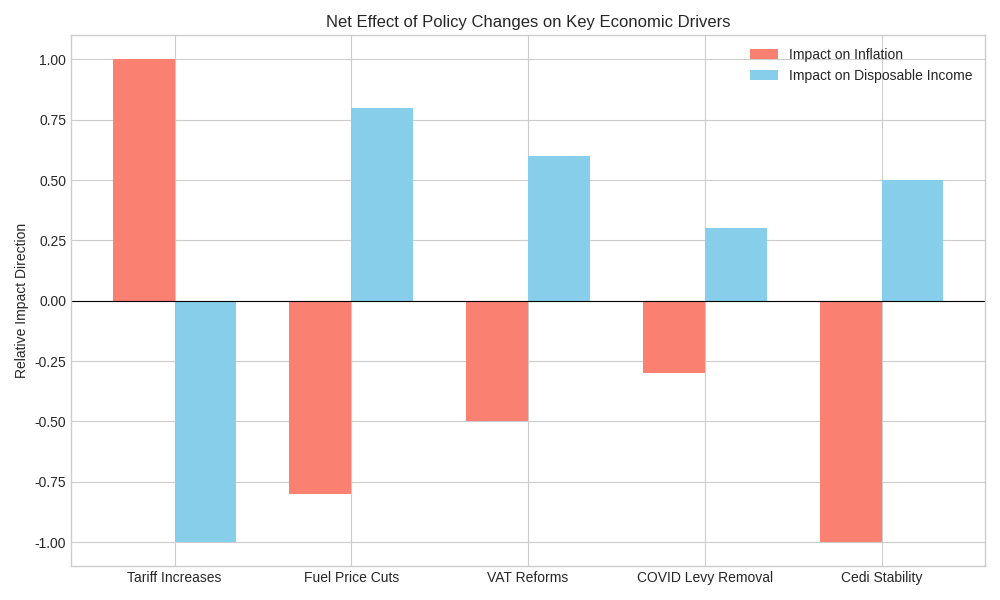
The net effect of recent policy changes specifically; the increase in utility tariffs, stabilization of the cedi, reduction in fuel prices, and comprehensive tax reforms (including the removal of the flat 3% VAT rate and the COVID-19 levy), is a projected stabilization of the macroeconomic environment.
While the upward adjustment of utility tariffs introduces inflationary pressure, this is largely counterbalanced by the positive impacts of a stable currency, declining inflation, and a subsequent reduction in interest rates, which collectively foster a more favourable climate for private sector growth and investment.
Macroeconomic Context and Trends
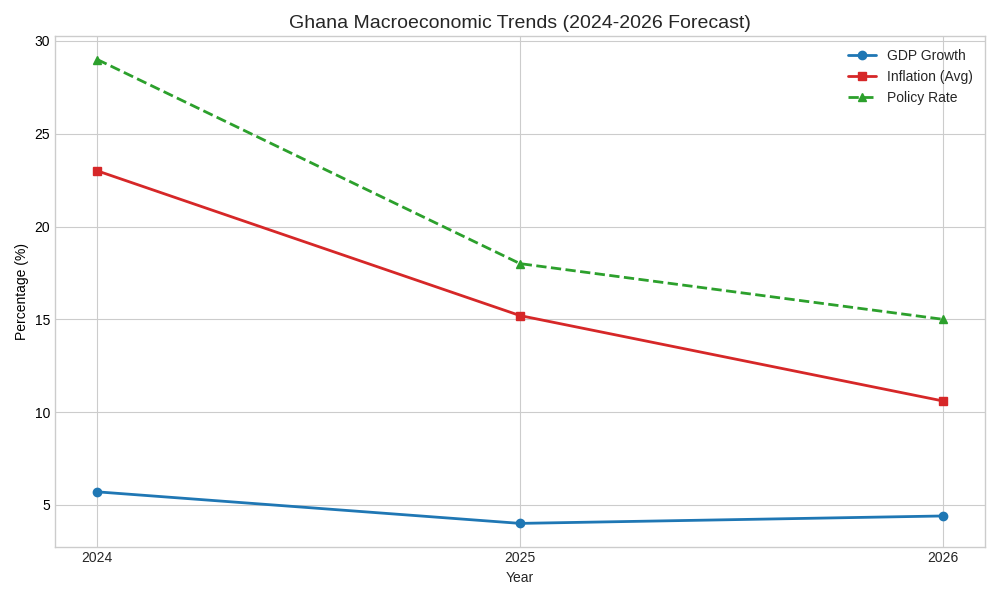
The economic outlook for Ghana is characterized by a strong disinflationary trend and a return to moderate, sustainable growth. The data below illustrates the projected trajectory of key indicators.
Indicator
2024 (Actual/Est)
2025 (Forecast)
2026 (Forecast)
Primary Driver
Real GDP Growth
5.7%
4.0%
4.4%
Fiscal consolidation and private sector recovery [4]
Average Inflation
23.0%
15.2%
10.6%
Monetary policy tightening and cedi stability [5]
Monetary Policy Rate
29.0%
18.0%
15.0%
Response to falling inflation [6]
Cedi Stability
Volatile
Improving
Stable
Improved reserves and debt restructuring [7]
The most significant development is the rapid deceleration of inflation, which fell to 6.3% in late 2025, a level not seen since early 2019 [8]. This success has enabled the Bank of Ghana to implement aggressive cuts to the Monetary Policy Rate, which stood at 18% in November 2025, signaling a lower cost of borrowing for businesses and consumers in 2026 [6].
Macroeconomic Trends Visualization
The following chart visualizes the projected convergence of the Monetary Policy Rate and Inflation, a key indicator of economic normalization.
Analysis of Policy-Specific Impacts
The net effect on the economy is a result of the interplay between contractionary and expansionary forces from the new policies.
Tax Reforms: Removal of Flat 3% VAT Rate and COVID Levy
The government’s “Fiscal Reset” includes a comprehensive overhaul of the Value Added Tax (VAT) regime, effective from 2026 [1].
Policy Change
Direct Impact
Economic Effect
Abolition of COVID-19 Levy
Removes a 1% levy on the supply of goods and services.
Reduces the effective tax burden on businesses and consumers, contributing to disinflation [1].
Removal of Flat 3% VAT Rate
Reverses the flat rate regime, allowing businesses to claim input VAT deductions.
Eliminates the cascading effect of taxes, lowering the cost of production and improving business competitiveness [1].
Effective VAT Rate Reduction
Overall effective VAT rate reduced from ~21.9% to 20%.
Increases disposable income for households and stimulates consumption [1].
The net effect of these tax reforms is expansionary and disinflationary, providing relief to the private sector and supporting the government’s goal of improving the ease of doing business.
Tariff Increases and Fuel Price Dynamics
A major counter-inflationary force is the increase in utility tariffs, which is necessary for the financial viability of the energy sector.
Utility Tariffs: Electricity and water tariffs saw significant hikes in early 2026 (9.86% and 15.92% respectively), following cumulative increases in 2025 [9]. These increases raise the cost of living and production.
Fuel Prices: Conversely, fuel prices have seen a marginal decline in early 2026, driven by the appreciation of the Cedi and stable global oil prices [10].
Net Effect: The reduction in fuel prices, a major component of the transport and logistics cost structure, acts as a crucial offset to the inflationary impact of higher utility tariffs. The overall impact on the Consumer Price Index (CPI) is likely to be dampened by the fuel price relief.
Stable Currency (Cedi)
The stability of the Ghanaian Cedi is arguably the most critical factor in the current economic outlook.
Impact: A stable Cedi reduces the cost of imported goods, particularly fuel and raw materials, which are major drivers of domestic inflation [7]. This stability reinforces the disinflationary trend and allows the central bank to continue its rate-cutting cycle.
Net Effect: The stable currency provides a strong anti-inflationary anchor for the entire economy, mitigating the price pressures from domestic tariff increases.
Overall Net Effect
The overall net effect is a positive shift towards macroeconomic stability, driven by the successful implementation of the IMF-backed program and prudent monetary policy. The policy mix, while containing the short-term pain of utility price adjustments, is structurally beneficial. The tax reforms are designed to boost the supply side of the economy, while the stable Cedi and falling interest rates are stimulating demand and investment.
The following qualitative assessment summarizes the directional impact of the key policy components:
The analysis suggests that the combined effect of the policies will lead to a more stable and predictable economic environment in 2026, with lower inflation and interest rates paving the way for sustained GDP growth.
[9] MyJoyOnline. New Year begins with 15.92% water and 9.86% electricity tariff hikes. [https://www.myjoyonline.com/new-year-begins-with-15-92-water-and-9-86-electricity-tariff-hikes/]
[10] GBC Ghana Online. Fuel pump prices set for marginal decline as Cedi gains. [
By : Emmanuel Danso-Boafo
The writer is a financial professional.
DISCLAIMER: The Views, Comments, Opinions, Contributions and Statements made by Readers and Contributors on this platform do not necessarily represent the views or policy of Multimedia Group Limited.
DISCLAIMER: The Views, Comments, Opinions, Contributions and Statements made by Readers and Contributors on this platform do not necessarily represent the views or policy of Multimedia Group Limited.