2.9 C
London
Saturday, December 27, 2025
Home Blog Page 401

“When I Was Stranded, Some Actors Asked Me for Sex to Let Me Sleep in Their Homes” – Omidan Lege

0

“When I Was Stranded, Some Actors Asked Me for Sex to Let Me Sleep in Their Homes” – Omidan Lege

News Hub Creator51min


Nollywood actress Omidan Lege recently detailed the dark side of the film industry in a candid interview on Feel Right News TV. She revealed that early in her career, when she was stranded and had nowhere to stay on set, some male colleagues pressured her into giving in to sexual advances in exchange for shelter.

Lege shared that during those vulnerable moments, she often asked to rest at a colleague’s home for the night—only to be met with resistance masked as hospitality. “They would say there was no space, but some actors would ask me to have sex with them just so I could stay,” she disclosed, adding that she would rather remain stranded than compromise her body.

She recalled times when, financially restricted and exhausted, she slept under bridges or wandered between locations because she refused to yield to such demands. “I always preferred to be stranded rather than give them my body,” Omidan emphasized.

Her testimony shines a light on the hidden harassment many aspiring actors endure behind camera lights. Lege’s courage in speaking out reminds stakeholders and audiences that respect, dignity, and safety must never be compromised — no matter the struggle.

Watch the video from (6:56 to 7:30).

Ghana’s Foreign Investment Jumps 382% in 2025

0

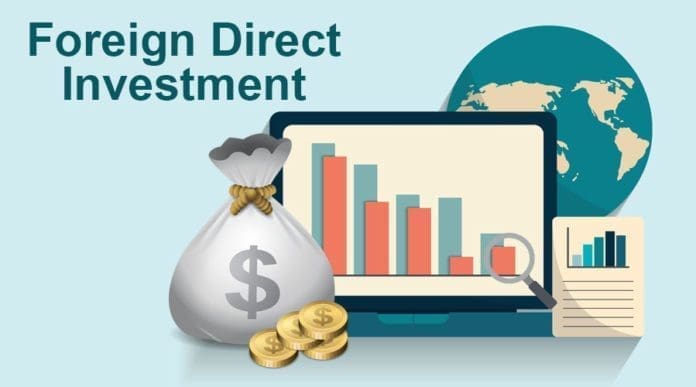
Foreign direct investment (FDI)
Image source: educba.com

Ghana has recorded a remarkable rebound in foreign direct investment, rising by 382 percent in the first half of 2025 compared to the same period last year. The surge signals renewed global confidence in the country’s economic prospects.

Data released by the Ghana Investment Promotion Centre (GIPC) shows that FDI inflows jumped from US$179.07 million in the first half of 2024 to US$862.96 million between January and June 2025. The increase comes amid ongoing economic reforms and efforts to restore macroeconomic stability following years of fiscal strain and global uncertainty.

According to GIPC, 76 new investment projects were registered during the first six months of the year. Once fully operational, these projects are projected to create 4,707 direct jobs across sectors such as manufacturing, services, general trading, and agriculture.

The manufacturing sector recorded the highest number of projects, with 32 registered in total. This underscores Ghana’s growing reputation as a light industrial hub in West Africa. However, general trading attracted the largest share of investment value, accounting for US$622.9 million of the total inflows. That’s more than 72 percent of all FDI recorded in the period.

In terms of investor origin, China maintained its position as Ghana’s leading source of new projects, registering 22 within the review period. It was followed by India with 14 projects, Nigeria with 8, and both the United Arab Emirates and the United Kingdom with 4 each. The United States registered three, while other investors came from Liberia, Mauritius, Singapore, and Turkey.

The sharp rise in inflows comes as Ghana continues to implement structural reforms under an International Monetary Fund backed program. These include fiscal consolidation, monetary tightening, and the restoration of business confidence through debt restructuring. And so far, the numbers suggest it’s working.

Economist Dr. Theo Acheampong told The Ghana Report the figures “reflect renewed investor optimism, particularly as Ghana’s economic fundamentals gradually stabilize.” He urged authorities to ensure that inflows translate into real jobs, local value addition, and equitable regional development.

Most of the registered projects are concentrated in Greater Accra and Ashanti regions, prompting calls for a more balanced approach that attracts investors to other parts of the country. Experts say the sustainability of Ghana’s FDI rebound will depend on how quickly registered projects transition from paper approvals to actual implementation.

There’s reason for caution here. Many projects in the past never materialized because of delays in permitting and land acquisition, according to industry observers. Local business consultant Ama Osei emphasized the importance of consistent monitoring and investor aftercare services to ensure long term results.

In response, the GIPC has pledged to improve transparency and coordination. Officials say a public monitoring system is being designed to track the progress of new projects and ensure compliance with Ghana’s investment laws. Whether that system gets implemented quickly enough remains to be seen.

If sustained, the current momentum could position Ghana as one of the leading FDI destinations in Sub-Saharan Africa in 2025. This would potentially boost job creation, technology transfer, and foreign exchange inflows. For now, the sharp rebound stands as one of the clearest signs that investor faith in the Ghanaian economy is being restored.

The question is whether Ghana can maintain this trajectory through the second half of the year, especially as global economic conditions remain uncertain and competition for investment dollars intensifies across the continent.

Ghana’s economic recovery on track

0

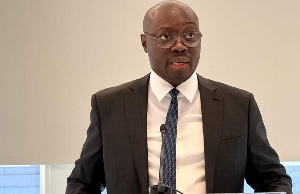
Dr Cassiel Ato Forson, Minister of Finance Dr Cassiel Ato Forson, Minister of Finance

Ghana’s Minister for Finance, Dr Cassiel Ato Forson, has assured international investors that the country’s economy is firmly on a measurable path to recovery and is poised for sustained growth and stability.

Speaking to a packed audience of investors in Washington, D.C., on the sidelines of the 2025 IMF and World Bank Annual Meetings, Dr Forson declared that “Ghana is on track. We will sustain the gains.”

He underscored that the country’s economic turnaround is already evident in declining debt vulnerabilities and stronger macroeconomic fundamentals, clear indicators of the effectiveness of government policy interventions and reforms.

‘We have turned the corner’ – BoG Governor

Dr Forson expressed strong optimism about the sustainability of ongoing structural and fiscal reforms, noting that these measures are designed to secure long-term macroeconomic stability.

Looking ahead, the finance minister highlighted that Ghana’s economic prospects remain positive.

He mentioned that growth is projected to rebound strongly in the final quarter of the year, driven by a revitalised real sector, while inflation, which has already declined significantly, is expected to ease further and remain in single digits by year-end.

He added that the government remains on course to achieve a positive primary balance of 1.5% of GDP by the close of the fiscal year, a milestone that will further consolidate the gains made under the ongoing fiscal reforms.

Dr Forson reaffirmed the government’s commitment to fiscal consolidation anchored on tight expenditure controls and prudent financial management.

CAFCC: Sheila Illiasu urges Kotoko to avoid conceding in first leg against WAC

0

Former Asante Kotoko defender Sheila Illiasu has advised the Porcupine Warriors to stay disciplined defensively in their CAF Confederation Cup playoff first leg clash against Wydad Athletic Club (WAC) of Morocco.

Speaking to Ghana Sports Page, the former Ghana international emphasized the importance of keeping a clean sheet when facing North African opponents, who are known for their tactical discipline and gamesmanship.

“The North Africans’ strategy is always to get a goal in the first leg, especially if it’s away, because in the second leg, they will frustrate you before the match, which makes it easy for them to win,” Illiasu explained.

“So I just hope we don’t concede. I want us to beat them without conceding. I’d even take a goalless draw. If we concede in this game, it will make the second leg difficult for us.” He told Ghanasportspage.com l.

Illiasu, who previously featured for both Kotoko and the Black Stars, also highlighted the vast investment gap between North African and West African clubs but insisted that Kotoko’s pedigree remains a psychological advantage.

“The North Africans — not only WAC — have really invested in their football compared to us in West Africa. If you compare player to player, we are nowhere near the quality they have. But the name Kotoko alone sometimes puts fear in teams,” he noted.

Asante Kotoko will host Wydad Athletic Club at the Accra Sports Stadium on Sunday, October 19, 2025 at 15:00 GMT kickoff time. 

Attorney General Directs Parliament To Validate Dismissal Of Special Prosecutor

0

A major development has hit Ghana’s political and legal landscape as the Attorney General has reportedly directed Parliament to commence an official validation process to dismiss the Office of the Special Prosecutor (OSP) from office with immediate effect.

The shocking directive, which has stirred intense national debate, is said to stem from growing concerns over alleged administrative misconduct, abuse of power, and breaches of procedural ethics within the OSP’s operations. According to reports, the Attorney General’s office believes that the recent controversies surrounding the OSP have significantly eroded public trust and undermined the credibility of the institution created to fight corruption at the highest levels.

Sources close to the Ministry of Justice revealed that the directive calls for Parliament to activate constitutional procedures that would assess the conduct of the Special Prosecutor and determine whether he should be relieved of his duties. The process, according to insiders, is expected to involve both legal and parliamentary scrutiny, including an official review of several petitions already submitted against the OSP.

The Attorney General is said to have raised concerns about how the OSP has handled several high-profile corruption cases, alleging that its methods have violated key legal protocols and disregarded constitutional limits. Critics within government circles claim that the OSP’s approach has been politically motivated and lacking in due process, while supporters argue that the institution is being targeted for exposing corruption within the political elite.

Legal experts have described the Attorney General’s directive as “unprecedented” and politically sensitive, warning that the move could trigger a constitutional standoff between the Executive and an office established to operate independently. They caution that if not handled carefully, the situation could weaken Ghana’s anti-corruption framework and further polarize the nation.

Meanwhile, opposition parties and civil society organizations have condemned the Attorney General’s move, viewing it as a deliberate attempt to silence the Special Prosecutor and derail ongoing investigations into corruption involving powerful individuals. They insist that instead of seeking dismissal, the government should strengthen the OSP’s independence and provide more support for its anti-corruption mission.

As of now, Parliament has not officially confirmed receipt of the Attorney General’s directive. However, sources within the House indicate that discussions are already underway among committee members on how to handle the matter, given its potential implications for governance, accountability, and public confidence.

The unfolding situation has left Ghanaians divided, with many awaiting an official statement from both the Office of the Attorney General and the OSP to clarify the next steps. Political observers believe the coming days will be crucial in determining the future of Ghana’s fight against corruption and the fate of the country’s top anti-graft office.

Source

https://www.youtube.com/watch?v=UIoQ3hG9d5Y

Ghana Aims to Ease Tax Pressures on Its Growing Creative Industry

0

Tax
Tax

The Ministry of Tourism, Arts and Culture is partnering with the Ghana Revenue Authority (GRA) to redesign tax policies for Ghana’s creative sector. This new collaboration seeks to ease the financial burden on artists and cultural entrepreneurs, fostering a fairer business environment.

Led by Sector Minister Abla Dzifa Gomashie, a stakeholder meeting brought creatives and tax officials together. The goal is to build a tax system that encourages growth rather than stifling it.

“We have a teeming number of talented young people, but without proper structures and understanding, the sector cannot thrive,” Gomashie stated. “We are here to find a human-centered approach to taxation.”

She described the engagement as a “new chapter of collaboration” to ensure fairness and accountability. In a unique approach to tax education, the Ministry plans to work with the National Theatre and community groups. They will use drama and flash performances to explain tax responsibilities in markets and creative spaces.

GRA Commissioner-General Anthony Kwasi Sarpong echoed the commitment to a balanced solution. “If we shut down this sector, there would be a crisis in this country,” Sarpong noted. “We must create a system that works for everyone, including creatives.”

A key outcome was the unveiling of Ntoboa, a new digital platform designed to help creatives manage tax records and track contributions. The app aims to simplify compliance through enhanced transparency.

Officials plan a follow-up session to develop a comprehensive roadmap, which may include specific tax incentives and policy reforms to strengthen the creative economy.

Kwaku Dawuro presents The Movement in the Morning Political Show

0

Kwaku Dawuro presents the morning political show on Movement TV Kwaku Dawuro presents the morning political show on Movement TV

Kwaku Dawuro presents The Morning Political Show on the Wontumi morning show.

Seated with his guests, they discussed some of the most topical political subjects of the week.

Together with his guests, they provided in-depth analysis of political stories making headlines today.

With its blend of expert analysis and engaging discussions, the programme, hosted in the widely spoken local dialect, Twi, brings together well-experienced guests and professionals to share their perspectives on the nation’s most pertinent political and social matters.

Ghana Accelerates Crypto Regulation as 3 Million Users Trade Digital Assets

0

Digital Asset
Digital Asset

Ghana is moving swiftly toward formal cryptocurrency regulation, with the Bank of Ghana establishing September 2025 as a deadline for licensing virtual asset service providers amid explosive growth in digital currency adoption across the country. The regulatory initiative addresses what central bank officials characterise as a significant blind spot in financial oversight affecting the nation’s economic data and currency stability.

Approximately 3 million Ghanaians, representing roughly 17 percent of the adult population, actively use cryptocurrency for transactions, remittances, and business operations, according to multiple industry reports. Between July 2023 and June 2024, crypto transactions in Ghana reached USD3 billion, underscoring the sector’s integration into daily economic activity and establishing Ghana as one of Africa’s fastest growing digital asset markets.

Bank of Ghana Governor Johnson Asiama has acknowledged that regulatory oversight arrived tardily but remains essential. “We are actually late in the game,” he stated, emphasising that unregulated cryptocurrency activity has distorted financial data collection, complicated capital flow monitoring, and hindered efforts to stabilise the Ghanaian cedi through effective monetary policy. The currency has experienced volatile swings, appreciating 48 percent over the past year following a 25 percent depreciation the prior year, challenges the central bank attributes partly to unreported crypto transactions.

The proposed regulatory framework targets virtual asset service providers including cryptocurrency exchanges, wallet providers, and custody platforms. Licensees will face requirements including anti-money laundering and know-your-customer compliance, cybersecurity standards, regular audits, and maintenance of minimum capital thresholds set at approximately 5 million Ghanaian cedis. The Bank of Ghana established a Virtual Assets Regulatory Office (VARO) in August 2025 and requested all virtual asset service providers to register by August 15, 2025, signalling imminent enforcement.

Selorm Brantie, Vice President of IMANI Africa, characterised the regulatory push as addressing a fundamental market opportunity. Ghana hosts 3.4 million citizens actively trading crypto with annual market value estimated at USD3 billion, yet this activity remains largely unmonitored. Drawing lessons from Switzerland, Singapore, and European approaches, Brantie proposed multi-agency regulatory coordination, clearer token classification frameworks, and public registries of licensed virtual asset operators.

Currently, the Bank of Ghana maintains that cryptocurrency is not legal tender in Ghana, yet millions trade it freely, often converting digital assets to cedis through mobile money platforms. This regulatory contradiction has created significant blind spots for tax collection, consumer protection, and anti-money laundering enforcement.

The central bank projects that harmonising open banking and crypto frameworks positions Ghana to capture substantial economic value while cementing its status as Africa’s fintech leader. However, practical implementation challenges persist. The department responsible for regulatory oversight has yet to be fully staffed despite the September deadline, prompting questions about enforcement capacity across multiple regulatory agencies that must coordinate.

Industry participants have responded cautiously to the regulatory initiative. Major international exchanges including Binance have begun facilitating crypto transactions using Ghanaian cedis through mobile money integration, signalling confidence in Ghana’s regulatory direction. Meanwhile, local fintech platforms continue expanding crypto offerings, betting that clarity will emerge through formalised licensing.

The regulatory framework represents an inflection point for Ghana’s digital finance sector. The country already leads Africa in mobile money with 77 million active accounts generating GHS1.9 trillion in annual transactions and recovery rates on digital lending products reaching 90 percent. Extending comparable regulatory discipline to cryptocurrency could position Ghana as the continent’s most comprehensive digital asset ecosystem.

Challenges remain in balancing regulatory certainty against innovation incentives. Analysts caution that overregulation risks pushing activity to less-supervised jurisdictions, potentially undermining Ghana’s competitive advantage. Conversely, insufficient oversight could perpetuate financial instability and tax revenue leakage affecting macroeconomic management.

The Bank of Ghana’s ambitious September timeline will test institutional capacity to operationalise complex regulatory functions across decentralised digital platforms. Success requires coordination between the central bank, tax authorities, financial intelligence units, and telecommunications regulators who must align their frameworks while maintaining proportionate enforcement.

Grammy Academy approves Wiyaala, Ah Moon’s ‘Get Wise’ song for consideration

0

Wiyaala is a Ghanaian singer-writer Wiyaala is a Ghanaian singer-writer

Acclaimed Ghanaian singer-songwriter, Wiyaala, has announced that a project she worked on with Myanmar singer, Ah Moon, and Beyond Music, has been received by the Grammy Academy and is currently under consideration.

In a post shared on her X page on October 16, 2025, Wiyaala confirmed that the song titled “Get Wise,” a single from Beyond Music Vol 4, is being considered for the Grammy Awards.

She added that the song is being considered for the Harry Belafonte Award for Social Change at the 68th Annual Grammy Awards.

“Wow! ‘Get Wise’ from BEYOND Music Vol 4 is being considered for the Harry Belafonte Award for Social Change at the 68th Annual GRAMMY Awards,” she shared.

I don’t get booked for shows – Wiyaala on reason she hasn’t been visible

The Lioness, as Wiyaala is also known as, further congratulated the writers of the song and thanked Beyond Music for including her in the project.

“‘Get Wise’ (Wiyaala & Ah Moon), Writers: Ah Moon, Kate Northrop, BK Duke. Thank you, BEYOND Music, for this amazing initiative bringing musicians from around the world to collaborate together. Congratulations to everyone! Ah Moon @KateNorthrop music BK Duke Dodo,” she added.

Meanwhile, Wiyaala is not the only Ghanaian musician whose work is currently under Grammy consideration.

Dancehall artist Shatta Wale’s “Street Crown” and reggae singer Epixode’s “Chooboi” are also reportedly under consideration for nomination at the upcoming Grammy Awards.

Read the post below:

JHM/AE

Meanwhile, watch as some Ghanaians demand quick prosecutions in ORAL cases

Education is the smartest investment parents can make

0

ABA Fuseini is the former Member of Parliament for Sagnarigu ABA Fuseini is the former Member of Parliament for Sagnarigu

A former Member of Parliament for Sagnarigu, ABA Fuseini, has called on parents to invest in the education of their children.

In an interview with TV3 on October 16, 2025, the former MP noted that the best investment every parent can make is in their children.

He explained that the best investment every parent can make is investing in the education and well-being of their children, adding that they will benefit from it when they are older.

‘No food, breaks, just books’ – A.B.A. Fuseini speaks on daughter’s law school journey

“It is the pride of every parent that their children grow to make them proud and also be in a position to look after them when they are in their old age or not be able to perform the functions of public life after a certain time.

“You should consider that every penny you put into your child’s education is an investment. It is perhaps the best investment you can ever make,” he said.

ABA Fuseini further reiterated that parents should not have a second thought when they want to invest in their children.

“I want to urge parents not to have a second thought about looking for resources anywhere to invest in the education of their children.

Watch what ABA Fuseini said about what he will take as bride price for his daughter

“Especially for those of us in the North, we grew up not having others you can look up to, to serve as a symbol of hope you can emulate,” he added.

ABA Fuseini’s statement comes in after his daughter, Latifa Teiya Fuseini, became the Overall Best Student from the Ghana School of Law during her call to the Bar on October 10, 2025.

JHM/AE

Watch as some Ghanaians demand quick prosecutions in ORAL cases

‘We have turned the corner’ – BoG Governor

0

Dr Johnson Asiama, Bank of Ghana Governor play videoDr Johnson Asiama, Bank of Ghana Governor

Bank of Ghana Governor Dr. Johnson Pandit Asiama has declared that the country “turned the corner” after years of economic instability, as inflation fell below 10 percent for the first time in four years amid a faster-than-expected rebound in growth.

Speaking at the IMF Annual Meetings during a side event dubbed ‘Governor Talks: From Crisis to Confidence – Ghana’s Journey to Macroeconomic Stabilisation’, Dr. Asiama said the economy’s recovery has exceeded expectations only eight months after he assumed office.

“When we took over, there were doubts about whether Ghana could sustain the IMF-supported programme,” he said. “But I’m happy to say that eight months down the road, Ghana is back. Inflation has fallen to 9.4 percentand we are running ahead of programme targets.”

He attributed the turnaround to a combination of tight monetary policy, fiscal discipline and reforms in the gold and foreign exchange markets.

The central bank, he said, maintained a “very tight monetary policy stance” supported by strong collaboration with fiscal authorities to curb liquidity pressures and stabilise prices.

“There was a lot of excess liquidity in the system and we had to do significant sterilisation,” the Governor noted, adding that about GH¢65billion of the Bank’s GH¢85billion balance sheet was tied to sterilisation costs. “There’s a price to stabilisation and someone needs to pay for it. But stability is a public good and we are committed to maintaining it.”

Ghana’s recovery follows one of the country’s deepest economic crises in decades, marked by debt distress, elevated consumer inflation and a collapse in market access that forced government into a US$3billion IMF programme during 2023. The central bank’s decisive policy tightening and debt restructuring have since restored market confidence and improved the outlook for 2026.

Despite progress, Dr. Asiama acknowledged challenges remain – including low private-sector credit and high non-performing loans.

He said the Bank is working with commercial lenders to improve risk management while expanding access to credit for youth and women-owned enterprises.

“Our goal is to sustain this recovery, broaden inclusion and ensure stability translates into stronger growth,” he said. “We’ve come a long way from the crisis and we are not turning back.”

Akosua Serwaa Reveals Heartbreaking Secrets About Daddy Lumba

0

In a dramatic turn of events at a recent court hearing, according to a report by Ghpage News, Akosua Serwaa has come forward to shed light on the allegations surrounding her elder sister’s purported involvement in a scandal involving famed Ghanaian musician Daddy Lumba.

The courtroom, packed with onlookers and media representatives, became the backdrop for a family narrative that intertwines personal betrayal and public scrutiny.

Akosua, visibly emotional, shared her perspective on the allegations that have sparked widespread gossip and controversy. She revealed that her sister had confided in her about the troubling situation, expressing distress over the accusations that have engulfed their family.

“She told me everything, and it was heartbreaking to hear,” Akosua recounted, her voice shaking as she described the burden of the allegations that have cast a shadow over their family name.

The allegations against Daddy Lumba, a beloved figure in Ghana’s music scene, have sent ripples through the entertainment industry and beyond. While the specifics of the claims remain sensitive, they have prompted public speculation and intense media coverage.

Akosua’s appearance at the court was not only to support her sister but also to clarify the misconceptions that have arisen in the wake of these allegations.

During her testimony, Akosua emphasized the importance of family unity during challenging times. “No matter what happens, we will stand by each other.

Family is everything,” she asserted, highlighting the emotional toll that public scrutiny can take on personal relationships. Her statement resonated with many in attendance, as it underscored the often-overlooked human aspect of high-profile scandals.

As she recounted her sister’s struggles, Akosua addressed the broader implications of the allegations, particularly how they affect not just the individuals involved but also their families and supporters.

“These accusations don’t just impact our lives; they affect our friends, our community, and everyone who cares about us,” she explained, advocating for a more compassionate understanding of the situation.

The court proceedings have attracted significant media attention, with many eager to hear the unfolding story behind the allegations.

Akosua’s testimony marks a pivotal moment in the case, as it reveals the personal dimensions of a narrative that has largely been viewed through the lens of sensationalism.

Her candidness about the emotional ramifications of the allegations provides a counter-narrative to the often harsh judgments passed by the public.

In light of the ongoing legal proceedings, Akosua called for patience and understanding from the public. “We are all human, and we all make mistakes. What matters is how we support each other through these times,” she said, urging people to refrain from rushing to conclusions without knowing the full story.

As the court case continues, the dynamics within the family and the public’s reaction to the allegations will play a crucial role in shaping the narrative.

Akosua’s willingness to speak out demonstrates a commitment to transparency and family solidarity, offering a glimpse into the personal struggles that often accompany public scandals.

In conclusion, the revelations made by Akosua Serwaa at the court premises serve as a reminder of the complexities surrounding personal relationships in the face of public scrutiny.

As the story unfolds, it raises important questions about loyalty, integrity, and the impact of fame on individual lives. The ongoing saga involving Daddy Lumba and the Serwaa family is far from over, and it remains to be seen how these allegations will ultimately resolve and what lasting effects they will have on those involved.

“Mahama May Not Be Trusted, But Nana Addo Will Be Remembered for Corruption” – Mintah Akandoh Fires

0

Ghana’s Minister for Health, Kwabena Mintah Akandoh, has taken a fierce swipe at former President Nana Addo Dankwa Akufo-Addo, accusing him of leaving behind a legacy defined by corruption and financial irresponsibility. According to the outspoken minister, the numerous cases of corruption and financial mismanagement under the former NPP government are the primary reasons why nurses’ salaries continue to delay and the health sector struggles to meet its obligations.

Speaking during a live interview on Channel One TV on Thursday, October 16, 2025, Akandoh stated that while former President John Dramani Mahama may not be trusted by all Ghanaians, his record in governance stands far cleaner and more disciplined compared to the “corrupt empire” built under the Akufo-Addo administration.

“Let’s be real with ourselves,” Akandoh said. “Mahama may not be trusted by everyone, but Nana Addo will go down in history as the president who institutionalized corruption. His government destroyed accountability and crippled vital sectors of the economy, including health. Nurses are crying for salaries today because of the financial rot his team left behind.”

The Health Minister revealed that several projects initiated under the previous NDC administration were either abandoned or mismanaged during the NPP’s tenure, leading to massive financial waste. He added that contracts meant for hospital construction, supply of medical equipment, and improvement of healthcare logistics were handed to cronies with little or no accountability.

Akandoh argued that the supposed economic growth the NPP paraded during its time in office was only cosmetic, built on reckless borrowing and misappropriation of state resources. “They looted with impunity and called it development. Today, we are all paying for it — from unpaid salaries to collapsing health facilities,” he charged.

The minister also expressed frustration at how the Akufo-Addo administration allegedly ignored the welfare of health professionals while using public funds for luxury and campaign ventures. “Our nurses, midwives, and doctors deserve better. These are the people who keep our hospitals running, yet under Nana Addo’s watch, they suffered the worst neglect,” he said.

Akandoh’s comments have since stirred intense political reactions across Ghana’s political spectrum. Supporters of the ruling NDC government have applauded his boldness, describing his remarks as “the truth many fear to say,” while members of the NPP have labeled his statements as a “cheap political diversion” from the current government’s challenges.

Political analysts believe Akandoh’s comments reflect the growing tension between the two major parties ahead of the next election season, where governance records and corruption scandals are expected to take center stage.

The Health Minister, however, insisted that his comments were not driven by politics but by facts. “We cannot build a better health sector if we pretend corruption never happened. We must call it what it is and fix it,” he stated.

He further assured Ghanaians that the Ministry of Health, under his leadership, is committed to ensuring transparency, timely salary payments, and the completion of all stalled hospital projects. “This government is working hard to rebuild what was destroyed. We owe it to our citizens, especially those in the medical field who have sacrificed so much for this country,” he added.

Akandoh’s explosive remarks have once again placed the spotlight on the Akufo-Addo administration’s handling of public funds, especially in the health sector — from the controversial procurement of medical supplies to stalled hospital projects across several regions.

As the political temperature rises, Akandoh’s statement serves as a direct challenge to the opposition NPP to defend its legacy, while reigniting public discourse about corruption, accountability, and the cost of leadership failures.

Watch the video here

If we continue to pretend everything is fine, Ghana will never move forward. We must expose corruption, fix the mess, and make sure it never happens again,” Akandoh concluded.

J12 Unleashes “Shawty Bounce” — A Vibrant Pop Anthem with a High School Musical Vibe

0

#FeaturedPost


Rising Nigerian Afrobeats sensation J12 is back with a brand-new single, “Shawty Bounce,” a lively Pop-inspired record that radiates youthful energy and creativity. Blending his Afrobeats roots with the fun, carefree essence of High School Musical, J12 delivers a sound that’s as catchy as it is refreshing.

Following the success of his previous single and official video, “Money,” J12 takes another bold step in his musical journey. “Shawty Bounce” showcases his versatility and fearless approach to experimenting with genres — combining infectious melodies, bright production, and a confident, feel-good rhythm that invites everyone to dance.


Speaking about the new release, J12 describes “Shawty Bounce” as “a track that celebrates fun, youth, and the magic of just letting go.” With its irresistible hooks and playful energy, the song promises to become a fan favorite and party staple.

With human hair wigs costing >₦200,000, these synthetic wigs under ₦80k are a perfect solution for women seeking quality, style, & affordability.


These affordable date spots in Lagos feel luxurious in their ambience, food, and service, but do not cost as much.


We tested the Itel BudsNeo 3 for two months. Here’s our honest review of its 100-hour battery life, sound, comfort, and whether it’s worth ₦13,000 in Nigeria.


“Shawty Bounce” is out now on all streaming platforms.

If I’m being truthful, this NDC Gov’t is worse than bad —Captain Smart Apologizes To Nana Addo

0

Outspoken broadcaster Captain Smart has publicly apologized to former President Nana Addo Dankwa Akufo-Addo, acknowledging that some of his previous criticisms were excessive and fueled by frustration. The apology was made during a live broadcast on Onua TV on Thursday, October 16, 2025.

Captain Smart, renowned for his bold political commentary, admitted that while his intent was always to hold leaders accountable, anger sometimes overshadowed fairness.

“I want to sincerely apologize to former President Nana Addo Dankwa Akufo-Addo. Some of the things I said were too harsh and disrespectful. I spoke out of anger because I expected better, but I should have been more measured,” he stated.

During the broadcast, he commended Akufo-Addo for developmental initiatives such as Free SHS, One District One Factory, and digitization efforts, describing them as projects that transformed lives and laid a solid foundation for Ghana’s growth.

“Let’s be honest, Akufo-Addo may not have been perfect, but he achieved things that are still benefiting Ghanaians today,” he added.

However, Captain Smart contrasted the former NPP administration with the current NDC government, which he criticized sharply for incompetence and lack of direction.

“If I’m being truthful, the NDC government we have today is worse than bad. Things are collapsing, there’s no seriousness, and corruption is on another level. At least under Akufo-Addo, there was hope, there was vision. Today, everything is about politics and propaganda,” he said.

He accused the current government of worsening living conditions, neglecting ordinary citizens, and failing to support businesses, asserting that many Ghanaians now regret their electoral choices.

Captain Smart emphasized that his apology was not politically motivated but a moral decision, driven by self-reflection. He urged journalists to speak truth to power with respect, noting, “Leadership deserves criticism, yes, but not insults.”

Concluding his statement, he called on both NDC and NPP leaders to prioritize the welfare of the people over party politics. “Ghana is bigger than any political party. Whether NDC or NPP, if you can’t fix the system, step aside and let competent people lead,” he said.

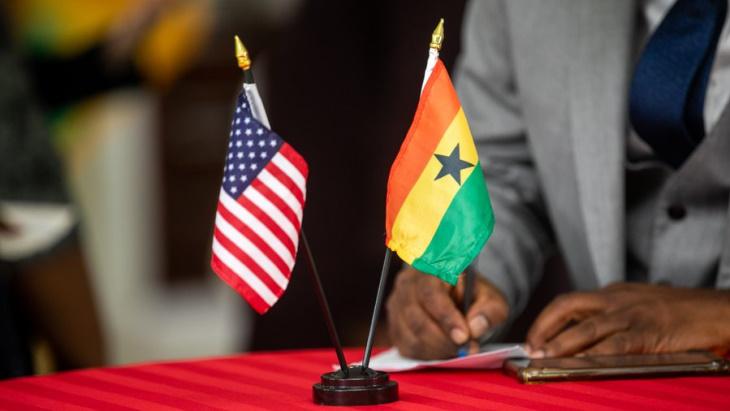
U.S.-Ghana Deportee Pact stirs Constitutional, Legal, and Human Rights Crisis

0

The controversial agreement between the government of Ghana and the United States to accept West African third-country deportees is currently facing a triple threat: a Supreme Court challenge, intense domestic political scrutiny, and severe human rights accusations. As of mid-October 2025, the controversy centres on the total number of deportees (now 42), their detention conditions, and the legality of the deal’s execution.

International Context: The Trump Administration’s Third-Country Program

The Ghana agreement is not isolated but is part of a broader, largely secretive initiative by the U.S. President Donald Trump administration to outsource migration management. Since July 2025, the U.S. has struck similar third-country deportation agreements with at least five African nations. Deportees have also been sent to Eswatini, South Sudan, and Rwanda, with an agreement also in place with Uganda (though no deportations have yet been announced there). Rights groups globally have protested this program, citing its lack of transparency and the risk it sends deportees to countries where they lack ties and face denial of due process.

The Legal and Constitutional Challenge

The U.S.-Ghana deportee deal faces a serious constitutional challenge, with the Supreme Court set to test the executive’s treaty-making power regarding international agreements. The immediacy of the legal crisis is highlighted by the Supreme Court fixing Wednesday, October 22, 2025, for the hearing of an interlocutory injunction filed by Democracy Hub to halt the agreement’s implementation.

The prominent Ghanaian civil rights and advocacy group, Democracy Hub, spearheaded by activist Oliver Barker-Vormawor, filed a lawsuit arguing the agreement is unconstitutional. They contend the arrangement was not approved by the Ghanaian Parliament, violating Article 75 of Ghana’s constitution which mandates legislative resolution and ratification for certain international agreements. Democracy Hub’s core legal and ethical position was encapsulated in a recent statement: “No administration has the right to commit Ghana to secret agreements that undermine constitutional and human rights obligations,” emphasising the need for transparency, legislative oversight, and respect for human dignity in international engagements.

The group further explicitly cites the use of the Bundase Military Training Camp as a detention site for civilian deportees as a violation of fundamental rights guaranteed under Articles 14, 15, and 19 of the Constitution (protecting personal liberty, human dignity, and fair trial), and asks the Supreme Court to declare this detention unlawful. The lawsuit explicitly asks the Supreme Court to stop the “onward deportation” of individuals facing persecution, a practice critics argue violates international conventions against non-refoulement, including the 1951 Refugee Convention, the Convention Against Torture, and the OAU Refugee Convention.

This legal strategy views Ghana’s action as an attempt to circumvent international obligations. The severity of this approach was highlighted by legal counsel in a related US lawsuit. Lee Gelernt, an ACLU attorney representing the deported African migrants, stated that the entire situation “reeks of a scam.” He further asserted: “It seems evident that the United States has concocted a scheme to use third countries to circumvent what the United States cannot do directly.”

Government Defense and Opposition Stance

The ruling National Democratic Congress (NDC) party has defended the executive action on the basis of the Pan-African principle. President John Mahama insisted the decision was “grounded purely on humanitarian principle and Pan-African solidarity” to offer temporary refuge. Foreign Minister Samuel Okudzeto Ablakwa maintained the deal was a “Memorandum of Understanding” (MOU) that did not require lawmakers’ approval, distinguishing it from a formal treaty. Minister Ablakwa also publicly confirmed the transactional nature of the agreement, stating that Ghana’s acceptance of the deportees was in exchange for the lifting of U.S. visa restrictions on Ghanaians, potential extension of a trade deal, and a re-evaluation of the 15% tariff.

Conversely, the opposition New Patriotic Party (NPP), through Samuel Abu Jinapor, argues that operationalising the agreement without parliamentary ratification is a “direct constitutional violation and an affront to the authority of the Supreme Court.”

The High Stakes: Outcomes of the Supreme Court Lawsuit

The Supreme Court’s decision will not only determine the fate of the deportees but will set a profound precedent for the balance of power and Ghana’s global positioning.

Scenario 1: Government Wins (Pact is Constitutional)

If the Supreme Court rules in favour of the government, declaring that the executive had the authority to sign the MOU without parliamentary ratification, the consequences will be:

  • Executive Power Validation: The ruling would grant the executive branch expansive, unchallenged power in foreign policy matters, potentially bypassing legislative oversight for future international agreements.
  • Continuation of Deportation Hub Role: Ghana would solidify its role as a key de facto third-country processing centre for the US, likely leading to an increase in future deportations and a sustained logistical and financial burden on Ghana’s unbudgeted resources.
  • Domestic Dissatisfaction: While visa and trade benefits may be secured, the public perception that the government “traded away our national dignity for visa concessions” would continue to fester, fueling opposition and domestic constitutional debates.

Scenario 2: Government Loses (Pact is Voided)

If the Supreme Court rules in favor of Democracy Hub, declaring the agreement void for violating Article 75, the consequences will be:

  • Reassertion of Parliamentary Authority: This would be a landmark victory for Ghana’s constitutional democracy, restoring Parliament’s legislative check on executive overreach in international affairs. It would force greater transparency in future dealings.
  • Immediate Pact Nullification: The agreement would be immediately voided, compelling Ghana to halt all further deportations under this framework and preventing future flights from the US.
  • Human Rights Victory: It would be a strong affirmation of Ghana’s commitment to the principle of non-refoulement, even in the face of foreign pressure, providing a potential remedy for the remaining deportees.

Reputational and Geopolitical Impact

Regardless of the court’s specific ruling, the litigation has already indelibly marked Ghana’s international standing.

The most significant reputational damage stems from the breach of non-refoulement and the alleged onward deportation of individuals to countries where they face persecution. The onward deportation of 10 West Africans (only two of whom were Togolese nationals) to Togo, and the immediate re-deportation of a bisexual Gambian man to The Gambia (where same-sex relations are criminalised) directly undermines the government’s claim of “Pan-African solidarity.” This practice forces regional neighbours to absorb the human and administrative costs of the US policy, severely damaging Ghana’s standing within the Economic Community of West African States (ECOWAS).

Erosion of Sovereignty and Trust

The explicit confirmation by the Foreign Minister that the deal was a diplomatic “quid pro quo”—exchanging human lives for visa concessions—has deeply eroded public trust and national dignity. This sentiment is best captured by market trader Ama Owusu, who lamented the government “traded away our national dignity for visa concessions.” This moral concern about acting as “America’s processing centre” is leading to domestic and diaspora anxiety about putting an “unfair burden on our home country’s resources” and diverting funds from essential domestic services.

Foundational Test

Ultimately, the U.S.-Ghana deportation agreement has evolved from a simple diplomatic transaction into a foundational test for the West African nation. The outcome of the legal challenge, beginning with the October 22, 2025, injunction hearing, will set a precedent for how Ghana balances economic and diplomatic expediency with its binding commitment to international human rights conventions and its own constitutional checks and balances in a world grappling with increasingly complex global migration issues.

DISCLAIMER: The Views, Comments, Opinions, Contributions and Statements made by Readers and Contributors on this platform do not necessarily represent the views or policy of Multimedia Group Limited.

DISCLAIMER: The Views, Comments, Opinions, Contributions and Statements made by Readers and Contributors on this platform do not necessarily represent the views or policy of Multimedia Group Limited.

Cedi Rises Again Today, October 16, 2025

0

The Bank of Ghana has published its daily exchange rates for Thursday, October 16, 2025, showing encouraging signs of strength for the Ghanaian cedi against major international currencies.

According to the interbank rates recorded at Wednesday’s close of business, the US dollar is trading at ₵11.2444 for buying and ₵11.2556 for selling, representing a narrow spread of approximately 0.1%. This tight margin indicates stable market conditions and healthy liquidity in the foreign exchange market.

The British pound sterling shows stronger positioning against the cedi, with buying rates at ₵15.0562 and selling rates at ₵15.0724. Meanwhile, the euro is trading at ₵13.0833 for buying and ₵13.0951 for selling transactions.

These rates serve as crucial benchmarks for commercial banks operating in Ghana, influencing everything from international trade settlements to remittance services for Ghanaians abroad. The interbank rates provide transparency in the foreign exchange market and help businesses make informed decisions regarding cross-border transactions.

The cedi’s improved performance reflects Ghana’s ongoing efforts to maintain macroeconomic stability despite global economic pressures. Financial analysts typically monitor these daily rates closely, as they offer insights into the country’s foreign exchange reserves, trade balance, and overall economic health.

For businesses engaged in international commerce, these rates are particularly significant as they directly impact import costs, export revenues, and foreign currency debt servicing obligations. Individual consumers also benefit through potentially lower prices of imported goods and services.

The Bank of Ghana continues to play a pivotal role in managing exchange rate stability through its monetary policy interventions and foreign exchange market operations, ensuring that Ghana’s currency remains competitive while demonstrating resilience against major global currencies.

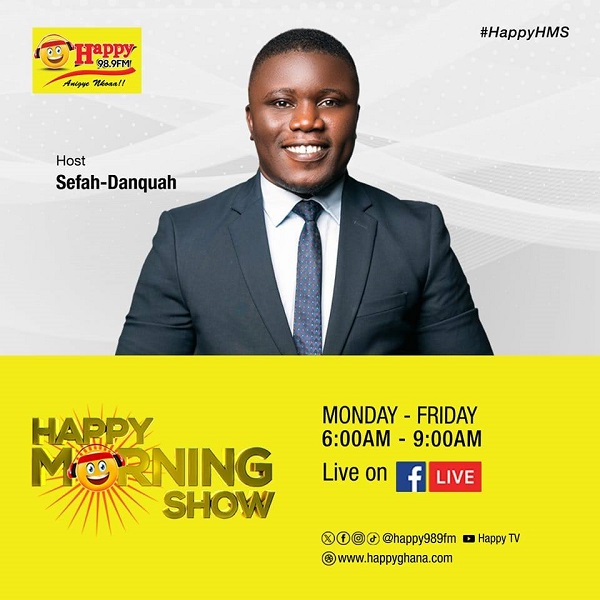
LIVESTREAMING: Happy FM Morning Show

0

Happy FM morning show is aired every day of the week Happy FM morning show is aired every day of the week

Experienced, well-read, in-depth journalists host Happy Morning Show in a lively, objective, and chatty presentation style.

It is the nation’s first and only mixed-language-English and Twi-morning show.

The trio objectively addresses issues of public interest and aims to educate and engage listeners and leaders for better governance and development.

Watch the Livestream below:

Telecel rebuts Minority’s claims in AT move

0

Telecel has described the claims by the Minority in Parliament as 'misleading' Telecel has described the claims by the Minority in Parliament as ‘misleading’

Telecel has dismissed what it describes as “misleading claims” by the Minority in parliament regarding its role in the ongoing challenges facing AT Ghana – stating that its involvement has been guided strictly by regulatory directives and a commitment to maintaining service continuity for millions of customers.

In a press statement, the company said it was compelled to clarify its position following the Minority’s press conference earlier in the week, which raised concerns over Telecel’s financial standing, alleged political influence and perceived attempts to take over AT Ghana through opaque means.

Telecel explained that its current engagement with AT Ghana stems from a directive by the National Communications Authority (NCA) after the shutdown of AT’s network sites by ATC Ghana in August due to unpaid debts.

“NCA directed the migration of network traffic from AT Ghana (AT) to Telecel Ghana’s network following the shutdown of AT’s sites by ATC Ghana in August 2025, due to long overdue debts of AT to ATC Ghana,” the company said.

“Telecel Ghana has since September 1, 2025 been providing national roaming services to AT as an interim measure. Without this intervention, AT customers would not have been able to use mobile voice and data services across the country,” it continued.

The company added that it is awaiting the outcome of work by KPMG, which has been appointed by government as transaction advisor, before any further decisions are made on the matter.

Responding to allegations about its financial capability, Telecel stated that it remains profitable and well-capitalised – contrary to claims of indebtedness.

“Telecel Ghana is profitable and has posted a year-to-date net profit of multiple hundreds of millions of Ghana cedis. Over US$240million in financial relief and investments has been made by Telecel since the acquisition in 2023 and not US$10million as was stated at the press conference,” it said.

The company also noted that no staff have been laid-off since the acquisition, adding that it continues to be recognised as a ‘Top Employer year on year’.

Addressing claims that its corporate social responsibility (CSR) activities were politically motivated, Telecel described such suggestions as “disingenuous, unfortunate and should be disregarded by the public”.

It said its recent donations and sponsorships form part of a longstanding commitment to social investment in health, education and community development.

“The recent donation of advanced cervical cancer screening equipment to the Korle Bu Teaching Hospital, Tamale Teaching Hospital and Sefwi Wiawso Government Hospital was in fulfillment of a commitment publicly announced by Telecel during May 2025 following the Ghana Medical Trust Fund launch by His Excellency the President,” the statement said.

It further clarified that its sponsorship of cultural festivals, including the Homowo celebration, was done in response to requests from Traditional Councils and not political figures.

Reaffirming its adherence to ethical conduct, Telecel emphasised that it operates under a joint ownership model that includes government participation.

“Telecel Ghana is a legal entity operating with the registered name Ghana Telecommunications Company Limited with the government of Ghana holding 30 percent shares on behalf of the people,” it said.

The company consequently urged the public to rely on verified information rather than political conjecture.

“We operate with professionalism, transparency and adherence to the law and are committed to preserving the interests of all stakeholders. We encourage the public to disregard any statements that misrepresent Telecel’s role, integrity or intentions,” the statement read.

Controversial Akufo-Addo statue to be re-erected

0

The statue was mounted to honour President Akufo-Addo’s contributions to the region The statue was mounted to honour President Akufo-Addo’s contributions to the region

The dismantled statue of former President Nana Addo Dankwa Akufo-Addo around Takoradi, which sparked public debate after its mysterious removal, is set to be reinstalled following repair works, according to a 3news.com report.

According to the report, Prophet Elisha Joshua, an independent parliamentary candidate for the Evalue Gwira constituency in the 2024 Election, has confirmed that a replacement statue has been completed and will soon be re-erected at the Effiankwanta Regional Hospital Roundabout in Sekondi.

The original statue, mounted to honour President Akufo-Addo’s contributions to the development of the Western Region, was taken down by unknown individuals shortly after the 2024 general elections.

The incident drew widespread criticisms, with many describing it as politically-motivated.

Prophet Joshua, who had earlier pledged to restore the monument, emphasised that such actions of political intolerance should not be condoned.

“Acts like these must not be encouraged since they could create a dangerous precedent. Tomorrow, someone may decide to destroy whatever President Mahama will also build,” he cautioned.

In an interview on Connect FM’s Omanbapa Morning Show, he revealed that preparations for the statue’s reinstallation are far advanced.

He explained that the statue was initially dismantled due to ongoing road construction at the site.

Akufo-Addo’s controversial statue at Effia-Nkwanta Regional Hospital completely destroyed

“The main reason it was taken down was because the road was not completed. Now that the road is done, the statue can be erected without opposition from anyone,” he stated.

Prophet Joshua added that he intends to seek formal approval from regional authorities before reinstalling the monument.

“The roundabout and the pillar where the statue stood are still intact. The new statue has been molded, and we’ll soon meet with the regional leaders to get their consent for reinstallation,” he said.

AM/AE

Meanwhile, catch the highlights of Sarkodie x Shatta Wale’s epic performance at Rapperholic Homecoming on GhanaWeb TV below:

Watch as some Ghanaians demand quick prosecutions in ORAL cases

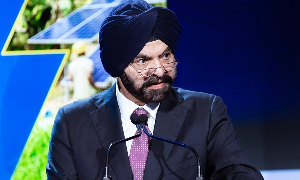
World Bank pushes US$9 billion agribusiness drive

0

World Bank Group President Ajay Banga World Bank Group President Ajay Banga

The World Bank Group has launched a major agribusiness initiative aimed at transforming the livelihoods of smallholder farmers and boosting food security, with a particular focus on Africa’s vast uncultivated land.

The programme, AgriConnect, seeks to create jobs, increase farmer incomes and strengthen value chains across developing countries. With global food demand expected to rise more than 50 percent in the coming decades, targetted investment in agribusiness could generate millions of jobs across the value chain – from input supply and logistics to processing and retail.

“We’ve set a target to double our agribusiness commitments to US$9billion annually by 2030, aiming to mobilise an additional US$5billion. It is grounded in what we’ve tested in the field and in lessons borrowed from others. Steal shamelessly and share seamlessly – that is how we succeed together,” World Bank Group President Ajay Banga said at the programme’s launch on Tuesday in Washington, D.C.

The World Bank Group President said agriculture remains central to development but stressed a need to transform it into a driver of large-scale employment and income growth.

“Over the next 10 to 15 years, roughly 1.2 billion young people in developing countries will enter the workforce, but only about 400 million jobs are expected to be created under current trends. That gap could either drive economic growth or fuel instability,” Mr. Banga said.

Africa’s agribusiness sector alone could reach US$1trillion by 2030, providing a critical engine for economic growth and food security.

As part of the initiative, the International Fund for Agricultural Development (IFAD) pledged to reach at least 70 million small-scale farmers by 2030 – aiming to increase their productivity, market access and incomes. The pledge was made by IFAD President Alvaro Lario during the World Bank’s Annual Meetings in Washington.

“IFAD investments have led to higher incomes, bigger yields and better market access for small-scale food producers,” Mr. Lario said.

He added that the goal is to ensure rural areas become engines of growth, jobs, and food security by connecting farmers to markets and resources.

AgriConnect is designed to support 250 million smallholder farmers globally, with backing from the World Bank, IFAD, African Development Bank and Inter-American Development Bank. IFAD’s experience shows that investments in remote and fragile rural areas can significantly boost incomes and food production.

Recent projects between 2022 and 2024 recorded average income growth of 34 percent and production gains of 35 percent for participating farmers. Market access for these smallholders also improved by an estimated 34 percent.

The initiative also emphasises private sector engagement, digital tools and youth involvement. Between 2019 and 2023, 70 percent of IFAD projects engaged local businesses to strengthen value chains. Investments now include de-risking support for small- and medium-sized enterprises (SMEs) and rural financial institutions, allowing farmers to access finance, technology and know-how.

IFAD has also invested in digital innovations such as mobile-based tools that help farmers manage crops, receive advice and facilitate payments while providing data for credit access.

Specifically, IFAD’s overarching objective in Ghana is to reduce poverty in line with government’s economic development strategy. IFAD-supported projects help build inclusive and sustainable institutions, backed by pro-poor investments, policies and innovation. Since 1980, IFAD has invested a total of US$271.5million in 17 projects and programmes in Ghana, benefitting more than 3,500,000 households.

The World Bank President outlined a three-pillar approach to generating jobs through agribusiness: build infrastructure and skills, create predictable regulations and a business-friendly environment and provide risk tools that attract private investment. Africa, with 60 percent of the world’s uncultivated arable land, is seen as central to the strategy. Other emerging regions, including Latin America and Asia, are also targets for increasing productivity, market access and financing for smallholders.

The initiative seeks to address structural challenges that limit smallholders’ ability to scale, including land tenure clarity, irrigation, storage and access to finance. By supporting producer organisations, cooperatives and structured value chains, AgriConnect aims to create predictable routes to market, enhance resilience against climate shocks and increase farmer incomes.

“Digital technology is the glue holding this system together,” Mr. Banga said. “Tools that detect crop disease, recommend fertiliser use and enable secure payments create a data-trail that supports credit access and lowers the cost of capital.”

He noted that pilot programmes in India’s Uttar Pradesh have demonstrated the approach’s scalability and impact.

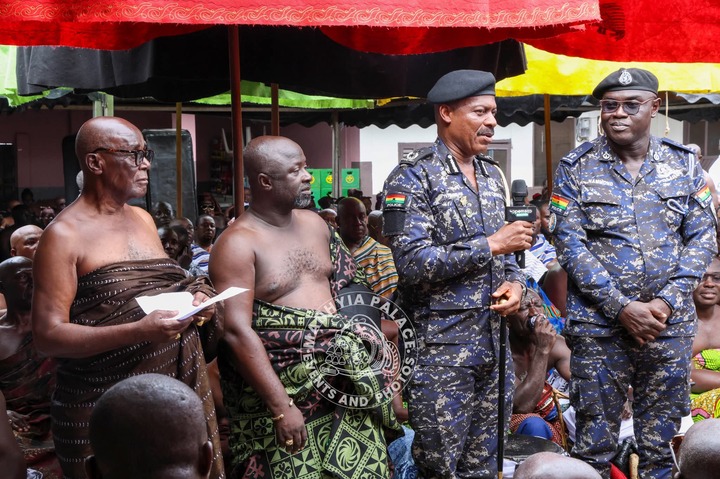
Manhyia receives police report on rising land conflicts in Ashanti Region

0

The Asantehene, Otumfuo Osei Tutu II, has received a report from the Ashanti Regional Police Command detailing a growing number of land disputes among traditional authorities in Asanteman.

The report, presented by Regional Police Commander DCOP Emmanuel Teye Cudjoe three days ago, includes a list of chiefs involved in the disputes, the Asantehene disclosed during a meeting of the Asanteman Council on Thursday.

Some Actors Do Ask Me To Have S€x With Them, So As To Allow Me Sleep In Their Houses” Omidan Lege

0

Some Actors Do Ask Me To Have S€x With Them, So As To Allow Me Sleep In Their Houses” Omidan Lege

News Hub Creator8h

Nollywood actress Omidan Lege has opened up about the dark side of her early struggles in the film industry, revealing how some male colleagues attempted to take advantage of her vulnerability during her formative years as an actress.

Speaking in an interview shared on the official YouTube channel of Feel Right News TV on Thursday, October 16, 2025, the actress recounted how life was extremely difficult when she started out in filmmaking. According to her, there were times she had nowhere to stay and even resorted to sleeping under bridges just to survive.

Lege recalled that when she occasionally sought temporary refuge at fellow actors’ homes, some of them turned her down unless she agreed to their inappropriate demands. “I encountered a lot of challenges when I started filmmaking,” she said. “I remember those days I used to sleep under the bridge. Sometimes, when I was stranded and went to my colleagues’ houses, they would say there was no space. Some even told me to sleep with them first before they could let me stay.”

The actress noted that although the offers often came when she was desperate and without options, she always chose to endure hardship rather than compromise her dignity. “They knew I was stranded and thought I would have no choice, but I preferred to stay outside than give them my body,” she added.

Her revelation has sparked discussions about the exploitation and moral challenges young women face in the entertainment industry, particularly those struggling to find their footing without support.

Watch the video from 6:56 to 7:30

Ghanaians React As Yaw Buaben Asamoah Says That NPP Is No Longer Referred To As New Patriotic Party

0

Yaw Buaben Asamoah, the interim General Secretary of the United Party (UP), has issued a strong critique of the current state of the New Patriotic Party (NPP), raising serious concerns about its direction and leadership.

In a recent statement, Mr. Asamoah expressed his deep disappointment over what he describes as a significant departure from the party’s founding principles and identity.

According to him, the NPP has strayed far from its original values of inclusivity, internal democracy, and policy-driven leadership.

He asserted that the party now appears to be functioning more as a personal political vehicle for President Nana Addo Dankwa Akufo-Addo, rather than a vibrant political organization that reflects the collective will and vision of its members.

He went further to describe the current NPP as “Nana’s People’s Party,” implying that allegiance to the president has taken precedence over commitment to the party’s broader ideals and democratic traditions.

Mr. Asamoah emphasized that this growing personalization of power within the NPP is not only unhealthy but also dangerous for Ghana’s democratic development.

He argued that the centralization of influence around the presidency has weakened the party’s internal structures, discouraged open debate, and alienated many long-serving members and supporters who once believed in the NPP’s core values such as good governance, transparency, and respect for the rule of law.

His remarks come at a politically sensitive time, as Ghana prepares for the next general elections. The statement is already stirring reactions among political commentators, party insiders, and the general public.

Many expect it to ignite broader conversations about leadership, accountability, and the future of the NPP as a democratic institution within Ghana’s political framework.

See some of the reactions from Ghanaians below.

Source: https://www.facebook.com/100069432252170/posts/pfbid0Y7uiEYaCkgMD8wLyLT9sJzVUkvUZd98tAiGd6euA1okqzVNB2Ykx8tzquqRTbcTdl/?app=fbl

Germany to seize €720m in frozen assets from Russian bank

0


The Frankfurt Higher Regional Court intends to confiscate around €720 million ($839 million) from the frozen assets of a Russian financial institution, the judiciary in the central state of Hesse said on Wednesday.

Special proceedings have been opened at the request of the Federal Public Prosecutor’s Office, the authority said.

The bank in Frankfurt was added to a EU embargo list against Russia, following its full-scale invasion of Ukraine in February 2022, in June 2022, according to a statement.

As a result, all of the company’s assets at European financial and credit institutions were frozen in response to the attack on Ukraine. 

Shortly after the listing, unknown people at the bank are said to have attempted to withdraw the funds. However, a corresponding electronic transfer order was not executed. 

Under the proceedings, the money is to be confiscated in favour of the state treasury.

A date for the necessary main hearing has not yet been set.

Source: dpa

World Bank touts poverty reduction potential of 24-Hour economy, Big Push programme

0


World Bank touts poverty reduction potential of 24-Hour economy, Big Push programme – Ghana Business News


Kotoko have a good record against North African sides – Sarfo Duku on WAC clash 

0

Asante Kotoko’s Head of Communications, Lawyer Sarfo Duku Esq, has acknowledged the challenge ahead of the club’s CAF Confederation Cup playoff clash with Wydad Athletic Club (WAC) but insists the Porcupine Warriors have what it takes to prevail.

Speaking in an interview with GTV Sports+, Sarfo Duku described the fixture as a difficult one, given the history of encounters between Ghanaian and North African clubs. 

He, however, pointed out Kotoko’s impressive record against teams from the region.

“Yes, the game is coming live and from whichever angle we look at it, it’s going to be a tough game. It has never been easy for Ghanaian clubs when they come face-to-face with their North African counterparts,” Duku said.

“But I think Kotoko has not fared badly against North African sides. Especially when we talk about WAC, and you look at the records, they show that Kotoko have done well.”

The experienced communicator also reflected on one of the club’s most painful memories against the Moroccan giants — the 2002 CAF Cup Winners’ Cup final, which Kotoko lost on the away goal rule after winning 2–1 in Kumasi.

“Except for that terrible experience in 2002 when we had to lose the cup to them in the grand finale on the away goal rule. In that game, Kotoko won 2-1, but we lost the trophy,” he recalled.

“Most of our supporters have not forgiven us. Sometimes we meet some of them and they tell us that from that day till date, they have not watched any of our matches because they lost interest.”

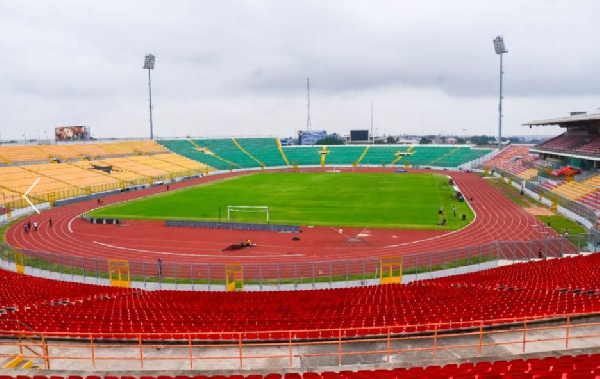
Asante Kotoko will host Wydad AC at the Accra Sports Stadium on Sunday, October 19, 2025, after CAF declined approval for the Baba Yara Sports Stadium to host the game due to renovation works.

Assibey Antwi, Gifty Oware to face court today over NSA ghost names scandal

0

Former Executive Director of the National Service Authority (NSA), Osei Assibey Antwi, and his deputy, Gifty Oware, are expected to appear in court today, Friday, 17th October 2025, to answer charges of alleged financial misconduct involving several millions of cedis.

Mr. Assibey Antwi faces 14 counts, including causing financial loss to the state, stealing, and money laundering.

His charges are in line with sections 179A(1) and 124(1) of the Criminal Offences Act, 1960 (Act 29), and section 1(2)(c) of the Anti-Money Laundering Act, 2020 (Act 1044).

According to prosecutors, the former NSS boss allegedly approved payments to over 60,000 ghost national service personnel and misappropriated public funds during his tenure between August 2021 and February 2025.

His deputy, Gifty Oware, also faces multiple charges, including stealing, money laundering, and abuse of office.

The Attorney-General’s Department accuses her of misappropriating about GH¢38.46 million between February 2022 and March 2024, while overseeing finance, audit, and procurement at the Authority.

Prosecutors allege that Ms. Oware dishonestly transferred GH¢31.5 million from a loan facility meant to support national service personnel into the account of her private firm, Blocks of Life Consult, under the guise of supplying goods on a hire-purchase arrangement.

Read more details…

National Service Scandal: Gifty Oware-Mensah charged for stealing over GH¢38m

Prophet outlines plans to tackle illegal mining nationwide

0

The Founder of Glory and Dominion Ministry in Takoradi of the Western Region, Prophet Elisha Joshua Kabenlah, has announced that he has developed strategies aimed at eradicating illegal mining, commonly referred to as galamsey, within the country.

These strategies, according to him, propelled by citizen advocacy, would concentrate on the Electoral Commission’s database, chiefs, landowners, merchants, fuel stations, and the judicial system (law courts).

“We will formulate these strategies, and I sincerely hope that the President will grant me this permission and opportunity. I pledge that within 90 days, galamsey will cease. The practice is still ongoing, and we will initiate our efforts in the Western Region. We are ready to engage with the government on this matter,” Prophet Kabenlah said.

“Galamsey represents a significant national concern, and it is our shared duty to eliminate this ‘cancer.’ The Church must take a leadership role by being proactive rather than passive participants and campaigning against this national disgrace; we cannot afford to be idle, absolutely not! We require a revitalisation in our efforts to protect the environment and our natural resources,” he highlighted.

Prophet Kabenlah disclosed these strategies during an interview with The Ghanaian Times, where he expressed his views on the rampant illegal mining that has devastated much of Ghana’s valuable land and environmental resources.

He pointed out that illegal mining had led to a decline in cocoa production, emphasising that the fish in the Ankobra River within the Evalue Gwira enclave have also suffered due to significant pollution.

He said attempts made by security agencies have not been entirely effective, as illegal miners receive information from informants well in advance of the operatives’ arrival at the galamsey sites.

He added that the offenders quickly resumed their activities with new equipment provided by merchants.

His advocacy team, Prophet Kabenlah explained to The Ghanaian Times, would obtain an Electoral Commission database of all chiefs in the communities and, along with other officials, hold them accountable for any environmental violations, including galamsey.

Moreover, he stated, “Chiefs receive their shares from landowners who sell properties for galamsey. They play a crucial role in the galamsey industry, alongside the ‘merchants of the trade,’ who provide equipment such as Chang Fan machines. You apprehend the young individuals but leave the masterminds untouched. It is impossible to halt galamsey.”

He suggested that the coalition of advocates would collaborate with the district assemblies and assembly members to issue summons to defiant chiefs and landowners.

Prophet Kabenlah emphasised that landowners conspired with the chiefs in the sale of lands for galamsey and, as a result, they would be subjected to prosecution in specialised high courts, required to sign a bond of good behaviour, and upon violation, face imprisonment.

He believed that this approach would act as a deterrent and compel chiefs and their accomplices to cease illegal mining activities in their regions.

FROM CLEMENT ADZEI BOYE, TAKORADI

🔗 Follow Ghanaian Times WhatsApp Channel today. https://whatsapp.com/channel/0029VbAjG7g3gvWajUAEX12Q
🌍 Trusted News. Real Stories. Anytime, Anywhere.
✅ Join our WhatsApp Channel now! https://whatsapp.com/channel/0029VbAjG7g3gvWajUAEX12Q

Ghana faces cataract surgery crisis as access remains critically low

0


Ghana faces cataract surgery crisis as access remains critically low – Ghana Business News


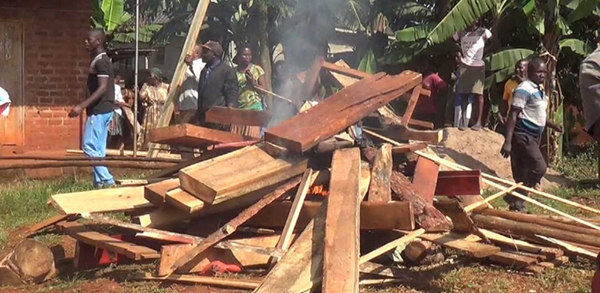
Man set ablaze after being found with human hand

0

When the Police finally arrived, the suspect had already succumbed to the crowd’s fury When the Police finally arrived, the suspect had already succumbed to the crowd’s fury

The quiet town of Assin Bereku, district capital of Assin North, was shattered on Tuesday October 14, 2025 morning by a chilling scene of vigilante justice.

A man, known only as Asuo and in his 30s, was brutally lynched by an enraged crowd after being caught with a blood-soaked bag containing what appeared to be a human hand.

A neighbour watched in horror as Asuo left his home, clutching the grisly bundle and alarmed by the sight, the vigilant neighbour raised the alarm just as the boy’s frantic parents combed the area for their missing nine-year-old.

The community’s rage exploded instantly when the connection was made and within minutes, Asuo was dead.

When the Police finally arrived, the suspect had already succumbed to the crowd’s fury.

A search of his home revealed a horrifying stash of bloodied knife and bedsheets.

The two bodies had been taken to the morgue in Assin Fosu as authorities launch a full investigation into the horrific crime.

Sylvester Amakye, the District Chief Executive on hearing the news visited the site to denounce the tragedy and issued a strong warning: “Such acts of vigilante justice must never happen again.”

He implored the youth not to take the law into their own hands and to trust law enforcement agencies to bring offenders to justice.

Museveni rallies supporters on wealth creation in Yumbe

0

People attend President Museveni's campaign rally in Yumbe District People attend President Museveni’s campaign rally in Yumbe District

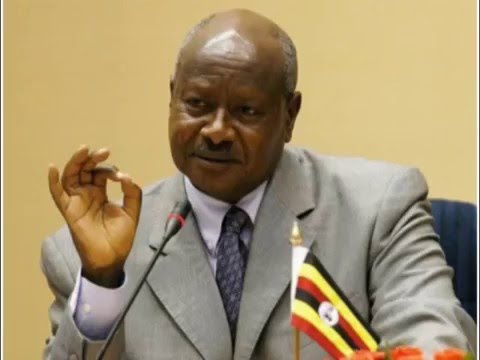
President Museveni, the National Resistance Movement (NRM) party candidate, has re-echoed his call on Ugandans to embrace wealth creation and improve their livelihoods.

He said while the NRM government has prioritised infrastructural programmes such as road tarmacking, construction of health centres, schools, and industrial parks, kicking poverty out at the household level comes at the top of his five-year agenda in case he is re-elected.


“We started with Entandikwa, Bonna bagaggawale, Operation Wealth Creation, Parish Development Model, and the Uganda Women Empowerment Programme to empower Ugandans and get them out of poverty,” Mr Museveni, who is seeking a seventh term, told a gathering at Geya Primary School Ground in Yumbe District yesterday.

Throughout his campaign rallies, Mr Museveni has emphasised peace and security and wealth creation and development, which he refers to as major pillars of his ruling NRM government.

The residents recognise the NRM government for its concerted effort in restoring peace in the once war-ravaged area. The government has also upgraded Yumbe Hospital to a Regional Referral Hospital with a view to improving health services in the district. 

“I want Ugandans to get involved in wealth creation. We are putting Shs100 million per parish per year. We are going to add another Shs15 million for local leaders because they have not been getting money in the current arrangement,” Mr Museveni said.

He announced the creation of special funds for religious leaders, university graduates, and cultural leaders. 

“All these are aimed at chasing poverty out of homes. We shall also open up model farms for seed multiplication and commercial farming,” he said. 

But district leaders, in a memorandum they presented before him, cited infrastructural developments such establishment of industrial parks, road tarmacking, and construction of more schools and upgrading of health centres, among others, that they said needed urgent attention. 

Mr Museveni also encouraged locals in Terego and Yumbe to embrace fish farming through the establishment of fish ponds, and to grow coffee and bananas. 

The promises

He promised to construct industrial parks that will create jobs. Already, more than 200 acres of land have been secured by the district for the construction of the industrial park. 

Responding to unfulfilled pledges of supporting the families of former rebels, the late Col Nasur Ezaruku and Gen Ali Bamuze, and the construction of a secondary school, Mr Museveni asked the State House team to capture details for a possible follow-up.


According to statistics from the Electoral Commission, in 2021, of the 113,855 registered voters, Mr Museveni won with 50,686 (71.24 percent). Meanwhile, the runner-up, Robert Kyagulanyi, garnered 16,890 (23.74 per cent) votes.

National Boardroom Governance Summit 2025 Champions Bold Leadership and Governance Excellence

0

The second edition of the National Boardroom Governance Summit concluded with a call for African board leaders to embrace bold, ethical, and inclusive governance to sustain institutional growth and public trust.

Convened by Professor Douglas Boateng, the summit, held on October 14, 2025, at the Labadi Beach Hotel, brought together over 800 participants, including board chairpersons, CEOs, policymakers, regulators, and governance experts, under the theme “Daring to be Different: The Role of the Chairperson in Effective Boardroom Governance.”

Delivering the keynote address, Hon. Julius Debrah, Chief of Staff at the Office of the President, highlighted that effective boardroom governance is vital to translating national strategies into tangible results. He stressed that when leadership upholds integrity, accountability, and professionalism, it builds investor trust, drives job creation, and reinforces Ghana’s overall economic stability and growth.

“Sound boardroom governance determines whether strategy becomes success or another shelved ambition. When boards are transparent, accountable, and professionally run, capital becomes confident, jobs multiply, and institutions grow resilient. Weak governance, however, invites inefficiency, politicization, and public mistrust. Ghana’s economic resilience, investor confidence, and national reputation are all reflections of how its boardrooms function,” the Chief of Staff stated.

He further emphasized that government, recognizing this principle, remains committed to strengthening accountability and transparency through initiatives such as the Reset Agenda and the Government Accountability Series, which ensure that sector ministers publicly report on policies and progress.

He emphasized that these efforts reflect government’s resolve to build trust and integrity in governance, noting that while policies provide structure, true accountability must be nurtured within the culture of leadership itself.

He concluded by urging Chairpersons to lead with courage, fairness, and unwavering ethics, noting that aligning productivity with purpose strengthens boardroom governance, drives sustainable economic growth, and fosters national stability.

In his welcome remarks, Professor Douglas Boateng, Africa’s first-ever Professor for Industrialization and Supply Chain Governance, emphasized the need for board chairs to move beyond routine compliance and embrace leadership anchored in purpose, conscience, and service to the greater good.

He noted that effective governance is not merely about titles or procedures, but about fostering trust, fulfilling duty, and shaping a sustainable future for society.

“The seat of the chairperson is not a furniture, it is a promise made to the people we meet today and those we may never meet especially the children who will inherit the output of our decisions,” he stated.

Other distinguished speakers, including Mr. Alex Apau Dadey, Executive Chairman, KGL Group, Stephane Abass Miezan, President of the Ghana National Chamber of Commerce and Industry (GNCC), and Chief Alhassan Andani, Executive Chairman of LVS Africa reiterated that Accountability, effective communications and respect for the CEO’s operational independence remains essential for effective boardroom governance.

The event featured three engaging panel sessions, interactive Q&As, and a networking session that facilitated cross-sector collaboration and peer learning. Participants commended the summit for offering actionable insights on improving corporate governance practices in both private and public institutions.

Closing the summit, Professor Boateng thanked all sponsors and partners for their continued support.

“This year’s summit reinforces that governance transformation must begin from the top. Chairpersons must dare to be different; to inspire, to innovate, and to hold themselves accountable to the people and institutions they serve,” he said.

The National Boardroom Governance Summit is an annual platform convened by Professor Douglas Boateng to advance the culture of ethical governance, leadership accountability, and sustainable business growth across Africa. The summit fosters learning, dialogue, and peer exchange among current and aspiring board leaders.


Gov’t will be able to exit current IMF Programme come next year – BoG Governor assures

0

Bank of Ghana Governor, Dr Johnson Asiama, has assured that Ghana will be able to exit the current programme with the International Monetary Fund (IMF) next year.

According to him, the country is currently ahead of most of the targets and benchmarks under the IMF programme.

The Governor noted that Ghana has worked hard to undertake the necessary reforms to firmly stabilise the economy.

Dr Asiama gave the assurance during an interaction with the IMF’s Director of the African Department, Abebe Selassie, on the sidelines of the IMF/World Bank Annual Meetings in Washington DC.

The discussion formed part of the “Governor Talks Series” organised by the IMF, focusing on Ghana’s recent macroeconomic journey—marked by external shocks, fiscal vulnerabilities, and a challenging global environment.

The Governor’s assurance comes at a time when there have been reports suggesting that the country could be forced to extend the IMF programme to give investors and development partners confidence in government’s commitment to fiscal discipline.

However, Dr Asiama’s remarks appear to calm such fears.

“We should not forget that when this administration took over, there were concerns that we should cancel the programme, and there were doubts about whether we could carry on with it,” he said.

“But the current developments show that we have delivered and turned things around,” he added.

He further noted that “the current ECF programme has also introduced a lot of structural reforms, including those designed to strengthen the Bank of Ghana’s operational capacity and its monetary policy framework.”

Ghana signed up for the IMF programme in 2023, which is expected to end in May 2026. According to the Fund, it has already advanced more than US$2 billion to support Ghana’s economic recovery.

Dr. Asiama also praised the IMF for the support it has provided to help stabilise the economy.

Ghana’s Economic Recovery

The Governor highlighted some of the drastic measures undertaken by both fiscal and monetary authorities to stabilise the economy.

“We met an economy that was challenged, with high levels of inflation, and this was our priority when this administration took over,” he said.

Dr. Asiama added that the Bank of Ghana worked hard to tighten monetary policy and step up liquidity management.

He revealed that following the high inflation levels experienced in 2023 and 2024, the central bank moved swiftly to raise the policy rate and strengthen liquidity controls.

“These measures have helped to reduce inflation to 9.4 per cent as of September 2025,” he said.

“Our policies, going forward, will be data-driven and adaptable to changes in the economy,” the Governor added.

On sustaining the current inflation levels, Dr Asiama emphasised that “now that inflation is within the target band, the challenge is to sustain the gains by continuing to implement sound monetary and exchange rate policies to ensure inflation remains within target.”

He also highlighted the critical role of Ghana’s Gold for Reserves programme, saying it has yielded positive results and enabled the Bank of Ghana to build its reserves.

Exchange Rate Framework

Dr Asiama disclosed that, in collaboration with the IMF, the Bank of Ghana has developed a structured foreign exchange operations framework to intermediate FX flows and smooth excessive market volatility while building international reserves.

“As these framework changes take place, they will bring further transparency to our foreign exchange market operations and help ease volatilities in the market,” the Governor said.

DISCLAIMER: The Views, Comments, Opinions, Contributions and Statements made by Readers and Contributors on this platform do not necessarily represent the views or policy of Multimedia Group Limited.

DISCLAIMER: The Views, Comments, Opinions, Contributions and Statements made by Readers and Contributors on this platform do not necessarily represent the views or policy of Multimedia Group Limited.

Vulcanizer jailed 15 years for motorbike robbery

0

File photo of a jailed person File photo of a jailed person

An Adenta Circuit Court has sentenced a 32-year-old vulcanizer to 15 years’ imprisonment for robbing a rider of his motorbike.

Issiful Bilal, charged with robbery, pleaded guilty before the court on September 25, 2025.

The court convicted him on his own plea but deferred his sentence to today (October 16).

The prosecution, led by Chief Inspector Maxwell Lanyo, told the court that the complainant, Razal Mukiala, was a commercial motorbike rider and a resident of Adenta New Site.

Chief Inspector Lanyo said on September 16, 2025 at about 10:30pm, the complainant was riding his Royal Motorbike with registration number M-25-WX1145 at Ritz Junction, Madina.

Prosecution said the complainant was transporting some passengers with his motorbike when Bilal and his accomplice, now at large, conspired to rob him (complainant), luring him to take them to Adenta New Legon.

On reaching a section of the road near Pinnacle Estate at Adenta Commandos, Bilal pretended his mobile phone had fallen onto the ground and asked the complainant to stop.

Prosecution said Bilal and his accomplice alighted and then pulled out a knife, threatening the complainant and robbed him of his motorbike.

The court heard that Bilal and his accomplice sat on the motorbike and sped off.

Prosecution said the complainant, who had fixed a sensor on the motorbike, activated it and the bike stopped a few meters away.

The complainant then raised the alarm, which attracted people to the scene.

Bilal, sensing danger, pushed the complainant into a gutter, picked up a big stone in an attempt to smash the complainant’s head.

Prosecution said Bilal then pretended it was his motorbike that had been taken by the complainant, however, with the timely intervention by the witnesses, Bilal was arrested but his accomplices escaped.

Bilal led the police to Agbogboloshie and Komba to arrest his accomplice, but he could not be found, prosecution said.

Federation presents over 80,000 coconut seedlings to small-holder farmers in Techiman Municipality

0

The programme aimed at improving household nutrition as well as building a strong foundation The programme aimed at improving household nutrition as well as building a strong foundation

The Coconut Federation of Ghana (COCOFEG), the nation’s largest umbrella organisation in the coconut sector, has presented 81,000 seedlings to the Techiman Municipal Directorate of Agriculture, for onward distribution to small-holder farmers in the municipality.

Stephen Aidoo, the Techiman Municipal Director of Agriculture who disclosed this, said the seedlings (hybrid) would scale-up agribusiness, boost the coconut sector and improve the socio-economic livelihoods of the farmers.

He explained that the directorate had already distributed 61,000 seedlings to small-holder farmers and hoped to share the additional 20,000 by the end of October 2025.

In an interview with the Ghana News Agency (GNA) at Techiman, Aidoo said the coconut sector had huge economic potential, explaining that so far over 500 small-scale and commercial farmers had registered to benefit from the distribution.

He said the coconut seedlings had been planted on about 1,000 acres of land and explained that the distribution was aligned with the implementation of the government’s “Feed the Industry Programme.”

The programme aimed at improving household nutrition as well as building a strong foundation for agro-industrial growth, to ensure food security for the country.

Aidoo said the directorate was expected to distribute three million hybrid coconut seedlings to farmers nationwide, under the programme explaining that “coconut is an economic crop that embodies resilience and versatility and has huge global prospects.

He said the coconut sector created job opportunities for millions of people with vibrant markets, saying the nation’s annual production exceeded 65 million metric tons, with small-holder farmers contributing about 95 percent.

Baba Yara Stadium will get CAF and FIFA clearance soon

0

The Baba Yara Sports Stadium is the home grounds of Asante Kotoko The Baba Yara Sports Stadium is the home grounds of Asante Kotoko

The Minister of Sports and Recreation, Kofi Adams, has assured that the Baba Yara Stadium will soon get FIFA and CAF approval. 

The edifice is currently undergoing renovation after the Confederation of African Football [CAF] described it as unfit to host FIFA and continental-sanctioned games.

The decision has forced Asante Kotoko to play their CAF Confederation Cup games in Accra.

However, speaking to Asempa FM, the Member of Buem constituency hinted that the Baba Yara Stadium will soon be cleared to host international games.

“FIFA is concerned about the Baba Yara Sports Stadium, but massive improvements are currently underway. I believe the pitch will be approved after CAF conducts its inspection,” he assured.

“We have been given some areas to fix before we get the place approved, and I know that we will surely do that.”

At the moment, the Accra Sports Stadium remains the only stadium fit to host CAF and FIFA-sanctioned games.

Having hosted Kwara United in Accra in the first round of the preliminary round, Asante Kotoko will host Moroccan side Wydad Athletic Club in the second round of games on Sunday, October 19.

Police probe hammer and hoe attacks that claimed two lives in Jinja

0

Mafubira residents react violently by setting timber on fire following murder of two people Mafubira residents react violently by setting timber on fire following murder of two people

Police in Jinja have launched investigations into two separate murders that occurred on the night of October 14, which claimed the lives of two residents.

The first incident happened in Lwanda Ward, where Ms Nusula Nakaziba, a mobile money agent, was attacked while returning home with her young daughter.

When the thugs attacked them, her daughter fled while raising an alarm. This alerted residents who came to their rescue. 

Police deployed a sniffer dog to assist with the investigation, and the dog led investigators to Grace’s Furniture Workshop, located across the road, and later to a residence in Lwanda Village.

The dog stopped at a residential house, and the angry locals started accusing its occupants of being involved in the crime.

They stoned the house, breaking windows, and looted property, forcing the occupants to run for their dear lives.

Mr Dan Mulangira, a Nakabango resident, expressed frustration over the death of the security guard, describing him as a law-abiding citizen.

In protest, residents blocked the Kamuli–Jinja Highway using timber and furniture taken from Grace’s Furniture Workshop, which they accused of harbouring criminals. Police intervened, but the situation escalated as some residents set fire to parts of the workshop, while others looted timber and furniture.

The Jinja Northern Division Deputy RCC, Mr Hamisi Kiganira, condemned the incidents, blaming them on the rising youth unemployment and indiscipline in the community.

“It’s alarming that many of our youth have turned into criminals. They don’t want to work; instead, they spend their days betting and later resort to robbing and even murdering innocent people,” Mr Kiganira said.

Mr Kiganira added that security forces have launched regular patrols in the area to restore peace and prevent further violence.

The Overlooked Key to Secure Banking (Part 2)

0

Most people imagine that robust technology and strong systems are the main barriers standing between their money and cybercriminals. In reality, the greatest risk to your security often lies in your own daily habits. Cybercriminals are not just targeting complex systems. Increasingly, they are focusing on individuals, exploiting predictable routines and small lapses in judgement.

Banks such as Absa Bank Ghana invest extensively in security systems. However, no amount of technology can protect against habits that leave personal information exposed. If you believe you are too smart to fall victim, you may already be more vulnerable to the latest tactics employed by fraudsters.

In this series, we are examining some of the most common digital habits that make people vulnerable when banking online, and how you can avoid them. Previously, we highlighted the dangers of weak passwords, acting on urgent requests without verification, and accessing your accounts over public Wi-Fi. In this instalment, we turn to three more habits that deserve your immediate attention.

Digital Habit #4: Ignoring Security Updates on Your Devices

Security updates can feel like an inconvenience. Many people are tempted to dismiss update reminders with a quick tap of “Remind Me Later,” without thinking of the potential consequences. However, neglecting to update your phone, computer, or banking apps can create real vulnerabilities that cybercriminals are quick to exploit.

Software updates do more than introduce new features or fix minor bugs. Their most important function is to address security gaps that attackers are actively searching for. Once a weakness in an operating system or application is discovered, criminals develop malicious software specifically designed to exploit it. If you continue to use outdated software, you are effectively leaving your digital door unlocked.

These risks are not only theoretical: many major cyber incidents worldwide have succeeded because users delayed critical updates. Banks such as Absa Bank Ghana work continuously to strengthen the security of their platforms, releasing regular updates to protect customers from new threats. However, these measures only work if customers update their apps promptly. In fact, many security updates are released in response to threats that have already been identified, which means that delaying installation may leave you exposed to risks that criminals are already exploiting.

The simplest way to stay protected is to enable automatic updates on your devices and banking apps. This ensures you always have the latest security enhancements without having to remember to check manually. For those who prefer to update manually, it is essential to develop a habit of checking for updates regularly, especially for apps related to finance, communication, and identity.

Device security settings also play a role in your overall protection. Take the time to review your phone or computer’s privacy and security settings, switch off unnecessary tracking, and enable features such as biometric authentication where possible. These steps help reduce the amount of personal information available for criminals to use against you.

Security updates are not just another notification to ignore. They are a vital layer of protection in a constantly evolving digital world. The next time your device prompts you to update, do not put it off. A few minutes spent installing updates today may prevent a far greater loss tomorrow.

Digital Habit #5: Relying on Browser-Saved Passwords

Trusting your web browser to remember your passwords often seems like an easy way to save time. Many people choose this option for the sake of convenience, believing their passwords are safely stored behind a single login or fingerprint. However, relying on browser-saved passwords introduces a significant risk to your digital security.

If your device is ever lost, stolen, or compromised by malware, stored passwords can quickly become accessible to cybercriminals. While modern browsers use encryption to protect saved passwords, determined attackers and malicious software can still extract these credentials from your device. This risk is particularly crucial when it comes to banking details, as a single breach may allow an intruder to access your accounts, transfer money, or lock you out entirely before you become aware.

A safer alternative is to use a dedicated password manager. Unlike browser storage, which is directly linked to your device, a password manager stores your login details in a secure, encrypted vault. Even if someone gains access to your device, your passwords remain protected by a single master key that only you control.

Another important habit is to avoid letting browsers auto-fill passwords on shared or public computers. Always log out of banking websites and apps after transactions and never save passwords on any device that does not belong to you.

Digital security often requires prioritising safety over convenience. It may take a few extra moments to enter your password or use a password manager, but that extra effort can make the difference between keeping your information safe and handing it over to a criminal. Protecting your credentials should always be a priority, especially as banking becomes increasingly digital.

Digital Habit #6: Ignoring Bank Alerts and Security Notifications

It can be tempting to treat bank alerts and security notifications as background noise. They arrive frequently and therefore are often overlooked or dismissed as unimportant. However, ignoring alerts from your bank can result in missed warnings about suspicious activity and expose your accounts to greater risk.

Bank alerts serve as an early warning system. Notifications about transactions, logins from new devices, or changes to your account details are designed to keep you informed and help you react quickly if something is amiss. Criminals often attempt unauthorised transactions outside of your usual banking patterns, knowing that a delayed response can give them the time they need to complete their fraud.

By paying close attention to your alerts, you give yourself a critical advantage. If you receive a notification about an activity you do not recognise, contact your bank immediately using a verified number. Prompt action can make the difference between preventing a crime and suffering financial loss.

It is also important to ensure that your contact details are up to date with your bank so that you never miss a notification. If you change your phone number or email address, update your records promptly. Make it a habit to review your account activity regularly, even if you do not receive an alert, and always enable security notifications on your banking app.

Viewing bank alerts as essential safeguards rather than inconveniences will help you maintain control over your finances and protect your accounts from fraud. In the digital age, vigilance is a habit that pays off.

End of Part Two

This concludes part two of our series on digital habits for secure banking. In the final instalment, we will address more habits to avoid and provide further guidance on how to keep your finances safe in an ever-changing digital world.

By: Benjamin Abiemo, Head, Cyber Security Management, Absa Bank Ghana LTD

BoG interventions target market stability, not cedi manipulation – Asiama

0

Governor of the Bank of Ghana, Dr. Johnson Asiama, has rejected suggestions that the Central Bank is overstepping its bounds in managing the foreign exchange market, stressing that its actions fall squarely within a flexible exchange rate framework aimed only at curbing excessive volatility.

Speaking at the IMF–World Bank Governor Talk Series in Washington, D.C., Dr. Asiama explained that while the Bank occasionally intervenes to stabilise the cedi, such actions are reserved for periods of exceptional market pressure.

“The framework that we have is a flexible exchange rate management framework. Essentially, what we do is smoothen excessive volatilities,” he stated.

Addressing concerns about the scale of intervention, he said: “Yes, there were allegations about whether we were intervening in the market, but that was not exactly the case,” noting that significant foreign outflows had required short-term support from the Central Bank.

According to Dr. Asiama, between the second and third quarters of 2025, Ghana undertook several “lumpy” foreign payments, including billions of U.S. dollars to Independent Power Producers (IPPs) and domestic bondholders who exited their holdings amid the cedi’s appreciation.

At the same time, remittance inflows weakened, draining liquidity from the interbank foreign exchange market.

“In the mix of that, the central bank had to step in. The interbank FX market had dried up, so the central bank had to provide that support,” he said.

Dr. Asiama added that market conditions have since improved, thanks to directives requiring mining firms to channel all foreign exchange inflows through commercial banks — a measure that is already showing positive results.

“We do not over-support the market at all. What we seek to do is limit volatility to ensure smooth dynamics in the market, and that is the framework we will maintain going forward,” he affirmed.

Ghana is on track, we’ll sustain the gains — Ato Forson tells global investors

Billions in energy debt triggered temporary foreign exchange pressure – BoG Governor

0

Governor of the Bank of Ghana (BoG), Dr Johnson Asiama Pandit, says recent pressures on the foreign exchange market were triggered by large energy sector payments and investor exits, not by direct market intervention from the Central Bank.

Speaking in an interview with the International Monetary Fund (IMF) at the ongoing IMF/World Bank Spring Meetings in Washington, D.C., on October 16, he said the Bank of Ghana had to undertake a series of “lumpy” foreign exchange payments between July and August to clear long-standing energy debts and other domestic obligations.

“Yes, there were allegations about whether we were intervening in the market. But that was not exactly the case,” he explained.

The Governor’s remarks come amid renewed public scrutiny of the Bank of Ghana’s foreign exchange management practices and growing interest in the country’s energy sector debt, which continues to weigh heavily on fiscal stability.

“Between the second and third quarter, we had to do a number of lumpy payments. There were all these large arrears in payments to some of the IPPs. These were billions of US dollars.”

He revealed that the Central Bank also faced additional outflows from some domestic bondholders who decided to liquidate their investments after the cedi appreciated.

“We also had some of the domestic debt-affected bondholders who wanted to exit. They felt that because the currency had appreciated, it was the right time to take up their investment. We had to allow them to go,” he said.

The Bank of Ghana Governor said those combined pressures temporarily tightened liquidity in the foreign exchange market.

“We did a lot of lumpy payments between July and August, and you might have seen some bit of that,” he noted.

Dr. Pandit further disclosed that the situation coincided with a decline in remittance inflows, which typically provide over US$6 billion in annual FX injections.

“Because all these inflows accrue to the central bank, and it was happening at a time when we saw some decline in remittance inflows, the central bank needed to step in to meet all those lumpy payments,” he said.

According to him, the interbank foreign exchange market “had dried up” during that period, forcing the Bank of Ghana to provide temporary support.

“The central bank needed to provide that support. But I’m happy to say that the interbank FX market has come back,” Dr Pandit said.

He explained that the Central Bank has since written to mining firms to route their inflows through commercial banks to improve liquidity in the FX market.

“We are beginning to see some pick-up in interbank FX market activity,” he said, clarifying that the directive covers all commodities except gold.

Dr Pandit stressed that with improved market conditions, the Central Bank no longer needs to be heavily involved in supplying dollars.

“As of yesterday, we had committed to make available $150 million. This morning, when I checked, the market had picked up only $90 million, so $60 million automatically goes into our reserves,” he said.

“Same thing Tuesday — we made available $150 million, and the markets picked up less than half that. So automatically, it goes into our reserves.”

He dismissed claims that the Bank was over-supporting the market.

“We do not over-support the markets at all. All we seek to do is to limit volatility and ensure smooth market dynamics. That’s the framework we will maintain going forward,” Dr Pandit emphasised.

DISCLAIMER: The Views, Comments, Opinions, Contributions and Statements made by Readers and Contributors on this platform do not necessarily represent the views or policy of Multimedia Group Limited.

DISCLAIMER: The Views, Comments, Opinions, Contributions and Statements made by Readers and Contributors on this platform do not necessarily represent the views or policy of Multimedia Group Limited.

Serwaa Amihere breaks silence on her law career plans

0

Serwaa Amihere is a Ghanaian media personality Serwaa Amihere is a Ghanaian media personality

Ghanaian media personality and newly called lawyer Serwaa Amihere has finally addressed the big question many have been asking since news broke about her successful call to the Bar.

The big question from what Ghanaians have seen on social media is whether she intends actually to practice law or not.

In a recent video from her hosting the popular morning political show on GHOne TV, Serwaa responded after her colleague, Muntala, playfully asked if she would practice or not.

In her response, she made it clear that not practicing law is out of the question, emphasising that she did not go through five years of intense academic and professional struggle for nothing.

The celebrated broadcaster further noted that she has already taken her first step into the legal field.

According to her, on Monday, October 13, 2025, she was officially introduced by the law firm she practices with at the court, although she declined to mention the firm’s name publicly due to the rules that govern the practice.

Power struggle rocks Resurrection Power New Generation Church after death of Kwadwo Boakye

0

The church’s legal representative, Alexander Kodwo Kom Abban The church’s legal representative, Alexander Kodwo Kom Abban

The ongoing turmoil in the Resurrection Power New Generation Church (RPNGC) is a “coordinated effort” by a faction within the church to seize control under the pretext of demanding financial transparency and accountability, the church’s legal representative, Alexander Kodwo Kom Abban, has revealed.

According to him, the countless allegations and rumours were all part of a grand scheme by a few disgruntled members of the church and underlined the power struggle that had bedevilled the church, following the untimely demise of its founder, Reverend Dr Anthony Kwadwo Boakye.

RPNGC has been embroiled in a leadership crisis following allegations of financial mismanagement and a power struggle by a faction within the church who were bent on seizing control under the pretext of demanding financial transparency.

Addressing a news conference in Accra on Tuesday October 14, 2025, Abban denied the allegations of financial mismanagement, stressing that some purported elders of the church are spreading false rumours to hijack the administration of the church.

“These individuals are spreading baseless allegations and inciting division with the sole intention of hijacking the church,” Abban said, labelling the effort as a “calculated coup d’état.”

These purported individuals, led by Elder Benjamin Frimpong Yeboah, have planned to cut off the children of the late founder, Dr Anthony Boakye, from all administrative roles in the church alleging that the children are living liverish life after the demise of the founder, their father.

Rev Dr Anthony Boakye, who died in February 2023, had formally registered himself, his wife Margaret Boakye, and their children Benjamin and Jennifer Boakye as directors of the church at the Registrar General.

He also appointed John Kofi Boateng (known as “Dada Boot”) as General Secretary and Linda Naa Odarley as Deputy Secretary.

Founded in 2002, the church grew into a nationwide movement but lacked formal governance structures, with leadership largely centralised around the late founder and his inner circle.

Following his death, a funeral committee was formed comprising family members, elders, legal advisors, and staff, of which Shardrack Adjetey Sowah, who is a member of the church, was made the chairman of the said funeral committee.

In June 2024, the crisis deepened when an audio recording surfaced allegedly featuring Kofi Nyarko, who claimed to be Rev. Boakye’s grand-nephew, accusing the founder’s children of embezzling church funds.

Abban dismissed the claims as “malicious and unfounded,” adding that Nyarko had previously been implicated in theft during Dr Boakye’s illness at his house.

“Every individual named in the recording denied the allegations when I met them. Nyarko was invited to substantiate his claims but never showed up,” Abban stated.

Poultry farmers in Western Region urge government to entrust birds into professional hands

0

The government’s policy of (Nkoko Nkitinkiti) intends to give every constituency 10,000 birds The government’s policy of (Nkoko Nkitinkiti) intends to give every constituency 10,000 birds

The Western Regional Poultry Farmers Association says distributing broilers to non-poultry farmers or inexperienced groups at the constituency level was tantamount to the failure of the programme. 

The government’s policy of (Nkoko Nkitinkiti) intends to give every constituency 10,000 birds at an estimated cost of 200 million cedis, a significant commitment to the Poultry sector.

The group said, broilers required specialised care; feed regime, housing, vaccination and stress management, therefore without adequate training to beneficiaries it would result in high mortality and economic loss to the state.

Emmanuel Benya, the Regional Chairman of the Association, at a press conference at Takoradi said though the initiative was a bold one to reduce dependency on imported Poultry, critical implementation risks must be addressed.

He mentioned bird mortality, threats of outbreak of diseases and market disruption as a major challenge of poultry farming, and recommended Cockerell as a more sustainable and cost-effective alternative for the project, than broilers which were very fragile and had less resistance to infections.

“We strongly recommend Cockerell or Saso which are more resilient, require less intensive care or management and are better suited to the Ghanaian climate with lower risks options and are also in high demand,” the Chairman explained.

Benya said the ability to raise birds was not a task for the faint hearted; “members of the Association are therefore cardinal in the successful implementation of the policy…this could also save numerous birds from the mortality bracket.”

They were also of the view that the government must gave each identified Poultry farmer or commercial farmer specific number to rear as against giving all 10,000 birds to one farmer…this will save deaths associated with mobility after the four weeks period.

Benya said the policy had the power to become a transformative game changer for Ghana in revitalising local agriculture, achieving food security and strengthen the cedi but for implementation hiccups.

The Association suggested a biosecurity protocol, comprehensive training, government supported veterinary services and monitoring framework in partnership with existing farmer Association. 

Benya therefore called on the Ministry of Food and Agriculture and other relevant state agencies to help the government with the right information and management abilities to ensure that the programme became a great success to the teeming sector players.

Some of the poultry farmers encouraged the government to depoliticise the programme to achieve the utmost result.

Dr Randy Abbey commends Black Stars players’ commitment after World Cup qualification

0

Black Stars Management Committee Chairman, Dr Randy Abbey, has lauded the playing body of the senior national team’s dedication following their successful qualification for the 2026 FIFA World Cup.

Ghana secured their fifth World Cup appearance with a hard-fought 1-0 victory over Comoros in their final group game at the Accra Sports Stadium, courtesy of a second-half strike from Mohammed Kudus.

In the wake of criticism surrounding the commitment of certain players, Dr. Abbey insisted that the squad displayed full dedication throughout the campaign. He highlighted that differences in club and national team performances do not reflect a lack of effort from the players.

“Every player has been eager to deliver. No player decided not to give us a bad performance. The performance at the club level is not the same as the national team,” he told Asempa FM.

“The game plan and tactics are always different from the national team. At the club side, they train more and play more together than the national team.

“We shouldn’t criticise that, but we can criticise the performance and not the commitment of the players because they were committed and ready to deliver,” he added.

Ghana will learn their opponents for the 2026 World Cup group stage when the draw takes place on December 5.

The ‘shadow army’ helping Uganda’s long-serving president keep an iron grip on power

0

Toting sub-machine guns and sometimes wearing masks as they drive along the streets of Uganda, members of an elite military unit are increasingly viewed as a private army to keep 81-year-old President Yoweri Museveni in power – along with his ever-growing family dynasty.

Museveni has led Uganda since 1986, when his rebel forces marched into the capital, Kampala. He has since won four elections – all marred by allegations of violence and rigging.

But this is nothing new in the country – since Uganda gained independence in 1962, power has only ever changed hands through rebellions or military coups.

Museveni is seeking re-election next year and the opposition fears that the Special Forces Command (SFC) could be used to prevent it from campaigning, as it says was the case in 2021.

But the SFC, which for years was commanded by Museveni’s son Gen Muhoozi Kainerugaba, has been accused by government critics of abducting, torturing, and killing opposition activists all year round, not just during elections. The SFC denies these allegations.

“It’s like a shadow army within the army, which is only answerable to the president and his son. Its rise and influence are causing resentment among senior generals,” one military source told the BBC.

This is compounded by the fact that Gen Kainerugaba, 51, who is now the army chief and has said he wants to succeed his father one day, has enlisted his own son into the army.

Gen Kainerugaba has also been contemptuous of some long-serving generals, calling one a “buffoon”.

His remarks sent shockwaves through military and political circles, but the government downplayed them as “mere social-media banter” – something for which Gen Kainerugaba is well known.

Several years ago he made a joke remark about invading neighbouring Kenya, to the dismay of generals.

Analysts say the unit has become so influential that it rivals the power of the regular army, which still has commanders who fought in the guerrilla war that brought Museveni and his National Resistance Movement (NRM) to power.

These observers have raised fears that the two could clash one day – as in Sudan where a civil war has broken out following a power struggle between the army and a paramilitary group once allied with it, the Rapid Support Forces (RSF).

The unit now known as the SFC was established when Museveni first took office, and has a motto stating “there is no substitute for loyalty”.

“The SFC is the most powerful unit within the Ugandan military, comprising the [most] highly trained, best-equipped, and best-funded officers in the country,” Dr Gerald Bareebe, a Uganda-born academic based at Canada’s York University, told the BBC.

Both the Ugandan army and the SFC declined to comment when approached by the BBC.

Museveni has previously defended the SFC, saying it was formed for Ugandans. He said that only people who did not wish Uganda well could be unhappy with such a force.

But Museveni’s critics see it differently – arguing that the president has ruled with an iron fist since seizing power, and has turned the country into his family’s fiefdom.

They note that the president’s wife, Janet, is the education minister and Gen Kainerugaba is the army chief. His grandson’s enrolment into the army – announced in July – is seen as perpetuating the family dynasty.

Gen Kainerugaba has twice led the SFC and is credited with expanding it into a force with an estimated membership of more than 10,000. The regular army is thought to have around 40,000 active members.

“They go through specialised training. And also they have sophisticated weapons, unlike the regular army,” a former senior military officer told the BBC.

Although his father promoted him to chief of the defence forces in March last year, Gen Kainerugaba is said to have maintained de facto control over the SFC, with its current commander, Maj Gen David Mugisha, reporting to him.

Gen Kainerugaba mostly operates from the unit’s headquarters – in a building named after his father – in Entebbe, about 34km (21 miles) south of the capital, Kampala.

The SFC boasts on its website that it carries out specialised missions “at a moment’s notice”, and is assigned to secure critical installations such as the main airport and oil fields.

It is widely suspected to have crossed into Kenya last November to capture opposition politician Kizza Besigye, once Museveni’s doctor, and take him back to Uganda to face trial for treason, which has yet to start. The army’s prosecutor has acknowledged the involvement of the Ugandan security forces.

Analysts like Dr Bareebe feel the SFC’s core function “is to guarantee regime survival” by fending off threats – not only from the opposition but also army generals.

“It plays a disproportionately central role in suppressing anti-regime mobilisation and shielding the ruling NRM from both internal dissent and external threats,” Dr Bareebe said.

Although the SFC has denied involvement in the wave of abductions and torture of opposition members, some of its officers have been convicted of abusing their power.

The most prominent case was that of a 32-year-old SFC soldier, who was court-martialled and sentenced to death last November for shooting dead three people and injuring two others, including a one-year-old child.

In May, the presidency said it was investigating a reported incident where SFC soldiers were accused of torturing the driver of a boda boda – as motorbike taxis are known locally. The rider had been rushing to reach his pregnant wife when he got caught up in a presidential convoy.

In the same month, Gen Kainerugaba sparked public outrage after he confirmed the detention of an opposition leader’s bodyguard, who had been missing for days.

He said his “boys” were holding Edward Sebuufu, alias Eddie Mutwe, “in my basement”, and in a social media post, attached a photograph of the bodyguard with a clean-shaven head.

Gen Kainerugaba mocked Mr Sebuufu, saying he was “looking very smart these days” as his beard had been shaved by “my boy”, referring to a junior soldier.

The Uganda Law Society said Mr Sebuufu’s ordeal had not been an isolated case, but was “part of a systematic campaign to silence dissent and crush the aspirations of people yearning for freedom”.

It added that the incident underscored “a dangerous nexus of military power and political oppression”.

The shadowy nature of the unit and its operations have often led to accusations that its existence was illegal.

But in June, parliament passed a controversial legislative amendment, recognising the SFC as one of four official military services – along with the land forces, air force, and reserve force.

Opposition MPs criticised the move, saying the unit should not be given such legitimacy and should instead be disbanded.

“The new law validates an entity that has been operating illegally,” said opposition MP Ibrahim Ssemujju Nganda.

For Dr Bareebe, the SFC’s “elevation in law merely reflects its already dominant position within Uganda’s militarised power structure and reinforces its role as the cornerstone of regime security”.

This concern was shared by respected Ugandan analyst Godber Tumushabe. He recently warned that despite the country’s apparent stability, “all that we have is the absence of war”.

A senior army officer, who preferred not to be named for fear of repercussions, told the BBC that there has been growing discontent within the military about the unit’s recruitment process as it appeared to be along ethnic lines.

Various sources, including those in the military, told the BBC that the SFC was heavily dominated by officers from President Museveni’s Banyankore ethnic group and related communities in order to guarantee loyalty.

“If you look at all SFC commanders since its inception, they come from Museveni’s ethnic group,” says Nganda, the opposition MP.

Of the six commanders who have held the position since 2007, only one does not hail from the west country, where the Banyankore live.

Given these competing interests, analysts fear that a power struggle could break out between rival military factions in the post-Museveni era.

“My greatest fear is that we don’t know what will happen when Museveni goes and there is dissent within the army,” Nganda said.

Dr Bareebe echoed this concern: “A stand-off between the SFC and the regular army – each with its own loyalties, interests, and command structures – could trigger significant political instability and even violence, especially in the absence of a clear succession plan.”

But other analysts disagree, saying that this is where Gen Kainerugaba will come into his own, given his long career with both the army and SFC.

They argue he is well placed to hold the rival factions together and ensure that the Museveni dynasty continues, guaranteeing stability in Uganda.

Such an outcome would, of course, be seen as undemocratic by the opposition.

Robert Kyagulanyi, a former pop star better known as Bobi Wine who is running against President Museveni for a second time next year, describes the unit as a “torture squad”.

Earlier this year, Gen Kainerugaba threatened to behead the opposition leader, though he later deleted the “joke” tweet and apologised.

Bobi Wine told the BBC he and his colleagues were often targeted and beaten up by SFC officers – and he wants the squad disbanded.

“This is largely seen as the section in the military that is responsible for regime survival through brutality,” he said. “They operate with impunity, and they operate under the protection of General Museveni and his son.”

Health Ministry denies withholding funds for La General Hospital Project

0

The Ministry of Health has dismissed claims by former Health Minister Dr. Bernard Okoe Boye that the government has failed to make payments to the contractor working on the La General Hospital project.

Dr. Okoe Boye had accused the government of neglecting the project despite an allocation of ₵60 million in the national budget.

Responding to the allegations on Thursday, October 16, 2025, a spokesperson for the Ministry, Tony Goodman, maintained that the government remains fully committed to completing the hospital.

“The case is that we are making ₵130 million — the Minister made a public statement on that. We have asked the contractor to return to the site. As to whether it is ₵30 million or ₵60 million, that is not for him to say,” Mr. Goodman said.

He further criticised Dr. Okoe Boye for what he described as an attempt to shift blame, arguing that the former minister failed to complete the project during his tenure.

“He failed the people and could not deliver what was expected. Now that the project is being handled by another person, he should allow the new minister to work,” he added.

The La General Hospital project, which has faced several delays since its demolition in 2020, has been a major subject of public concern over the years, with residents and health professionals repeatedly calling for its speedy completion.

Akandoh: Funds for La General Hospital Project to be released soon

7 Things That Still Make No Sense About Thanos

0

The comic book movie genre is home to plenty of lackluster villains. It comes with the territory, as on most occasions the goal is to prop up the good guys and make sure everyone in the theater walks out feeling good. However, a couple of evildoers stand out among the crowd. The first superhero movie villain that comes to mind when talking about the best of the best is almost always The Dark Knight‘s Joker, who loves to explain where he got his scars and just wants to watch the world burn. He has some competition, though, and it comes from the Marvel Cinematic Universe.

Thanos makes his MCU debut in The Avengers‘ post-credits scene, but it takes him until Avengers: Infinity War to really hit his stride. Once the ball finally does get rolling, there’s nothing that can stop the Mad Titan, as he does what he sets out to do, wiping out half of life in the universe using the Infinity Gauntlet. But just because Thanos wins initially doesn’t mean he’s a perfect villain. Here are seven things that still make no sense about the MCU’s Thanos.

7) Giving Away an Infinity Stone

Tom Hiddleston as Loki with his scepter in The Avengers

Loki arrives on Earth in The Avengers with a major upgrade, wielding a staff that allows him to control people. It takes until Avengers: Age of Ultron for the truth to come out, but it turns out that there’s an Infinity Stone hiding in the weapon. While the idea of using a stone to get a stone seems sound, Thanos screws up big-time because he loses one of the objects that will help him complete his goal.

6) Trusting the Wrong People

Ronan from Guardians of the Galaxy.

One would think getting burned by Loki would ensure that Thanos doesn’t take any more chances. However, he doesn’t feel like getting out of his chair in Guardians of the Galaxy, tasking his daughters and Ronan the Accuser with acquiring the Power Stone. Of course, that plan blows up in his face because Ronan and Nebula aren’t up for the task, and Gamora turns her back on him. The Mad Titan’s laziness forces him to make another stop on Xandar that could’ve easily been avoided.

5) Waiting Too Long to Attack


Speaking of laziness, the MCU never reveals the exact moment that Thanos becomes aware of the existence of the Infinity Stones, but it’s fair to assume it’s years before the event of The Avengers. That means he sits idly by while a team of powerful superheroes forms and the gems are used to create powerful beings that can challenge him in the future, such as Captain Marvel and Scarlet Witch.

4) Letting Tony Stark Live


Despite his plan to wipe out trillions, Thanos isn’t exactly blood thirsty in Infinity War. He lets his minions do most of the killing, and even when he has a chance to put someone down, he doesn’t take it. Tony Stark witnesses Thanos’ mercy when the Mad Titan leaves him and his friends on Titan to pursue the final stone. That comes back to bite the villain, as Tony completes the time-travel formula that leads to his defeat.

3) Never Mentioning His Brother


Thanos tells Doctor Strange all about his past and what happened to his home world, Titan. There weren’t enough resources to go around, and it led to a catastrophe. However, Thanos makes it out like he’s the only member of his family still alive. That’s very much not the case because his brother, Starfox, is still kicking and even announces himself as a relative of Thanos. Maybe Thanos isn’t aware of the fact that his brother survived the fall of Titan, but the MCU has yet to confirm that.

2) Only Seeing One Way Through

Josh Brolin as Thanos in Avengers: Infinity War

What went down on Titan was tragic, and it would probably change anyone who witnessed it. But Thanos himself says the entire debate boils down to the fact that resources are finite, which isn’t necessarily true. He could easily use the Infinity Stones to ensure that every planet has everything it needs. Instead, he decides to play judge, jury, and executioner for the entire galaxy. Despite how smart the MCU makes Thanos out to be, he’s also a bit of a fool.

1) Having No Connection to Death


Infinity War had the oppurtunity to make Thanos’ quest make more sense by making him obsessed with Death, the cosmic figure in the Marvel Universe that controls who lives and who dies. The comics use Death to motivate the Mad Titan, and they’re better for it. The MCU chooses to ground the Infinity Saga in reality where it can, though, which makes its Big Bad’s story less interesting than it could be.

What do you think? Leave a comment below and join the conversation now in the ComicBook Forum!

Ghana secures additional 200m RMB Chinese grant for Aflao market, National Theatre

0

President John Dramani Mahama has announced that China has committed an additional grant of 200 million RMB to Ghana.

This builds on an earlier grant of 200 million RMB intended for the construction of the proposed Aflao Market and the renovation of the National Theatre in Accra.

According to President Mahama, the Aflao Market is expected to become a vital trading hub linking Ghana and Togo, aligning with his broader “Resetting Ghana” agenda.

He also revealed that Ghana aims to finalise a Zero Tariff Policy with China by the end of October.

Other topics discussed during the meeting with President Xi Jinping included strengthening regulation of small-scale mining to ensure operations are responsible and licenced, and expanding trade and investment opportunities for Ghana’s business sector.

China has expressed interest in supporting Ghana’s 24‑hour economy initiative and its Green Transition policy, positioning itself as a partner for government and private enterprise.

President Mahama reaffirmed Ghana’s commitment to the One China Policy and expressed eagerness to continue bilateral collaboration under what he called a new era of global governance.

Read also

25,000 students placed in private schools under Free SHS so far – GNACOPS

Ghana is on track, we’ll sustain the gains — Ato Forson tells global investors

0

Minister for Finance, Dr. Cassiel Ato Forson, has assured international investors that the country’s economy is firmly on a measurable path to recovery and is poised for sustained growth and stability.

Speaking to a packed audience of investors in Washington on the sidelines of the 2025 IMF and World Bank Annual Meetings, Dr. Forson declared that “Ghana is on track. We will sustain the gains.”

He underscored that the country’s economic turnaround is already evident in declining debt vulnerabilities and stronger macroeconomic fundamentals, reflecting the effectiveness of government’s policy interventions and reforms.

Dr. Forson expressed strong optimism about the sustainability of the ongoing structural and fiscal reforms, which he said are designed to secure long-term macroeconomic stability.

Looking ahead, Dr. Forson highlighted that Ghana’s economic prospects remain positive.

Growth is projected to rebound strongly in the final quarter of the year, led by a revitalised real sector, while inflation, which has already seen significant declines, is expected to ease further and remain in single digits by year-end.

He added that government remains on course to achieve a positive primary balance of 1.5% of GDP by the close of the fiscal year, a milestone that will further consolidate the gains made under ongoing fiscal reforms.

Dr. Forson reaffirmed government’s dedication to implementing fiscal consolidation measures anchored on tight expenditure controls and prudent financial management.