-1.3 C
London
Sunday, January 11, 2026
Home Blog Page 38

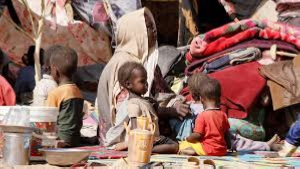
Children killed after drone hits home in Sudan, medics say

0

The Sudan conflict is having a huge impact on children The Sudan conflict is having a huge impact on children

At least 13 people have been killed – eight of them children – after a drone strike on a house in the Sudanese city of el-Obeid, says the Sudan Doctors’ Network.

Most of the dead were part of the same family, the medical group added.

Although no group has claimed responsibility, the medics say the paramilitary Rapid Support Forces (RSF) carried out the attack in an area controlled by the army, and which it has been trying to penetrate for months.

As the civil war between Sudan’s army and RSF rebels approaches its third year, the scale of suffering has seen it described as the world’s worst humanitarian crisis by the UN and aid agencies

To date, more than 11 million people have been forced from their homes by the violence, and hundreds of thousands of people have been killed. Widespread sexual violence is also being used as a weapon of war.

Both the RSF and the Sudanese Armed Forces are accused of atrocities.

Witnesses say Monday’s drone attack on the house in el-Obeid happened in a residential neighbourhood.

The Sudan Doctors’ Network says it “reflects a dangerous escalation of the policy of indiscriminate killing and systematic bombing of safe residential areas”.

The city of El-Obeid remains under army control despite the RSF’s advance elsewhere in the wider state of North Kordofan.

Analysts say it is a key target for the RSF because of its strategic location between Sudan’s capital city, Khartoum, and the Darfur region, where they have established a parallel government and are accused of genocide.

The attack comes days after the RSF hit a power plant in el-Obeid, and also follows what the army claims was an attempted RSF drone attack on the country’s largest hydro-electric dam near the northern town of Merowe.

Scientists Warn Tattoos May Pose Hidden Biological Health Risks

0

Nubian henna tattoos
tattoos

Scientists are warning that tattoos may carry hidden biological risks as growing research suggests tattoo ink can interact with the body in ways not fully understood.

According to Dr Manal Mohammed, a medical microbiology lecturer at University of Westminster in the United Kingdom, tattoo ink does not remain fixed in the skin after injection. Beneath the skin, tattoo pigments interact with the immune system in ways scientists are only beginning to understand, she explained.

While tattoos are generally considered safe, scientists say their long term health effects may be less harmless than once assumed, particularly as permanent body art has surged in popularity in recent decades. The concerns extend beyond regret over names, spelling mistakes or outdated designs to potential biological interactions within the body.

One concern centres on the composition of tattoo inks, which are often complex chemical mixtures. Many pigments currently in use were originally developed for industrial applications such as car paint, plastics and printer toner, rather than for injection into human skin, Mohammed noted. Some inks contain trace amounts of heavy metals, including nickel, chromium, cobalt and, in some cases, lead.

Heavy metals can be toxic at certain levels and are known for triggering allergic reactions and immune sensitivity. Black inks, commonly made from carbon black, may contain carcinogenic compounds linked to cancer. Coloured inks, particularly red, yellow and orange, are more frequently associated with allergic reactions and chronic inflammation.

Tattooing involves injecting ink deep into the dermis, prompting the body to treat pigment particles as foreign material. Immune cells attempt to remove them, but the particles are too large to be fully cleared, Mohammed said. Instead, they become trapped inside skin cells, which is what makes tattoos permanent.

Studies show that tattoo pigments can migrate through the lymphatic system and accumulate in lymph nodes, which play a key role in immune defence. The long term health effects of ink accumulation in these tissues remain unclear, but their central role in immune defence raises concerns about prolonged exposure to metals and organic toxins, she warned.

Some research has linked tattoos to increased cancer risks. A study by the University of Southern Denmark found that people with tattoos may face a higher risk of skin and blood cancers, with the risk of lymphoma reported to be up to three times higher among those with large tattoos. A Swedish study published in 2024 suggested tattoos could raise overall cancer risk by 21 per cent.

Infections represent another concern. Surveys indicate that around one in five people who get tattoos or piercings experience complications such as burning or swelling, with some cases requiring medical treatment. In severe instances, infections can lead to sepsis.

Experts say a major challenge in assessing tattoo safety is inconsistent regulation. In many countries, tattoo inks are regulated far less strictly than cosmetics or medical products, and manufacturers are not always required to disclose full ingredient lists.

Tattoos remain a powerful form of self expression, but they also represent lifelong chemical exposure, Mohammed said. While current evidence does not suggest widespread danger, growing research highlights important unanswered questions about toxicity, immune effects and long term health.

From Inauguration to Reality: Mahama’s First 365 Days

0

Today marks exactly one year since President John Dramani Mahama, dressed like a man who knew this was serious business but also knew the cameras would never forget, took the oath of office for his second coming.

For President Mahama, it was not his first oath, but it was certainly the most loaded. This was not a debut; it was a comeback. And like all comebacks, it came with applause, expectations, and a long list of people saying, “This time, do better.”

When Mahama returned to Jubilee House on January 7, 2025, he did so at a moment of national fatigue. The economy was strained, public confidence had thinned, and many Ghanaians were less interested in political poetry than in practical relief. His mandate, therefore, was clear: stabilise first, then reset.

He wasted little time setting the tone. One of his earliest moves was the dissolution of boards, a signal that the old order was being cleared for a new structure. Appointments soon followed, though not without surprise. Some names long predicted in political whisper circles never showed up, while others emerged quietly.

I vividly recall asking the late Dr. Omane Boamah on inauguration day if he would gladly accept the Health Ministry, as he seemed well-suited for it. But Mahama appointed him as Minister of Defence, a choice that reminded the country that he was not returning to fulfil anyone’s personal prophecy.

Fast forward to February, the President delivered his State of the Nation Address, laying out a sobering but deliberate assessment of Ghana’s condition. It was less of a rallying speech and more of a doctor’s report—honest, detailed, and occasionally uncomfortable, especially for the NPP caucus, now the “super minority.”

Fiscal reforms, spending discipline, and urgent measures to restore confidence in public finances were highlighted, setting the tone for his first year.

This made even more sense when, on March 6, President Mahama chose a modest Independence Day celebration, cancelling the rotational hosting arrangement he deemed unnecessarily costly. In a country accustomed to grand parades and heavy logistics, the scaled-down event was praised, and the message landed: the era of excessive symbolism was paused.

Cost-cutting became a running theme. Mahama insisted on a lean administration, trimming excess and signalling restraint at the very top, as he appointed 60 ministers—a move that surprised even critics in a political class often accused of living large while preaching sacrifice.

By May, the 120-day social contract had run its course. Key promises were fulfilled: the E-levy was scrapped, betting taxes were removed, and a few other relief measures reached citizens. While debates about revenue and fiscal sustainability continue, the political statement was clear: Mahama intended to ease pressure on households immediately.

At his first UN General Assembly since returning to office, President Mahama highlighted Ghana’s economic recovery, climate change efforts, and commitment to regional peace. His speech drew praise for its clarity and ambition.

Beyond policy and administration, the year has had moments of galamsey and drama.
There were high-profile launches of initiatives, including Blue Water Guards and NAIMOS.

There were also moments of tragedy and personal loss. The nation mourned a helicopter crash that claimed the lives of some of the President’s closest aides and colleagues.

President Mahama’s suspension and removal of Chief Justice Torkornoo over alleged misconduct sparked major controversy. While he nominated Justice Paul Baffoe-Bonnie as her replacement, critics questioned the move’s impact on judicial independence, and the former Chief Justice challenged her removal in court, making it one of the year’s most debated episodes.

Despite the weight of governance, Mahama has been swift in addressing trending issues, often noting with a touch of self-deprecating humour that he keeps up with TikTok to know what citizens care about. This attentiveness translated into decisive actions and directives.

One year on, the verdict is neither euphoric nor dismissive. Mahama’s comeback has been steady, cautious, corrective, and responsive.

The reset is not complete. Jobs, incomes, completion of roads, Operation Recover All the Loot, and the fight against illegal mining remain the ultimate tests.

From inauguration to reality, the first 365 days suggest a president governing with the awareness that this chapter is not about returning, but about how he will be remembered.

He has managed tragedy, celebrated progress, and kept a finger on the pulse of public sentiment, all while quietly steering the ship of state.
On we go, second year, Mr. President.

Giving meaning to the Africa Continental Free Trade Area: High Commissioner Alhaji Abdul-Rahman Harruna Attah Drives AfCFTA Agenda with November in Namibia Business Forum & Exhibition

0

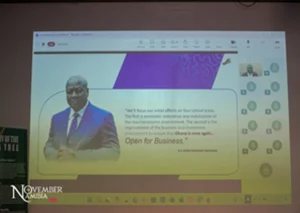
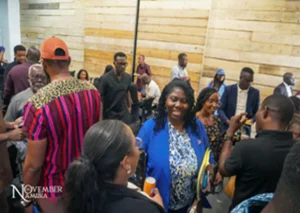
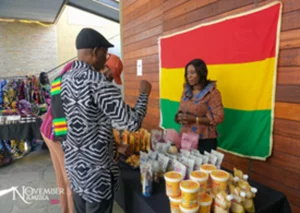
Photos (from left): H.E. High Commissioner Alhaji Harruna Attah drives home a point; Ms. Katrina Amupolo (Manager: MSME Market Access and Export Promotion at Namibia Investment Promotion and Development Board) at the November in Namibia Business Forum


Ghana’s High Commissioner to Namibia has reaffirmed his commitment to deepening tourism, trade, and cultural cooperation between Ghana and Namibia, as the 2025 edition of the November in Namibia campaign records expanded participation and growing institutional support.


Image: captured from GIPC online webinar presentation and in-person networking session at the November In Namibia Business Forum


 The initiative, which was spearheaded by Hype.UP Limited, a Ghanaian marketing and events company, was conceived as a people-to-people and cultural exchange programme aimed at strengthening bilateral relations. Since its inception, it has steadily evolved into a broader platform that integrates tourism promotion with trade, investment, and private sector engagement.

Although now in a key diplomatic role, the High Commissioner’s involvement with the campaign predates his formal assumption of office. Prior to taking up his post, he remained actively engaged with the initiative, and has since demonstrated sustained commitment to its growth and strategic direction.

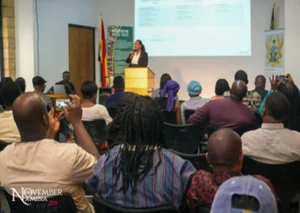
The November in Namibia 2025 edition marked a notable milestone with the introduction of a Business Forum & Exhibition, held alongside the cultural and tourism activities. The forum provided an opportunity for structured dialogue on investment prospects and commercial cooperation, bringing together business leaders, public institutions, and private sector stakeholders from both Ghana and Namibia.

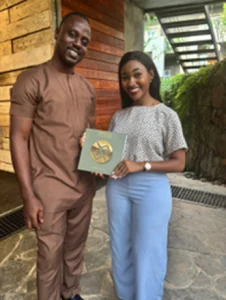
Image: Ms. Katrina Amupolo (Manager: MSME Market Access and Export Promotion at Namibia Investment Promotion and Development Board) delivering presentation; Ike Dsane (C.E.O, Hype.UP Limited) and Ms. Jemimah Ndebele-Deku of NBC captured with newly released  ‘Adi Nyhia: A Book of Symbols by Mr. Kweku Opoku at the November in Namibia Business Forum & Exhibition


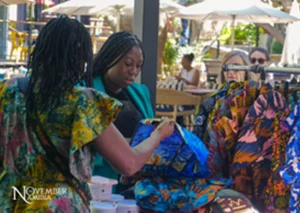
In addition, several Ghanaian companies travelled to Namibia to participate in a business exhibition, showcasing their products, services, and partnership potential. The exhibition underscored the campaign’s growing emphasis on translating cultural exchange into tangible economic opportunities.


Image: Ghanaian businesses at the November in Namibia Business Exhibition in Windhoek, Namibia


The 2025 edition also benefitted from close collaboration between both the Ghanaian and Namibian High Commissions, whose joint efforts helped strengthen coordination and elevate the profile of the campaign. This diplomatic cooperation has been widely noted as a key factor in positioning November in Namibia as a credible bilateral engagement platform.

Further reinforcing the initiative were partnerships with GIPC and NIPB, which contributed to discussions on market access, investment facilitation, and long-term business collaboration.

The steady expansion of November in Namibia reflects a deliberate alignment of cultural diplomacy with economic development objectives. With private sector leadership at its foundation, and growing diplomatic and institutional support, the campaign is increasingly viewed as a model for intra-African cooperation.

As stakeholders look ahead, there is optimism that future editions will build on the progress of 2025, expand participation, and deliver even greater impact for stakeholders in both countries. By all indications, November in Namibia is a campaign that continues to grow in relevance and influence.

Nigeria’s entertainment and media revenues projected to reach $4.9bn in 2026 – report

0


Nigeria’s entertainment and media (E&M) industry is projected to generate revenues of $4.9 billion in 2026, up from $4.5 billion reported in 2025, according to the 2026 PwC Nigeria Economic Outlook.

The projection reflects stronger momentum in Nigeria’s digital economy, which the report identifies as one of the key forces shaping economic performance in 2026.

The report titled ‘Turning macroeconomic stability into sustainable growth’ disclosed that the emergence of the digital economy, supported by regulatory clarity and rising technology adoption, is accelerating growth across media, entertainment, and content-driven services.

According to PwC, digital platforms are reshaping how Nigerians consume media and entertainment, with streaming services, online video, digital music distribution, and social media-driven content creation expanding rapidly.

Read also: Nigerian box office hit historic N15.6bn in 2025 as Nollywood films get more views than Hollywood for first time

These trends are being reinforced by a young, mobile-first population and increasing integration of digital payments, which support monetisation across the entertainment value chain.

The report disclosed that the creative economy is expected to contribute 2 percent of the total revenue generated. OTT video, cinema, music, radio, and podcasts constitute the creative economy segment.

It said, “Growth is increasingly digitally led, with OTT video revenues rising from $33 million to $37 million and music, radio and podcasts expanding from $67 million to $73 million, reflecting rising streaming and audio consumption.”

Despite the positive outlook, the report cautions that growth in the entertainment and media sector will remain uneven. Infrastructure constraints, including broadband gaps and power supply challenges, continue to shape the pace and scale of digital expansion.

PwC also points to adoption gaps and execution risks that could limit the sector’s full revenue potential if not addressed. This includes weak consumer purchasing power and high operating costs

However, the report added that mobile internet penetration, cheaper data plans, and smartphone adoption continue to shift consumer behaviour towards on-demand and digital-first content, particularly among Gen Z and millennial audiences.

“Continued investment in fibre rollout and 5G deployment is expected to unlock new digital experiences and monetisation opportunities, supporting further E&M sector expansion beyond 2026,” it said.

Chinwe Michael

Chinwe Michael is a financial inclusion advocate and economy journalist who uses compelling storytelling to drive awareness. With a background in Banking and Finance and experience across accounting, media, and education, she applies sharp analysis and attention to detail to every piece. She simplifies complex financial and economy concepts into engaging content for Africa and global audience. Chinwe also doubles as a speaker with global recognition for her expertise.

Metascholar Consult Limited Develops Ghana National Resource System for March Launch

0

Metascholar Consult Limited

Metascholar Consult Limited has confirmed it is in advanced stages of developing the Ghana National Resource System (GNRS), a cloud native, artificial intelligence (AI) ready national knowledge infrastructure scheduled for official public deployment in March 2026.

The system is designed to modernise how academic, research, and institutional resources are produced, governed, accessed, and preserved across Ghana, representing a landmark step in the country’s digital knowledge transformation agenda.

Engineered as a national scale distributed digital platform, GNRS is conceived not as a conventional repository but as a mission critical knowledge backbone. Its architecture integrates intelligent content ingestion, advanced discovery, institutional workflow automation, and long term digital preservation within a unified, standards driven ecosystem capable of operating on a national scale.

To ensure broad accessibility, scalability, and user adoption, the Ghana National Resource System is being deployed as a multi platform digital service spanning web and mobile environments. The web based version of the platform will be publicly accessible at gnrs.academicdigital.space, optimised for high performance access across institutions, libraries, research centres, and policy environments.

GNRS is being developed as a mobile first platform, with native applications scheduled for release on both the Google Play Store for Android devices and the Apple App Store for iOS devices. These mobile applications are designed to extend the system’s reach, enabling students, researchers, and institutional users to securely access academic resources, track submissions, receive notifications, and interact with national knowledge assets from any location.

This multi channel deployment strategy ensures platform resilience, inclusivity, and continuity, allowing GNRS to function effectively across bandwidth conditions, device types, and institutional contexts, which developers say is an essential requirement for nationwide digital infrastructure.

From a systems engineering perspective, the GNRS web and mobile platforms are supported by a shared cloud native backend, ensuring consistency, security, and performance across all access points. Core services such as authentication, search, content management, analytics, and audit logging are exposed through secure, standards based application programming interfaces (APIs), allowing seamless integration between web clients and mobile applications.

This architecture enables independent evolution of frontend interfaces while maintaining a single source of truth for national academic data. The approach also supports horizontal scalability, automated load balancing, and high availability, ensuring uninterrupted service delivery even under peak national usage.

Security considerations extend uniformly across the web and mobile deployments. The Ghana National Resource System enforces strong identity and access management (IAM) controls, secure session handling, encrypted data transmission, and role based permissions across all client platforms. Mobile applications are being designed with secure token based authentication, device aware access controls, and backend enforced authorisation policies to prevent data leakage or unauthorised access.

The March 2026 launch will introduce the first operational release of the Ghana National Resource System across its web platform and mobile ecosystems, with pilot onboarding of selected academic and research institutions. Subsequent phases will expand functionality, institutional coverage, and intelligent analytics capabilities based on national needs and stakeholder feedback.

As the platform matures, GNRS is expected to evolve into a fully integrated national knowledge infrastructure, accessible anytime, anywhere via browser or mobile device, supporting education, research, policy development, and innovation at scale.

Amaarae hails Stonebwoy’s unmatched work ethic in music industry

0

Amaarae is an internationally acclaimed Ghanaian singer Amaarae is an internationally acclaimed Ghanaian singer

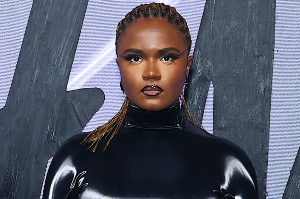
Internationally acclaimed Ghanaian singer Amaarae has showered high praise on reggae–dancehall star Stonebwoy, describing him as one of the hardest-working artists in the music industry.

According to Amaarae, no one hustles harder than Stonebwoy, whose consistency, discipline, and dedication to his craft continue to set him apart both locally and on the global stage.

She noted that the BHIM Nation president never relaxes, constantly pushing boundaries to elevate Ghanaian music beyond the continent.

Amaarae highlighted Stonebwoy’s relentless drive, pointing to his steady stream of music releases, international collaborations, world tours, and performances on major global platforms as proof of his unmatched commitment.

She said his ability to stay relevant over the years while representing Ghana with pride is something many artists can learn from.

“Stonebwoy is always working,” she noted, emphasising that his passion for music and cultural representation fuels his nonstop grind.

“He’s one of the few artists who consistently puts Ghana on the map and never takes his foot off the gas.”

Stonebwoy, a multiple award-winning artist, has over the years built a strong international profile, collaborating with global acts and performing at major festivals across Europe, North America, and Africa. His efforts have earned him recognition as one of Ghana’s most influential musical exports.

Amaarae’s comments have sparked admiration among fans, with many agreeing that Stonebwoy’s work ethic and dedication have played a significant role in projecting Ghanaian music to a worldwide audience.

The endorsement from Amaarae, herself a globally celebrated artist, further cements Stonebwoy’s reputation as a tireless force in African music and a leading ambassador of Ghana’s sound on the world stage.

Anas drags Nyantakyi over ‘president in pocket’ claim

0

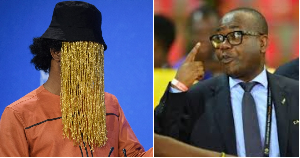
Anas called on the public to disregard Nyantakyi’s claims Anas called on the public to disregard Nyantakyi’s claims

The Chief Executive Officer (CEO) of Tiger Eye PI, Anas Aremeyaw Anas, has debunked claims that he could not prove in court allegations against Kwesi Nyantakyi regarding a president during the Number 12 exposé.

Speaking in an interview with JoyNews, the former Ghana Football Association (GFA) President claimed that Anas failed to produce evidence in court to support allegations that he had said he had “the president in his pocket.”

Nyantakyi argued that this was a clear indication he was not guilty of the charges leveled against him by the investigative journalist, insisting it vindicated his position.

2025 AFCON: Late Appollis penalty fires South Africa into knockout stages

In response, Anas has denied the claims, describing them as misinformation intended to damage his reputation, and stressing that nothing of the sort happened.

The award‑winning investigative journalist explained that the case in court was between the Republic of Ghana and Nyantakyi, not himself, and, therefore, the football administrator was misrepresenting the facts.

“It is important to place on record that the CEO of Tiger Eye PI, Anas Aremeyaw Anas, had no case against Nyantakyi in court that he needed to prove. The case before the court was between the Republic of Ghana and Kwesi Nyantakyi, who was being prosecuted for several offences, including fraud. It is therefore bizarre—though not unusual that Nyantakyi continues to misrepresent the matter as ‘Anas vs Nyantakyi,’” he stated.

Anas also defended his decision not to testify in the case.

“Anas offered to testify as a prosecution witness after our Lead Investigator, Ahmed Suale, who had been threatened by Nyantakyi, was brutally assassinated. Anas declined to testify only after the trial judge ruled that he must testify in camera but without a mask. This would have exposed him to grave danger, particularly in a country where the murder of Ahmed Suale remains unresolved,” portions of the statement read.

Tiger Eye PI admonished the public to disregard Nyantakyi’s claims, describing them as an attempt to redeem his image.

“We understand Nyantakyi may be seeking to rehabilitate his damaged reputation. However, history cannot be rewritten with lies, distortions, or propaganda. Tiger Eye PI urges the public to disregard this latest attempt at deception. Tiger Eye PI remains unwavering in its mission to confront corruption in fulfilment of our mandate to ‘Name, Shame, and Jail,’” the statement added.

The Number 12 documentary, released in 2018, exposed alleged corruption in Ghanaian football and led to Nyantakyi stepping down from his roles at the GFA, the Confederation of African Football (CAF), and FIFA.

Watch the statement below:

SB/AE

Meanwhile, watch as Ashie Moore pays tribute to late Naser Toure

NPP will contest Ayawaso East by-election – Haruna Mohammed

0

The New Patriotic Party (NPP) has stated that it will contest the Ayawaso East parliamentary seat once it is officially declared vacant, despite calls from the Accra Major for the opposition party not to contest.

This come after the Chief Executive of the Accra Metropolitan Assembly, Michael Kpakpo Allotey, appealed to the NPP to refrain from contesting a potential by-election in the constituency following the death of the MP, Naser Toure Mahama.

The Accra Mayor had suggested that a non-competitive election would serve as a gesture of respect to the late lawmaker.

Speaking on Citi Eyewitness News on Tuesday, January 6, Deputy General Secretary of the NPP, Haruna Mohammed, dismissed the call by the Accra Mayor.

Mr. Mohammed explained that comparisons being made to the Tamale Central situation were misplaced, stressing that the circumstances surrounding the two cases were different. He noted that the decision taken by the NPP in the Tamale Central case was influenced not only by the death involved but also by the unique circumstances under which it occurred.

According to him, the situation in Ayawaso East does not fall within the same context, and therefore does not warrant a similar political approach.

“I believe that that is his opinion but what I would say as a political party is that maybe his major reference to what happened in Tamale Central was a classical one. One, it was not just because of the death but it was because of the circumstances, the circumstances in which he passed on.

“This is the first time we are having a number of people on duty pass on. So the NPP at our steering committee level took a decision to honour them and also make reference to the circumstances.

“So the circumstances of the Tamale Central is different from the circumstances of the Ayawaso East. So I want to place it on record that when the nominations are open and the official declaration of that particular seat is made the NPP will contest that seat.”

Late former Tamale Central MP and Environment Minister, Murtala Muhammed was one of eight persons who lost their lives in a helicopter crash on Wednesday August 6, 2025 while en route to an official assignment in the Ashanti region.

Read also…

Don’t contest Ayawaso East seat – Accra Mayor tells NPP

Ait-Nouri helps Algeria into last-eight at AFCON

0

Rayan Ait-Nouri helped Algeria into the quarter-finals of the African Cup of Nations after a dramatic 1-0 win over the Democratic Republic of Congo.

Manchester City's Player of the Month announcement features a blurred image of a player holding the team jersey. The text reveals the winner as Rayan Cherki, alongside the Etihad logo.


Cherki voted Etihad Player of the Month for December


The two-times winners looked like they would be pushed all the way to penalties until a stunning 119th minute winner from Adil Boulbina.

Algeria won their three group games at the tournament in Morocco, but struggled to find a way past a stubborn DR Congo side in the last-16 clash.

Former City star Riyad Mahrez, as always was a huge threat, but the North Africans found it difficult to create too many big opportunities in the first half.

SUBSCRIBE TO CITY+ TO ACCESS EXCLUSIVE CONTENT

Indeed, DR Congo’s Axel Tuanzebe went closest before the break with a towering header that drifted just wide.

Mahrez tried his luck with a second half free-kick that flew over the bar before both the Algeria captain and Ait-Nouri were surprisingly substituted.

DR Congo almost took the lead immediately with Edo Kayembe’s long-range strike testing goalkeeper Luca Zidane, who has yet to be beaten in the competition so far.

Both countries went close to winner in extra-time until, with a shootout looming, Boulbina struck – cutting in from the left wing and firing an unstoppable shot into the top corner.

Algeria will now face Nigeria in the quarter-finals in Marrakesh on Saturday 10 January at 16:00 (UK).


Exeter tickets available from just £5

Be at our FA Cup third round clash with Exeter City at 15:00 (UK) on Saturday 10 January!

A piece of history will be made in the first ever competitive meeting between the two sides as both clubs set sight on glory in the oldest club competition in football!

Tickets are available from just £5 for concessions and £10 for adults so it’s a great opportunity to see your City favourites in action.

Meanwhile, hospitality packages start at just £90 for this fixture with a range of options and experiences available!


Promotional image for Emirates FA Cup Third Round featuring Manchester City versus Exeter City at Etihad Stadium on January 10th at 3:00 PM. Includes ticket purchase information.