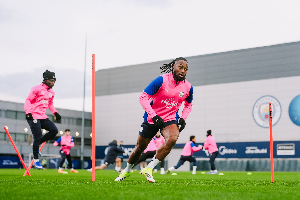
Former Ghana international Laryea Kingston has cautioned the Black Stars not to underrate Panama.
Ghana will face Panama in their group-stage match at the 2026 World Cup, scheduled to be co-hosted by the USA, Canada and Mexico next summer.
Despite Panama making their second appearance at the Mundial, Kingston believes Ghana must not underestimate their opponents.
“Everyone is looking forward to the game against Panama, but we should not underrate them. Everyone, I believe, is looking forward to these kinds of games, but these teams are such that they work hard,” he told SuperSport Blitz.
Kingston also predicted that the second group game against England would be an exciting fixture to watch.
“These are games, I believe the players will be ready for. Most of the players look up to them, and they play just like the English team, so it will be a tough one and an exciting one as well,” he added.
The Black Stars will begin their campaign against Panama on June 17 in Toronto, face England on June 23 in Boston, and wrap up the group stage against Croatia on June 27 in Philadelphia.
Following early exits in both the 2014 and 2022 World Cups, Ghana will be aiming for a more successful run in the expanded 2026 tournament.
Jerry Ahmed Shaib is the Member of Parliament for Weija-Gbawe
The Member of Parliament for Weija-Gbawe Constituency in the Greater Accra Region, Jerry Ahmed Shaib, has donated office equipment to the Weija-Gbawe Municipal Health Directorate to support its administrative and service delivery capacity.
The donation followed a request from the Municipal Director of Health Services, Dr. Jennifer Andoh, who appealed for logistical support to enhance the directorate’s operations.
Items donated included six desktop computers, four laptops, two air conditioners, two printers, one photocopier, five swivel chairs, four extension boards, 30 pen drives, and assorted stationery.
In addition to the equipment, the MP also facilitated the repainting of the Health Directorate’s building, further improving the working environment for staff.
Speaking during the donation, Mr. Shaib said the gesture forms part of his commitment to strengthening healthcare delivery in the Weija-Gbawe Constituency by ensuring that health workers are adequately resourced to perform their duties effectively.
Dr. Andoh expressed appreciation to the MP for responding promptly to the directorate’s needs, noting that the support would significantly improve efficiency and service delivery.
The donation has been welcomed by the staff of the Municipal Health Directorate, who described it as a timely intervention that will enhance both productivity and morale.
Gabby Asare Otchere-Darko is the Founder and Executive Chairman of the Africa Prosperity Network
A continent-wide, people-driven campaign aimed at dismantling barriers to the free movement of Africans is set to be launched in Accra in February 2026.
The initiative, dubbed “Make Africa Borderless Now!”, will be formally unveiled at the Africa Prosperity Dialogues (APD) 2026 and seeks to mobilise more than 10 million signatures across Africa and its global diaspora in support of visa-free travel, open skies and deeper continental integration.
According to the Founder and Executive Chairman of the Africa Prosperity Network, Gabby Asare Otchere-Darko, the signatures will be presented to African Heads of State at the 40th African Union Summit scheduled for February 2027 in Addis Ababa.
Mr. Otchere-Darko said the campaign aims to transform African integration from a long-standing political aspiration into a mass public demand driven by citizens, particularly young people.
Drawing parallels with the global Jubilee 2000 (Drop the Debt) campaign of the 1990s, in which he participated, Mr. Otchere-Darko expressed confidence that the movement could achieve its ambitious target.
He noted that the Jubilee 2000 campaign successfully gathered 24 million signatures worldwide without the benefit of modern digital tools.
“If it was possible to mobilise millions across the world in the 1990s with pen and paper, radio and fax machines, then mobilising 10 million Africans today in a digitally connected continent is achievable,” he said.
The Make Africa Borderless Now! campaign will be led by the Africa Prosperity Network in collaboration with key Pan-African institutions and partners, including the AfCFTA Secretariat, the African Development Bank (AfDB), AUDA-NEPAD, BADEA and the Africa Finance Corporation (AFC).
The Africa Prosperity Dialogues 2026, scheduled for February 4–6 at the Accra International Conference Centre, will be held under the patronage of President John Dramani Mahama.
Organisers say the movement will rely heavily on digital platforms and grassroots mobilisation, engaging businesses, traders, civil society groups, labour unions, faith-based organisations, traditional authorities, youth groups and cultural influencers across the continent and in the diaspora.
At the core of the campaign is a twelve-pillar roadmap designed to accelerate the implementation of existing African Union agreements and protocols.
Key proposals include visa-free travel across Africa, the liberalisation of air routes, a continental biometric passport, a single African customs union, harmonised trade standards, seamless digital payments, trans-African infrastructure corridors and stronger legal mechanisms to enforce a single African market.
The campaign also emphasises the central role of women and youth in Africa’s integration agenda and calls for a unified African voice in global negotiations.
Mr. Otchere-Darko said the initiative comes at a critical moment, as global migration restrictions tighten and African institutions increasingly warn of the economic costs of internal border barriers.
He argued that free movement within Africa is essential for economic resilience, self-determination and long-term prosperity.
“This is about Africans demanding the freedom to move, trade and innovate within their own continent,” he said.
“A borderless Africa is no longer just an idea; it is a necessity.”
The organisers are urging Africans at home and abroad to participate in the campaign when it launches in 2026 by signing, sharing and mobilising in support of continental integration.
Legal scholar and social commentator Professor Stephen Kwaku Asare, popularly known as Kwaku Azar, has criticised the Ghana Police Service over the prosecution of Ghana’s self-acclaimed modern-day Noah, Evans Eshun, popularly known as Ebo Noah.
In an elaborate post shared on Facebook on January 2, 2026, Kwaku Azar pointed out that the charges the police prosecutors have levelled against Ebo Noah, who was arrested for claiming that the world would be destroyed by a flood on December 25, 2025, are unconstitutional.
He explained that the charges against the accused person are under Section 76 of the Electronic Communications Act, 2008 (Act 775), but these laws do not criminalise remarks made by people.
“What, then, does Section 76 actually criminalise? The law provides: ‘A person who, by means of an electronic communications service, knowingly sends a communication which is false or misleading and likely to prejudice the efficiency of a life-saving service or to endanger the safety of any person, ship, aircraft, vessel or vehicle commits an offence.’
“Section 76 does not create a general offence of false speech. Parliament deliberately limited criminal liability to false electronic communications that pose a public-safety risk, specifically those that interfere with life-saving services or endanger physical safety,” he wrote.
He added, “The provision targets emergency hoaxes and communications that divert or disrupt rescue systems. That narrow focus is missing from the charge as pleaded.”
Doomsday ‘scammer’ Ebo Noah arrested
The legal luminary also pointed out that the police even failed to prove that the action of Ebo Noah really meets the threshold of Section 76 of Act 775.
“The charge sheet does not allege that any life-saving service was mobilised, misled, or disrupted. It does not claim that emergency responders were diverted, that evacuation efforts were triggered, or that anyone’s physical safety was endangered. No victim is identified. No public complaint is cited. No concrete harm is described.
“Instead, the charge relies on conclusory language, asserting an ‘intent to cause fear and panic’ and a likelihood of ‘fear and alarm’ without pleading facts to support those conclusions.
In law, however, intent is inferred from conduct, not labels. The charge alleges no calls for evacuation, no instructions to panic, no solicitation of money, no crowd mobilisation, and no disruption of public services,” he said.
Read his full write-up below:
GOGO Demurs: Why the Noah Charge Misses the Law
The charge sheet against Evans Eshun, popularly known as “Ebo Noah,” is clear.
The State alleges that he published false statements on TikTok, YouTube, and Facebook predicting that the world would be destroyed by a flood on December 25 and claiming that he was building an ark.
According to the charge, these statements were made with the intent to cause fear and panic and were likely to alarm the public. On that basis, he has been charged under Section 76 of the Electronic Communications Act, 2008 (Act 775).
Let me be clear at the outset: GOGO does not endorse these claims, these actions, or such prophecies. False predictions of catastrophe are irresponsible and deserve firm public rejection.
But disapproval is not a substitute for law, and criminal prosecution must still meet the threshold Parliament set.
What, then, does Section 76 actually criminalize?
The law provides:
“A person who by means of electronic communications service, knowingly sends a communication which is false or misleading and likely to prejudice the efficiency of life-saving service or to endanger the safety of any person, ship, aircraft, vessel or vehicle commits an offence.”
Section 76 does not create a general offence of false speech. Parliament deliberately limited criminal liability to false electronic communications that pose a public-safety risk, specifically, those that interfere with life-saving services or endanger physical safety.
The provision targets emergency hoaxes and communications that divert or disrupt rescue systems.
That narrow focus is missing from the charge as pleaded.
The charge sheet does not allege that any life-saving service was mobilised, misled, or disrupted. It does not claim that emergency responders were diverted, that evacuation efforts were triggered, or that anyone’s physical safety was endangered. No victim is identified. No public complaint is cited. No concrete harm is described.
Instead, the charge relies on conclusory language, asserting an “intent to cause fear and panic” and a likelihood of “fear and alarm” without pleading facts to support those conclusions.
In law, however, intent is inferred from conduct, not labels. The charge alleges no calls for evacuation, no instructions to panic, no solicitation of money, no crowd mobilisation, and no disruption of public services.
Simply predicting catastrophe, even falsely or irresponsibly, does not automatically establish criminal intent.
The claim that the speech was “likely” to cause fear is equally speculative. The charge does not allege audience size, public reaction, panic consequences, or any real-world impact. Criminal liability, especially for speech, cannot rest on conjecture.
There is also a deeper constitutional concern. Claims about an impending apocalypse and an ark fall within the realm of prophetic, religious, or fantastical expression.
Unless such speech is coupled with fraud, coercion, or real-world disruption, criminal prosecution risks turning the State into an arbiter of belief. That is not what Section 76 authorises, and it is not what the Constitution permits.
The issue here is not whether the speech was false, strange, or irresponsible. It is whether the law cited actually fits the conduct alleged.
On the face of the charge sheet, it does not. Section 76 was enacted to protect emergency systems and public safety, not to punish absurdity or police belief.
Citing a law is not the same as satisfying it. If Section 76 can be stretched to cover this case, then false ideas become police matters rather than social ones.
And once that line is crossed, freedom of expression depends not on constitutional principle, but on official tolerance.
PS: Yɛde post no bɛto hɔ. Yɛnyɛ comprehension consultants.
Da Yie!
BAI
Meanwhile, watch as Acting Defence Minister Ato Forson inaugurates 9-Member Ministerial Advisory Board
Residents inspect the damage after US forces had launched a strike against Islamic State militants
Nigeria’s military urged civilians in the country’s northwest on Friday not to keep or tamper with unexploded ordnance found at sites targeted in recent U.S.-backed airstrikes.
The alert follows online footage showing locals scavenging debris and unexploded ordnance at strike sites in Sokoto state, sparking fears of deadly blasts.
U.S. forces launched a rare strike deep inside Nigeria on December 25 at the request of Nigeria’s government, firing 16 GPS-guided munitions from MQ‑9 Reaper drones at two Islamic State-linked camps in Sokoto.
“We do not expect civilians to pick up or keep such materials,” Major General Michael Onoja, director of Defence Media Operations, told reporters on Friday.
“We can only appeal to them to return all materials that may prove harmful to them.”
Onoja said specialised ordnance units within the armed forces were tasked with recovering debris and other remnants from the strikes.
Residents of Paga in the Kassena-Nankana West District of the Upper East Region have expressed fear and anxiety following repeated landings of a suspicious aircraft at the Paga airstrip, raising concerns about security and national sovereignty in the border community.
According to residents and local watch groups, an aircraft bearing the tail number 60171 landed at the Paga airstrip on three consecutive occasions between December 28 and December 31, 2025.
Community members say that on each occasion, attempts—sometimes involving district-level security personnel—to approach the aircraft and determine its purpose were unsuccessful, as it reportedly took off abruptly before contact could be made.
Tensions heightened on December 31, 2025, when the aircraft landed again and security agencies, including the Ghana Police Service, National Intelligence Bureau (NIB), National Security operatives, and other allied agencies, reportedly intervened to prevent it from taking off.
However, the Paga Youth Movement, in a press release, claimed that the occupants of the aircraft refused to disembark or cooperate with security officials, a situation the group described as troubling.
The youth group further alleged that while local security agencies were investigating the matter, an instruction from the Upper East Regional Police High Command ordered the aircraft to be released on the grounds that it was a “national security aircraft.”
According to the group, this directive halted further action and left both community members and district authorities without any explanation regarding the aircraft’s mission, cargo, or destination.
The Paga Youth Movement also claimed that independent checks linked the aircraft’s tail number to the United States Army and alleged that its original markings and colour appeared to have been concealed, further heightening public suspicion. These claims, however, have not been independently verified.
The group expressed concern that district security authorities were not informed in advance of the aircraft’s activities and alleged that the District Chief Executive, who chairs the District Security Committee (DISEC), was unaware of the aircraft’s presence.
It further claimed that the Upper East Regional Minister had no prior knowledge of the operations.
According to the group, checks with the Ghana Civil Aviation Authority (GCAA) suggested the authority was also unaware of the aircraft and had reportedly made unsuccessful attempts to establish contact with it.
Given Paga’s proximity to Burkina Faso and other Sahelian countries affected by ongoing insecurity, the youth group warned that the incident should not be treated lightly.
It cited unverified reports suggesting the aircraft may have been carrying arms allegedly destined for Burkina Faso, stressing that while such claims require official clarification, they raise serious concerns.
The Paga Youth Movement is calling for a full public explanation from the Regional Police Commander, a clear statement from National Security, and an official briefing from the Ghana Armed Forces, the aviation authorities, and the Ministry of the Interior on the identity, clearance, mission, and cargo of the aircraft.
The group also wants assurances that no aircraft will operate in the area without the knowledge of local and regional security authorities.
The group said it remains ready to cooperate with authorities and the media by providing additional information and evidence.
As of the time of filing this report, efforts to reach the Upper East Regional Minister, the Kassena-Nankana West District Chief Executive, and the Regional Police Commander for official comment were unsuccessful.
The management of the University of Ghana (UG) has moved to distance itself from the controversial 25% hike in academic fees for the 2025/2026 academic year.
University authorities contend that the staggering increments—which have seen some freshman bills jump by over 30%—are almost entirely driven by third-party levies introduced by student governance bodies, not the central administration.
The clarification aims to defuse a brewing crisis on the Legon campus, where provisional fee schedules recently revealed that Level 100 Humanities students are now expected to pay GH¢3,110, up from GH¢2,319 last year.
Speaking in an interview with Citi News, the Pro Vice-Chancellor for Academic and Student Affairs, Professor Gordon Awandare, emphasised that the university has limited oversight over the specific charges added by the Students’ Representative Council (SRC) and the Graduate Students’ Association of Ghana (GRASAG).
“What is being reported as fee increases relates to third-party fees imposed by student leadership. These are fees approved through their own governance structures and communicated to students over two weeks ago. University management did not impose these fees. If students have issues with these charges, they should take them up with their SRC or GRASAG leadership. These fees are meant to support student programmes and activities,” Professor Awandare explained.
The university administration insists that students should look inward at their elected representatives, who allegedly adjusted their own funding components to reflect the rising costs of running student unions and legacies.
According to the university’s breakdown, the total third-party component has swelled significantly this year. While the core academic facility user fee has remained relatively stable, the auxiliary levies have reached new heights.
Third-Party Item (Undergrad)
Amount (GH¢)
SRC Hostel Development Levy
300
75th Anniversary Legacy Project
100
Telecel Data Package (Freshers)
312
SRC Welfare Dues
50
Reprographic Fees
5
Total (Freshmen)
767
For postgraduate students, the GRASAG components similarly include a Development Levy (GH¢250) and the Legacy Project (GH¢100), totalling GH¢385 in third-party additions.
Despite the outcry, Professor Awandare argued that the base fees charged by Ghana’s premier university are still “modest” when weighed against the current economic climate of high inflation and soaring utility costs.
“When you look at the fees—about GH¢2,000 for an entire academic year at Ghana’s premier university—it is difficult to describe them as excessive. Utilities and operational costs have increased significantly, yet university fees have largely remained unchanged since 2022. Even the students themselves recognise that the previous fee levels were no longer realistic under current economic conditions, which is why they have adjusted their component of the fees to match the cost of running their activities,” he added.
Management highlighted that while the university has absorbed rising costs for two years, student leaders concluded that their specific programmes—such as the ambitious SRC Hostel Development project—could no longer be sustained without a significant revenue boost.
DISCLAIMER: The Views, Comments, Opinions, Contributions and Statements made by Readers and Contributors on this platform do not necessarily represent the views or policy of Multimedia Group Limited.
A man who was reported missing on Thursday, [December 25, 2025], has been found dead under disturbing circumstances in a bush at Bapilla, a community in the Talensi District of the Upper East Region.
The incident has sent shockwaves through Dagliga in the Nabdam District and surrounding communities.
The deceased, identified as Mosobil Levyang, 41, a tricycle rider popularly known as Capito, is a native of the Dagliga community in the Nabdam District.
He reportedly left his family home at Dagliga Lebyang House in mid-December 2025 to travel to Zomeela in search of a job.
On December 25, 2025, his colleagues informed the family of his absence from their base, and after three days without any contact, the family reported him as a missing person and appealed to the public for information on his whereabouts.
An extensive search across neighbouring towns and villages, did not yield results until Wednesday, [December 31, 2025], when his body was discovered in a bush at Bapilla in the Talensi District.
The body was reportedly found naked, with visible bruises, a swollen jaw and a pierced stomach, leading the family to suspect foul play.
“The injuries on his body show that something terrible happened to him. We strongly believe he was attacked, and we are demanding justice for our brother,” a family member told Graphic Online’s Gilbert Azeem Tiroog.
The incident has generated fear and anger among residents of Dagliga and nearby communities, with many calling for a thorough investigation into the matter to ensure accountability and deter similar incidents.
Some community members also appealed to security agencies to intensify patrols, especially in the Talensi East area, where there have been increasing robbery cases over the years.
The body of the deceased was laid to rest on Wednesday, [December 31, 2025] in accordance with local customs, amid grief and heightened tension within the community.
DISCLAIMER: The Views, Comments, Opinions, Contributions and Statements made by Readers and Contributors on this platform do not necessarily represent the views or policy of Multimedia Group Limited.
play videoDavid Oscar’s new song is specially for the people of Koforidua
Ghanaian reggae sensation, David Oscar Dogbe, has gifted the people of Koforidua a musical tribute that resonates with home-grown pride.
The acclaimed musician has announced the release of his latest single, an ode to the indigens of Koforidua in the Eastern Region of Ghana dubbed ‘Good Evening Koforidua.’
Scheduled to drop on January 2, 2026, the song ‘Good Evening Koforidua’ is already being hailed as a potential anthem for the city, blending soulful reggae rhythms with a deep sense of patriotism.
The upcoming banger does more than provide a catchy beat; it serves as a lyrical tour of Koforidua’s most iconic landmarks and neighborhoods.
By exploring the popular areas of the town, Oscar seeks to connect with listeners on a personal level, evoking memories of the streets and sounds that define the local experience.
Beyond the aesthetics, the song carries a powerful social message.
It is designed to whip up communal love among residents.
Strengthen the bond between the people and their homeland.
Foster a spirit of unity aimed at the collective development of the city.
While the song is a celebration for those currently residing in the Eastern Regional capital, it also serves as a clarion call to Koforidua indigens living across Ghana and in the diaspora.
Oscar uses his platform to urge successful sons and daughters of the soil to “look back and give back.”
The track emphasises that the future growth of Koforidua depends on the contributions and love of its people, no matter where they are in the world.
“This isn’t just a song; it’s a movement for our hometown. I want every person from Koforidua to feel that pulse of pride and the urge to contribute to our beautiful town,” David Oscar asserted.
Enjoy this new one from David Oscar as the new chapter of 2026 open for every blessed soul.