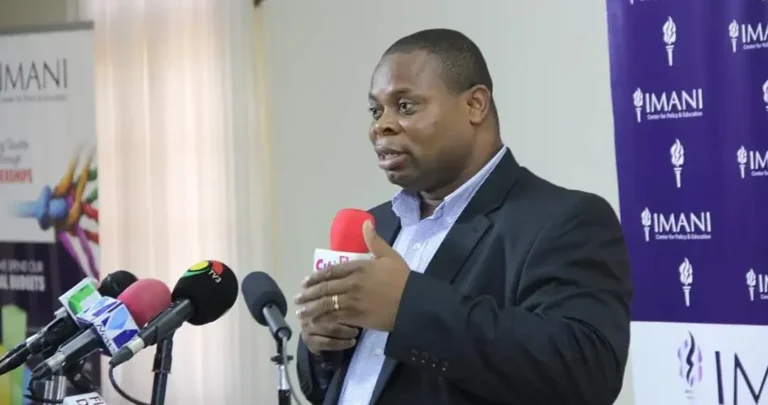
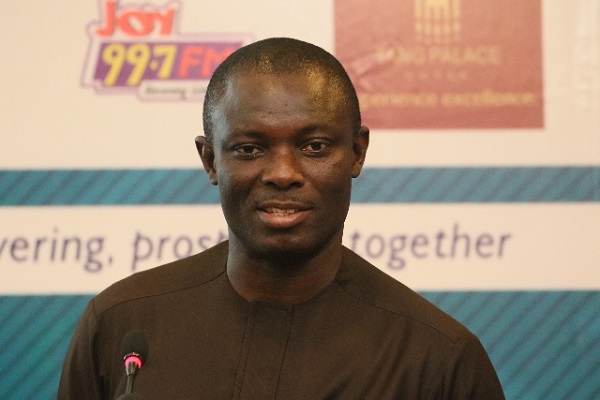
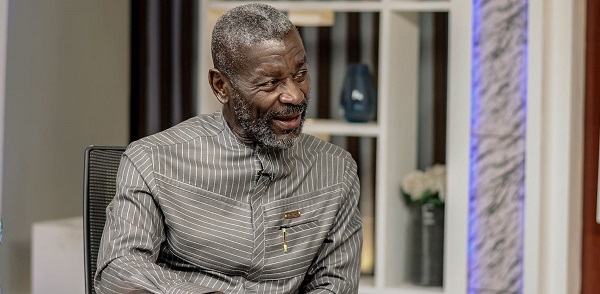
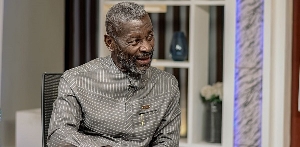
Sammy Gyamfi is the Chief Executive Officer of the Ghana Gold Board
Chief Executive Officer of the Ghana Gold Board (GoldBod), Sammy Gyamfi, has dismissed allegations that his institution recorded losses under the Gold-for-Reserves programme, revealing a substantial financial surplus for 2025 instead.
During his appearance on Newsfile on Saturday, January 3, Gyamfi refuted reports of a US$214 million deficit as completely inaccurate.
He disclosed that GoldBod generated over GH¢960 million in revenue last year against expenditures under GH¢120 million, according to preliminary unaudited management accounts.
He clarified that as a public entity, GoldBod does not aim for profits but surpluses, projecting a cautious figure of GH¢700–800 million for 2025.
He confirmed compliance with legal requirements through quarterly financial disclosures, with a full external audit by the Auditor-General due by Q1 2026.
“Has GoldBod incurred losses? Absolutely not. Despite not being a commercial profit-driven entity, we’ve posted no deficits. Revenue reached GH¢960 million-plus, while spending stayed below GH¢120 million; these are unaudited figures,” he stated.
He further rejected assertions that GoldBod shifted losses to the Bank of Ghana, calling the claim nonsensical.
Gyamfi explained the programme originated as a Bank of Ghana initiative in 2022, fully funded by the central bank, with all transactions recorded in its accounts.
Noting GoldBod’s establishment in April 2025 amid an inherited inefficient structure requiring overhaul, he said legal directives mandated continuity of the Gold-for-Reserves scheme during the transition.
Gyamfi questioned why pre-existing programme losses were being pinned on GoldBod, insisting they have meticulously accounted for every cedi from BoG, delivered equivalent gold value, and collected only authorised agency fees.
These five individuals were arrested for allegedly impersonating NAIMOS officials
The Ghana Police Service has launched an investigation into five persons who were arrested for impersonating officials of the National Anti-Illegal Mining Operations Secretariat (NAIMOS).
The arrests were made by the Eastern South Regional Command on January 2, 2026, at Akwadum in Abuakwa South near Kibi. The suspects were caught dressed in security uniforms, claiming to be NAIMOS operatives, and extorting money from mining sites in the area.
The suspects currently in police custody are Moses Tapiam, 43; Christopher Amakor, 29; Casimir Nunekpeku, 29; Wisdom Miwonuko, 35; and Paul Agbanu, 53, all from Accra.
According to a police statement released on January 3, 2026, the case is being thoroughly investigated to bring the perpetrators to justice. The statement also explained how the operation was carried out.
“The suspects were reported to have gone to Akwadum in Abuakwa South near Kibi, moving from one mining site to another and extorting money from miners. The NAIMOS team arrested the suspects at Akwadum, who were on board a Mitsubishi 4×4 pickup with registration number GS 536-25, and handed them over to the Eastern South Regional CID at Kibi.
“Residents, especially those who impersonate security officers, are advised to desist from the act since it constitutes an offence. The public is assured that persons holding themselves as such will be arrested and prosecuted. The five suspects are in police custody, assisting with investigations, and will be arraigned in due course,” the police statement read.
NAIMOS has been tasked with cracking down on illegal mining activities in the country, which cause environmental destruction through water pollution and land degradation.
Read the statement below:
SB/BAI
Meanwhile, watch President John Dramani Mahama’s 2026 full New Year Message below:
Meanwhile, watch as Rev. Owusu-Bempah drops major prophecies for 2026
Former world heavyweight champion Anthony Joshua has flown back to the UK after a fatal car crash that killed two of his close friends in Nigeria.
The 36-year-old was a passenger in a Lexus SUV that collided with a stationary truck on a major expressway near Lagos on Monday.
Joshua’s close friends and team members, Sina Ghami and Latif “Latz” Ayodele, died in the crash. Their funerals will take place at a London mosque on Sunday.
Joshua was taken to hospital and was discharged on Wednesday.
Driver Adeniyi Mobolaji Kayode, 46, was charged at Sagamu Magistrates’ Court on Friday. Police sources told the BBC the charges included causing death by dangerous driving.
The defendant was granted bail of 5 million naira (£2,578) and remanded pending his bail conditions being met. The case has been adjourned until January 20.
Joshua, who was born in Watford, has family roots in Sagamu – a town in Ogun State, near the crash site.
The 2012 Olympic champion was on his way to visit relatives for New Year celebrations in the town at the time of the collision, a family member told the BBC.
The boxer had been spending time in Nigeria after his recent victory over American YouTuber-turned-boxer Jake Paul on December 19.
Believers of the Islamic faith in Ho are divided over a directive by the Volta Regional Security Council to close down the Ho Central Mosque temporarily.
This was after extensive meetings and consultations by the Council following a gunshot incident at the mosque a week ago, where gunmen opened fire on worshippers, injuring a number of people.
Background
The Ho Muslim community had witnessed a protracted conflict for about 5 years over who would become the Volta Regional Chief Imam.
The community has therefore been divided into two, with each part owing allegiance to Alhaji Alfa Anas Hamid and Alhaji Muniru Ali, who both claim to be the Volta Regional Chief Imam.
Despite the National Chief Imam selecting and installing Alhaji Muniru Ali as the legitimate Volta Regional Chief Imam, Alhaji Alfa Anas Hamid and his followers objected to this, though he was appointed as the Deputy Volta Regional Chief Imam.
Ho New Zongo
They cited that the Muniru faction had influenced the office of the National Chief Imam to twist facts to suit their preferred candidate.
There has since been a power play over who has the authority over the Ho Central Mosque, where the followers of Alhaji Alfa Anas Hamid have refused to allow Alhaji Muniru Ali to lead prayers.
Gunshot incident
26th December 2025 witnessed a tragic incident of a gunshot in the Central Mosque, linked to the chieftaincy impasse.
Eleven people suffered gunshot wounds at various parts of their bodies, including legs and arms, as a result of sporadic shootings at the mosque.
Some 14 people who were arrested in connection with the incident and were sent to the Police Headquarters in Accra were released after interrogation.
Meanwhile, the Volta Regional Police Commander, DCOP Wisdom Akorli, speaking to the media, had indicated his outfit learnt the incident was premeditated after preliminary investigation.
Closure of Ho Central mosque
To prevent chaos and ensure safety and peace, the Volta Regional Security Council closed down the central mosque for two weeks.
Security officers stationed at the mosque
A press release signed by the Volta Regional Minister, James Gunu, declared the mosque a crime scene, explaining the decision was part of a set of steps being taken to resolve the conflict.
“The temporary closure will provide a calm and neutral environment to facilitate mediation efforts aimed at resolving ongoing disputes and restoring harmony among all parties involved,” he said.
The mosque area has since been placed under high security, with about 120 military and police personnel stationed to guard the facility, which is under lock and key.
Community reaction
The announcement was welcomed with mixed reactions from the Ho Zongo community, compelling Alhaji Alfa Anas Hamid and his followers to worship in an open space under tents.
A youth leader in the Zongo community, Kidza Mohammed, described the directive as an infringement on their right to worship, urging the authorities to “handle the issue devoid of favouritism”.
Alhaji Alfa Anas Hamid and his followers worshiping in the open.
He bemoaned the instance where innocent people have become victims entangled in the power play, hoping “a solution will be delivered at the shortest possible time.”
On the other hand, the spokesperson for Alhaji Muniru Ali, Chief Adamu Hamani, welcomed the decision to close the mosque, believing it would help calm nerves, since it has become the bone of contention.
He unequivocally condemned the shooting incident, explaining that “it does not conform to the teachings and practices of the Islamic religion.”
Chief Adamu Hamani
Plea from Community members
Residents have lamented the protracted conflict, fearing its consequences on the development of economic and social aspects of the community.
Ayishatu Adamu expressed worry about the unfortunate incidents surrounding the Regional Chief Imam race, fearing it may truncate her education and perhaps make other residents orphans.
“I am a student; supposing my dad was shot dead, who would take care of my education and other needs? So, we are begging the authorities to do something about this quickly,” she pleaded.
Ayishatu Adamu
Hajia Sherifatu questioned the “unconcerned” posture of political leaders in the municipality and requested the authorities to do due diligence to find an amicable and permanent solution to the conflict.
“It has been one week now since people were shot; even if fowls are killed, we feel pity for them. Where is the Municipal Chief Executive, where is the Member of Parliament, and where is the Regional Minister? None of them have come to visit us. Why?” she quizzed.
DISCLAIMER: The Views, Comments, Opinions, Contributions and Statements made by Readers and Contributors on this platform do not necessarily represent the views or policy of Multimedia Group Limited.
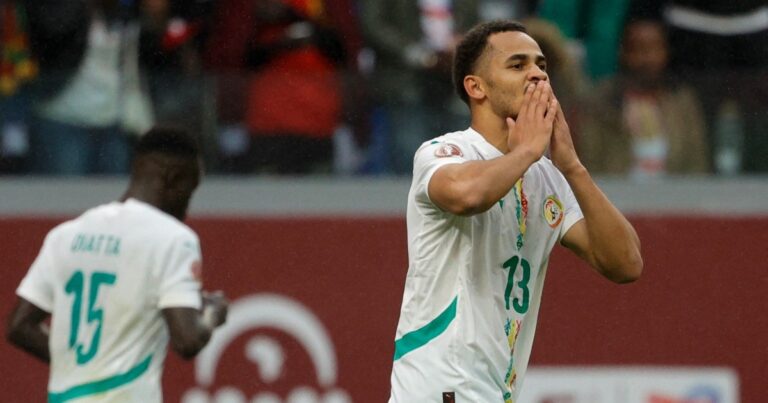
A double from midfielder Pape Gueye saw Senegal come from behind to ease past Sudan 3-1 on Saturday and become the first side to book a place in the Africa Cup of Nations quarter-finals.
They were behind after six minutes of their last-16 clash at the Grande Stade Tangier, but Gueye scored two goals before halftime, and 17-year-old Ibrahima Mbaye added a third 13 minutes from the end.
Senegal will now meet either Mali or Tunisia, who were playing later on Saturday in Casablanca, in the last eight on Friday.
Senegal, the 2021 Cup of Nations winners, are the second-ranked team in Africa and, despite conceding early, showed their quality and strength to win in comfortable fashion.
Sudan took a surprise lead with a classy goal as the Australian-based Aamir Abdallah, who plays in the state league in Victoria, cut inside the much vaunted Senegal defence and curled a left-footed effort wide of Edouard Mendy.
It was a shock setback for the highly fancied Senegal, but they quickly assumed control of the game, dominating possession and fighting their way back to lead at the break.
Nicolas Jackson had a point-blank effort expertly stopped by Sudan goalkeeper Mongeel El Neel but a minute later, Senegal were level when Mane pinched possession in midfield from Abuaagla Abdallah and fed Gueye, who stuck his effort into the corner of the goal.
Ismailia Sarr was brought down in the area five minutes later, but the penalty award was overturned when VAR showed Sarr was offside in the build-up.
Sarr then had the ball in the net in the 43rd minute but was again denied by an offside call before his run set up Gueye’s second, feeding Jackson, who turned the ball back to the edge of the area, where Gueye side-footed it in with precision.
Substitute Mbaye got the third in the 77th minute to become, some three weeks before his 18th birthday, the second youngest scorer in Cup of Nations history as Mane was again the provider.
“We needed to dig deep to come from a goal down to be able to win the match,” said Senegal coach Pape Bouna Thiaw.
“I give credit to my players for the way they focused on the game and recovered to win the match. Now we will focus on the next match by correcting some of the mistakes we noted in this game and pursue our goals with intensity.”
Black Stars and Athletic Bilbao forward Iñaki Williams has welcomed his first child with wife Patricia Morales, a baby boy named Niko.
The name serves as a touching tribute to Iñaki’s younger brother and teammate, Nico Williams. The couple announced the joyful news on Instagram, sharing an intimate photo of the newborn’s tiny foot alongside the birth date, January 1, 2026.
In the emotional post, the Athletic striker captioned the image: “Welcome to the world, Niko! Our family is growing and our hearts are overflowing with love. Thank you for so much in such a short time.”
The message captured the raw joy and gratitude of the moment, resonating with fans worldwide. Athletic Bilbao quickly echoed the celebrations, posting a warm message hailing the arrival of “a new lion to the family” and extending best wishes to Iñaki and Patricia.
Williams prioritised family for New Year’s, missing training to be present for the birth, but rejoined the squad this Friday.
Athletic coach Ernesto Valverde confirmed Iñaki’s inclusion in the team for the LaLiga EA Sports clash against Osasuna at El Sadar, marking the close of the first half of the season.
Valverde praised the player’s swift return, highlighting his commitment despite the personal milestone.
During the same press conference, Valverde addressed Iñaki’s recent candid remarks labelling the Super Cup in Saudi Arabia as “a load of crap.”
The coach urged greater caution with such expressions while showing understanding for the striker’s heightened emotions.
With a newborn at home and potential travel looming, Valverde noted these days are particularly sensitive for the Ghanaian international.
The birth of Niko adds a heartwarming chapter to Williams’ story, blending family bliss with his demanding career in Spain and duties for Ghana’s Black Stars.
Goalkeeper Djigui Diarra saved twice in the shootout to help 10-man Mali to a 3-2 win via penalties after a 1-1 last-16 draw with Tunisia in Casablanca on Saturday and book an Africa Cup of Nations quarter-final with Senegal.
Tunisia striker Firas Chaouat gave his side the lead in the 88th minute as he lost his marker to guide a deep cross from Elias Saad into the net.
However, Mali were awarded a penalty in stoppage time when substitute defender Yassine Meriah inexplicably used his arm to deflect the ball from a free-kick, and Lassine Sinayoko netted in the 97th minute to send the game to extra time.
Mali had been reduced to 10 men in the 26th minute when Woyo Coulibaly stamped on the ankle of Tunisia’s Hannibal Mejbri, and could have few complaints, but they put in a battling performance to snatch the win in the shootout.
Quite remarkably, Mali advance to the quarter-finals having not yet won a game at the tournament in Morocco.
They drew all three of their Group A fixtures but finished runners-up in the pool, and drew against Tunisia in Casablanca.
They will face West African rivals Senegal in Tangier on Friday, after the latter earlier defeated Sudan 3-1 to advance to the last eight.
TOUGH CONDITIONS
The wet and windy conditions in Casablanca did not help the spectacle, and neither did the early red card, but it took until the 79th minute for the first shot on target from either side as Hannibal’s curling free-kick was saved by Diarra.
South Korean medical device manufacturer WONTECH Co., Ltd. will showcase its latest healthcare innovations at CES 2026 in Las Vegas, marking the company’s strategic expansion beyond traditional medical equipment into broader healthcare solutions.
The firm has secured booth space at the Venetian Expo’s Lifestyle Hall, where it will debut two flagship products from January 6 through 9. WONTECH’s co-CEOs Jong Won Kim and Jung Hyun Kim confirmed the company intends to address persistent clinical challenges including infection control, operational efficiency, and chronic pain management through these new offerings.
PETRA and LIME represent WONTECH’s response to heightened hygiene standards that emerged following the COVID 19 (coronavirus disease 2019) pandemic. The non-contact biometric monitoring system uses cameras and video analysis to measure vital signs without physical contact. This approach eliminates cross-contamination risks while reducing the burden of device sterilization and consumable management in healthcare facilities.
The second product, ELLISE, combines laser therapy with electrical stimulation for pain treatment without pharmaceuticals or surgery. The system delivers dual-wavelength laser energy alongside electrical stimulation through ultra-thin optical fiber needles inserted beneath the skin. WONTECH developed this technology as a complementary alternative to medication-based and surgical interventions, targeting deep tissue layers associated with pain sources.
Both solutions incorporate artificial intelligence (AI), optical technology, and clinical validation data. Company representatives stated that these products were designed using insights from real-world clinical environments to enhance therapeutic effectiveness and workflow efficiency.
WONTECH will also display its monopolar radiofrequency (RF) platform Oligio X and products from subsidiary OneMedico. The expanded portfolio spans medical devices, home care, and cosmetics, reflecting what company officials described as a strategic evolution toward comprehensive healthcare solutions.
The company currently generates more than 60 percent of its total revenue from overseas markets. WONTECH holds regulatory approvals from the United States Food and Drug Administration (FDA), Australia’s Therapeutic Goods Administration (TGA), European Union CE marking, and Thailand’s FDA. Products reach over 80 countries through distribution networks, with subsidiaries operating in the United States, Japan, and Thailand.
Founded in June 1999, WONTECH specializes in laser and energy-based medical technologies. The firm independently develops laser light sources and power supply systems, manufacturing products through fully in-house processes. Its flagship offerings include the Oligio monopolar RF system, PicoCare high-power picosecond neodymium-doped yttrium aluminum garnet (Nd:YAG) laser, and Tightan focused ultrasound system known as high-intensity focused ultrasound (HIFU).
A company representative stated that participation at CES 2026 represents a significant milestone in WONTECH’s transition from medical device manufacturer to healthcare solutions provider. The Consumer Technology Association’s annual gathering attracted more than 140,000 attendees in 2025, with the 2026 conference expected to draw similar numbers to Las Vegas for four days of technology demonstrations and industry networking.
Digital health is moving beyond prototypes into ecosystems that anticipate needs, according to industry analysts tracking healthcare technology trends. Privacy and interoperability are front and center, and AgeTech is gaining momentum with solutions for independence and personalized care.
The exhibition comes as global demand continues growing for anti-aging, lifting, and tightening solutions across Asian, European, Middle Eastern, and South American markets. WONTECH officials indicated they plan to use the event to engage directly with stakeholders, gather market insights, and strengthen technological competitiveness in the global healthcare sector.
The year 2025 will go down in Ghana’s economic history as the year the reset truly began.
After inheriting an economy weighed down by inflation above 23 percent, interest rates north of 30 percent, a sharply depreciating cedi, battered investor confidence, and unsustainable debt dynamics, the Mahama Administration moved with speed and clarity to stabilise the fundamentals and rebuild trust. At the centre of this recovery drive was the Minister for Finance, Dr. Cassiel Ato Forson, backed by a President who provided stellar leadership and unwavering political support.
What follows are the 20 key macroeconomic achievements and reforms implemented in 2025 that together reset Ghana’s economy.
1–2. Growth Reignited 1. GDP expanded by 6.1 percent in the first three quarters of 2025, up from 5.7 percent over the same period in 2024 — the fastest growth since 2019. 2. Non-oil GDP growth surged to 7.5 percent, reflecting broad-based expansion in the real economy where most jobs are created.
These figures signalled a decisive end to the stagnation of previous years.
3–7. Inflation Brought Under Control 3. Headline inflation collapsed from 23.8 percent in December 2024 to 6.3 percent by November 2025, the lowest since February 2019. 4. Food inflation fell by 21.2 percentage points to 6.6 percent. 5. Non-food inflation eased by 14.2 points to 6.1 percent. 6. Inflation on locally produced items declined to 6.8 percent from 26.4 percent. 7. Imported inflation dropped to 5.0 percent from 18.0 percent.
For households, this meant restored purchasing power and relief at the market stalls.
8. Interest Rates Collapse 8. Treasury bill rates plunged from over 30 percent at end-2024 to about 11 percent in 2025, cutting government borrowing costs and unlocking credit to the private sector.
9. Cedi Makes History 9. For the first time in many years, the cedi recorded an annual appreciation against all major currencies:
• 40.7 percent against the US dollar • 30.9 percent against the pound sterling • 24.0 percent against the euro
This reversed the painful depreciation of 2024.
10–12. External Position Strengthened 10. Trade balance posted a surplus of US$8.5 billion by end-October 2025, up from US$2.8 billion a year earlier. 11. Current account surplus widened to US$3.8 billion in the first three quarters, from US$0.6 billion in 2024. 12. Gross international reserves rose to US$11.41 billion, covering 4.8 months of imports.
13. Debt Turnaround 13. Public debt fell from GH¢726.7 billion (61.8% of GDP) in December 2024 to GH¢630.2 billion (45.0% of GDP) by October 2025, one of the sharpest debt reductions in Ghana’s history.
14. Investor Confidence Restored 14. Fitch, Moody’s and S&P all upgraded Ghana’s credit ratings — the first triple upgrade in years and a powerful endorsement of fiscal credibility.
15. Fiscal Discipline Returns 15. A primary surplus of 1.9 percent of GDP was achieved by October 2025, tripling the initial target of 0.6 percent.
16–19. Pro-Growth Reforms 16. Major VAT reliefs including the abolition of the COVID-19 Levy, reduction of VAT to 20 percent, restoration of VAT input deductions, raising the VAT threshold to GH¢750,000, and zero-rating textiles to 2028. 17. Strengthened fiscal rules, amending the PFMA to cap debt at 45 percent of GDP by 2034 and require a minimum 1.5 percent primary surplus annually. 18. Abolished nuisance taxes such as the Betting Tax, Emission Tax and e-Levy to ease the cost of doing business. 19. Redirected oil revenues, mining royalties and DACF transfers to priority infrastructure under The Big Push and empowered local governments with at least 80 percent direct transfers.
20. Financial Sector Reset 20. A sweeping reset of the financial system saw:
• Recapitalisation of National Investment Bank with GH¢1.92 billion. • Total funds under management rising to GH¢85.53 billion. • GSE Composite Index delivering 27.82 percent return with volumes up 146 percent. • Fixed income trading jumping to GH¢108.23 billion, a 51 percent year-on-year increase.
A Reset, Not a Pause
These 20 achievements are not just statistics; they represent a restored belief in Ghana’s future. They reflect long nights at the Ministry of Finance, hard political choices, and a President and Finance Minister working in lockstep to rescue the economy.
But 2026 is not a time for complacency. It is the year to deepen reforms, sustain discipline, and complete the reset — so that the gains of 2025 become a permanent foundation for growth, jobs and prosperity.
President Donald Trump declared Saturday that United States oil companies will take control of Venezuela’s energy sector following military operations that captured President Nicolás Maduro and his wife Cilia Flores.
Trump stated the United States would temporarily administer Venezuela while working toward what he described as a safe political transition. He spoke from his Mar a Lago residence in Palm Beach, Florida, hours after announcing the completion of special forces operations in Caracas.
The President said American oil companies would invest billions of dollars to repair Venezuela’s deteriorating petroleum infrastructure. He characterized the country’s oil industry as severely mismanaged over an extended period.
“As everyone knows, the oil business in Venezuela has been a bust for a long period of time. We’re going to have our very large United States oil companies, the biggest anywhere in the world, go in, spend billions of dollars, fix the badly broken infrastructure, the oil infrastructure, and start making money for the country,” Trump stated.
The President claimed Venezuela’s oil industry had been built with American expertise and subsequently stolen during previous administrations. He described this as constituting one of the largest thefts of American property in history.
Trump indicated that Secretary of State Marco Rubio, Defense Secretary Pete Hegseth, and other officials would oversee Venezuelan operations. He promised to announce specific personnel responsible for administering the country.
The President stated oil revenue would benefit both Venezuela and the United States. He explained that wealth extracted would flow to Venezuelan people, Venezuelan expatriates, and America as reimbursement for damages.
Trump expressed willingness to maintain military forces on the ground and threatened additional strikes if necessary to secure operations. He emphasized that running Venezuela would not cost American taxpayers due to anticipated oil revenues.
Venezuela possesses the world’s largest proven crude oil reserves at approximately 303 billion barrels, representing about one fifth of global reserves according to the United States Energy Information Administration (EIA). The South American nation is a founding member of the Organization of the Petroleum Exporting Countries (OPEC).
Despite massive reserves, Venezuela currently produces only about one million barrels per day, less than one percent of global crude production. Production once peaked at 3.5 million barrels daily in the 1970s, representing over seven percent of global output at that time.
The state owned oil company Petróleos de Venezuela (PDVSA) has not updated its pipelines in 50 years, and restoration to peak production levels would require approximately 58 billion dollars in infrastructure investment. Years of underinvestment, sanctions, economic crisis, and technical expertise loss have crippled the industry.
Venezuela nationalized its oil sector during the 1970s, creating PDVSA. The country briefly opened to foreign investment in the 1990s, but President Hugo Chávez later required PDVSA to maintain majority ownership in all projects starting in 1999.
China became Venezuela’s primary oil customer after sanctions shifted trade away from the United States. Venezuelan exports effectively halted after the Trump administration imposed a blockade on vessels entering or leaving the country in December 2025.
Venezuelan reserves consist primarily of extra heavy crude oil requiring specialized equipment and high technical expertise to extract and refine. This heavy, sour crude differs substantially from the light, sweet crude that American producers typically extract.
Energy analyst Gregory Brew of Eurasia Group noted that companies would likely hesitate to enter without a stable security environment and favorable terms to offset risks, especially given current market oversupply and low prices.
The market outlook remains uncertain. Brew indicated that Maduro’s removal represents a bearish signal for oil prices, as the United States may relax its blockade after achieving its stated goal. Oil analysts expect any production increases would require years of sustained investment and political stability.
Chevron remains the only American oil company currently operating in Venezuela. The company issued a statement emphasizing its focus on employee safety, asset integrity, and compliance with all relevant laws and regulations.
American oil companies firmly declined when the administration asked about their interest in returning to Venezuela last month, according to reporting by Politico citing four unnamed sources familiar with the discussions. The American Petroleum Institute stated Saturday it was closely monitoring developments and potential implications for global energy markets.
Historical context complicates the situation. When Venezuela first nationalized its oil industry in the 1970s, American companies which had accounted for more than 70 percent of crude production lost roughly five billion dollars in assets but received only one billion dollars each in compensation.
Venezuelan economist Francisco Rodríguez of the University of Denver explained that companies at that time felt pursuing larger sums didn’t make sense. Hugo Chávez’s 2007 nationalization effort proved more controversial, with ExxonMobil and ConocoPhillips claiming they were owed billions in compensation.
Phil Flynn, senior market analyst at the Price Futures Group, described the potential impact as historically significant for oil markets, noting that the Maduro regime and Hugo Chávez had essentially ransacked Venezuela’s oil industry.
Energy consultant Bob McNally of Rapidan Energy Group suggested the intervention’s price impact would likely be modest unless widespread social unrest emerges. He emphasized that stability would determine whether a pro American Venezuela could quickly increase production.
Venezuela’s heavy, sour crude is particularly valuable for producing diesel, asphalt, and fuels for factories and heavy equipment. Most American refineries were constructed to process Venezuelan heavy oil and operate more efficiently with it compared to domestic light crude.
Market analysts note that oil prices have remained subdued due to oversupply concerns. United States crude briefly rose above 60 dollars per barrel when the administration began seizing Venezuelan vessels but has since fallen to 57 dollars.
Venezuela exported approximately 700,000 to 900,000 barrels per day over the past year, while Saudi Arabia exports over six million barrels daily and American crude exports often exceed four million barrels per day.
The operation raises numerous uncertainties about long term American involvement, corporate interest despite massive reserves, post Maduro governance structures, security conditions, and broader geopolitical implications. Questions remain about how long American administration of Venezuela might last and what a political transition would entail.
Energy experts caution that historical precedents from Libya and Iraq following regime changes suggest that restoring oil production to previous levels rarely happens quickly. Political instability, security challenges, and infrastructure decay typically prolong recovery periods.
Venezuelan Vice President Delcy Rodríguez appeared on state television condemning what she described as an abduction for the purpose of extracting oil and natural resources. Trump claimed Rodríguez had been sworn in as the new leader and described her as willing to do what the administration considers necessary, though Venezuelan opposition figures disputed this account.
Democratic lawmakers criticized the administration for launching military strikes without congressional approval. Democratic National Committee chair Ken Martin excoriated Trump for what Martin termed unconstitutional and illegal strikes, accusing the President of revealing that the operation’s true justification involved regime change and enriching oil corporations rather than stemming drug flows.
International reactions have varied. The African Union expressed grave concern and called for peaceful resolution. The United Nations Security Council plans to convene January 5 to discuss the situation at the request of Colombia, Russia, and China. Multiple nations including France, Mexico, and South Africa have condemned the operation as violating international law.
Trump told Fox News he watched the operation unfold like a television show and defended it as necessary for stopping drugs entering the United States. He emphasized no American fatalities occurred during the raid, though officials acknowledged a helicopter was struck and several service members injured.
Maduro and Flores were transported aboard the USS Iwo Jima amphibious assault ship to New York, where they face drug trafficking charges in the Southern District of New York stemming from a 2020 indictment. Attorney General Pamela Bondi announced Maduro would face trial in American courts.
The captured Venezuelan leader has governed since 2013 following Hugo Chávez’s death. His presidency has been marked by economic collapse, hyperinflation, mass emigration, and disputed elections. The 2024 presidential election results remain contested, with opposition candidate Edmundo González claiming victory based on alternative vote tallies.
Trump’s announcement marks an extraordinary assertion of American control over a sovereign nation’s natural resources and government. The full implications for Venezuela, regional stability, global energy markets, and international law remain uncertain as events continue to unfold.