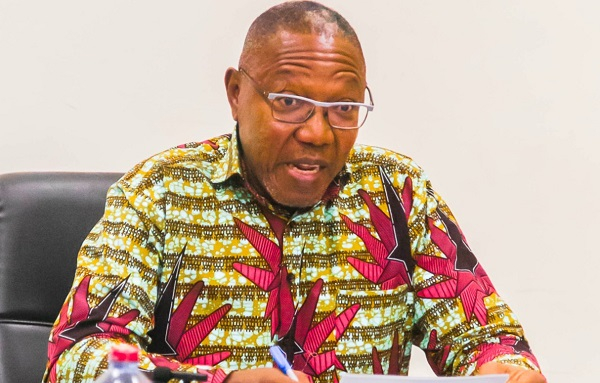
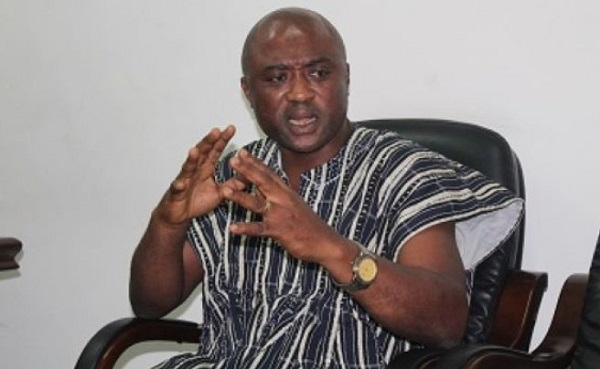
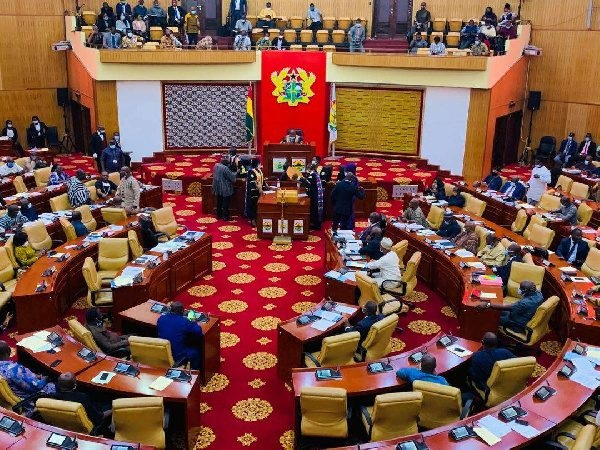
Leading Member of the People’s National Convention (PNC), Bernard Mornah has taken a swipe at the New Patriotic Party (NPP) over its public posture on a yet-to-be-delivered court judgement relating to a disputed parliamentary seat in Kpandai.
Speaking on the matter in an interview on GBC’s FOCUS, Mr. Mornah stressed that no one can accurately state the contents of a judgement that is yet to be delivered, adding that it is speculative and inappropriate for any political party to make conclusions ahead of time.
Former President, Nana Addo Dankwa Akufo-Addo has commended Ghana’s rise as a continental leader in cybersecurity, describing the achievements as a national milestone that reflects years of sustained effort and institutional collaboration.
He said the progress recorded in the sector showed what was possible when leadership, clear policy direction, and technical expertise converged to strengthen national security and protect the country’s digital space.
The former President made the remarks on Tuesday in Accra at the launch of the book, The Republic: A Professional Journey, Ghana’s Cybersecurity and the Making of a Role Model Country, authored by Dr Albert Antwi-Boasiako, Founder of the e-Crime Bureau and former Director-General of the Cyber Security Authority.
He noted that the book captured nearly fifteen years of Ghana’s cybersecurity development, from its early stages to the significant transformation that elevated the country to Tier One status in the International Telecommunication Union Global Cybersecurity Index.
He said the achievements documented in the book were built on foundations laid by successive governments, and expanded through key initiatives introduced during his administration, including policy reforms, the adoption of revised national cybersecurity frameworks, and the ratification of international conventions on cybercrime and data protection.
The former President highlighted Ghana’s remarkable rise in the ITU assessment from a score of 32.6 in 2017 to 99.27 in 2023, describing it as evidence of the country’s growing global influence in the cybersecurity sector.
He commended Dr Antwi-Boasiako for his technical leadership and his role in coordinating national efforts that helped Ghana gain international recognition and strengthen its cybersecurity ecosystem.
Dr Antwi-Boasiako, reflecting on his journey, said the book documented more than a decade of experiential learning shaped by academic work, institutional reforms, and real-world encounters in the fight against cybercrime.
He noted that Ghana’s growth in cybersecurity maturity had been the result of deliberate planning, technical leadership, and the commitment of officers who worked tirelessly despite limited early resources.
He added that the narrative also highlighted the philosophical foundations that guided the development of Ghana’s cybersecurity institutions, stressing the importance of self-reflection, continuous learning, and ethical leadership in public service.
He expressed gratitude to leaders whose decisions had strengthened the sector, and encouraged young professionals to embrace the discipline, curiosity, and courage needed to sustain national progress.
Reviewing the book, Justice of the Court of Appeal, Justice Afa Serwah Asare-Botwe, commended the author for producing a well-structured and insightful documentation of Ghana’s cybersecurity evolution, describing the book as a timely contribution to national security literature.
She said the work captured the complexity of managing modern threats and provided practical lessons for policymakers, judges, investigators, and the wider criminal justice system.
A young woman recently caught the attention of many online after a video of her posture at a Shay Concert went viral, drawing huge reactions from social media users. The video showed her interacting with male attendees in a way that people found amusing and interesting, which quickly led to thousands of shares and comments across different platforms. The attention did not go unnoticed, and soon the young woman herself became part of a live interaction with Wendy Shay, the popular Ghanaian artiste who performed at the concert.
During a TikTok live session, Wendy Shay reached out directly to the young woman, offering to support her career or even provide capital to help her start a business. Fans watching the live session were surprised and excited as Wendy Shay spoke warmly and openly, showing genuine interest in helping someone whose video had gone viral. The singer’s willingness to invest in the young woman’s future drew praise from many viewers, who commented on the kindness and generosity of the artiste.
“What I can do is support you in your career, or if you want to start a business, I can give you some capital to help you get started,” Wendy Shay told the young woman during the live session. Her words showed a mix of encouragement and practical help, and it quickly became clear that Wendy Shay was serious about giving an opportunity to someone she admired from the viral clip.
The young woman, however, had a different reaction from what viewers might have expected. Instead of asking for financial support or career guidance, she expressed a strong desire to follow Wendy Shay wherever she goes. Her response added a layer of humor and charm to the live session, making the interaction even more entertaining for the online audience. The exchange left fans commenting on how dedicated and bold the young woman was in expressing her admiration for the singer.
“I would prefer to follow you wherever you go,” she said firmly, leaving Wendy Shay and the viewers laughing and impressed at her candidness. This statement showed that while many people might seek financial or career opportunities from a celebrity, the young woman’s focus was entirely on personal support and loyalty, which made her interaction stand out even more.
The TikTok live session continued with Wendy Shay engaging further, showing patience and good humor as she listened to the young woman’s unexpected reply. Fans flooded the chat with comments, with many praising both Wendy Shay for her generosity and the young woman for her honesty and boldness. Social media users have since shared clips from the live, generating even more discussions about celebrity interactions with fans and how viral moments can open unexpected doors.
This event highlighted the influence of social media in connecting fans and celebrities in real time, showing how viral content can create unique opportunities for personal interaction. The young woman’s video, which started as a simple post capturing her presence at a concert, became a moment that attracted attention, engagement, and even a direct response from one of Ghana’s most popular artistes.
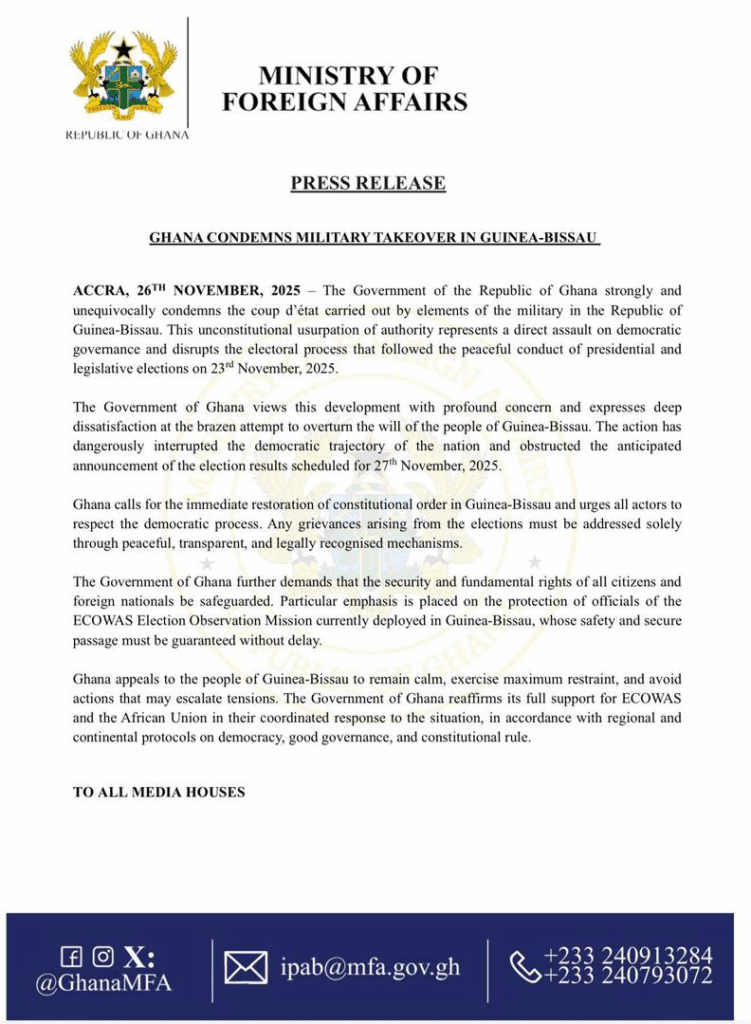
In a dramatic seizure of power, the military in Guinea-Bissau has announced it has taken full control of the nation, dissolving government institutions, suspending a closely contested presidential election, and confining citizens to their homes under an imposed curfew. The group, identifying itself as the “High Military Command for the Restoration of National Security and Public Order,” made the declaration on state television, effectively halting the country’s democratic processes.
The coup follows reports of intense gunfire near key government buildings in the capital, Bissau, including the presidential palace and the electoral commission headquarters. In their televised address, the military officers justified their actions by alleging the discovery of a widespread plot to destabilize the country, implicating politicians, a “well-known drug baron,” and both local and foreign actors in a scheme to manipulate electoral results.
The military’s announced measures are sweeping: the president has been removed from office, all land, sea, and air borders have been sealed, a nationwide curfew from 9 p.m. to 6 a.m. is in effect, and media activity has been suspended. The Command stated these steps are necessary to clarify the political situation and restore conditions for a “full return to constitutional normality.”
The deposed president confirmed his ouster in a brief statement to media, simply stating, “I have been deposed.” His removal plunges the country into profound uncertainty, occurring just as the nation awaited the official results of a tightly fought presidential election where both leading candidates had prematurely claimed victory.
The streets of Bissau now present a scene of apprehension and silence. Shops are shuttered, traffic has vanished, and a palpable sense of fear hangs over the city. Residents report widespread anxiety about the future, with some considering fleeing if the situation deteriorates further. The military’s assertion of “full powers of the state” marks the latest interruption to democracy in a country with a long history of political instability, leaving both citizens and the international community to watch with deep concern for what comes next.
Short brocade dresses have become a timeless style essential for women who love expressing elegance with a hint of glamour. Brocade, known for its rich texture, intricate patterns, and luxurious finish, adds depth and sophistication to even the simplest silhouettes. Whether you’re dressing for a cocktail party, dinner date, wedding reception, or festive celebration, a short brocade dress offers a perfect blend of charm and class. Here are some beautiful and classy options to consider adding to your wardrobe for a truly fabulous look.
One stunning choice is the A-line short brocade dress, which flatters almost every body type. Its structured shape, combined with brocade’s ornate designs, creates a graceful yet modern appearance. Pair it with pointed heels and minimal jewelry for a chic, effortlessly stylish ensemble.
Another must-have is the fit-and-flare brocade dress. This silhouette gives you a feminine waistline and a playful skirt that adds movement and personality to your look. Metallic brocade shades like gold, silver, and rose gold elevate this dress style even further, making it ideal for evening occasions.
For those who prefer something bold, the high-neck brocade mini dress offers a statement look with royal appeal. The high neckline balances the short length, giving the dress a regal, refined finish. Add drop earrings and a sleek clutch to complete the outfit.
If you want something versatile, the peplum-style brocade dress is an excellent choice. Its structured peplum detail enhances your silhouette while maintaining a classy and polished vibe suitable for both formal and semi-formal events.
Short brocade dresses are timeless pieces that never go out of style. With their rich fabric, elegant structure, and unique patterns, they instantly elevate your wardrobe. Adding one—or several—of these stunning options ensures you always have a fabulous, classy look ready for any special occasion.
Ghana’s President John Dramani Mahama has been facing criticism for using his brother Ibrahim Mahama’s private jet, the Dzata, for official trips.
The government has clarified that the only cost incurred by the state is the fuel for these trips, with Felix Ofosu-Kwakye, Minister of State in charge of Government Communication, stating that “the only cost we incur in using Ibrahim Mahama’s jet is fuel”.
The opposition has questioned the transparency and ethics of using a private jet owned by the president’s brother, but Kwakye Ofosu has assured the public that this arrangement doesn’t cost Ghanaian taxpayers a dime and is a practical solution while the official presidential aircraft undergoes review.
The presidential jet, a Dassault Falcon 900EX EASy, has been grounded in France since March 2025 due to corrosion issues and is currently undergoing repairs.
The government has emphasized that President Mahama is mindful of the country’s challenging economic situation and remains committed to prudent management of public resources. The use of the private jet is temporary, and the president will resume using the official aircraft once the review is completed.
It’s worth noting that Ghana is planning to modernize its air force, with a focus on acquiring new aircraft and upgrading existing infrastructure.
The government has announced plans to acquire modern communication systems and advanced technologies to strengthen the operational capabilities of the Armed Forces.
What do you have to say about this? You can freely drop your comments with us using the comment section below
Professor Irene Agyepong, Co-Principal Investigator and Ghana Team Lead for the RESPONE project
A groundbreaking study has unveiled an alarming mental health crisis among adolescent mothers in Ghana, revealing that over two-fifths of teenage clients seeking primary care are experiencing significant psychological distress.
These urgent findings, presented at a national policy dialogue on Tuesday, November 27, underscore the critical need to integrate mental health support into routine maternal care services.
The findings, disseminated at the Ghana College of Physicians and Surgeons (GCPS), come from the four-year RESPONSE research project, which examined the mental health burden on both mothers and the healthcare workers who treat them.
Prof. Tolib Mirzoev, Principal Investigator of the RESPONSE project
The Vulnerable: Adolescent Mothers at Double the Risk
The study, conducted by the London School of Hygiene & Tropical Medicine (LSHTM) and the GHS Research and Development Division (RDD), focused on scalable mental health solutions across six primary health facilities in the Prampram-Ningo and Shai-Osudoku districts of the Greater Accra Region.
Using the World Health Organization’s Self-Reporting Questionnaire (SRQ-20) to screen over 2,000 women, the research provided a clear statistical measure of the psychological distress endured by young mothers:
43% of the 172 teenage clients (aged 14–19) screened scored $\ge 6$ on the SRQ-20, the clinical threshold for mental distress.
This rate is significantly higher than the 27% distress rate observed in adult women aged 20 and above, meaning adolescent mothers are nearly 1.6 times more likely to be in distress.
Overall, 28% of the total women screened showed signs of mental distress. Furthermore, 5% of all women admitted to experiencing suicidal thoughts in the month prior to screening.
Professor Irene Agyepong, Co-Principal Investigator and Ghana Team Lead, emphasised that the distress often begins before birth: “Traditionally, we focus only on postpartum depression, but our data shows the problem often starts during pregnancy.”
Group photo of participants at the RESPONSE national dissemination and policy dialogue
The data showed 36% of pregnant women were in distress, compared to 25% of postnatal clients.
Dr. Bertha Garshong, a researcher on the project, stressed that women who had suffered pregnancy loss were also highly vulnerable, with 50% showing signs of distress. She urged policymakers to ensure these vulnerable groups receive targeted attention in any national scale-up.
The Dual Crisis: Strained Caregivers
The mental health burden is not confined to the patients. The study also revealed that the frontline health workers who screen these vulnerable mothers are themselves under intense psychological strain, creating a dual crisis in the primary healthcare system.
Researchers screened 172 health workers using the Depression, Anxiety, and Stress Scale (DASS-21) via a mobile app.
51% experienced moderate to extremely severe anxiety.
40% reported moderate to extremely severe stress.
37% struggled with moderate to extremely severe depression.
Prof. Agyepong highlighted the crucial connection between provider and patient wellbeing:
“Health workers told us clearly: ‘If you want us to care for patients’ mental health, you must first care for ours,’” she stated, noting that the health of the caregiver is foundational to achieving good maternal health outcomes.
Policy Demands and Sustainable Solutions
The findings spurred stakeholders, including the GHS, the Mental Health Authority, and civil society, to commit to developing new policies.
Prof. Tolib Mirzoev, Principal Investigator, stressed that addressing mental health is central to healthcare performance: “Health systems’ responsiveness is a critical aspect of performance. Prioritising responsiveness to both patients and staff, particularly in mental health, is essential.”
Dr. Frank Atuguba, Director of the Dodowa Health Research Centre, delivered the chairperson’s remarks, urging the Ministry of Health to:
Revise the National Reproductive Health Guidelines to formally include mental health screening.
Allocate dedicated budgetary support for frontline health worker mental health programmes.
The dialogue concluded with the commitment to forming a Technical Working Group to explore the sustainable financing of these services, including the crucial step of integrating the RESPONSE project’s pilot-tested tools—which include SRQ-20 screening and referral to WHO mhGAP-trained mental health nurses—into the National Health Insurance Scheme (NHIS).
Prof. Agyepong wrapped up the session with a strong mandate for action:
“Maternal and health worker mental health is not a luxury—it is foundational to achieving universal health coverage and the Sustainable Development Goals… The question is no longer ‘if’ but how quickly and how well we act.”
DISCLAIMER: The Views, Comments, Opinions, Contributions and Statements made by Readers and Contributors on this platform do not necessarily represent the views or policy of Multimedia Group Limited.
DISCLAIMER: The Views, Comments, Opinions, Contributions and Statements made by Readers and Contributors on this platform do not necessarily represent the views or policy of Multimedia Group Limited.
Agradaa was convicted on charges of fraud and charlatanic advertisement
Nana Agradaa’s attempt to appeal her 15-year jail term could end up worsening her situation, as a legal practitioner Samuel Kissiedu said the appeal process might open the door to an even harsher sentence.
In an interview on Okay FM on November 24, 2025, Samuel Kissiedu explained that the evangelist was convicted of fraud, an offence which carries a minimum sentence of 10 years and a maximum of 25 years.
Kissiedu noted that while the appeal process is meant to give a convict an opportunity to challenge a ruling, it also comes with risks.
Nana Agradaa has changed her name in prison – Angel Asiamah details
According to him, if the High Court reviewing Agradaa’s case feels the original sentence was too lenient, it has the power to impose a harsher one within the 10–25-year range.
“In sentencing, judges work strictly with the law. Defrauding by false pretences attracts a jail term of 10 to 25 years. If the judge is convinced by the prosecution’s case, the sentence can fall anywhere within that range,” he said.
He added that appealing a conviction or sentence does not guarantee a reduction.
“You may hope for a lighter sentence, but the judge may decide to increase it if they believe the trial court did not apply the law adequately,” he stated.
Agradaa was convicted on July 3, 2025, by an Accra Circuit Court on charges of fraud and charlatanic advertisement.
The charges stemmed from an incident at her Heaven Way Champion’s International Ministry in 2022, where she was accused of taking money from attendees under false pretences. She received a 15-year custodial sentence.
Her appeal case is scheduled to be heard at the High Court in Amasaman on December 4, 2025, where judges will determine whether her sentence should be reduced, upheld, or potentially increased.
Watch the video below:
Here’s how much Ghana pays anytime President Mahama and his vice use his brother’s jet
President Nana Addo Dankwa Akufo-Addo with the NPP MPs during the visit
Former President Nana Addo Dankwa Akufo-Addo has expressed strong admiration for the dedication and performance of Minority Members of Parliament from the Northern, North East, and Savannah Regions following a courtesy call on him at his Labone office in Accra.
The delegation, made up of MPs from the 9th Parliament—many of whom served in various roles during his administration—visited the former President to discuss matters of national importance and issues of shared interest within the party.
In a message shared on his official Facebook page, former President Akufo-Addo noted that the meeting was cordial and constructive, focusing on the nation’s development and the strengthening of parliamentary engagement.
He praised the MPs for their diligent service, stating that their representation in Parliament has been “stellar and of immeasurable benefit to their constituencies and the nation.” He encouraged them to continue demonstrating leadership, unity, and commitment in the discharge of their duties.
The former President further highlighted the value of ongoing dialogue across political lines, especially at a time when the nation continues to navigate key developmental challenges.
The meeting concluded with renewed assurances of collaboration and a shared commitment to advancing Ghana’s democratic and developmental agenda.
Watch the promo to GhanaWeb’s latest documentary, which uncovers the evolution of ‘kayamata,’ an exploitative practice fueled by love charms and manipulation, titled, “The Dark Side of Kayamata,’ below:
Here’s how much Ghana pays anytime President Mahama and his vice use his brother’s jet
The wait is over! The GhanaWeb Excellence Awards 2025 is officially launched. Let’s celebrate impact, innovation and excellence across Ghana.
Who deserves to be honoured this year?
Nominate now 👉 https://ghanaweb.com/ghanaexcellenceawards/nominate
Minority Leader Alexander Afenyo Markin says he does not know of alleged attempts within the New Patriotic Party (NPP) to remove him from his position. Speaking on Kokrokoo on Peace FM on Wednesday, November 26, 2025, the Effutu Member of Parliament told host Kwame Sefa Kayi that it was the first time he had heard of such claims.
When asked about reports circulating publicly, Afenyo Markin responded that he was not aware of anything like that and was hearing it from the host for the first time. Kwame Sefa Kayi pointed out that the matter had been circulating publicly, drawing Afenyo Markin’s attention to a post by veteran journalist Kwesi Pratt on X, formerly known as Twitter.
In his November 21, 2025, post, Pratt wrote that Afenyo Markin is not sitting pretty and that there have been attempts to remove him. He added that comments from Okaikwei Central Member of Parliament Patrick Yaw Boamah reinforced the claims. Pratt stated there are very strong indications that the Minority Leader in Parliament is not sitting pretty and that there have been attempts to remove him.
Pratt continued by saying that in an effort to distance himself from a plot to remove Afenyo Markin, Patrick Yaw Boamah, a respected NPP Member of Parliament, has confirmed that there were serious moves to take the Effutu MP out as Majority Leader in the 9th Parliament. The veteran journalist suggested that Boamah’s comments provided evidence of internal party tensions surrounding the leadership position.
Patrick Boamah, speaking on Asempa FM’s Ekosii Sen on November 17, 2025, explained that he was one of those who defended Afenyo Markin during earlier attempts to unseat him. He stated that he was one of the people who defended him when some individuals tried to unseat him, emphasizing that the party was grooming young leaders and saw no need to change him.
Boamah added that at the time, Afenyo Markin had not even served a full year as Majority Leader before the party lost the 2024 election. He noted there is nobody in Parliament who knows Afenyo Markin more than he does, describing them as friends for years who remain very close and share ideas all the time.
The Okaikwei Central MP dismissed claims that he is positioning himself to become the next Minority Leader. He described the rumors about him eyeing the leadership role as surprising given his long standing and close relationship with the current Minority Leader.
When Boamah was asked whether he was positioning himself for a presidential bid, he responded that God has his time for everything. He stated that he is qualified to run for the presidential primaries but believes everything must happen at the right time.
Kwame Sefa Kayi pressed Afenyo Markin again on whether he was aware of these developments, but the Minority Leader insisted that he would only be certain after personally meeting Patrick Boamah. He said that until he meets him and understands the full backstory, he cannot speak to it.
The allegations of internal tensions come at a time when the NPP is navigating its role as the Minority in Parliament following its defeat in the December 2024 elections. Afenyo Markin served as Majority Leader during the 9th Parliament under the NPP government led by President Nana Addo Dankwa Akufo Addo.
Following the National Democratic Congress (NDC) victory in the 2024 elections and President John Dramani Mahama’s inauguration on January 7, 2025, the NPP transitioned to the Minority side of Parliament. Afenyo Markin assumed the role of Minority Leader, leading the opposition caucus in holding the government accountable.
The Minority Leader has recently been vocal on several national issues, including the Tamale High Court’s order for a rerun of the Kpandai parliamentary election, which he described as shameful and potentially dangerous for Ghana’s democracy. He has also addressed internal challenges within the NPP caucus, warning that disunity and internal betrayals are undermining the party’s ability to effectively hold the Mahama government accountable.
During a caucus meeting on Thursday, November 13, 2025, Afenyo Markin warned NPP MPs that the greatest threat facing the caucus is not the Majority but their own disunity. He stated that colleagues were allowing internal disagreements to become burdens for the people they represent, while the Majority focuses on suppressing the Minority’s views.
Afenyo Markin lamented that while the Majority sits across with one agenda to suppress views, silence expression, and render the Minority irrelevant, NPP MPs are doing their work for them by bickering, backbiting, and whispering in corridors instead of roaring in the chamber. He emphasized that members are not in Parliament by accident but by choice, reminding them of their obligation to represent the people of Ghana and serve as the voice of the voiceless.
The Minority Leader has maintained a prominent presence in parliamentary proceedings and public discourse despite speculation about internal party dynamics. His leadership has been marked by strong positions on judicial matters, economic policy, and government accountability.
Patrick Boamah’s revelation that there were serious moves to remove Afenyo Markin when he served as Majority Leader suggests that internal party tensions predated the NPP’s electoral defeat. The timing of these alleged attempts, coming before the party had even completed a year under his leadership as Majority Leader, indicates possible disagreements over strategy or leadership style.
Kwesi Pratt’s public commentary on the matter brought the internal party dynamics into the public domain, prompting questions about the stability of Afenyo Markin’s leadership position. However, the Minority Leader’s measured response, indicating he would seek direct clarification from Patrick Boamah before commenting further, suggests a cautious approach to addressing internal party matters.
The NPP is currently engaged in internal reorganization and positioning following its electoral defeat. Various party members have begun positioning themselves for future leadership roles, including potential presidential candidates for the next election cycle. This internal jockeying for position may be contributing to tensions within the parliamentary caucus.
Afenyo Markin’s leadership has been characterized by assertive opposition to government policies and strong defense of NPP positions on key national issues. His confrontational approach to the judiciary over the Kpandai election matter and his warnings about internal disunity demonstrate his willingness to take controversial positions both externally and within his own party.
The Minority Leader’s response to the removal allegations reflects a pattern of addressing issues directly while avoiding premature conclusions. By stating he would seek personal clarification from Patrick Boamah before commenting, Afenyo Markin has signaled his preference for resolving party matters through internal channels rather than public confrontation.
As the NPP navigates its role in opposition and prepares for future electoral contests, questions about leadership stability and internal cohesion will likely remain significant factors in the party’s effectiveness as a parliamentary opposition. The outcome of any internal discussions about leadership positions could have implications for the party’s ability to present a united front in holding the government accountable.
A landmark national policy dialogue hosted at the Ghana College of Physicians and Surgeons (GCPS) has emphasised the need for the integration of mental health services for pregnant women, new mothers, and frontline health workers into Ghana’s primary healthcare system.
The dialogue was convened on Tuesday, November 27, to disseminate findings from an approximately 4-year RESPONSE research project—a comprehensive study that reveals a troubling mental health crisis affecting two of the most vulnerable groups in the healthcare ecosystem.
The RESPONSE project, spearheaded by the London School of Hygiene & Tropical Medicine (LSHTM) in partnership with the Ghana Health Service – Research and Development Division (GHS RDD) and other institutions, was funded by the UK Medical Research Council, the Foreign Commonwealth and Development Office (FCDO), and the Wellcome Trust.
The project explored scalable solutions for integrating mental health screening and support into routine maternal and frontline worker care.
Disturbing Data from the Field
The study’s findings, drawn from 42 months of research, included a six-month pilot intervention in six primary health facilities across the Prampram-Ningo and Shai-Osudoku districts in the Greater Accra Region.
Over 2,000 women—both antenatal and postnatal—were screened using the World Health Organization’s Self-Reporting Questionnaire (SRQ-20).
The results were stark:
28%of women scored ≥6 on the SRQ-20, the threshold for mental distress.
5% admitted that thoughts of ending their lives had crossed their minds in the past 30 days.
Among pregnant women, 36% showed signs of mental distress, compared to 25% of postnatal clients.
Particularly alarming were findings related to adolescent mothers aged 14–19.
Of the 172 teens screened:
43% scored ≥6 on the SRQ-20.
This is significantly higher than the 27% rate among women aged 20 and above.
Among women who had experienced pregnancy loss, 50% showed signs of mental distress.
“Traditionally, we focus only on postpartum depression, but our data shows the problem often starts during pregnancy,” said Professor Irene Agyepong, Co-Principal Investigator and Ghana Team Lead for the RESPONSE project.
Frontline Workers in Crisis
The mental health burden is not limited to mothers.
Frontline health workers also reported high levels of psychological strain.
Using the Depression, Anxiety, and Stress Scale (DASS-21), administered via a mobile application, researchers screened 172 health workers, with the following results:
51% experienced moderate to extremely severe anxiety.
37% reported moderate to extremely severe depression.
40% had moderate to extremely severe stress.
“Health workers told us clearly: ‘If you want us to care for patients’ mental health, you must first care for ours,’” Prof. Agyepong shared with stakeholders from across the health sector, development community, and civil society.
Tested Solutions: Feasible and Scalable
To address these issues, the RESPONSE project piloted two key interventions:
Maternal Mental Health Screening: All pregnant and postnatal women attending primary health facilities were given the SRQ-20. Those who scored ≥6 were referred to mental health nurses trained in using WHO’s Mental Health Gap Action Programme (mhGAP), adapted to the Ghanaian context. Based on evaluations, care was either provided at the primary care level or escalated to clinical psychologists or psychiatrists, such as those at Pantang Hospital.
Health Worker Self-Screening: Staff voluntarily completed the DASS-21 via a mobile app. Results were confidentially reviewed by a psychiatric team lead, who followed up with teleconsultations and referrals for those in need.
Despite the pilot’s success, challenges remain.
Of the 103 staff members flagged as needing support, only 56 received follow-up care, primarily due to incorrect contact information or scheduling conflicts—highlighting the need for stronger follow-up protocols.
Policy Recommendations and Next Steps
Prof. Tolib Mirzoev, Principal Investigator of the RESPONSE project, emphasised the broader implications for health systems:
“Health systems’ responsiveness is a critical aspect of performance. Prioritising responsiveness to both patients and staff, particularly in mental health, is essential.”
He also stressed the pervasive stigma surrounding mental health in Ghana, which affects both patients and providers and impedes access to care.
Delivering the chairperson’s remarks, Dr. Frank Atuguba, Director of the Dodowa Health Research Centre, urged the Ministry of Health and Ghana Health Service to:
Revise the National Reproductive Health Guidelines to include mental health screening.
Allocate dedicated budgets for frontline health worker mental health support.
Institutionalise the RESPONSE tools as part of national protocols.
Dr. Bertha Garshong, a researcher on the project, highlighted the need for targeted interventions for adolescent mothers and women who have suffered pregnancy loss, who are among the most vulnerable.
To take the project forward, participants at the dialogue committed to forming a Technical Working Group to:
Explore national scale-up strategies.
Design robust monitoring and evaluation systems.
Investigate sustainable financing structures, including integration into the National Health Insurance Scheme (NHIS).
“Maternal and health worker mental health is not a luxury—it is foundational to achieving universal health coverage and the Sustainable Development Goals,” Prof. Agyepong concluded.
“Today’s evidence shows we already have simple, feasible, and acceptable solutions. The question is no longer ‘if’ but how quickly and how well we act.”
As Ghana strives toward achieving equitable and comprehensive healthcare, the integration of mental health into primary care may no longer be optional—but essential.
Other researchers on the RESPONSE project were Dr Linda Lucy Yevoo, Dr Daniel Adjei, Dr Elizabeth Awini, Dr Leveana Gyimah, Anthony Danso-Appiah, Mary Eyram Ashinyo and Mr Wonder Siegward.
DISCLAIMER: The Views, Comments, Opinions, Contributions and Statements made by Readers and Contributors on this platform do not necessarily represent the views or policy of Multimedia Group Limited.
DISCLAIMER: The Views, Comments, Opinions, Contributions and Statements made by Readers and Contributors on this platform do not necessarily represent the views or policy of Multimedia Group Limited.
Home » Airline News In Africa » Explore the Caribbean and West Africa with New Direct Flight Between Trinidad & Tobago and Ghana
Published on
November 27, 2025
News recently came out of the governments of Ghana and Trinidad and Tobago planning the first direct charter service in their country’s history. This first charter service will begin sometime in the coming months. With the service, there will be a direct link of travel for all. This is an important move for all in the Caribbean and West Africa as it will encourage an increase in travel for business as well as for any tourism and cultural growth for both areas. Together, both should greatly benefit in all aspects.
This information will now be available to and to all in their communities for the first time. Access to both Trinidad and Tobago will come in the months ahead from Africa first through the now Caribbean Airlines and their joint partnership with Ethiopian airlines to serve as the first to meet this growing need. They stated it will be with the anticipation of all in Africa pleading for any travel connections to the West. This is especially important in traveling for tourism, business and in the ever growing diaspora.
Enhancing Cultural and Tourism Connectivity Between Ghana and Trinidad and Tobago
The new flight route being launched is expected to help foster tourism for from and to Trinidad and Tobago and Ghana due to the great cultural values and deep connections to the African Diaspora in both nations. Recently, recent tourism promotion initiatives in Ghana like the “Year of Return”, where African Descendants are invited to the country to reconnect to their roots, have attracted more international travelers. This new flight route to/from Ghana will benefit African-American travelers and their descendants who are interested in visiting their cultural roots in Africa.
For travelers from both countries, the new route opens up the possibility of multi-destination travel for cultural tourism. Ghana has numerous cultural and historical tourist attractions like the Cape Coast Castle, which is also a monument of significant importance in the transatlantic slave trade. On the other hand, Trinidad and Tobago has a rich cultural heritage, and is famous for its artistic festivals, music, and food/culinary culture of the Caribbean. This new route will facilitate cultural tourism, educational tourism, and travel to historical sites in both nations to strengthen the understanding and partnership in the culture and history both countries share.
Strengthen Economic Links and Travel for Work
The new flights to/from Ghana will create new opportunities for business travel to/from Ghana, and, of course, travel for business and corporate purposes to/from Trinidad and Tobago. With growing trade, finance and investment, Trinidad and Tobago and Ghana share significant business relations. With one of the most developed west African economies, Ghana has extensive and diversified business relations worldwide. Trinidad and Tobago has developed business relations with Africa due to its strong energy and financial services sector, and the Caribbean for its financial services.
The new air services are expected to optimize the business travel flow, which will further strengthen and diversify economic and business relations for all parties involved. The new services will facilitate business meetings and corporate travel for trade and other conferences, trade and economic events, and business opportunities most beneficial to the economies.
Benefits of the New Air Link
Chartered and scheduled flights are immensely beneficial for the new, fully operational direct service flight route between Trinidad and Tobago and Ghana. With Ethiopian Airlines being the first to service the flight, there are ongoing negotiations to broaden the route to include other airlines such as Caribbean Airlines to increase service for holidaymakers.
With the introduction of the new direct flights, holidaymakers will skip the lengthy layovers and multi-stop flights, and as a result will save travel time. The direct service route will assist those travelling between the Caribbean and West Africa. Air travelers will no longer need to endure the excessive flight times that exceed a full day. The improvement of the service route will assist holiday travelers to West Africa and the Caribbean to arrive faster and to spend a longer time in each country.
With the new flight route comes the ability to broaden the opportunities for advertising tourism. The tourism boards of Trinidad and Tobago and Ghana can coordinate and collaborate with their marketing efforts to plan heritage tours, focus itineraries, and travel packages. The new Air Link route will allow visiting to both Trinidad and Tobago and Ghana to be seamless.
Joining Multi-Destination Travel Caribbean and West Africa
With the last expected route of the first charter progressing into the scheduled service phase, it is expected that the new service will contribute to the further expansion of multi-destination travel products. Caribbean travelers will, for example, more easily travel to and visit the historical attractions of Ghana. Meanwhile, travelers from Ghana will more easily access and appreciate the rich cultural and historical diversity of the Caribbean.
In addition, the tourism service will increase the flow of travelers in both directions. Improved travel demand will facilitate business development to address the need. Improving travel demand will increase service available to users, enhancing the overall travel product.
Conclusion
Anticipating the new route between Trinidad & Tobago and Ghana, the new route can be seen as a strategic, longer-term investment in Africa-Caribbean tourism. With both regions now under the umbrella of cultural heritage, history, and sustainable tourism-focused growth, the air connection becomes even more important for expanding the tourism interdependence. For buyers of the service, the travel product becomes available travel to and between two vibrants and culturally rich destinations.
Many countries are adding new global tourism partnerships for travel, work, and culture. Trinidad and Tobago and Ghana are adding new global tourism partnerships. This culture and travel route will allow for increased accessibility, deeper relationships, and understanding.
In the age of social media, where love stories unfold before millions of viewers, few tales captured hearts quite like that of TikToker Jay Zee and his bride-to-be. Their journey was one of romance, laughter, and viral moments that made strangers feel like family. But just as the couple was preparing to walk down the aisle, fate intervened in the most tragic way—reminding us all how fragile life can be.
Jay Zee, known for his infectious energy and comedic skits on TikTok, had built a loyal following who adored not only his content but also the glimpses he shared of his relationship. His fiancée, radiant and equally charismatic, often appeared in his videos, their chemistry undeniable. Together, they embodied the modern love story: two young dreamers navigating life, love, and the digital spotlight.
The wedding preparations had been a spectacle in themselves. From dress fittings to venue tours, the couple documented every step, inviting fans into their world. Their followers eagerly awaited the big day, cheering them on as if they were close friends. The anticipation was palpable, and hashtags celebrating their union began trending weeks before the ceremony.
But then came the unthinkable. Just days before the wedding, tragedy struck. Details remain scarce, but reports confirm that Jay Zee’s life was cut short in a sudden accident. The news spread like wildfire across social media, leaving fans in shock and disbelief. How could someone so full of life, so close to celebrating one of the happiest milestones, be gone in an instant?
The heartbreak was compounded by the image of his bride, left to grapple with unimaginable grief. One moment she was preparing to say “I do,” and the next she was mourning the love of her life. Friends and family described her devastation as “beyond words,” a cruel twist of fate that turned joy into sorrow overnight.
Fans poured out tributes online, flooding TikTok, Instagram, and Twitter with messages of love and condolences. Many shared clips of Jay Zee’s videos, remembering his humor and positivity. Others wrote heartfelt notes about how his content had brightened their darkest days. In death, Jay Zee’s impact became even clearer: he wasn’t just an entertainer, he was a source of light for countless people around the world.
The tragedy also sparked conversations about the unpredictability of life. In a society obsessed with planning and documenting every detail, Jay Zee’s story is a sobering reminder that tomorrow is never guaranteed. His passing underscores the importance of cherishing every moment, loving deeply, and living authentically—values he embodied in his short but impactful life.
As the digital community continues to mourn, Jay Zee’s bride faces the daunting task of moving forward. While her dreams of a wedding day have been shattered, the love she shared with him remains eternal. Their story, though cut short, will live on in the memories of those who witnessed it, both online and offline.
In the end, Jay Zee’s legacy is not defined by the tragedy of his death, but by the joy he brought to others. His laughter, his creativity, and his love story remind us all to hold our loved ones close and to never take a single day for granted.
Death may have had other plans, but Jay Zee’s spirit continues to inspire—a reminder that even in loss, love endures.
Fmr NPP MP Storm AG Office With Evidence, Orders AG to Arrest Addo Over Ken Ofori-Atta Criminalities
News Hub Creator11h
A dramatic scene unfolded in Accra as a former New Patriotic Party (NPP) Member of Parliament stormed the Office of the Attorney General with what he described as “crucial and irrefutable” evidence allegedly linking an individual known as Addo to criminal activities connected to former Finance Minister Ken Ofori-Atta.
According to eyewitnesses, the former MP arrived unexpectedly at the AG’s office, clutching a sealed envelope believed to contain documents, financial records, and communication trails supporting his claims. He demanded an urgent meeting with the Attorney General and insisted that immediate action be taken, including the arrest of Addo for his alleged role in the suspected wrongdoing.
The meeting reportedly lasted close to an hour behind closed doors. While details remain sketchy, insiders say the former MP pressed for swift prosecution, arguing that the evidence clearly exposes what he called “coordinated financial misconduct and deliberate attempts to conceal crimes” linked to Ofori-Atta’s tenure.
The development has sparked intense discussion online, drawing over 1.4K views in just seven hours as Ghanaian debate the political implications of the bold move. Supporters applaud the former MP for demanding accountability, while critics accuse him of attempting to revive internal party tensions or pursue a personal agenda.
The Attorney General is yet to issue an official statement on the matter, leaving the public waiting to see whether the new evidence will trigger an investigation or lead to potential arrests.
The Ghana Cedi has been on a roll, recording a significant appreciation against the US dollar, with a 32.2% gain in the first 11 months of 2025. This impressive performance makes it one of the strongest currencies in West Africa.
According to the Bank of Ghana’s latest data, the cedi closed November at GH¢11.12 to $1, with retail rates averaging GH¢12.10. Improved FX inflows and policy tightening have been the driving forces behind this remarkable performance.
The cedi’s strong performance is not limited to the US dollar, as it has also strengthened against other major currencies, gaining 18.8% against the euro and 26.4% against the British pound.
This is a welcome respite for Ghanaians, who have been grappling with the effects of currency depreciation in recent years. The cedi’s appreciation is expected to boost investor confidence and stimulate economic growth, providing a much-needed boost to the economy.
However, the pace of gains has slowed slightly, with the cedi slipping 1.8% on the interbank market and 1.24% on retail markets. This is attributed to increased FX demand and typical year-end pressure.
Despite this, the cedi’s year-to-date performance remains far stronger than the same period in 2024. The Bank of Ghana’s data shows that the cedi has been relatively stable, with minimal fluctuations in recent months.
As the country works to consolidate its economic gains, Ghanaians can look forward to a more stable currency, which will help to boost economic activity and improve living standards.
The strong performance of the cedi is a testament to the government’s efforts to stabilize the economy and attract foreign investment.
Professor Irene Agyepong, Co-Principal Investigator and Ghana Team Lead for the RESPONE project
A crucial national policy dialogue convened on Tuesday, November 27, has thrown a spotlight on a hidden mental health epidemic among mothers and expectant women in Ghana.
Disturbing findings from a four-year research project reveal that a staggering 5% of pregnant and new mothers have had thoughts of ending their lives in the preceding month, demanding an immediate integration of mental health services into routine primary healthcare.
The meeting at the Ghana College of Physicians and Surgeons (GCPS) was held to disseminate the results of the RESPONSE research project, a comprehensive study that analysed the mental health burden across the healthcare ecosystem.
The Maternal Emergency: Data From the Field
The study, spearheaded by the London School of Hygiene & Tropical Medicine (LSHTM) in partnership with the Ghana Health Service – Research and Development Division (GHS RDD), drew its findings from 42 months of research, including a six-month pilot intervention in six primary health facilities within the Prampram-Ningo and Shai-Osudoku districts of the Greater Accra Region.
It was funded by the UK Medical Research Council, the Foreign Commonwealth & Development Office (FCDO) and the Wellcome Trust.
Researchers screened over 2,000 antenatal and postnatal women using the World Health Organization’s Self-Reporting Questionnaire (SRQ-20).
Prof. Tolib Mirzoev, Principal Investigator of the project
The stark data highlights the scale of distress:
28% of the women screened scored ≥6 on the SRQ-20, the widely recognised threshold for mental distress.
Most critically, 5% of all women interviewed admitted that thoughts of suicide had crossed their minds in the past 30 days.
Professor Irene Agyepong, Co-Principal Investigator and Ghana Team Lead for the project, challenged the traditional medical focus, stating:
“Traditionally, we focus only on postpartum depression, but our data shows the problem often starts during pregnancy.”
Group photo of participants at the RESPONSE national dissemination and policy dialogue
This is supported by the figures showing that 36% of pregnant women (antenatal clients) exhibited signs of distress, compared to 25% of postnatal clients.
Maternal Distress Prevalence
Data Point
All Women in Distress (SRQ-20/≥6≥6 )
28%
Suicidal Ideation (Past 30 Days)
5%
Pregnant Women in Distress
36%
Postnatal Women in Distress
25%
Vulnerable Groups: Teenagers and Loss
The study identified certain demographics facing an alarmingly higher risk profile:
Adolescent Mothers (Aged 14–19): Of the 172 teens screened, 43% showed signs of mental distress. This is nearly double the rate of the general adult population, which stood at 27% among women aged 20 and above.
Pregnancy Loss: 50% of women who had experienced pregnancy loss showed elevated signs of mental distress.
Dr. Bertha Garshong, a researcher on the project, stressed that any national scale-up must ensure targeted attention for adolescent mothers and women who have suffered pregnancy loss, as they are among the most vulnerable.
Piloted Solutions: From Screening to Specialist Care
To tackle this crisis, the RESPONSE project piloted a scalable screening and referral intervention:
All pregnant and postnatal women attending primary health facilities were given the SRQ-20.
Women scoring ≥6 were immediately referred to mental health nurses trained in the WHO’s Mental Health Gap Action Programme (mhGAP), adapted specifically for the Ghanaian context.
Based on the nurses’ detailed evaluation, care was either provided at the local primary care level or escalated to specialist care, such as to clinical psychologists or psychiatrists, including those at Pantang Hospital.
Frontline Workers Also At Risk
The findings highlighted a parallel crisis of burnout among the caregivers themselves. The study revealed that frontline health workers are under immense psychological strain:
51% experienced moderate to extremely severe anxiety.
40% reported moderate to extremely severe stress.
37% reported moderate to extremely severe depression.
Prof. Agyepong reiterated the critical link between staff and patient health: “Health workers told us clearly: ‘If you want us to care for patients’ mental health, you must first care for ours.’”
The Call for Policy and Financing
Delivering the chairperson’s remarks, Dr. Frank Atuguba, Director of the Dodowa Health Research Centre, urged the Ministry of Health and Ghana Health Service to act immediately by making three specific policy commitments:
Revise the National Reproductive Health Guidelines to formally include mental health screening.
Allocate dedicated budgets for both maternal and frontline health worker mental health support.
Explore sustainable financing structures, prioritising the integration of these services into the National Health Insurance Scheme (NHIS).
Prof. Agyepong concluded the dialogue with a powerful summary of the findings, stressing that the evidence is clear:
“Maternal and health worker mental health is not a luxury—it is foundational to achieving universal health coverage and the Sustainable Development Goals… The question is no longer ‘if’ but how quickly and how well we act.”
Participants committed to forming a Technical Working Group to expedite the exploration of national scale-up strategies and monitoring systems to institutionalise the pilot-tested tools.
DISCLAIMER: The Views, Comments, Opinions, Contributions and Statements made by Readers and Contributors on this platform do not necessarily represent the views or policy of Multimedia Group Limited.
DISCLAIMER: The Views, Comments, Opinions, Contributions and Statements made by Readers and Contributors on this platform do not necessarily represent the views or policy of Multimedia Group Limited.
Potential investors paid a courtesy visit to Yiram Kpembewura Banbange Ndefoso IV
The Salaga-South Constituency is poised for a major agricultural breakthrough following a high-level investor mission led by the Member of Parliament, Hajia Zuwera Mohammed Ibrahimah, on Monday, November 24, 2025.
The MP, together with a team of potential investors headed by Alfred Mahama, elder brother of the President of the Republic, paid a courtesy visit to Yiram Kpembewura Banbange Ndefoso IV at his palace in Kpembe to announce plans for large-scale agricultural development in the area.
The delegation formally notified the Kpembewura and his elders of their intention to undertake extensive irrigation farming projects, with the Kafaba enclave earmarked as a priority zone.
According to Alfred Mahama, the choice of Salaga was influenced by its rich and fertile lands, which offer strong potential for commercial agriculture.
He explained that the investment package goes beyond crop production, as it includes a range of interventions designed to support farmers in the East Gonja Municipality.
These will cover access to tractors and machinery services, storage and processing facilities, extension support, training programmes, and the supply of farm inputs. As part of the model, farmers will sell their produce to the investors after harvest to ensure a structured market system.
In welcoming the investors, Yiram Kpembewura Banbange Ndefoso IV expressed appreciation for the initiative and praised the delegation for choosing his traditional area for such a transformational project.
He offered his blessings and encouraged the youth to embrace the opportunities the investment will bring.
Zuwera thanked the Kpembewura, his chiefs, and the queen mothers for their open support.
She noted that Alfred Mahama had been a father figure to her since 1981, adding that his decision to bring such investment to Salaga during her tenure as MP was both significant and timely.
She stressed that the project has the potential to create substantial employment, boost agricultural productivity, and reinforce Salaga-South’s status as a key food-producing hub in the Savannah Region and Ghana as a whole.
The MP further disclosed that the investors had also expressed interest in supporting other development sectors, including education, health, and access to potable water.
She commended Mahama and his team for prioritising Salaga in this major development effort.
After the engagement at Kpembe, the delegation visited Yiram Kafaba Wura Seidu Yahaya Nyenshunu at Kafaba to brief him and his people about the planned project.
The Kafaba Wura enthusiastically welcomed the news, assuring the investors of his full support and confirming the availability of vast fertile lands for the initiative. He highlighted the transformative impact the project would have on the community.
Zuwera once again expressed gratitude to the Kafaba Wura and the people of Kafaba for endorsing the investment.
She also revealed that the Salaga–Kafaba road contract was nearing approval, assuring the chief and residents that positive news on the road’s construction would be announced soon.
The delegation included the Municipal Chief Executive, Kassim Yazid Rabiu; Constituency Executives led by Chairman Haruna Abdul Aziz; and staff from the office of the MP.
Zambia’s President Hakainde Hichilema has come out fighting after a bruising month that saw him come under attack by stone throwers as he was trying to make a speech.
Video clips of him crouching and then being whisked away from a rally in the Copperbelt province shocked Zambians and many people, irrespective of their political affiliation, condemned what happened.
But with nine months to go until elections and a run for a second term, the president is under pressure.
On Tuesday, in his first press conference for 18 months, Hichilema set out to defend his record and laid out his achievements on the key issues of the economy and power generation.
“This level of hatred is shocking, you can see and even touch the venom,” he said, while appealing for Zambians to love each other.
But the message may not hit home with those who are continuing to struggle day to day.
The president has lost touch with “the real pulse of the people”, according to an opposition candidate to be mayor of the capital, Lusaka, Simon Mwila, who was trying to explain why people were throwing stones “rather than flowers”.
Sishuwa Sishuwa, a Zambian historian and senior lecturer at South Africa’s Stellenbosch University, argues that the president has turned his back on what he once stood for.
“In power and over the last four years, Hichilema has turned out to be nearly everything he detested about his predecessor, Edgar Lungu, and, in some cases, much worse,” the academic told the BBC.
This is a charge rejected by the president, who pointed out his record on solving the debt crisis that he inherited and stabilising government finances.
On 8 November, Hichilema may have hoped for a friendlier reception in Chingola town, particularly as he had arrived with $450,000 (£340,000) to go towards rebuilding a local market that had been destroyed in a fire.
Instead, an angry crowd forced him to abandon his address.
Police blamed the trouble on “unruly members of the public” who were allegedly looting local shops. At least 27 people have been arrested for violence and arson.
At his press conference this week, Hichilema accused illegal artisanal miners of being behind the violence as his government was trying to crack down on this unregistered work.
“We will not allow any thuggery to return ever again,” he said.
In a dramatic turn at the Kumasi High Court, lawyers argued that celebrated highlife legend Daddy Lumba — born Charles Kwadwo Fosuh — died a German national, not a Ghanaian, potentially reshaping the bitter dispute over his funeral rites and estate ownership.
At issue is a lawsuit launched by his first wife, Akosua Serwaa Fosuh, who insists she is the only legitimate spouse and claims that under German law, she alone should perform the widowhood and funeral rites.
During proceedings, counsel William Kusi challenged a witness — the family head of the Ekuona clan — who initially stated Lumba was Ghanaian at his death. The lawyer countered that Lumba had legally acquired German citizenship, thereby raising the question of whether Ghanaian customary law could still apply to his burial.
The revelation has stoked fierce controversy, coming at a time when the family and supposed second partner, Priscilla Ofori (aka “Odo Broni”), are locked in competing claims over rights to his body, funeral rites, and estate.
Observers warn that the nationality argument — if upheld — could unsettle traditions in Ghana around death, burial, and family rights, especially in cross-border situations where Ghanaian musicians, like Lumba, spent significant periods abroad.
The court is expected to issue a ruling on these contentious issues soon, a decision that could have far-reaching implications not only for Lumba’s legacy but for broader customary-law practices across the country.
The Divisional Wing Chiefs and people of the Agave Traditional Area in the South Tongu District of the Volta Region have accused the Woyome brothers, Alfred Agbesi Woyome and Kwabla Mensah Woyome, of unlawfully interfering in the traditional affairs of the area.
The traditional authorities, including Wing Chiefs, Divisional Chiefs, Sub-Chiefs, Queen Mothers, and others, staged a protest on November 24, 2025, during which they petitioned President John Dramani Mahama.
They requested that his office halt what they describe as systematic and unlawful interference by the Woyome brothers in Agave chieftaincy affairs.
According to them, the actions of the Woyome brothers constitute a direct assault on their customs and laws, adding that the brothers are unqualified to assume any role in the district’s chieftaincy matters.
“We stand united in our demand for immediate intervention to halt the systematic and unlawful interference in Agave chieftaincy affairs by the Woyome brothers and their associates. Their actions constitute a direct assault on our customs, our laws, and the very fabric of our traditional governance. The gravity of this situation cannot be overstated.
“…The Woyome brothers do not fit the traditional priestly role in Agave; by our customs and laws, they are considered outsiders. Despite this, the brothers have used their previous positions, one as a former consul for Ghana and the other as a former Member of Parliament for South Tongu, to involve themselves in chieftaincy matters. These matters are not their concern,” the petition reads.
The petitioners further alleged that the Woyome brothers, together with the Regional House of Chiefs, have installed and gazetted a self-styled paramount chief in Agave using his private name, something they consider alien to their traditions.
According to them, the Regional House of Chiefs crowned Edward Allan Agbeti as the traditional ruler despite being served with an interlocutory injunction.
“The Woyome brothers, along with Tepre Hodo of the Regional House of Chiefs, have installed and gazetted a self-styled paramount chief in Agave using the private name Edward Allan Agbeti, which is completely alien to the stool.”
Ghana’s chieftaincy institution at risk – Kwahu Forum for Truth
They are requesting that President John Dramani Mahama grant them 10 reliefs, among which is an order directing the Woyome brothers to immediately hand over the traditional council keys and instructing the Regional House of Chiefs to operationalise the traditional council.
They are also demanding that Alfred Abesi Woyome, one of the Woyome brothers, be interrogated alongside the Wing Chiefs of Agave.
“Stop the Woyome brothers from using their residence as a palace for the outdooring of chiefs. Furthermore, the Attorney General should release the docket for the investigation and prosecution of Prince Kofi Adiabo (also known as Edward Agbeti), the illegitimate paramount chief installed by the Woyome brothers and fraudulently gazetted with the help of Tepre Hodo, to proceed.
“Ensure the revocation of the fraudulent gazette of Prince Kofi Adiabo and investigate the Regional House of Chiefs on how they got him gazetted. Ensure the proper investigation and prosecution of Holy Kofi Ahiabu for his role in inciting violence and making threats against the legitimate chiefs,” it added.
JHM/BAI
Watch the promo to GhanaWeb’s latest documentary, which uncovers the evolution of ‘kayamata,’ an exploitative practice fueled by love charms and manipulation, titled, “The Dark Side of Kayamata,’ below:
Here’s how much Ghana pays anytime President Mahama and his vice use his brother’s jet
The wait is over! The GhanaWeb Excellence Awards 2025 is officially launched. Let’s celebrate impact, innovation and excellence across Ghana.
Who deserves to be honoured this year?
Nominate now 👉 https://ghanaweb.com/ghanaexcellenceawards/nominate
Afua Asantewaa Shines In Obi-Manso With Her Singathon Hustle
News Hub Creator33min
Afua Asantewaa, a rising star in the local music scene, has been turning heads with her relentless dedication and electrifying performances in Obi-Manso. Known for her vibrant energy and passion for music, Afua has been hustling hard, captivating audiences with her unique style and powerful vocals.
The singathon, which she recently led, showcased not only her talent but also her commitment to uplifting the local music culture. Residents of Obi-Manso have been left impressed by her ability to connect with fans, blending contemporary beats with soulful melodies that leave lasting impressions.
Social media has since erupted with praise for Afua Asantewaa, with many lauding her perseverance and authenticity. Her performance is a testament to how dedication and hard work can make waves, even outside major urban centers.
For many young artists in Ghana, Afua’s journey serves as inspiration—proof that with determination and consistency, it’s possible to build a strong reputation and touch hearts through music. As she continues to hustle and grow her craft, the Obi-Manso community is undoubtedly proud to call her their own.
Afua Asantewaa’s singathon isn’t just a performance, t’s a movement that reminds everyone of the power of talent, hard work, and passion.
An Oyerepa host and traditional authority figure Naa Torshe are at odds over a contentious matter involving a huge GH5.4 billion fund, which Kennedy Ohene Agyapong, a veteran Ghanaian politician and lawmaker, has brought to light, further igniting controversy in the media landscape.
Amidst escalating tensions over the distribution and administration of the multimillion-cedi fund, Agyapong recently made a statement in which he accused the parties of blunders. Despite his omission of specifics, his comments have caused a stir in political and media circles, drawing attention to the ways in which public funding oversight, traditional authority, and media power overlap.
Allegations indicate that resources were either misappropriated or mismanaged, and the controversy is said to centre on the use of GH¢5.4 billion that were supposed to go towards development projects. The dispute between the well-known media personality Oyerepa and the respected traditional leader Naa Torshe has reportedly escalated since Agyapong’s confession, according to persons with knowledge of the matter.
Political observers have pointed out that Agyapong’s intervention could further inflame the conflict, especially considering his history of making controversial remarks and demanding accountability from celebrities. “Whenever Ken Agyapong comments on financial concerns or public conflicts, it tends to increase tensions and garner national attention,” said a governance expert. “The recent revelations may prompt enquiries from authorities or legal action.”
As the matter unfolds, there is still a degree of mystery because neither the Oyerepa presenter nor officials from Naa Torshe have publicly responded to Agyapong’s accusations. The scandal, according to observers, brings to light larger problems with the openness of big-scale fund administration and the power of powerful people to resolve or exacerbate conflicts.
Everyone is watching to see what happens next and what consequences Agyapong’s comments may have. The incident highlights the precarious equilibrium of power, responsibility, and public opinion in Ghanaian culture, where media, politics, and traditional authority all come together.
A high-stakes confrontation over substantial national money is developing, and the next several days should indicate whether this fresh bombshell from Ken Agyapong will lead to official enquiries, public remarks from the parties concerned, or additional escalation.
One person has been hospitalised after a fire gutted a four-bedroom house at Aboabo Number 2 in the Asokore Mampong Municipality on Wednesday, November 27, 2025.
The fire is believed to have started around 6:30 p.m.
Assembly Member for the area, Haruna Abdul Rashid, told Citi News that he learned of the incident when a stranger called to alert him. He said several young men in the community attempted to control the fire, and one of them was electrocuted in the process. The injured volunteer is currently receiving treatment and is reported to be recovering.
According to the Assembly Member, the Electricity Company of Ghana (ECG) quickly intervened by switching off the transformer that supplies power to the affected house to prevent further danger. Technicians were later seen working on the lines to restore electricity to nearby homes.
He added that the affected household has been advised to wait until assessments are completed on Thursday before re-entering the property.
Daddy Lumba’s family reaffirmed that his burial would take place on December 13, 2025, despite public family fued
His sister, Ernestina Fosu, opposed the scheduled date in court and expressed her wish to delay the funeral to 2026
Relatives supporting the original plan said funeral billboards had already been mounted and invitations distributed
Don’t miss out! Get your daily dose of sports news straight to your phone. Join YEN’s Sports News channel on WhatsApp now!
The family of legendary highlife singer Charles Kwadwo Fosu, well known as Daddy Lumba, has reaffirmed that the date of his burial remains unchanged.
The family of the late Daddy Lumba reaffirms December 13, 2025 as the date of his burial. Photo credit: daddy lumba. Image source: X Source: Twitter
Daddy Lumba’s family has been embroiled in a publicised feud since his death at age 60 on Saturday, July 26, 2025.
This confirmation comes after Ernestina Fosu, the eldest sister of Daddy Lumba, cast doubt on the scheduled funeral service following her appearance in court in Kumasi on November 21, 2025.
Ernestina cast doubt on Daddy Lumba’s funeral
In an interview after her court appearance, Ernestina Fosu stated that she would not allow Daddy Lumba’s funeral to be held on December 13, 2025.
She said:
“Excuse me for saying this, but Charles (Daddy Lumba) is not a chicken. Only two weeks for his funeral? No. The funeral will not happen.”
Daddy Lumba’s elder sister, Ernestina Fosu, casts doubts on her late brother’s December 13 funeral service. Photo source: @gists_online, @m_bawumia, @ghpagenews Source: UGC
When asked whether Daddy Lumba’s funeral would be held in 2026, she explained that she did not have the authority to make that decision. However, she added that she would postpone the funeral to 2026 if she were given the power to decide.
The Instagram video of Ernestina Fosu casting doubt on the late Daddy Lumba’s funeral is below:
Daddy Lumba’s family reaffirms burial date
However, in a recent video, a group of men said to be members of Daddy Lumba’s family stated that billboards have already been mounted announcing the burial date, December 13, 2025, and according to them, “nothing is changing.”
As proof, they mentioned that billboards for the funeral have been placed in Accra, and more are being transported to Kumasi for the same purpose.
They also noted that invitations have already been prepared, reinforcing their position that the date is final and will not be changed.
The video of Daddy Lumba’s family reaffirming the date of the singer’s burial is below:
Reactions to Daddy Lumba’s burial reconfirmation
YEN.com.gh collected reactions from Ghanaians who watched the video on X. Some of the comments are below.
“If they don’t want to bury him, they should stop. One funeral every day this, every day that.”
“Bro, do your funeral and leave us out of it. We’re tired.”
@thegud_neighbor commented:
“Nyame hyira wo a w’adɔfo asa. If DL were an ordinary person, he’d have been buried peacefully.”
@koftownFlower said:
“Person no fit rest in peace again?”
Kumchacha speaks on Daddy Lumba’s burial
YEN.com.gh had earlier reported that Prophet Kumchacha warned that if the late highlife singer Daddy Lumba is buried on December 13, 2025, tragedy may occur.
According to him, he had seen the late singer at least twice in his dreams and witnessed him sobbing within a jail cell.
The prophet pleaded for the burial date to be changed, stating that he had foreseen a disaster from the spiritual realm.
Former Ghana international Sarfo Gyamfi has attributed the mass departure of players from the domestic scene to the persistent snubbing of home-based footballers by the Black Stars.
Players who ply their trade in Ghana barely receive invitations to the national team, with Hearts of Oak goalkeeper Benjamin Asare emerging as the only consistent home-based player in the Black Stars.
Speaking to Kessben FM, the former Asante Kotoko star blamed the continuous exclusion of local players for the rampant departure of talent from the domestic leagues.
“Players in the local scene are not motivated enough to stay. The players prefer to play outside Ghana because of the persistent Black Stars snub. They believe playing abroad or outside Ghana can only earn them a call-up into the national team.”
“In previous years, home-based players were dominating in the Black Stars and that was enough motivation for players to stay in the league. Kotoko had 12 players in the Black Stars during our playing days, but the narrative has changed,” he said.
The mass exodus of players in the domestic top-flight has affected the standard of the Ghana Premier League and other leagues in the country.
Most players who perform well in the local scene join other clubs on the African continent or move to Europe for greener pastures.
Meanwhile, a chunk of Ghanaian football fanatics have advocated for the inclusion of home-based players in the Black Stars for the impending 2026 FIFA World Cup tournament to be staged in the USA, Canada, and Mexico.
Veteran Gospel musician, Edward Akwasi Boateng, has disclosed that his ex-wife, Genevieve, has filed for divorce and is seeking custody of their children, as well as half of his Kumasi house.
The estrangement between the couple has reportedly lasted about five years. Together, they have four children.
According to a video shared on the Gospel singer’s YouTube Channel, Genevieve has served Edward with a court order demanding 50% ownership of the house he acquired.
Edward explained that this development came after he went to the Kumasi Metropolitan Assembly (KMA) to formalise their divorce.
The gospel musician who lost 17 cars after marriage
He noted that he drew inspiration from the ongoing family dispute involving the late music legend Daddy Lumba.
According to Edward, Genevieve returned the bride price, which had been given to her family during their wedding as a customary rite. However, she believes she is entitled to 50% ownership of the Kumasi house of the Gospel musician, claiming that they built it together while married.
Court documents referenced in Edward’s YouTube video indicate that Genevieve claims he received a loan during their marriage with her assistance and has allegedly refused to repay it. She asserts that because they were married and jointly contributed, she is entitled to half of the property.
Edward, however, has denied all accusations. He stated that he personally financed and constructed the house, attributing his ability to his successful music career, particularly his hit song “Ade Mepe,” and also help from well-meaning Ghanaians such as Afia Schwarzenegger, Tracey Boakye, Pastor El Bernard, making others.
“As for this house, she wasn’t with me at the time I built it. This house is for Ghanaians, they’re the ones who helped me build it,” he said.
He further pointed to some support he provided to his ex-wife during their marriage, including taking Genevieve abroad, buying her a car, and helping her obtain a UK passport.
The veteran Gospel singer noted that Christians often face trials, but he remains confident in God’s guidance. “I’ve not wronged my ex-wife in any way. The Bible says trials and tribulations always come in the way of believers,” he stated.
Edward also expressed gratitude to his fans and the Ghanaian public for supporting him throughout his journey, recalling when he sold his music on flash drives in markets to survive.
Watch the video below:
Veteran Ghanaian gospel musician Edward Akwasi Boateng has revealed that his ex-wife, who has been estranged from him for about five years and with whom he shares four children, has served him with a court order demanding 50% of a house he acquired.
The hot debate currently dominating the mainstream media in Ghana is the issue of religious freedom in Ghana’s Senior High Schools (SHSs).
The debate was resurrected after the Office of the Attorney General filed a formal response to a Supreme Court suit where Wesley Girls’ Senior High, one of the top SHSs in Ghana, was accused of discriminatory religious policies.
The suit was filed on December 24, 2024, by private legal practitioner Shafic Osman under the Supreme Court’s original jurisdiction, invoking Articles 2(1)(b) and 130(1)(a) of the 1992 Constitution.
It centres on allegations that Muslim students are barred from wearing the hijab, fasting during Ramadan, and observing other Islamic rites, and forced to partake in practices of the Methodist Church, which established the school. He argued that actions the plaintiff says violate constitutional guarantees of freedom of religion.
In his response, the Attorney General dismissed claims that the school is acting unlawfully, insisting that Wesley Girls’ SHS, founded and operated by the Methodist Church of Ghana, is permitted to enforce rules consistent with its Methodist principles, arguing that the school’s faith-based identity grants it the authority to establish standards on religious conduct within the school environment, even where such standards limit the expression of other religious practices.
The AG’s defence divided the public, with a number of legal luminaries including Prof Kwaku Asare (Azar) arguing in favour of the plaintiff, which has forced the Christian Council of Ghana and Ghana Catholic Bishops Conference to also issue a statement defending Wesley Girls.
GhanaWeb has now sighted the writ filed by the plaintiff at the Supreme Court, which details the reliefs he was seeking from the court and the crime he is accusing the school of.
The private legal practitioner accused the school of compelling students to practise a compulsory school religion in a public institution, which contravenes Articles 21(1)(b), (c), and 26 of the 1992 Constitution. He further contends that the restrictions conflict with international human rights standards recognised under Article 33(5).
Catholic Bishops, Christian Council wade into Wesley Girls Muslims’ rights debate
Below are the exact reliefs below:
A declaration that the 1st Defendant’s policy prohibiting the belief, practice, and observance of Islam by Muslim students on its campus is contrary to and inconsistent with Articles 12, 17(1) and (2), 21(1)(b), (c), (e), and 26 of the 1992 Constitution and international human rights cognisable under Article 33(5) of the Constitution of Ghana, 1992.
A declaration that the 1st Defendant’s policy compelling and requiring the practice of a compulsory school religion in a public school is contrary to and inconsistent with Articles 21(1)(b), (c), and Article 26.
A declaration that the 1st Defendant’s policy prohibiting Muslim students from exercising their religious rights is unlawfully discriminatory and a violation of Article 17(2) of the Constitution of Ghana, 1992.
A declaration that the limitations on Muslim students in the 1st Defendant school undermine the welfare of Muslim students under international human rights of the child cognisable under Article 33(5) of the Constitution of Ghana, 1992.
A declaration that the 1st Defendant’s policy compelling the practice of Methodism by all students is an establishment of religion in violation of Article 21(1)(c) and Article 56 of the Constitution of Ghana, 1992.
A declaration that by allowing the 1st Defendant’s policy of compelling the practice of Methodism by all students, the 2nd Defendant has unlawfully allowed the imposition of a common religious programme in violation of Article 56 of the Constitution of Ghana, 1992.
An order perpetually restraining the 1st and 2nd Defendants, with immediate effect, from further administering the impugned policy in the 1st Defendant school or similar policies in any other school.
An order directing the 2nd Defendant to enact constitutionally compliant guidelines for the regulation of religious practice and observance for all public schools in Ghana.
Any other order(s) that this honourable court may deem fit.
Read the full court document below:
BAI
Watch the promo to GhanaWeb’s latest documentary, which uncovers the evolution of ‘kayamata,’ an exploitative practice fueled by love charms and manipulation, titled, “The Dark Side of Kayamata,’ below:
Ghana defender Mohammed Salisu was adjudged the Man of the Match
Ghana defender Mohammed Salisu was adjudged the Man of the Match in AS Monaco’s UEFA Champions League game against Greek champions Pafos.
Despite an unfortunate late own-goal which handed the hosts a point in the thrilling 2-2 draw, Salisu earned the highest rating from the UEFA Technical Observe.
The towering centre-back lasted the entire duration and worked relentlessly to deny Pafos victory in front of their fans.
Meanwhile, the French giants started the game brilliantly with Japanese winger Takumi Minamino opened the scoring after just five minutes.
Pafos responded 13 minutes later after former Chelsea defender David Luis powerfully headed home from a corner kick.
AS Monaco restored their lead eight minutes later through American forward Folarin Balugon, who pounced on a mistake by Pafos’ goalkeeper Neofytos Michail.
With two minutes remaining, Ivan Sunjic hit the bar and the ball went in through a deflection from the Ghanaian defender.
The draw leaves both teams with a win, three draws and a defeat in five matches in this season’s UEFA Champions League.
Chief Timipre Sylva is a former Minister of State for Petroleum in Nigeria
Former Minister of State for Petroleum, Chief Timipre Sylva, has written to the Economic and Financial Crimes Commission (EFCC), requesting that a date be fixed for him to appear before the agency over an alleged $14.8 million fraud.
In the letter dated November 24 and acknowledged by the EFCC on November 26, Sylva expressed concern over the Commission’s move to declare him wanted, insisting he was not evading investigation.
He informed the EFCC that he is currently undergoing urgent medical treatment for a life-threatening condition and is consulting with his doctors to determine when he can safely appear.
“I most humbly request that a mutually agreed date be set — subject to medical clearance — to enable me to appear physically. I trust the objective of your invitation is not to harm me but to investigate an alleged crime, which I firmly deny,” he wrote.
Sylva also recalled recent events he described as distressing, including the armed operation at his Abuja residence, during which several aides, drivers, security personnel, and domestic staff were reportedly arrested and remain in custody.
He said he was taken aback by the EFCC’s public declaration of him as a wanted person on November 10, noting that he had previously honoured an invitation in December 2024, was granted administrative bail on self-recognition, and was never contacted again.
“I have never declined or evaded any lawful invitation. The claim that I jumped bail is incorrect. No such bail condition existed or was violated by me,” he stated.
Sylva warned that the developments could create an impression of political persecution, stressing that he has always been willing to cooperate with law enforcement agencies.
“The recent actions may be misinterpreted as a political witch-hunt by many, especially considering that I appear to have been a target since the beginning of this administration,” he added.
Finance Minister Dr. Cassiel Ato Forson has hailed the Bank of Ghana’s latest monetary policy announcement as a significant milestone in Ghana’s economic recovery. This follows the central bank’s decision to cut the policy rate to 18 percent — the lowest level since March 2022.
Dr. Forson said the development signals growing economic stability and a steady decline in inflation.
He noted that “the Bank of Ghana’s monetary policy easing continues,” highlighting the consistent drop in inflation, which now stands at 8 percent as of October, down sharply from 27 percent in November 2024.
In a post on X, the Finance Minister explained that the new policy rate amounts to a substantial 350-basis point reduction, which he believes will stimulate lending and reduce credit burdens on businesses and households.
“The move reflects renewed economic confidence, and it means lower borrowing costs, improved access to credit, and greater room for businesses and individuals to grow, invest, and create jobs,” he said.
Dr. Forson added that the policy shift points to stronger recovery momentum and a more supportive financial environment for growth, investment, and job creation.
Concluding on an optimistic note, he remarked: “The recovery is clearly strengthening, and it can only get better!”
The Bank of Ghana’s monetary policy easing continues.
With inflation now down to 8 percent in October, the central bank has taken another bold step by reducing the policy rate to 18 percent, a deep cut of 350 basis points.
According to a report by GHOne TV on Wednesday November 26, 2025, a disturbing video showing a woman physically assaulting her boyfriend has sparked widespread outrage on social media in Ghana. The footage, which has been circulating online, captures a violent altercation that has prompted numerous citizens to call for immediate police intervention.
Multiple social media users have tagged the Ghana Police Service in their comments, demanding that authorities take action against the perpetrator. One commenter, Gorden Naalubepeng Dognaa, stated that he would continue tagging the police until appropriate action is taken. The video has generated significant engagement, with many expressing concern about the incident.
The public response has been largely unified in condemning the violence. Several commenters emphasized that domestic abuse affects everyone, regardless of gender. Royal Nuhu Ocansey encouraged victims to speak out, writing that people should resist bullying and abuse from anyone. The message reinforced that all lives matter and that victims deserve support and protection.
Some commenters debated the circumstances surrounding the incident. However, most agreed that violence is never an acceptable solution to conflict, regardless of the situation that led to the altercation.
This incident highlights an important but often overlooked issue in society. Male victims of domestic violence frequently face unique challenges in reporting abuse. They may fear not being taken seriously or worry about social stigma. The public outcry demanding justice in this case represents a positive step toward recognizing that domestic violence can affect anyone.
Domestic violence remains a serious concern in Ghana and worldwide. Experts emphasize that all victims deserve protection and support, regardless of their gender. When abuse occurs, witnesses and community members play a crucial role in speaking up and ensuring that perpetrators face appropriate consequences.
The Ghana Police Service has been repeatedly called upon to investigate this matter thoroughly. As the video continues to trend online, citizens await official action to address this concerning incident and send a clear message that domestic violence will not be tolerated.
The Minority in Parliament is warning that more tax increases are likely in the coming days—a development they say will further burden already struggling businesses.
According to the caucus, the approval of the Value Added Tax (VAT) Bill 2025, which eliminates the flat-rate VAT system, effectively raises VAT on retail goods and services from 3% to 15% and increases VAT on real estate from 5% to 15%.
Debating the motion on the VAT Bill in Parliament on Wednesday, November 26, 2025, the Minority Leader, Alexander Afenyo-Markin, argued that the new tax structure will make compliance more difficult for businesses and could worsen the already challenging economic environment.
“The burden contained therein is this: you are increasing retail services VAT from 3% to 15%. Also, real estate is going up from 5% to 15%. The revenue-neutrality language you are using is not of interest to us. You state in your own report that the introduction of this bill will help the government generate revenue. We are telling you that this bill is being brought because you need revenue,” he said.
Deputy Finance Minister Thomas Nyarko Ampem, however, rejected the claim, insisting that the new VAT framework will simplify compliance rather than impose additional tax burdens on businesses or the public.
“The bill, contrary to what the Minority Leader is saying, is not imposing any new tax on Ghanaians. It is rather giving back to Ghanaians. The decision to change the treatment of the Health Insurance Levy and GETFund Levy to allow for tax-credit deductibility is giving back. The NHIL alone, by changing from a straight levy to a VAT-creditable levy, offers relief,” he explained.
Minority fabricating sanitary pad scandal to dent Mahama’s image – Apaak
The Government of Ghana has strongly condemned the military takeover in Guinea-Bissau, describing it as an unconstitutional act that threatens democratic governance in the West African nation.
In a press release issued by the Ministry of Foreign Affairs on Wednesday, November 26, 2025, Ghana expressed “profound concern” over the coup d’état carried out by elements of the Guinea-Bissau military, noting that the action disrupts the electoral process following the peaceful presidential and legislative elections held on November 23.
According to the statement, the overthrow undermines the democratic will of the people of Guinea-Bissau and has obstructed the anticipated announcement of the election results scheduled for November 27, 2025.
Ghana urged all parties involved to use peaceful, transparent, and legally recognised avenues to resolve any electoral grievances.
The government also called for the immediate restoration of constitutional order and emphasised the need to protect the rights and security of both citizens and foreign nationals.
Special concern was raised for the ECOWAS Election Observation Mission currently stationed in Guinea-Bissau, with Ghana insisting that their safety and free movement must be guaranteed without delay.
Ghana further appealed to the people of Guinea-Bissau to remain calm and avoid actions that could escalate tensions.
The statement reaffirmed Ghana’s support for ECOWAS and the African Union in coordinating a regional response to the crisis, stressing adherence to established continental protocols on democracy, good governance, and constitutional rule.
Parliament has approved the Value Added Tax (VAT) Bill, 2025, marking a major step toward overhauling Ghana’s VAT regime to improve clarity, consistency and legal certainty.
The new law replaces the existing flat-rate system with a unified structure designed to simplify the tax framework. It also raises the registration threshold for VAT-eligible businesses — a change expected to exempt many micro and small enterprises from VAT obligations altogether.
But during the debate, Minority Leader Alexander Afenyo-Markin warned that the revised framework could result in additional tax liabilities for businesses and increase the financial burden on the general public.
Deputy Finance Minister Thomas Nyarko Ampem dismissed these concerns, arguing that the reforms will make compliance easier, not harder, and will not introduce new tax burdens on businesses or consumers.
DISCLAIMER: The Views, Comments, Opinions, Contributions and Statements made by Readers and Contributors on this platform do not necessarily represent the views or policy of Multimedia Group Limited.
DISCLAIMER: The Views, Comments, Opinions, Contributions and Statements made by Readers and Contributors on this platform do not necessarily represent the views or policy of Multimedia Group Limited.
Dr Nana Ayew Afriye during the debate on Wednesday, November 26
Ranking Member of the Parliamentary Health Committee, Dr Nana Ayew Afriye, has taken a strong swipe at the NDC government, accusing it of “high-level inconsistencies” in its 2026 Budget Statement as presented by Finance Minister Dr Cassiel Ato Forson.
Contributing to the budget debate in Parliament, Dr Ayew Afriye said the minister’s claims of expanding access to healthcare under the Mahama Care initiative sharply contradict the government’s own fiscal actions—particularly regarding the National Health Insurance Fund (NHIF).
He quoted the minister’s assertion: “Mr Speaker, the National Health Insurance Scheme has been uncapped to provide financing for vaccines, essential commodities, HIV services and Free Primary Health Care under the Mahama Care initiative.”
According to the Ranking Member, this statement does not reflect the real situation on the ground. He revealed that last year, although GH₵8 billion was allocated to the NHIF, the amount was capped at GH₵6.8 billion, and ultimately only GH₵6.5 billion was released—representing about 95.5 percent.
Dr Ayew Afriye argued that this year’s figures present even deeper contradictions. He noted that the projected NHIF envelope of GH₵10 billion—later revised to GH₵8 billion—was again subjected to a further 20 percent cap to fund the Mahama Care Trust. This, he explained, translates to about GH₵1.6 billion being withheld, significantly reducing the funds available to the NHIA.
“Mr Speaker, if this pattern persists, about GH₵6.4 billion will eventually be released to the NHIA—a drastic drop from last year and a clear indication of inconsistency in the government’s budget narrative,” he said.
The Ranking Member further demanded clarity from the government on the true scope of the Mahama Care initiative and the Primary Health Care programme.
He stated: “Mr Speaker, they said they have capped about 20 percent of the GH₵8 billion budget and allocated it to Primary Health Care under the so-called Mahama Care. This is confusing because they also claim Mahama Care is for specialist treatment and non-communicable diseases. Which is which? The government must come clear.”
Dr Ayew Afriye concluded that these contradictions undermine the minister’s claims of expanded healthcare access, insisting the actual allocations point to a contraction rather than an improvement in health sector financing.
Watch a video of his remarks below
Watch the promo to GhanaWeb’s latest documentary, which uncovers the evolution of ‘kayamata,’ an exploitative practice fueled by love charms and manipulation, titled, “The Dark Side of Kayamata,’ below:
Here’s how much Ghana pays anytime President Mahama and his vice use his brother’s jet
The wait is over! The GhanaWeb Excellence Awards 2025 is officially launched. Let’s celebrate impact, innovation and excellence across Ghana.
Who deserves to be honoured this year?
Nominate now 👉 https://ghanaweb.com/ghanaexcellenceawards/nominate
Zambia’s President Hakainde Hichilema has come out fighting after a bruising month that saw him come under attack by stone throwers as he was trying to make a speech.
Video clips of him crouching and then being whisked away from a rally in the Copperbelt province shocked Zambians and many people, irrespective of their political affiliation, condemned what happened.
But with nine months to go until elections and a run for a second term, the president is under pressure.
On Tuesday, in his first press conference for 18 months, Hichilema set out to defend his record and laid out his achievements on the key issues of the economy and power generation.
“This level of hatred is shocking, you can see and even touch the venom,” he said, while appealing for Zambians to love each other.
But the message may not hit home with those who are continuing to struggle day to day.
The president has lost touch with “the real pulse of the people”, according to an opposition candidate to be mayor of the capital, Lusaka, Simon Mwila, who was trying to explain why people were throwing stones “rather than flowers”.
Sishuwa Sishuwa, a Zambian historian and senior lecturer at South Africa’s Stellenbosch University, argues that the president has turned his back on what he once stood for.
“In power and over the last four years, Hichilema has turned out to be nearly everything he detested about his predecessor, Edgar Lungu, and, in some cases, much worse,” the academic told the BBC.
This is a charge rejected by the president, who pointed out his record on solving the debt crisis that he inherited and stabilising government finances.
On 8 November, Hichilema may have hoped for a friendlier reception in Chingola town, particularly as he had arrived with $450,000 (£340,000) to go towards rebuilding a local market that had been destroyed in a fire.
Instead, an angry crowd forced him to abandon his address.
Police blamed the trouble on “unruly members of the public” who were allegedly looting local shops. At least 27 people have been arrested for violence and arson.
At his press conference this week, Hichilema accused illegal artisanal miners of being behind the violence as his government was trying to crack down on this unregistered work.
“We will not allow any thuggery to return ever again,” he said.
A grainy video captured the moment that President Hakainde Hichilema (crouching behind the microphone) came under attack
In the 2021 elections, Hichilema, who had already made five unsuccessful runs for the presidency, surfed a wave of popularity that swept him into power in a landslide victory over Lungu.
By polling day, the country had defaulted on its debts, annual price inflation was touching 25% and there were frequent power blackouts.
Under the slogan “Bally will fix it” (“bally” is Zambian slang for father), he positioned himself as the solution to virtually all the problems the country faced.
Debt repayments have since been renegotiated and inflation has come down.
This week, Hichilema said that whereas four years ago there was a “huge debt mountain” and “we were living beyond our means”, now Zambia’s credit rating had improved and it was attracting investment from all over the world.
He also argued that the country’s vital mining sector was rebounding.
But with the August 2026 election approaching, Hichilema is finding out that he is not necessarily thanked for what he has achieved but rather criticised for what has not changed.
Economist Trevor Hambayi has described the progress with the nation’s finances as an “overriding success story”.
Better budgetary controls have helped boost investment in infrastructure, education, social programmes, health and the recruitment of essential government workers.
Annual inflation has come down to just below 12%, and the currency, the kwacha, has recently strengthened following a precipitous decline in the early years of the Hichilema presidency.
But Mr Hambayi told the BBC that the failure to resolve the power crisis had had a big impact on people, along with the “high cost of living and the lack of employment opportunities”.
“These are the metrics that speak to the ordinary Zambian.”
In its October report, the Lusaka-based Jesuit Centre for Theological Reflection, which monitors the cost of living, said people were being squeezed by high prices for essential food and non-food items that “continue to absorb a growing share of household income”.
It added that although inflation had eased, “many families still cannot meet basic needs without reducing food quality or skipping meals”.
The president did acknowledge the energy problem in September, saying that the government feels “the pain and frustration of power outages faced by our citizens”.
Power shortages are making the lives of ordinary people very hard
And this week, he said Zambia’s generation capacity had been “decapitated” by a recent drought owing to its reliance on hydroelectricity.
“This challenge was a wake-up call. Now we have woken up,” he added, promising more solar and thermal energy projects.
Throughout his 15 years in opposition, Hichilema portrayed himself as an upholder of democratic values.
But once in the state house, he has been accused of passing oppressive measures which he had previously opposed, such as the Cybersecurity Law.
This legislation, while seen as necessary for dealing with things like online fraud and child pornography, has been criticised for allowing the surveillance of anyone the state sees as undesirable.
Academic Dr Sishuwa also accused Hichilema of using the law against his opponents – exactly what he had criticised under the previous administration.
“After he commendably abolished the law on defamation of the president, he quickly turned to other repressive statutes to arrest critics and political opponents on a variety of charges such as sedition, criminal libel, hate speech, espionage and unlawful assembly,” he said.
The president insists that his government respects the rule of law and has not targeted anyone for political reasons.
Hichilema has also backed a controversial constitutional review process, including a plan to increase the number of constituencies so there would be more MPs in parliament.
While in opposition, he successfully campaigned against a review that incorporated a similar idea, saying this would enable then-President Lungu to stay in power and that it was too close to elections to embark on such a huge change.
He now argues that, according to the constitution, Zambia needs to create new constituencies every 10 years.
The president says that the delimitation exercise, or the increase in the number of constituencies, is important to ensure that resources are distributed equally.
And he has hit out at critics who are planning to hold national prayers to protest against the process on Friday, saying there is already a consultation process and discussions at state house, as well as legal avenues to object.
With the clock ticking down towards next year’s election, the president appears concerned about the way that people are responding to him.
While calling for tempers to cool, Hichilema has urged patience, saying it takes time for long-term development and investment programmes to have an impact.
But as the volley of stones thrown his way attests, patience may be wearing thin for some.
DISCLAIMER: The Views, Comments, Opinions, Contributions and Statements made by Readers and Contributors on this platform do not necessarily represent the views or policy of Multimedia Group Limited.
DISCLAIMER: The Views, Comments, Opinions, Contributions and Statements made by Readers and Contributors on this platform do not necessarily represent the views or policy of Multimedia Group Limited.
Visibly sobbing mother recalled how her 8-year-old daughter passed away
A grieving mother has shared the heartbreaking final moments she spent with her 8-year-old daughter, Priscilla, before the Dansoman Market fire took the young girl’s life.
In a video posted by Joy News, the mother, visibly sobbing recalled how what started as a normal, happy evening turned into a tragedy she never imagined.
She said they had been playing and watching TV together when Priscilla asked for kenkey and fish. She gave her money to buy it and even asked her to get some soup for her on the way back because she planned to eat gari.
8-year-old burnt to death in Dansoman market fire
“I was with her in the evening, playing and watching television. She asked to eat kenkey and fish, and I said okay. I gave her money to buy the kenkey… I even told her I would eat gari, so she should buy soup for me on her way back,” she recalled.
Priscilla returned home, ate her food, and later went to bed since she had school the next day. The mother explained that after her daughter fell asleep, she stepped out to buy her own food and didn’t wake her to inform her.
“After she went to bed, I stepped out to buy food. By then, she was asleep, so I didn’t inform her,” she said.
While at the food vendor’s stand, she received a call from a friend who said her shed was on fire. The mother immediately panicked, remembering her daughter was still inside one of the kiosks.
“She called and said there was a fire in her shed. I just said, ‘My daughter is there.’ That was it. I never saw my daughter again,” she cried.
The fire tore through several wooden structures at the Dansoman Market, destroying shops and trapping the little girl who had been asleep inside.
Authorities are investigating the cause of the blaze as the community mourns the loss of a young life.
Watch the video below:
Dansoman Market Fire: A heart-wrenching moment as Priscilla’s mother breaks down in tears, admitting she locked her 8-year-old daughter inside while she stepped out to get food.#JoyNewspic.twitter.com/QcsBGs337g
Dr Clement Apaak is the Deputy Minister of Education
Deputy Minister of Education, Dr Clement Apaak, has dismissed accusations from the Minority in Parliament that the government is inflating the cost of sanitary pads being supplied to female students.
The claims came after the MP for Old Tafo, Vincent Ekow Assafuah, raised concerns on November 25, 2025, about the allocation of GH¢292 million for 6.6 million sanitary pads.
He argued that the numbers do not align with current market prices and suggested that the cost may have been inflated.
‘Chop bar arithmetics’ – Haruna Iddrisu blasts Assafuah over sanitary pads overpricing claim
Speaking to journalists in Parliament on, November 26, 2025, Dr Apaak said the accusations were unfounded and driven by politics.
He claimed the Minority was trying to create a scandal to tarnish the image of the Mahama administration, adding that the Old Tafo MP’s calculations were misleading.
“For the Honourable Member of Parliament to disingenuously perform what the Minister for Education, Haruna Iddrisu, has described as chop-bar arithmetic, we can only conclude that this is another attempt to manufacture a scandal to discredit the John Dramani Mahama government so the decomposing elephant can feel relevant,” Dr Apaak said.
The Deputy Minister insisted that the government has done nothing wrong.
“There is no scandal. There will never be a scandal. The NDC under John Dramani Mahama and the Ministry of Education has not purchased a pack of sanitary pads for 45 Ghana cedis and will never do so,” he stated.
Dr Apaak stressed that the process has been transparent and that the government remains committed to ensuring value for money.
“We have the data to show that we are a transparent, accountable government that promised to reset governance and guarantee value for money,” he said.
He reported that 3.9 million pads have already been distributed to pupils in 20,744 public basic schools, while another 2.6 million have gone to girls in 906 senior high and TVET schools.
According to him, 398,701 basic school pupils have benefited so far. At the junior high level, 1.1 million girls have received pads, along with 968,285 girls in senior high schools.
Dr Apaak said the programme has reached a total of 2,578,915 female students from Primary Five to SHS, describing the initiative as life-changing and insisting it is being carried out with integrity.
Here’s how much Ghana pays anytime President Mahama and his vice use his brother’s jet
Aksa Enerji to build 119 MW power plant in Burkina Faso’s capital
20-year electricity sales deal signed with national utility Sonabel
Project aims to boost energy security amid rising demand and urbanization
Turkey’s Aksa Enerji announced a project on Tuesday to build a 119 MW fuel oil power plant in Ouagadougou, the capital of Burkina Faso. The company also announced the signing of a 20-year electricity sales contract with the national utility Sonabel, guaranteeing the full offtake of the plant’s production for two decades.
The construction cost for the infrastructure was not disclosed. The company stated that the power plant will be commissioned in the last quarter of 2026. It said the plant aims to meet growing energy demand, driven by urbanization and a rising population. It will strengthen the reliability of the electricity supply in the capital and surrounding areas, and its construction and operation will create local jobs and involve regional suppliers.
Cemil Kazancı, Chairman of the Board and Chief Executive Officer of Aksa Enerji, said this project aligns with the Turkish company’s strategy in Africa, where it has already built several energy infrastructures, such as in Senegal and Ghana. He cited its ability to provide fast and effective technical solutions due to its financial strength and over 25 years of experience on the continent.
“The initiative we are taking today reflects our vision of creating long-term value in Africa,” he said. “To contribute to Burkina Faso’s energy supply security goals, we will mobilize our experience and competencies to deploy our fastest and most effective solutions. As with our previous projects on the African continent, I am confident we will succeed in this one as well.”
The project provides Burkina Faso with a concrete instrument to close the gap between the supply and demand for electrical energy. The reinforcement of infrastructure also contributes to economic growth and energy security. Separately, Aksa Enerji is conducting other major projects in Africa, such as the construction of a 1000 MW power plant in Gabon.
US President Donald Trump has defended special envoy Steve Witkoff as doing the “standard thing” after a leaked recording appeared to show him advising a Russian official on how to appeal to the president.
Trump told reporters on Wednesday he had not heard the audio, but that Witkoff was doing “what a dealmaker does” to “sell” the peace plan to both Russia and Ukraine.
The leaked call from last month emerged days after a 28-point draft peace plan presented by the US largely reflected Russian positions on its full-scale war in Ukraine.
Witkoff has visited Moscow several times this year and will meet Russian President Vladimir Putin again next week.
He has never gone to Kyiv in his role as special envoy, although other US officials have visited, and US Army Secretary Dan Driscoll went to Kyiv this week, and Trump says he will hold further talks with the Ukrainians.
Diplomatic talks have continued after the initial draft plan was criticised by Ukrainian and European leaders as being too favourable to Russia. Among the proposals was a handover to Russia of Ukrainian-controlled territory in eastern Ukraine.
The plan has since been revised to better reflect Ukraine’s interests and the views of European allies. Ukrainian President Volodymyr Zelensky has said he is ready to meet Trump to discuss outstanding “sensitive points”.
In the leaked audio recording obtained and shared as a transcript by Bloomberg, Witkoff appeared to advise Yuri Ushakov, Putin’s foreign policy adviser, on how to get on Trump’s good side.
BBC News has not independently verified the reported 14 October call, but Trump said it represented a “very standard form of negotiations”.
During the leaked conversation, the two men reportedly talked about ending the war, with Ushakov asking if it would be useful to get their bosses – Putin and Trump – to speak.
Witkoff is quoted as saying that “my guy is ready to do it”, before suggesting how to go about the call.
“Just reiterate that you congratulate the president [Trump] on this achievement… that you respect that he is a man of peace and you’re just, you’re really glad to have seen it happen,” Witkoff is quoted as saying. “I think from that it’s going to be a really good call.”
“I told the president that you – that the Russian Federation has always wanted a peace deal. That’s my belief,” Witkoff adds according to the transcript. “The issue is is that we have two nations that are having a hard time coming to a compromise.”
“I’m even thinking that maybe we set out like a 20-point peace proposal, just like we did in Gaza,” Witkoff adds.
The call ends with Witkoff telling Ushakov of an imminent Zelensky visit to the White House and that “if possible”, Trump and Putin should talk before that meeting.
What followed was a two-and-a-half hour phone call between the US and Russian presidents, news of which emerged as Zelensky was on his way to Washington last month.
Before the Trump-Putin call, the US president had appeared to be running out of patience with his Russian counterpart and had suggested he might provide Ukraine with long-range Tomahawk missiles.
By the time Zelensky entered the White House, the atmosphere appeared to have changed. Trump said giving Kyiv Tomahawks could escalate the conflict and he believed Putin “wants to end the war”.
Asked about the call being leaked, Yuri Ushakov told Russian state media that it was done to “hinder, probably” and that it was “unlikely” to be done to improve relations.
He also confirmed that Witkoff would be visiting Moscow next week as per a “preliminary agreement”.
It was not clear who was behind the leak, but Bloomberg has also transcribed another reported call between Ushakov and Putin envoy Kirill Dmitriev, who spent days with Witkoff in Miami in late October weeks before the 28-point draft plan emerged.
According to the transcript, Dmitriev tells his Russian colleague: “We’ll just make this paper from our position, and I’ll informally pass it along, making it clear that it’s all informal. And let them do like their own.”
Apparently angered by the report, Dmitriev complained of a “well-funded, well-organised malicious media machine built to spread fake narratives, smear opponents and keep people confused”.
DISCLAIMER: The Views, Comments, Opinions, Contributions and Statements made by Readers and Contributors on this platform do not necessarily represent the views or policy of Multimedia Group Limited.
DISCLAIMER: The Views, Comments, Opinions, Contributions and Statements made by Readers and Contributors on this platform do not necessarily represent the views or policy of Multimedia Group Limited.
Thomas Tanko Musah is the General Secretary of the Ghana National Association of Teachers (GNAT)
The General Secretary of the Ghana National Association of Teachers (GNAT), Thomas Tanko Musah, has called on the Minister of Education, Haruna Iddrisu, and the Ghana Education Service (GES) to intervene immediately to prevent possible industrial unrest following delays in the payment of November 2025 salaries to all Government of Ghana workers.
According to him, teachers are angry and upset about the delay in paying the CPD allowance, describing the mood among teachers as deeply troubling.
On November 25, 2025, the Controller and Accountant-General’s Department announced that the allowance would not be paid as scheduled, citing a technical challenge that has forced a rescheduled payment date of December 18, 2025.
The CPD allowance — a benefit negotiated between teachers and the government several years ago — is enshrined in teachers’ collective agreement and conditions of service. Originally set at ₵1,200, it was later increased to ₵2,400.
The government released millions of cedis to pay the allowance in September 2024. Early this year, both the Ministry of Education and the GES assured teachers that the payment would be made again without delay.
Speaking to the media, General Secretary of GNAT, Thomas Tanko Musah, said teachers are angry and upset about the delay in paying the CPD allowance, as they feel betrayed by the sudden change.
“Last year it was paid in September, and this year it was supposed to be paid this month. Everything has been done — validation has been done — and when the validation was completed, there was an indication that the allowances would be paid,” he said.
“Then only yesterday it came to our attention that there was a technical problem at a point in time. We had already communicated to members that the monies would be paid in November.”
He added that the situation has placed union leaders in a difficult position.
“Now the implication is that we have lied to them that the allowances would be paid in November — and since yesterday till now, it has not been easy.”
Musah is calling on the Minister of Education to step in quickly to defuse the growing tension.
“Both the Ministry of Education and the Ghana Education Service should respond to this difficult situation as soon as possible. The Minister gives policy direction, and the GES is the employer. Teachers want to hear from them on exactly what the issues are,” he stressed.
Government has issued a forceful condemnation of the military coup underway in Guinea-Bissau, describing the action as a ‘direct assault on democracy’ and a dangerous attempt to overturn the will of the people.
In a strongly worded statement released on Wednesday, November 26, the Ministry of Foreign Affairs said Ghana is “profoundly concerned” about the military takeover, which erupted just days after Guinea-Bissau held peaceful presidential and legislative elections on November 23.
According to Ghana, the coup has “brazenly disrupted” the electoral process and blocked the anticipated announcement of results scheduled for November 27, thereby derailing the country’s democratic trajectory.
Ghana is calling for the immediate restoration of constitutional order, insisting that any disputes arising from the elections must be resolved through peaceful, transparent, and legally recognised channels — not through force.
The statement further demands that the rights and safety of civilians and foreign nationals be protected, with particular emphasis on the ECOWAS Election Observation Mission stationed in Guinea-Bissau.
Their secure passage and protection, Ghana stressed, “must be guaranteed without delay.”
Amid rising tensions, Ghana is appealing to the people of Guinea-Bissau to remain calm and avoid actions that could inflame the crisis.
The government reaffirmed its full support for ECOWAS and the African Union as both institutions coordinate a regional response in line with long-standing protocols on democracy, good governance and constitutional rule.
DISCLAIMER: The Views, Comments, Opinions, Contributions and Statements made by Readers and Contributors on this platform do not necessarily represent the views or policy of Multimedia Group Limited.
DISCLAIMER: The Views, Comments, Opinions, Contributions and Statements made by Readers and Contributors on this platform do not necessarily represent the views or policy of Multimedia Group Limited.
Nvidia has claimed it is “a generation ahead” of rivals in the artificial intelligence (AI) industry amid growing suggestions a rival may emerge to threaten its market dominance – and multi-trillion dollar valuation.
Shares in the chip giant fell on Tuesday, following a report that Meta planned to spend billions on AI chips developed by Google to power its data centres.
In a statement on X, Nvidia, the world’s most valuable company, said it was the only platform which “runs every AI model and does it everywhere computing is done”.
In response, Google said it was committed to “supporting both” its own and Nvidia’s chips.
Nvidia’s chips have become a critical part of powering the data centres behind many of the most popular AI tools, such as ChatGPT.
In October it became the first company ever to be valued at $5tn (£3.8tn).
The American firm has been looking to expand its reach further in recent months, announcing an agreement in October to supply some of its most advanced artificial intelligence (AI) chips to South Korea’s government, as well as Samsung, LG, and Hyundai.
‘Healthy’ competition
Google rents access to its chips, called tensor processing units (TPUs), through Google Cloud to AI developers.
In other words, they are not sold externally – but kept for the tech giant’s own data centres.
But if recent reports are correct – that the tech company could be in talks to sell its chips to power other data centres – it would represent a significant change.
The news saw Nvidia shares fall nearly 6% on Tuesday, whilst those in Alphabet, Google’s parent company, rose by nearly the same percentage.
In the hours following the drop, the chip giant posted on X to state it still offered “greater performance” and “versatility” than the types of chips Google is producing.
In the past year, both Amazon and Microsoft have announced they also have AI chips in development.
Dame Wendy Hall, Regius Professor of Computer Science at the University of Southampton, told the BBC’s Today programme the news of the potential deal between Google and Meta was “healthy” for the market.
“Investment is pouring into this area,” she said.
“At the moment there is no real return on that investment except for Nvidia”.
DISCLAIMER: The Views, Comments, Opinions, Contributions and Statements made by Readers and Contributors on this platform do not necessarily represent the views or policy of Multimedia Group Limited.
DISCLAIMER: The Views, Comments, Opinions, Contributions and Statements made by Readers and Contributors on this platform do not necessarily represent the views or policy of Multimedia Group Limited.
The Minister of Finance, Dr Cassiel Ato Forson, has described the Bank of Ghana’s latest monetary policy decision as a major milestone in Ghana’s economic recovery, following the reduction of the policy rate to 18 percent, the lowest since March 2022.
Announcing the development, the minister said the decision reflects growing stability in the economy and declining inflation levels.
He noted that “the Bank of Ghana’s monetary policy easing continues,” referencing the sustained drop in inflation, which now stands at 8 percent as of October, down sharply from 27 percent in November 2024.
Dr Forson explained that the new rate represents a deep 350 basis point cut — a move he believes will boost lending and ease credit pressures on businesses and households.
He added, “This marks a drastic fall from the 27 percent recorded in November 2024. The move reflects renewed economic confidence, and it means lower borrowing costs, improved access to credit, and greater room for businesses and individuals to grow, invest, and create jobs.”
BoG cuts policy rate further from 21.5% to 18%
The finance minister asserted that the policy shift signals stronger recovery momentum and a more enabling financial environment for growth, investment, and job creation.
Concluding on a positive note, he remarked: “The recovery is clearly strengthening, and it can only get better!”
Watch the promo to GhanaWeb’s latest documentary, which uncovers the evolution of ‘kayamata,’ an exploitative practice fueled by love charms and manipulation, titled, “The Dark Side of Kayamata,’ below:
Here’s how much Ghana pays anytime President Mahama and his vice use his brother’s jet
The wait is over! The GhanaWeb Excellence Awards 2025 is officially launched. Let’s celebrate impact, innovation and excellence across Ghana.
Who deserves to be honoured this year?
Nominate now 👉 https://ghanaweb.com/ghanaexcellenceawards/nominate
Soldiers patrol on the main road in Bissau, Guinea-Bissau
West Africa’s ECOWAS and African Union observers on Wednesday expressed concern over the military takeover in Guinea-Bissau and the arrests of election officials, a joint statement issued by the organizations said.
A group of army officers said earlier on Wednesday they had seized power in the coup-prone West African nation, a day before the planned announcement of results from a hotly contested presidential election.
“It’s regrettable that this (coup) announcement came at a time when the missions had just concluded meeting with the two leading presidential candidates, who assured us of their willingness to accept the will of the people,” the observers said.
The observer missions that included Mozambique’s former President Filipe Jacinto Nyusi and Nigeria’s former President Goodluck Jonathan, called on the regional bodies to take the necessary steps to restore constitutional order.
“We urge the armed forces to immediately release the detained officials to allow the country’s electoral process to proceed to its conclusion,” the statement from the Economic Community of West African States and African Union observers said.
Asante Kotoko SC on Wednesday afternoon, suffered a 2-1 defeat to Basake Holy Stars FC in Aiyinase in the 2025/26 Ghana Premier league outstanding game.
Two second half strikes from the host, Basake Holy Stars FC propelled them to a second win of the campaign and also inspired them to end the visitors unbeaten run. Richmond Somiah scored five minutes after recess to put Basake Holy Stars FC nose in front after a goalless first half draw.
However, Kwame Poku leveled scores for the visitors minutes after Kotoko conceding but nonetheless, Basake Holy Stars were not ready to share spoils with the Porcupine Warriors having struggled this season to amass points.
In the stoppage Prince Tweneboah netted the winner to clinch all points for the host.
The victory means, Asante Kotoko SC unbeaten run ends after 11 matches with Basake Holy Stars FC now accumulating nine points in 11 games and now sit 17th on the log.
Asante Kotoko SC enters top four with 20 points, three points adrift top placed Aduana Stars FC.
The Chinese Ambassador to Ghana, Tong Defa; Tang Palace CEO, Tang Hong; Former Ghanaian Ambassador to China, Edward Boateng, Executives of the Center for West African Studies and some speakers of the conference
The 7th International Symposium on West African Studies (ISWAS) opened on Wednesday, November 19, 2025, at the Ghana Institute of Management and Public Administration (GIMPA) with a mandate extending beyond typical academic discourse. In a series of high level deliberations, diplomats and scholars laid out a concrete roadmap for how Artificial Intelligence (AI) must move from a buzzword to a driver of equity, empowerment, and resilience across the West African region.
The symposium, themed “Sustainable Economic and Social Development in West Africa: AI Empowerment and Innovation,” represents a tripartite collaboration between the University of Electronic Science and Technology of China (UESTC), GIMPA, and the University of Cape Coast (UCC). More than 65 scholars and practitioners participated in the event, which combined policy discussions with practical applications of AI technology.
Delivering a keynote that bridged diplomacy and hard economics, Chinese Ambassador to Ghana Tong Defa emphasized that the value of AI lies in its application to Ghana’s real economy. He called on delegates to visualize a near future where digital infrastructure fundamentally alters national output, asking them to imagine if AI technology were widely applied in Tema Port, in the cultivation of cassava and cocoa, and in the construction of the Volta Economic Corridor.
Ambassador Tong stated he believed such applications would greatly enhance the production efficiency and economic development of Ghana. He framed these proposals within the broader context of the recent Forum on China Africa Cooperation (FOCAC) Summit in Beijing and the upcoming China Africa Year of People to People Exchanges. He pledged China’s commitment to helping developing nations bridge the intelligent divide, ensuring that West Africa secures a distinct voice and representation in the global governance of AI.
Welcoming delegates to the opening ceremony, the Rector of GIMPA, Professor Samuel Kwaku Bonsu, recalled the inaugural ISWAS at UCC in 2017 and the subsequent Smart City themed event at UESTC in China. He emphasized that the partnership between GIMPA and UESTC has transcended academic exchange to become a bond for cultural integration.
Professor Bonsu stated that for the West African region, artificial intelligence holds enormous potential and is expected to become a key driving force for achieving sustainable development goals. He expressed hope that the seminar could further promote capacity building and cooperation, inspire profound reflection and action, and bring greater and more positive impacts to participating institutions, countries, and even the entire West African region.
On behalf of the Acting Vice Chancellor of the University of Cape Coast, Professor Rosemond Boohene, a former Pro Vice Chancellor of UCC, cautioned against adopting technology solely for speed. She highlighted that for the region to overcome challenges like climate vulnerability and educational gaps, the demographic dividend of West Africa’s youth must be armed with high level digital skills.
Professor Boohene emphasized that as artificial intelligence reshapes industries, governance, and social systems, West Africa must position itself not only as a participant but as a leader. She described the symposium as offering a unique platform to explore how AI can be leveraged not just as a tool of efficiency but as a catalyst for equity, empowerment, and resilience.
Professor Shurong Zhao, Director of the Center for West African Studies at UESTC, outlined the symposium’s rigorous academic agenda. She noted that the 7th International Symposium on West African Studies conference would generate many new ideas and innovative technologies, which could also be applied to different societies based on their political and historical backgrounds.
In her keynote presentation, Professor Zhao outlined findings from high impact research work that pointed out some risks in E Business Cooperation Between China and West Africa and how they could be addressed. Her presentation drew on extensive research conducted by the Center for West African Studies, which has been producing scholarship on regional development issues since its establishment.
Professor Nora Ann Colton, Director of Global Business School for Health at University College of London, highlighted the role of AI in addressing various challenges faced by healthcare professionals in the United Kingdom and how the same approaches could be translated into addressing similar challenges in West Africa. Her presentation provided concrete examples of AI applications in medical diagnosis, patient care management, and healthcare system optimization.
Speaking on how AI can be used to enhance productivity and efficiency within the public sector, the Head of Local Government Service, Engineer Dr. Nana Ato Arthur, called for stronger AI policy governance and regulation to ensure the ethical use and application of AI across all sectors of the public service. He emphasized the need for frameworks that balance innovation with accountability and transparency.
Professor Rosemond Boohene, in her presentation, bemoaned the lack of West African context in artificial intelligence development. According to her, the future of West African studies is not about resisting technology, but rather the lack of West African context in the AI space is where the problem lies. She called for more support for building AI ecosystems by West Africans themselves, ensuring that regional perspectives and needs shape technology development.
Following the plenary interventions, the symposium transitioned into six parallel expert seminars featuring scholars and practitioners who moved the dialogue from policy to practice. These technical sessions explored the critical intersections of the AI Empowerment theme, ranging from the application of big data analytics in public administration, national security, and social governance to strategies for the digital preservation of West African cultural heritage.
The symposium is being held with strategic support from the Ghana Chinese Chamber of Commerce and the Center for West Africa Studies (CEWAS). The Center for West African Studies of UESTC is a research center jointly established by UESTC, University of Ghana (UG), UCC, GIMPA, The Akenten Appiah Menka University of Skills Training and Entrepreneurial Development, and University for Development Studies (UDS) in April 2017.
The symposium is also co hosted by Global Afrisino, whose involvement underscores the critical role of private sector investment in digital capacity building. The partnership between Chinese and West African institutions has produced tangible results over the years, including collaborative research projects, student exchanges, and joint initiatives on technology transfer.
The ISWAS series began in 2017 at the University of Cape Coast and has since become a flagship platform for examining development challenges and opportunities in West Africa. Previous symposia have covered themes including digital economy transformation, smart cities, and vocational education cooperation, reflecting the evolving priorities of regional development.
The 6th ISWAS took place in Benin in November 2024, focusing on digital technology enabled economic and social development. That event demonstrated the growing reach of the symposium beyond Ghana to other West African nations, creating a broader platform for regional dialogue and cooperation.
Ambassador Tong’s emphasis on practical applications of AI in key sectors like agriculture, ports, and infrastructure reflects China’s broader approach to technology cooperation with African nations. The reference to the Volta Economic Corridor, a major infrastructure project aimed at transforming the region along the Volta River, illustrates how AI could enhance large scale development initiatives.
The symposium’s focus on AI governance and regulation addresses growing concerns about the ethical implications of artificial intelligence deployment. Dr. Nana Ato Arthur’s call for stronger policy frameworks recognizes that without proper oversight, AI systems could perpetuate existing inequalities or create new challenges in areas like data privacy, algorithmic bias, and digital security.
Professor Boohene’s insistence on West African context in AI development highlights a critical gap in current technology systems. Most AI platforms are developed in Western or Asian contexts, with training data, algorithms, and use cases that may not reflect West African realities. Building indigenous AI capabilities would ensure that technology solutions address local challenges and opportunities more effectively.
The parallel sessions allowed participants to engage with specific technical issues across multiple domains. Topics ranged from using AI for predictive analytics in public administration to employing digital tools for preserving endangered languages, traditional knowledge systems, and cultural artifacts. These discussions connected high level policy considerations with practical implementation challenges.
The 8th ISWAS, scheduled for 2026, promises to be significantly larger as it will form part of the China Africa Year of People to People Exchange. This designation by both Chinese and African Union authorities signals the importance of cultural and educational exchanges in strengthening relations between China and African nations.
The symposium reflects broader trends in higher education cooperation between China and Africa. Chinese scholarships have enabled thousands of African students to pursue advanced degrees in science, technology, engineering, and mathematics fields, creating a generation of professionals equipped to drive technological transformation in their home countries.
Participants emphasized that AI adoption in West Africa must be accompanied by investments in digital infrastructure, education systems, and regulatory frameworks. Without adequate internet connectivity, electricity supply, and technical training programs, even the most sophisticated AI applications would have limited impact on regional development.
The symposium concluded with commitments from participating institutions to deepen research collaborations, expand student exchange programs, and develop joint initiatives on AI applications in priority sectors. These partnerships aim to ensure that technological advancement contributes to inclusive growth and sustainable development across West Africa.
Parliament has passed the Value Added Tax Bill, 2025, marking the most sweeping reform to Ghana’s VAT regime in over a decade and officially scrapping the COVID-19 Health Recovery Levy.
The reforms fulfil a major pledge announced by the government in the 2025 Budget and Mid-Year Fiscal Policy Review to make Ghana’s VAT system fairer, simpler, and more growth-focused. Finance Minister Dr. Cassiel Ato Forson, who led the policy revisions, said the new legislation will remove distortions, reduce cascading effects, promote compliance, and improve economic efficiency for businesses and households.
“We promised to abolish the COVID-19 levy. With the support of this House, I am happy to announce today that it is abolished,” Dr. Forson declared on the floor of Parliament.
Under the new VAT structure, the COVID-19 levy is removed entirely, expected to return GH¢3.7 billion to individuals and businesses in 2026 alone. The bill also abolishes the decoupling of GETFund and NHIL from the VAT base, meaning both are now eligible for input tax deductions — a change projected to reduce the cost of doing business by about 5 percent. The government says that cumulatively, the full reform package will give back nearly GH¢6 billion to the Ghanaian economy.
Other approved measures under the VAT Bill include:
Abolition of VAT on mineral reconnaissance and prospecting, aimed at reviving exploration investment and reversing years of stagnation in greenfield development.
Reduction of the effective VAT rate from 21.9% to 20%.
Increase in the VAT registration threshold from GH¢200,000 to GH¢750,000, relieving thousands of micro and small enterprises from mandatory VAT compliance.
Extension of zero-rated VAT on locally manufactured textiles to December 2028, protecting more than 2,000 jobs and enhancing competitiveness in the domestic garment market.
Government ‘abolishes’ COVID-19 Levy
According to the Finance Minister, the previous taxation threshold had eroded significantly in real value since 2015, forcing many micro-businesses into VAT registration and raising administrative costs. The new threshold, he said, restores fairness and frees small enterprises to grow without heavy compliance burdens.
Dr Forson emphasised that the VAT overhaul goes beyond tax adjustments, positioning Ghana for a digitally enhanced revenue future. The rollout will introduce Fiscal Electronic Devices (FEDs) to track taxable transactions, digital VAT collection on cross-border e-commerce, and a new VAT reward scheme encouraging consumers to demand receipts and help police compliance.
The government believes these interventions will boost investor confidence, support local industry, and stimulate job creation — particularly in mining and textiles, where policy distortions have long restricted growth.
“These reforms mark a turning point in Ghana’s value-added tax administration,” the Finance Minister said. “This is not just a tax reform — it is a step toward a more just, predictable, and business-friendly economy.”
The Ghana Revenue Authority will begin a nationwide sensitisation campaign ahead of implementation, ensuring businesses and consumers are fully prepared for the transition.
The passage of the VAT Bill, 2025, signals a decisive shift in Ghana’s tax policy — one aimed at easing the cost of doing business, empowering industry, and anchoring long-term fiscal stability.
Watch the promo to GhanaWeb’s latest documentary, which uncovers the evolution of ‘kayamata,’ an exploitative practice fueled by love charms and manipulation, titled, “The Dark Side of Kayamata,’ below:
Here’s how much Ghana pays anytime President Mahama and his vice use his brother’s jet
The wait is over! The GhanaWeb Excellence Awards 2025 is officially launched. Let’s celebrate impact, innovation and excellence across Ghana.
Who deserves to be honoured this year?
Nominate now 👉 https://ghanaweb.com/ghanaexcellenceawards/nominate
Parliament has passed the Value Added Tax Bill, 2025, marking the most sweeping reform to Ghana’s VAT regime in over a decade and officially scrapping the COVID-19 Health Recovery Levy.
The reforms fulfil a major pledge announced by the government in the 2025 Budget and Mid-Year Fiscal Policy Review to make Ghana’s VAT system fairer, simpler, and more growth-focused. Finance Minister Dr. Cassiel Ato Forson, who led the policy revisions, said the new legislation will remove distortions, reduce cascading effects, promote compliance, and improve economic efficiency for businesses and households.
“We promised to abolish the COVID-19 levy. With the support of this House, I am happy to announce today that it is abolished,” Dr. Forson declared on the floor of Parliament.
Under the new VAT structure, the COVID-19 levy is removed entirely, expected to return GH¢3.7 billion to individuals and businesses in 2026 alone. The bill also abolishes the decoupling of GETFund and NHIL from the VAT base, meaning both are now eligible for input tax deductions — a change projected to reduce the cost of doing business by about 5 percent. The government says that cumulatively, the full reform package will give back nearly GH¢6 billion to the Ghanaian economy.
Other approved measures under the VAT Bill include:
Abolition of VAT on mineral reconnaissance and prospecting, aimed at reviving exploration investment and reversing years of stagnation in greenfield development.
Reduction of the effective VAT rate from 21.9% to 20%.
Increase in the VAT registration threshold from GH¢200,000 to GH¢750,000, relieving thousands of micro and small enterprises from mandatory VAT compliance.
Extension of zero-rated VAT on locally manufactured textiles to December 2028, protecting more than 2,000 jobs and enhancing competitiveness in the domestic garment market.
Government ‘abolishes’ COVID-19 Levy
According to the Finance Minister, the previous taxation threshold had eroded significantly in real value since 2015, forcing many micro-businesses into VAT registration and raising administrative costs. The new threshold, he said, restores fairness and frees small enterprises to grow without heavy compliance burdens.
Dr Forson emphasised that the VAT overhaul goes beyond tax adjustments, positioning Ghana for a digitally enhanced revenue future. The rollout will introduce Fiscal Electronic Devices (FEDs) to track taxable transactions, digital VAT collection on cross-border e-commerce, and a new VAT reward scheme encouraging consumers to demand receipts and help police compliance.
The government believes these interventions will boost investor confidence, support local industry, and stimulate job creation — particularly in mining and textiles, where policy distortions have long restricted growth.
“These reforms mark a turning point in Ghana’s value-added tax administration,” the Finance Minister said. “This is not just a tax reform — it is a step toward a more just, predictable, and business-friendly economy.”
The Ghana Revenue Authority will begin a nationwide sensitisation campaign ahead of implementation, ensuring businesses and consumers are fully prepared for the transition.
The passage of the VAT Bill, 2025, signals a decisive shift in Ghana’s tax policy — one aimed at easing the cost of doing business, empowering industry, and anchoring long-term fiscal stability.
Watch the promo to GhanaWeb’s latest documentary, which uncovers the evolution of ‘kayamata,’ an exploitative practice fueled by love charms and manipulation, titled, “The Dark Side of Kayamata,’ below:
Here’s how much Ghana pays anytime President Mahama and his vice use his brother’s jet
The wait is over! The GhanaWeb Excellence Awards 2025 is officially launched. Let’s celebrate impact, innovation and excellence across Ghana.
Who deserves to be honoured this year?
Nominate now 👉 https://ghanaweb.com/ghanaexcellenceawards/nominate



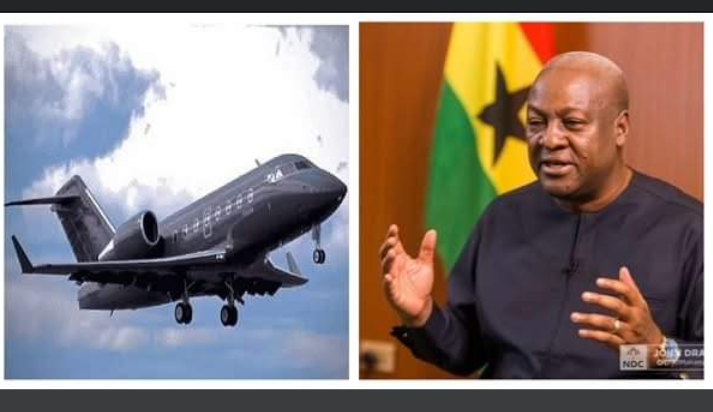 Ghana’s President John Dramani Mahama has been facing criticism for using his brother Ibrahim Mahama’s private jet, the Dzata, for official trips.

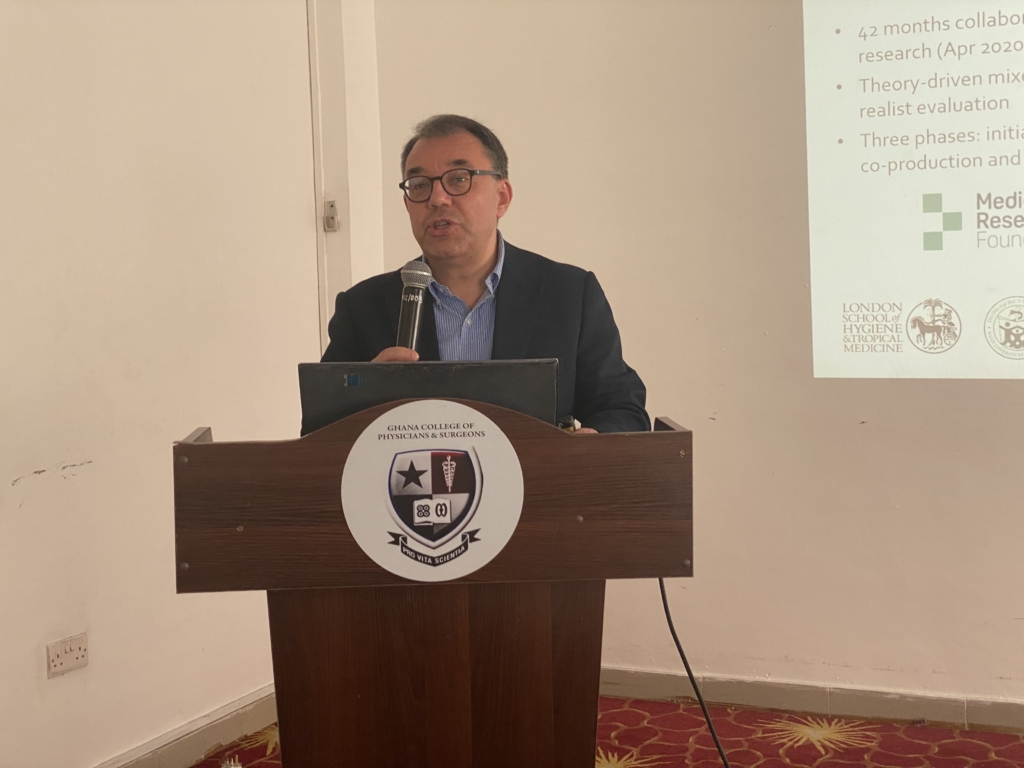



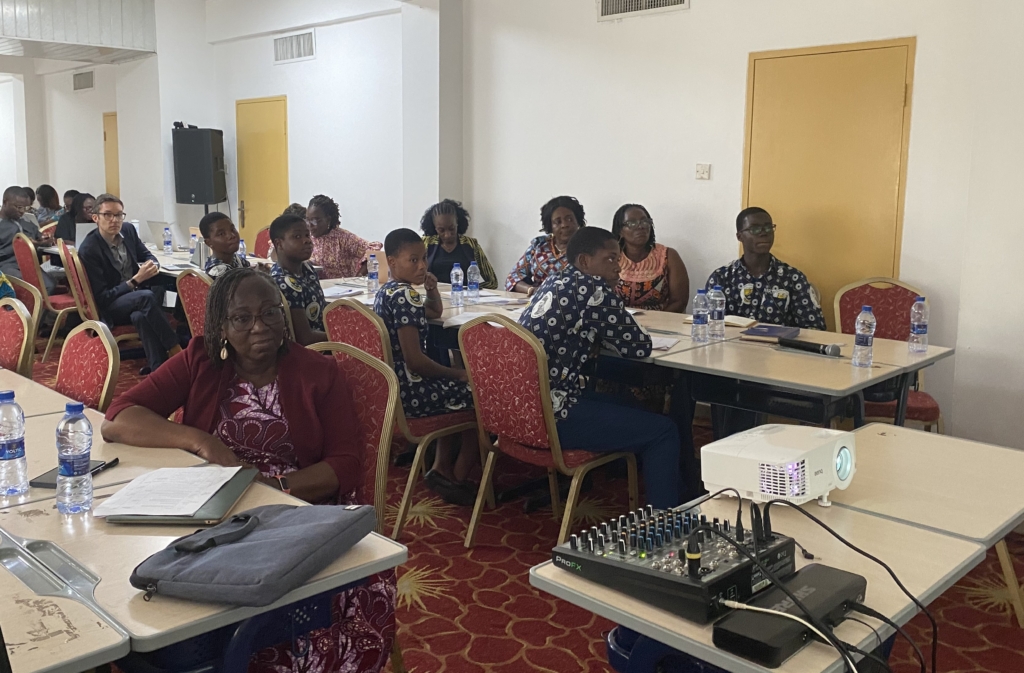
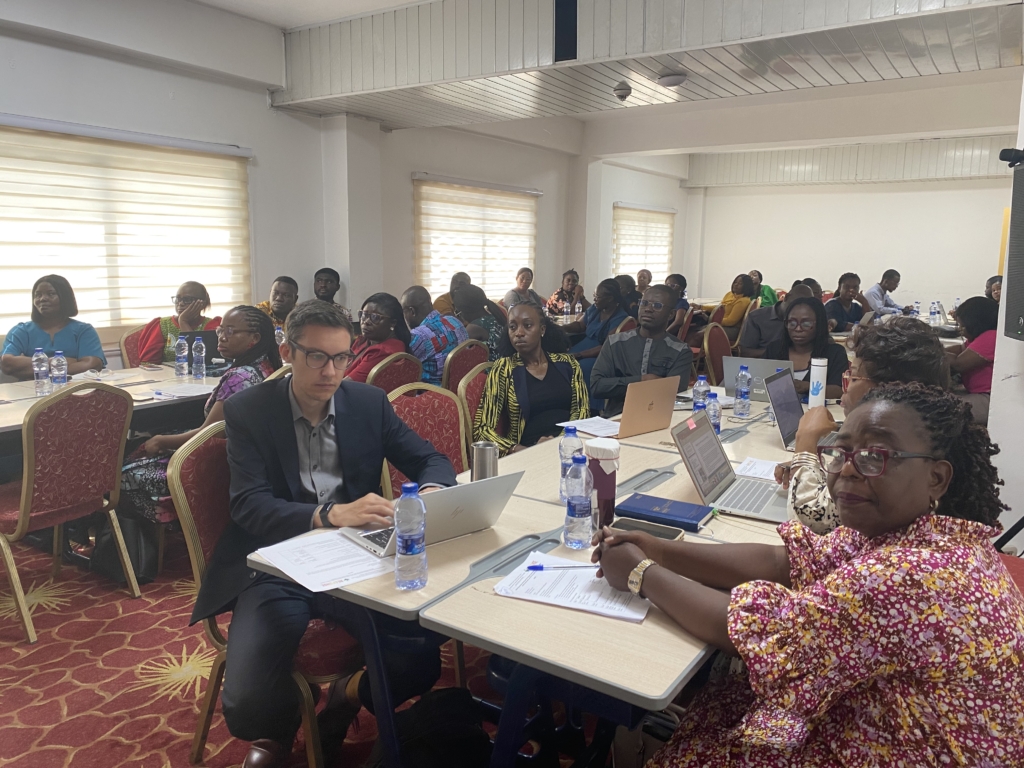
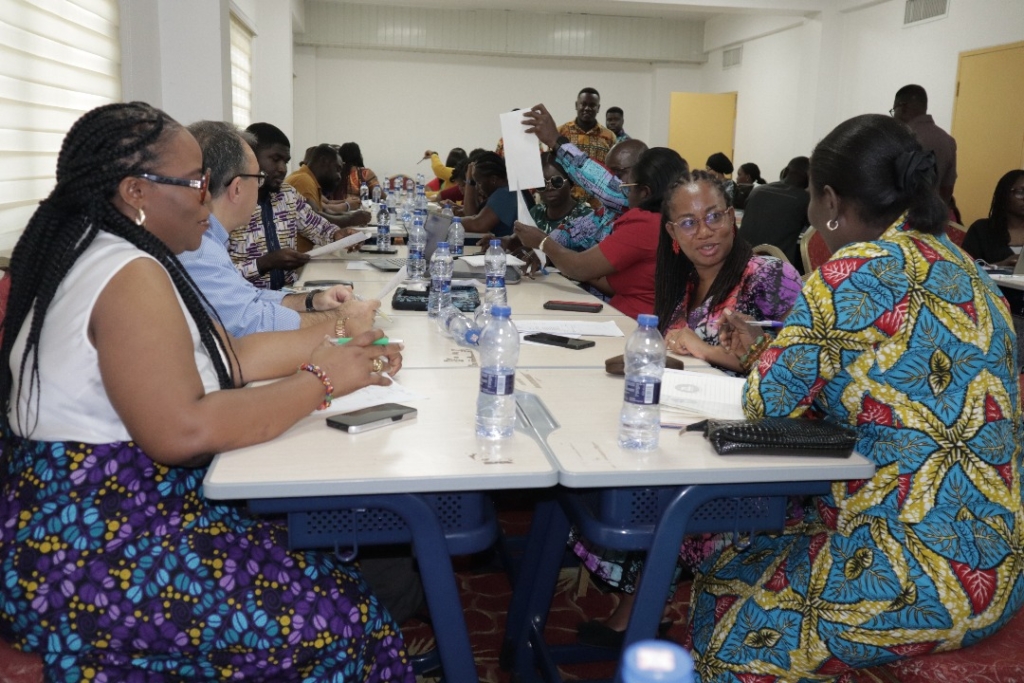
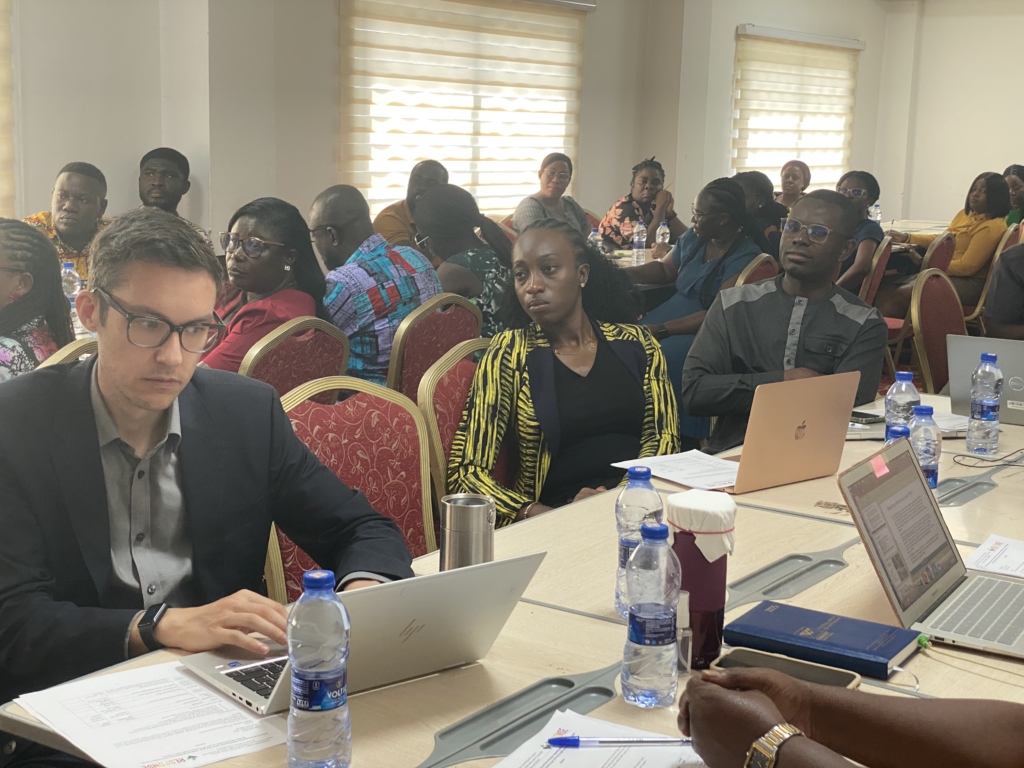
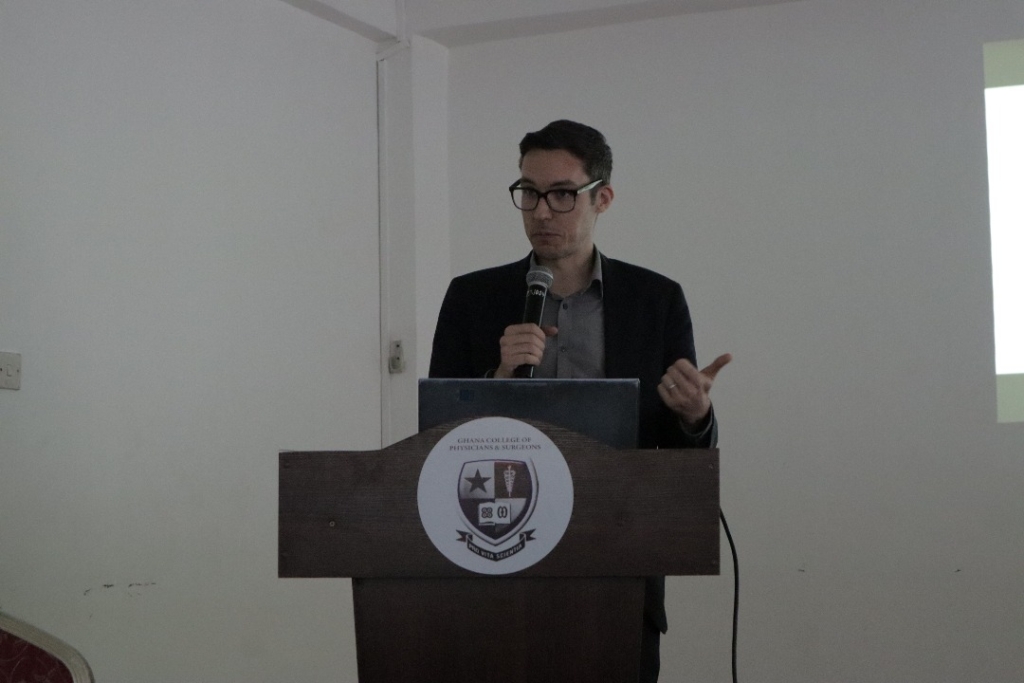






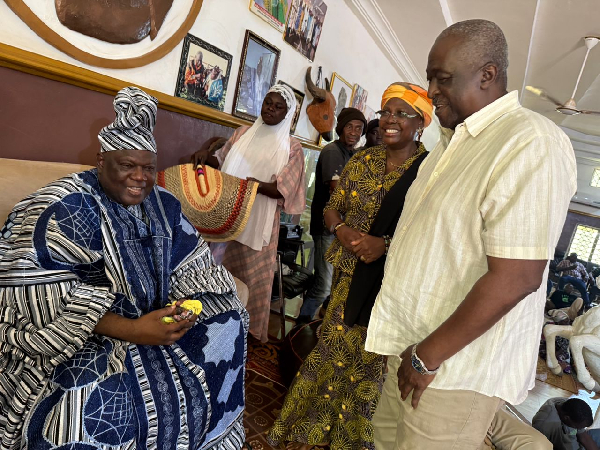


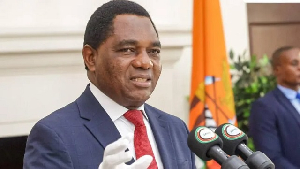
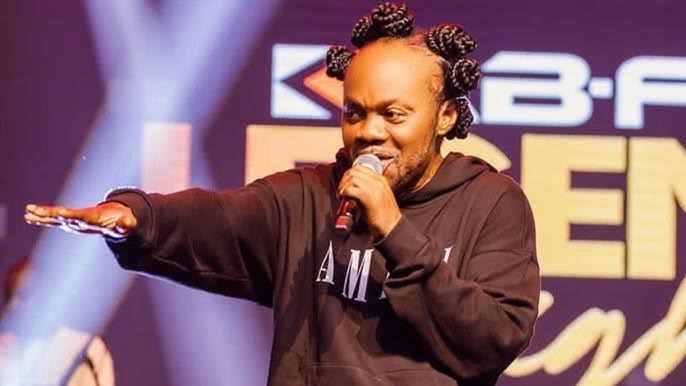 In a dramatic turn at the Kumasi High Court, lawyers argued that celebrated highlife legend Daddy Lumba — born Charles Kwadwo Fosuh — died a German national, not a Ghanaian, potentially reshaping the bitter dispute over his funeral rites and estate ownership.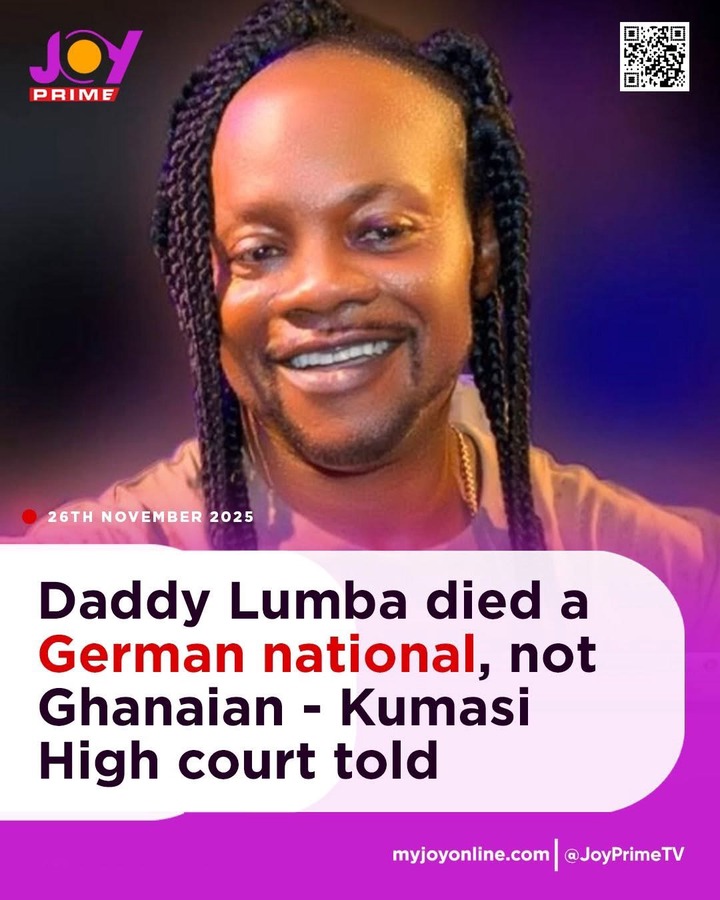



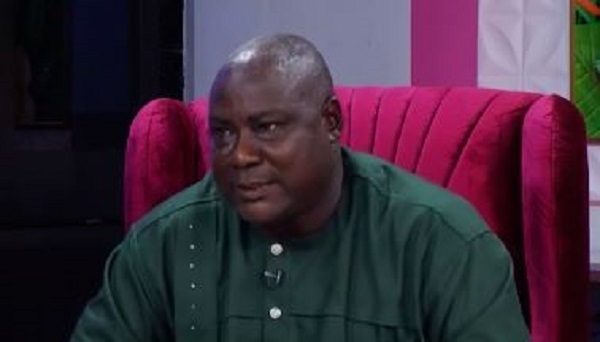





 According to a report by GHOne TV on Wednesday November 26, 2025, a disturbing video showing a woman physically assaulting her boyfriend has sparked widespread outrage on social media in Ghana. The footage, which has been circulating online, captures a violent altercation that has prompted numerous citizens to call for immediate police intervention.