Reports of violence against women and girls surge amid war in Gaza, UN agency finds
By: Nana Karikari, Senior Global Affairs Correspondent
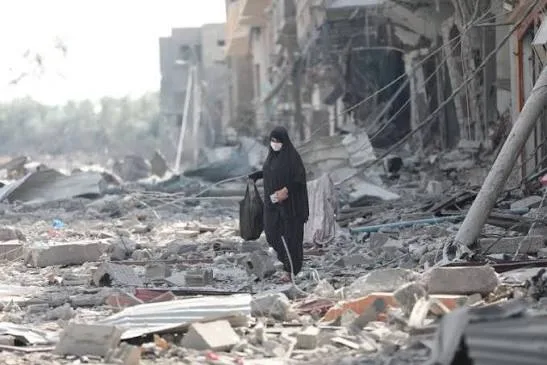
The protracted crisis in the Gaza Strip has triggered a sharp escalation in violence against women and girls. A series of recent reports from the UN Population Fund (UNFPA) highlights how the ongoing war has systematically eroded social structures. Ten organizations contributed data to an analysis revealing that conditions in war-torn Gaza have created severe and growing risks of gender-based violence.
Testimonies from Displaced Communities
Field testimonies from 230 women residing in crowded displacement camps in Gaza City and Khan Younis outline grim realities. One displaced woman in a school-turned-shelter describes how rape victims are often married to their rapists to avoid social stigma and scandal.
“When rape cases are discovered in schools, you find weddings and celebrations at the school the next day,” she notes. Another woman recounts how a father married off his fourteen-year-old daughter during a period of severe famine in exchange for two bags of flour so his remaining children could eat.
Six women across different displacement camps shared similar accounts of survival exchanges that would have been unthinkable before the conflict began in 2023.
Spike in Early and Forced Marriages
Data collection remains difficult, but UNFPA figures show that reported cases of early and forced marriage increased by one hundred and twenty-three percent in the second quarter of this year compared to the first. Child marriages involved girls aged twelve to seventeen.
Nestor Owomuhangi, the UNFPA representative to Palestine, calls these trends shocking. He explains that extreme circumstances over the past three years have broken down social structures, leading to mass destruction, multiple waves of displacement, and the collapse of public services.
Erosion of Education and Safety Nets
Before the war, girls in Gaza outnumbered and outperformed boys at every level of education above primary school.
Prolonged school closures have since halted this progress, forcing many children to drop out. Boys face pressure to find informal work, while girls confront heightened safety risks. Living among strangers without privacy in a conservative society has led to frequent complaints of sexual harassment.
Many families view marrying off their daughters as a protective measure to preserve modesty. Orphaned girls are particularly vulnerable.
A woman in a Gaza City camp describes attending the wedding of two family members aged fourteen and fifteen. “Their uncles married them off very young.
Do you know why? Because their father and mother were martyred, and their uncles wanted to get rid of the responsibility and expenses,” she says. “By God, they don’t understand what marriage or life is.”
Health Consequences of Adolescent Pregnancies
The Women’s Affairs Center and other local support groups have documented severe cases of abuse and early pregnancy. Girls in their early teens face significantly higher risks of miscarriages and underweight babies than adult women.
“We see adolescent pregnancies going through the roof because of child marriage,” Mr. Owomuhangi states. He adds that a young girl whose body is not fully developed, who is hungry, unhygienic, and unable to care for an infant or herself, faces profoundly negative consequences. Legal safeguards have also weakened, as Islamic courts handling family matters were closed for a large part of the war.
Personal Accounts of Bereavement and Marriage
The BBC spoke with families navigating these difficult circumstances. Zuhair, a twenty-five-year-old man, explains that his uncles pushed him to marry a sixteen-year-old girl from his extended family after her father and sole guardian was killed in an air strike.
“One of the reasons that led me to marry her was that there was no one to take care of her. That’s the first point,” he says. “If it were not for the war, she would still be a young girl spoiled by her father. She would be going to school. She still has a child’s mindset, not a mature mindset. She misses school, her family, and friends.
She even misses simply sitting at home.” Another family permitted their seventeen-year-old son to marry his sixteen-year-old cousin following family losses, noting that her education ended due to pregnancy.
Escalation of Sexual Violence and Exploitation
Sexual violence remains acutely under-reported due to fear of stigma and retaliation. UN safety audits highlight specific risks to women and girls at night, driving many to avoid camp toilets and bathrooms.
UNFPA task force analysis shows that sexual violence incidents, including rape and assault, accounted for 2.7 percent of total reported gender-based violence incidents from April to June 2026, up from 2.1 percent the previous quarter.
This represents a sixty-one percent surge in absolute case numbers, aided by improved confidential reporting mechanisms.
Widows and women with detained or missing husbands face heightened exploitation. Nearly one in four households is now female-headed, double the pre-war proportion.
“One widow was looking for a tent, and a representative told her, ‘I’ll give you a tent, we’ll put you in our camp, and you can come stay with me tonight,’” recalls a woman interviewed in Gaza City.
Humanitarian Appeals and Future Outlook
Aid agencies emphasize that risks to women could be significantly reduced by improving humanitarian conditions. Organizations are urging authorities to allow higher-quality shelters, equipment to upgrade latrines, sanitation facilities, and lighting into the territory.
Ongoing efforts focus on restoring education and healthcare, alongside long-term plans to combat domestic violence and child marriage.
While the conflict has permanently altered countless lives, women across Gaza continue to look toward a future where they can live with safety and dignity.
As international monitors and local human rights advocates continue to track these compounding crises, humanitarian experts emphasize that sustainable institutional recovery and stringent legal protections will remain vital prerequisites for safeguarding the fundamental rights and physical security of women and children across the region.

More Stories Here