



The Pharmacy and Poisons Board (PPB) has stepped up regulation of pharmacy practice and health products as part of ongoing reforms aimed at protecting patients and supporting Universal Health Coverage (UHC).
PPB CEO Dr Ahmed Mohamed said the Board had licensed 15,679 pharmaceutical professionals and 11,141 pharmaceutical premises as part of efforts to strengthen the sector.
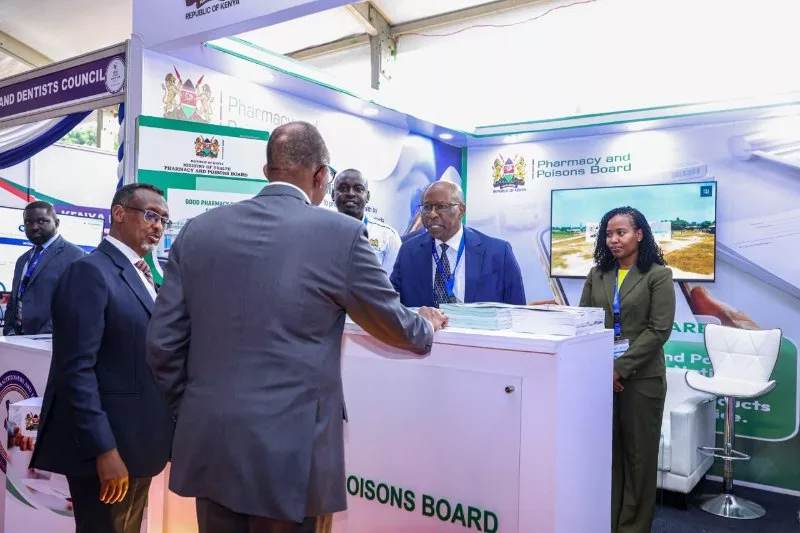
He said the milestones were among those showcased at the Kenya Health Summit 2026, where the Board outlined reforms aimed at improving access to safe, quality and effective health products.
“We have strengthened the regulation of pharmacy practice and health products and technologies as part of ongoing reforms to protect patients and support Universal Health Coverage,” Dr Mohamed said.
The Board has also introduced Kenya’s first Good Pharmacy Practice Standards and assessed 605 facilities across 43 counties to improve compliance and the quality of pharmaceutical services.
Dr Mohamed said the regulator had digitised key services through the Practice360 and Facility360 platforms.
“Practice360 manages the registration, licensing and professional development of pharmacists and pharmaceutical technologists, while Facility360 supports the licensing, inspection and compliance monitoring of pharmaceutical premises,” he said.
The digital platforms have also enabled members of the public to verify whether a pharmacy is licensed by scanning the QR code displayed on its licence.
The PPB has intensified post-market surveillance of medicines, vaccines, medical devices and other health products through inspections, product sampling, laboratory testing and investigations.

Dr Mohamed said the Board had reviewed 1,413 product-quality complaints, coordinated 99 product recalls and issued 14 rapid alerts.
“Enforcement operations have also resulted in 95 arrests and the closure of 48 non-compliant premises,” he said.
The Board has also expanded medicine-safety monitoring to all 47 counties through web, mobile and USSD reporting channels.
A total of 32,833 adverse drug reaction reports have been reviewed, helping the regulator identify potential safety concerns and take timely action.
Dr Mohamed said PPB had established a multisectoral committee to combat substandard and falsified medical products.
“The committee brings together health, regulatory, customs, security and law-enforcement agencies to coordinate intelligence-sharing, investigations and enforcement, including strengthened controls at ports of entry,” he said.
The Board is also working with the Digital Health Agency to introduce a national Track and Trace system to monitor health products from manufacturers or importers to patients.
Dr Mohamed said the system would improve supply-chain visibility and help detect substandard, falsified and illegally imported products.
At the same time, PPB is supporting local pharmaceutical manufacturing through Good Manufacturing Practice inspections, technical guidance, product registration and capacity-building.
“Regulatory support is currently being provided to 13 new pharmaceutical manufacturers at different stages of establishment to expand local production while maintaining standards of quality, safety and effectiveness,” Dr Mohamed said.
He said PPB remained committed to developing a modern, science-based and digitally enabled regulatory system capable of responding to emerging public health needs while supporting innovation and investment.
“As Kenya advances Universal Health Coverage, PPB will continue strengthening regulatory oversight, improving service delivery and safeguarding every Kenyan’s right to safe, quality and effective health products and pharmaceutical services,” Dr Mohamed said.
The Board has urged members of the public to obtain medicines only from licensed pharmacies, verify the licensing status of pharmaceutical professionals and premises, and confirm that health products are registered by PPB.
The public has also been encouraged to promptly report suspected substandard or falsified products and unexpected reactions following the use of medicines, vaccines or medical devices through the Board’s official reporting channels.
