
Sunyani Technical University (STU) and Fanshawe College Strengthen Collaboration to Propel Ghana’s Electric Vehicle (EV) and Green Technology Sector
Ghana is making significant strides in positioning itself as a regional leader in electric vehicle (EV) technology and green innovation, with the Sunyani Technical University (STU) playing a pivotal role in this transformation. Recently, Dr. Jeff Wright, Vice President of Innovation, Strategy, and Enrolment at Fanshawe College in Canada, undertook a two-day working visit to STU as part of an expanded partnership aimed at accelerating Ghana’s EV and green technology ecosystem.
A Strategic Alliance for Technological Advancement
The visit marked a critical milestone in the collaborative framework between STU and Fanshawe College, which seeks to establish STU as a preeminent hub for EV technology, green innovation, and technical education in West Africa. Dr. Wright’s engagement was not only a symbolic gesture but also a practical step to deepen academic and industry collaborations, ensuring that Ghana’s educational institutions remain at the forefront of global technological advancements.
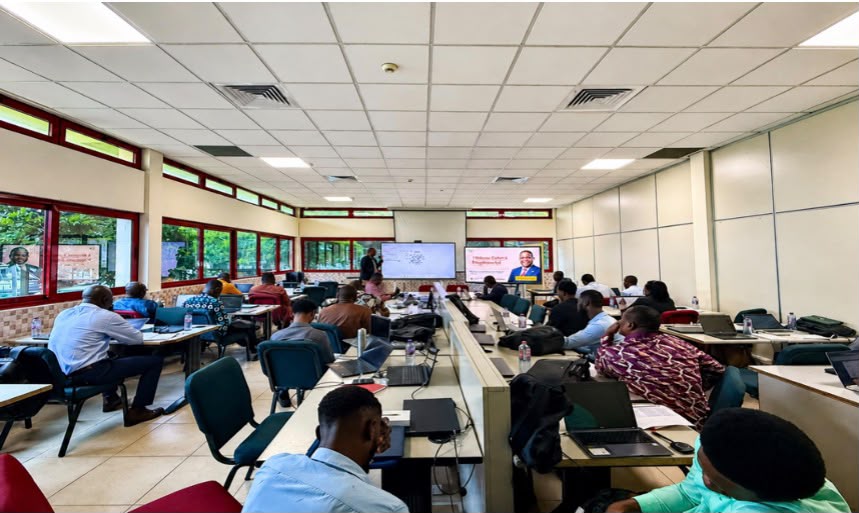
During his visit, Dr. Wright was guided through STU’s Centre of Excellence in Electric Vehicles (EVs) and Green Technologies, a state-of-the-art facility dedicated to research, training, and innovation in sustainable mobility. The university’s dedicated EV laboratories and training centers showcased a range of cutting-edge projects being developed by both faculty and students, reflecting STU’s commitment to practical, industry-aligned education.
Key Focus Areas: Research, Training, and Industry Integration
A detailed statement from the Centre of Excellence highlighted that Dr. Wright was briefed on STU’s progressive advancements in:
– Practical training programs designed to equip students with real-world skills in EV engineering, battery technology, and renewable energy systems.
– Research initiatives focused on localized solutions for Ghana’s transportation challenges, including energy-efficient vehicle designs, charging infrastructure, and sustainable materials.
– Innovative projects that align with global best practices while addressing African-specific needs, such as heat-resistant battery solutions and off-grid charging systems for rural areas.
Reverend Dr. Frimpong, the Head of the Centre of Excellence in EVs and Green Technologies at STU, emphasized that the centre is central to the university’s vision of producing industry-ready graduates who can contribute meaningfully to Ghana’s green transition. He noted that the partnership with Fanshawe College would amplify STU’s capacity to deliver high-quality technical education, ensuring that Ghanaian students are competitive in the global job market.
Industry-Academia Collaboration: Bridging the Gap Between Theory and Practice
A significant highlight of Dr. Wright’s visit was his meeting with Almaden Motors, a leading automobile dealership in Sunyani specializing in both conventional and electric vehicles. The discussions centered on strategic collaborations that would:
– Enhance student internships and industry attachments, providing hands-on experience in EV maintenance, diagnostics, and sales.
– Facilitate knowledge exchange between academia and industry, ensuring that curriculum development remains relevant to market demands.
– Promote strategic partnerships that could lead to joint research projects, technology transfer, and skill development programs.
The engagement underscored STU’s commitment to fostering strong ties between educational institutions and industry players, a critical factor in driving innovation, employability, and sustainable development in Ghana’s automotive sector.
Accelerating Ghana’s Sustainable Transportation Future
The collaboration between STU and Fanshawe College is not just about academic exchange—it is a strategic investment in Ghana’s long-term economic and environmental sustainability. By integrating EV technology and green skills into the national education framework, the partnership aims to:
– Reduce Ghana’s carbon footprint by promoting cleaner, more efficient transportation solutions.
– Create high-skilled employment opportunities in a rapidly growing sector.
– Position Ghana as a regional leader in green technology adoption, attracting foreign investment and expertise.
As Ghana continues to transition from fossil-fuel-dependent vehicles to electric and sustainable alternatives, initiatives like this strengthen the country’s resilience in the face of climate change and energy transition challenges.
Looking Ahead: A Blueprint for West African Innovation
The Fanshawe College-STU partnership serves as a model for other African institutions seeking to leverage international expertise while maintaining local relevance. With Fanshawe College’s global reputation in applied sciences and STU’s growing technical infrastructure, the collaboration is poised to inspire similar alliances across West Africa, fostering a regional ecosystem of innovation and technical excellence.
As Dr. Wright’s visit concluded, it became clear that this strategic partnership is more than just an academic exchange—it is a foundation for Ghana’s technological future, where education, industry, and sustainability converge to drive meaningful change.
Dr. Jeff Wright, Vice President of Innovation at Fanshawe College, during a tour of STU’s EV laboratories.
Students and faculty at STU’s Centre of Excellence in EVs and Green Technologies discussing a prototype electric vehicle project.
Representatives from Almaden Motors and STU engaging in discussions on industry-academia collaboration for EV training programs.