


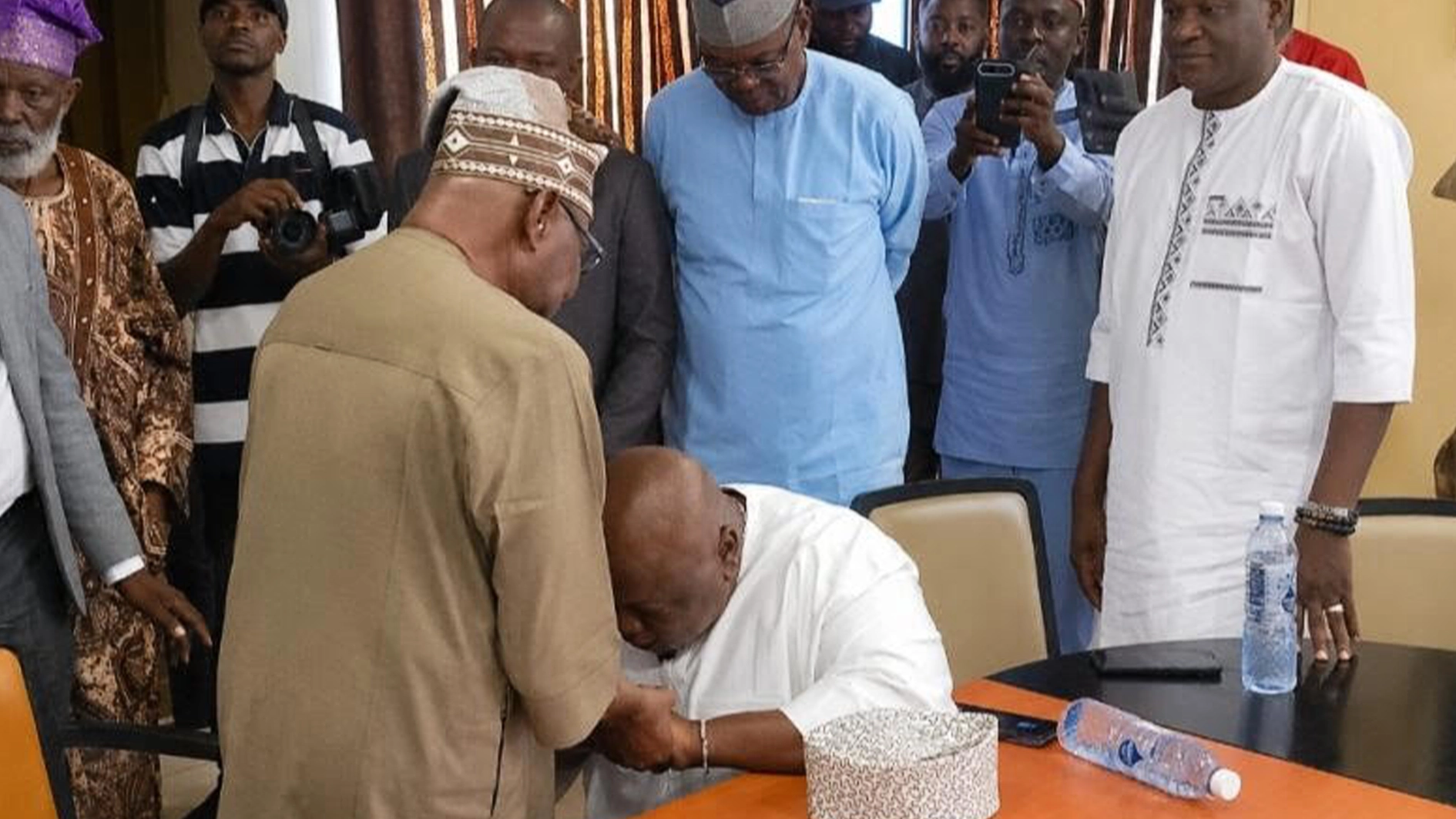
Former President Olusegun Obasanjo has reiterated his decision to distance himself from partisan politics while affirming his unwavering dedication to Nigeria’s development and the welfare of its citizens. Speaking during a recent engagement with the Peoples Democratic Party (PDP) in Ogun State, Obasanjo emphasized that his priorities now lie beyond party affiliations, focusing instead on sustainable progress for the nation.
The former president, who was present at an event where PDP’s governorship candidate, Hon. Ladi Adebutu, and his daughter, Iyabo Obasanjo—the party’s senatorial candidate for Ogun Central—received his counsel, made these remarks. The gathering took place in Abeokuta, the state capital, where Obasanjo, known for his pivotal role in Nigeria’s political history, delivered a message that blended personal reflection with a call for national responsibility.
A Shift from Partisan Politics to National Progress
Obasanjo, who served as Nigeria’s president from 1999 to 2007, has long been a prominent figure in the country’s political landscape. However, in recent years, he has increasingly distanced himself from active involvement in party politics. During the event, he clarified his stance, stating:
“At this stage of my life, I have set party politics aside. The goals of party politics are not always aligned with the broader objectives of promoting the welfare and well-being of the people. I can no longer engage in partisan politics, but my commitment to the progress of our nation remains unwavering.”
His words underscored a deliberate shift in focus—one that prioritizes long-term national development over short-term political gains. Obasanjo’s decision reflects a broader trend among retired political leaders who, having served their terms, seek to contribute to society in ways that transcend electoral cycles.
A Call for Prudence and Purpose in Leadership
Addressing Adebutu, the PDP’s governorship aspirant for the 2027 elections, Obasanjo offered words of wisdom, urging the candidate to approach leadership with humility and a clear sense of purpose. He advised:
“As for your desire and ambition, I encourage you to pursue them with wisdom and humility. Let your plans align with God’s purpose for your life, because it is ultimately God who directs our paths.”
This counsel was not merely motivational but carried the weight of experience. Obasanjo, who has spent decades navigating Nigeria’s political terrain, understands the challenges of governance firsthand. His advice to Adebutu reflects a desire to instill in the younger generation a sense of responsibility that goes beyond personal ambition.
The Challenge of Resource Management and Legacy
One of the most poignant aspects of Obasanjo’s remarks was his reflection on Nigeria’s ability—or lack thereof—to effectively manage its vast natural resources. Despite being endowed with abundant oil reserves, fertile land, and a rich cultural heritage, the country has struggled to translate these blessings into tangible development for its people.
“We are blessed with large African countries, rich in land and abundant natural resources. Yet, despite these blessings, we have not managed them as well as we should. Our elders have a responsibility to provide guidance, preserve our traditions, and take meaningful action that will benefit future generations.”
His words carry a sense of urgency, urging leaders and citizens alike to rethink how Nigeria harnesses its resources for collective benefit. Obasanjo’s emphasis on the role of elders in preserving traditions and guiding the nation forward highlights the importance of intergenerational wisdom in shaping a prosperous future.
Rooted in Tradition, Focused on the Future
Obasanjo’s connection to his rural roots has always been a defining aspect of his identity. Growing up in the village of Abeokuta, he has often spoken about the values instilled in him during his formative years—values of humility, hard work, and community-oriented leadership.
“I remain a village man at heart. I come from the village, and I am proud of my roots. Those values have stayed with me throughout my life.”
This grounding in tradition is not merely nostalgic but practical. Obasanjo believes that the principles of rural life—such as communal responsibility and sustainable living—can serve as a blueprint for modern governance. His call for Nigeria to focus on harnessing its resources for the good of its people is, in part, a plea to return to these foundational values.
Adebutu’s Perspective: Seeking Wisdom from a Statesman
Following Obasanjo’s address, Hon. Ladi Adebutu spoke to the media, expressing gratitude for the former president’s guidance. Describing Obasanjo as a “father figure, mentor, and respected statesman,” Adebutu acknowledged the significance of receiving his blessing ahead of the 2027 elections.
“First and foremost, we have come to spend quality time with our father, our mentor, and indeed, the father of modern Nigeria. We came to appreciate him for his invaluable contributions and to inform him of our resolve to pursue a path towards better governance for our state.”
Adebutu’s words reflect a deep sense of reverence for Obasanjo’s legacy. As a political aspirant, he recognizes the weight of leadership and the need for wisdom in navigating the complexities of governance. His statement also underscores the symbolic importance of Obasanjo’s endorsement—a testament to the former president’s enduring influence in Nigerian politics.
“There is no one more deserving to be informed about the future of the state than someone who played a pivotal role in its creation. We have received his blessings and wise counsel, and with that encouragement, we are determined to move forward in the interest of our people.”
A Legacy of Service and a Vision for Nigeria
Olusegun Obasanjo’s recent remarks serve as a reminder that leadership is not merely about holding office but about leaving a lasting impact on the nation. His decision to step back from partisan politics does not diminish his influence but rather redirects it toward a broader, more inclusive vision for Nigeria’s future.
As the country grapples with economic challenges, political instability, and social inequalities, figures like Obasanjo—who have spent decades shaping Nigeria’s trajectory—play a crucial role in offering guidance. His call for prudence, resource management, and a return to traditional values is not just a personal reflection but a call to action for all Nigerians.
In an era where political divisions often overshadow national unity, Obasanjo’s message resonates as a call to unity, responsibility, and progress. Whether through his past leadership or his continued advocacy, his commitment to Nigeria’s welfare remains as steadfast as ever. The challenge now lies in how future leaders—like Adebutu—will heed his counsel and translate vision into action.
