


Nigeria’s economic landscape in mid-2026 remains a dynamic interplay of domestic market resilience, regulatory tightening, and global macroeconomic shifts. From the Nigerian Exchange Limited (NGX) extending its rally to the Central Bank of Nigeria’s (CBN) stringent directives on fintech transparency, the week’s developments underscore both opportunities and challenges. Meanwhile, global trends—such as the U.S. Federal Reserve’s hawkish stance and geopolitical tensions—are reshaping investor sentiment across emerging markets. Below is a detailed breakdown of the week’s key economic, business, and financial market headlines.
1. Nigerian Capital Market: Rally Continues Amid Regulatory Scrutiny
The Nigerian equities market demonstrated robust momentum on Tuesday, June 23, 2026, as the All-Share Index (ASI) surged by 1.06%, adding N1.64 trillion in market capitalization. The rally was primarily driven by sustained demand for banking and blue-chip stocks, signaling investor confidence in Nigeria’s financial sector. However, the Bureau De Change (BDC) rate remained flat at N1,405 per U.S. dollar, reflecting persistent currency volatility despite the market’s upward trajectory.
SEC’s Striking Blow Against Unauthorized Share Promotions
The Securities and Exchange Commission (SEC) took decisive action against the unapproved marketing of Dangote Petroleum Refinery shares, directing capital market operators to immediately remove all promotional materials and refund subscribers within 24 hours. This enforcement underscores SEC’s commitment to regulatory governance and reinforces the need for execution discipline among issuers and intermediaries. The directive follows broader concerns over misleading financial promotions, particularly in high-profile infrastructure projects like Nigeria’s largest refinery.
Key Takeaway: Investors and operators must prioritize compliance and transparency to avoid regulatory backlash, which could disrupt market stability.
2. Sovereign Debt Concerns: Fitch Warns Over $5 Billion Abu Dhabi Loan
Global credit rating agency Fitch Ratings issued a cautionary warning regarding Nigeria’s proposed $5 billion total return swap (TRS) deal with First Abu Dhabi Bank (FAB). The agency highlighted that the financing arrangement—designed to manage liquidity and debt restructuring—could increase sovereign debt risks and reduce transparency in Nigeria’s public debt reporting.
Fitch’s concerns align with broader fiscal watchdog apprehensions about opaque debt instruments, which may complicate Nigeria’s debt sustainability efforts. While the TRS deal aims to stabilize foreign exchange reserves and extend debt maturities, critics argue that without clear disclosure mechanisms, the arrangement could exacerbate debt servicing pressures in an already strained economy.
Regulatory Watch: The CBN and Ministry of Finance must ensure full transparency in debt transactions to maintain investor trust and avoid downgrades by international rating agencies.
3. Global Market Shifts: AI Spending and Fed Policy Impact Frontier Markets
Wall Street experienced a technology-led sell-off on Tuesday, with the Nasdaq and S&P 500 closing at multi-week lows due to:
– Concerns over debt-funded AI spending, particularly in semiconductor stocks like Micron Technology.
– Expectations of a more hawkish U.S. Federal Reserve, which could lead to tighter monetary policy and higher borrowing costs globally.
These developments have ripple effects for frontier markets, including Nigeria, where capital inflows may slow if global risk appetite declines. Investors are increasingly scrutinizing emerging market debt sustainability, particularly in countries reliant on foreign financing.
Market Outlook: Nigerian equities may face volatility if global risk sentiment deteriorates, necessitating position discipline and diversification strategies.
4. Geopolitical Oil Market Recalibration
Global oil markets entered a period of cautious recalibration following renewed U.S.-Iran diplomatic engagement, which eased immediate geopolitical risks. However, traders remain skeptical about Iran’s actual oil return to the market, given historical patterns of sanctions evasion and production constraints.
Nigeria’s oil sector is also navigating new competition as three modular refineries—operating independently of Dangote Refinery—now supply 648,000 litres of Automotive Gas Oil (AGO) daily. This shift could pressure Dangote’s market dominance and accelerate Nigeria’s push for energy diversification, including renewable energy projects.
Energy Insight: The rise of modular refineries signals a structural change in Nigeria’s fuel supply chain, potentially reducing reliance on imported petroleum products.
5. Security and Economic Reforms: Tinubu’s State Police Bill and PPP Push
President Bola Tinubu took a significant step toward security sector reform by transmitting a State Police Bill to the Senate, aiming to establish state-level law enforcement agencies. This move follows years of criticism over the ineffectiveness of the Nigeria Police Force (NPF) and the need for decentralized security governance.
Additionally, the Infrastructure Concession Regulatory Commission (ICRC) and Federal Ministry of Justice unveiled the Nigeria Model Public-Private Partnership (PPP) Agreement, emphasizing its role in accelerating infrastructure development. The agreement is designed to standardize PPP contracts, reducing risks for both public and private stakeholders.
Policy Impact: If approved, the State Police Bill could improve localized law enforcement, while the PPP framework may attract foreign investment in critical sectors like power, roads, and housing.
6. Fintech Transparency: CBN’s UBO Directive Sparks Industry Debate
The Central Bank of Nigeria (CBN) introduced a mandatory disclosure rule requiring fintech firms to identify Ultimate Beneficial Owners (UBOs)—individuals who ultimately control financial institutions. This directive aims to combat money laundering, terrorism financing, and tax evasion, aligning Nigeria with global anti-money laundering (AML) standards.
However, industry stakeholders have raised concerns over operational challenges, including:
– Data privacy risks for fintech users.
– Potential slowdowns in digital financial services due to compliance burdens.
Fintech Watch: While the UBO rule enhances regulatory oversight, fintech firms must balance compliance with innovation to avoid stifling Nigeria’s digital economy growth.
7. Corporate Developments: Dividends, Rebranding, and Manufacturing Woes
SAHCO Approves ₦1.62 Billion Dividend
Shareholders of Skyway Aviation Handling Company Plc (SAHCO) approved a N1.62 billion dividend payout (N1.20 per share) for the 2025 financial year, reflecting the company’s strong operational performance despite aviation sector challenges.
Lafarge Africa Rebrands as HBM Nigeria Plc
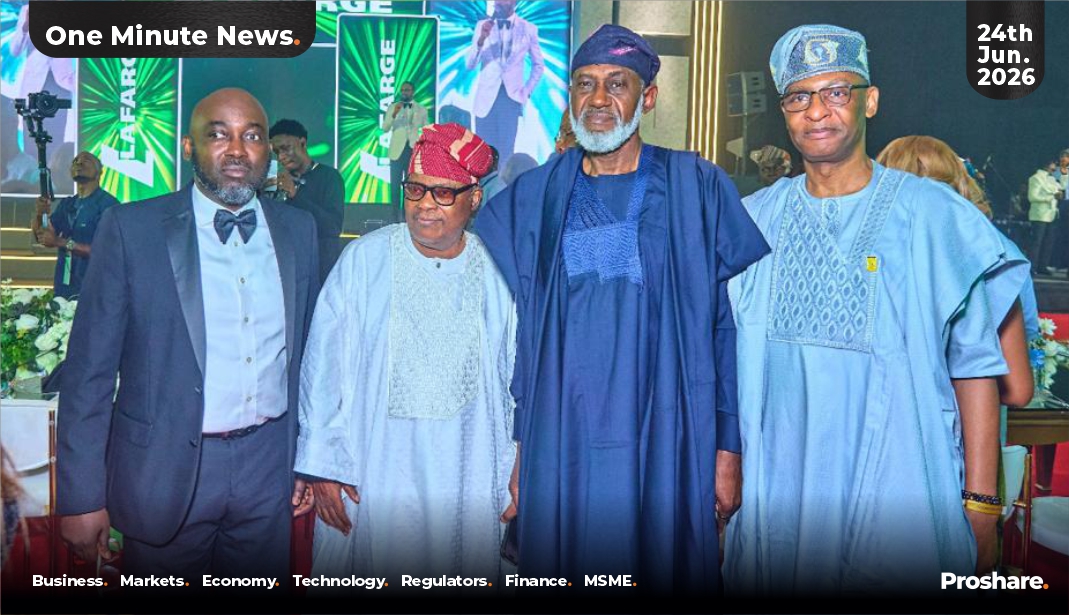
Lafarge Africa Plc officially rebranded as HBM Nigeria Plc, marking a strategic pivot toward sustainable construction solutions. The rebranding follows shareholder and regulatory approvals, signaling the company’s commitment to long-term growth in Nigeria’s infrastructure sector.
Manufacturing Sector Faces Credit Crunch
The Manufacturers Association of Nigeria (MAN) highlighted a 22.5% decline in commercial bank credit to the manufacturing sector, dropping from N8.53 trillion (Dec 2024) to N6.61 trillion (Dec 2025)—a N1.92 trillion reduction. This credit squeeze is exacerbating production challenges, with manufacturers calling for policy interventions to revive industrial lending.
Industrial Outlook: Without improved access to credit, Nigeria’s manufacturing sector risks further deindustrialization, undermining economic diversification efforts.
8. Telecom and Digital Economy: Mobile Subscribers Hit 188 Million
The Nigerian Communications Commission (NCC) reported a record 188 million active mobile subscriptions in April 2026, representing an 8.7% year-on-year growth from 2025. This surge reflects:
– Increased smartphone penetration.
– Growth in digital financial services (e.g., mobile banking, fintech apps).
President Tinubu reinforced Nigeria’s digital economy potential by assuring Mastercard that Nigeria’s tech-savvy youth are poised to drive global digital innovation. The government is also training 5 million businesses to leverage digital tools, aiming to boost productivity and financial inclusion.
Digital Economy Insight: Nigeria’s mobile subscriber growth positions it as a key player in Africa’s digital transformation, but infrastructure gaps (e.g., last-mile connectivity) remain critical challenges.
9. Global Market Moves: AI, Supply Chains, and Geopolitical Shifts
U.S. Pressures Meta on AI Security Reviews
The Trump administration is urging Meta (Facebook) to submit its AI models for government review, citing security vulnerabilities in emerging AI technologies. This move aligns with broader U.S. efforts to counter Chinese dominance in AI supply chains.
EU Joins U.S. Pact to Decouple from Chinese AI Tech
The European Union, Netherlands, Germany, and Greece have joined the Pax Silica initiative, a U.S.-led coalition aimed at reducing reliance on Chinese semiconductor supply chains. This tech decoupling could reshape global AI infrastructure, with implications for Nigeria’s fintech and digital economy sectors.
Elon Musk’s Wealth Hit by SpaceX Stock Decline
Elon Musk’s net worth suffered its largest-ever loss after SpaceX’s stock value plummeted, erasing $350 billion in a week. This decline highlights market volatility in high-growth tech sectors, a trend that could influence Nigeria’s venture capital and startup ecosystem.
10. Flood Warnings and Exit Benefit Scheme Deadline
26 States at Risk of Flooding
The Federal Ministry of Environment issued a flood warning for 26 states and the Federal Capital Territory (FCT), predicting heavy rainfall from June 22 to July 5, 2026. Authorities are advising preventive measures, including evacuation planning and infrastructure reinforcement, to mitigate potential human and economic losses.
PenCom Sets Deadline for Retiree Data Submission
The National Pension Commission (PenCom) has given Ministries, Departments, and Agencies (MDAs) until December 31, 2026, to submit details of retirees and soon-to-retire employees for the Federal Government’s Exit Benefit Scheme. This initiative aims to streamline pension payouts and reduce administrative delays in Nigeria’s retirement system.
11. Regulatory Updates: SEC Approvals and Beltone’s Acquisition Success
SEC Lifts BGL’s 2015 Suspension
The SEC revoked a 2015 suspension on BGL Capital, allowing the firm to resume specified capital market activities. This regulatory update reflects SEC’s efforts to clear historical compliance hurdles and encourage market participation.
Beltone’s Baobab Acquisition Proves Lucrative
Beltone Holding, an Egypt-based financial services group, reported that Baobab Group—acquired for $227.13 million in February 2026—now generates more revenue than all other Beltone businesses combined. This success underscores the strategic value of fintech acquisitions in Africa’s growing digital economy.
12. Key Takeaways for Investors and Stakeholders
- Market Resilience vs. Regulatory Risks: While Nigeria’s equities market remains bullish, SEC enforcement and debt transparency concerns demand heightened compliance.
- Global Market Linkages: Nigeria’s capital flows are highly sensitive to U.S. Fed policy and AI-driven tech sell-offs, necessitating diversified investment strategies.
- Energy Transition: The rise of modular refineries and geopolitical oil shifts could reshape Nigeria’s fuel market, requiring adaptive policies.
- Digital Economy Growth: Nigeria’s mobile subscriber boom and fintech expansion present opportunities, but infrastructure and cybersecurity remain critical challenges.
- Manufacturing Crisis: The credit crunch in manufacturing highlights the need for policy reforms to revive industrial lending.
Final Thoughts
Nigeria’s economic landscape in June 2026 is defined by market dynamism, regulatory tightening, and global macroeconomic pressures. While equities rally and fintech growth signal opportunities, debt risks, manufacturing challenges, and geopolitical uncertainties pose significant hurdles. Stakeholders—from investors to policymakers—must adapt to these shifts to navigate Nigeria’s evolving economic terrain successfully.

Source: Nairametrics – Who REALLY owns Nigeria’s fintech infrastructure? CBN’s UBO directive explained.

Source: Proshare – SEC Registration Approvals Update: BGL’s 2015 suspension lifted.

Source: Proshare – Nigeria’s mobile subscriber base hits 188 million in April 2026.

Source: Proshare – Regulatory updates and market intelligence notes.

Source: Proshare – Proshare Nigeria Limited’s market research platform.
