


Introduction
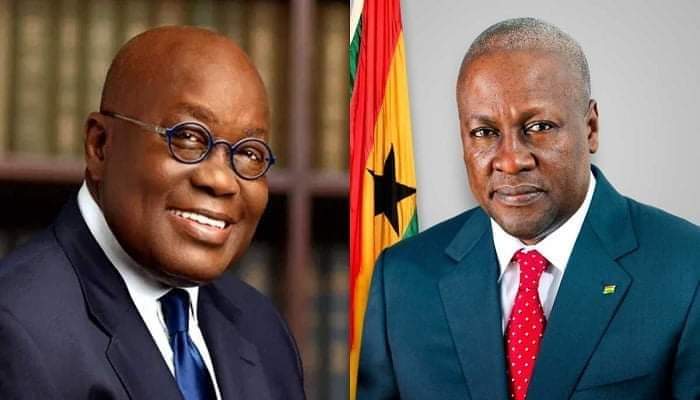
The question of bail in politically sensitive criminal prosecutions has increasingly become a major constitutional and human rights concern in Ghana’s Fourth Republic. Across the administrations of former President Nana Addo Dankwa Akufo-Addo and President John Dramani Mahama, accusations have persisted that state investigative and prosecutorial bodies sometimes impose harsh bail conditions on political opponents and former government officials as a form of indirect punishment. Although the right to bail is recognised under Ghanaian law, concerns continue to emerge regarding excessive bail requirements, prolonged pre-trial detention, abuse of discretionary authority, and the growing perception that criminal investigations are occasionally influenced by partisan considerations. Constitutional scholars, legal practitioners, and civil society organisations have therefore questioned whether the criminal justice system sufficiently protects the principles of liberty, fairness, and the presumption of innocence. This article explores the constitutional and statutory basis of bail in Ghana, assesses the treatment of politically exposed persons under both administrations, and considers whether the present legal framework adequately safeguards constitutional rights.
Constitutional Basis of Bail in Ghana
The right to personal liberty is guaranteed under the 1992 Constitution of Ghana. Article 14 protects individuals against unlawful arrest and detention and establishes important procedural safeguards. In particular, Article 14(3) requires that any person arrested and not released must be brought before a court within forty-eight hours a principle commonly described as the ‘48-hour constitutional rule’. Furthermore, Article 14(4) provides that where a person is not tried within a reasonable period, that individual may be released either unconditionally or on reasonable terms intended to ensure attendance at trial. In addition to the Constitution, the Criminal and Other Offences (Procedure) Act, 1960 (Act 30) regulates both police enquiry bail and judicial bail in Ghana. The legal philosophy underlying the bail system is rooted in the presumption that every accused person remains innocent until proven guilty by a competent court of law. Bail is therefore intended to guarantee appearance at trial and not to punish a suspect before conviction. The Supreme Court of Ghana has repeatedly affirmed that personal liberty should be the norm, while pre-trial detention must remain the exception.
Principles Governing the Grant of Bail
Under Ghanaian law, the decision to grant bail lies largely within judicial discretion, although that discretion must be exercised reasonably and in accordance with constitutional principles. In determining whether bail should be granted, courts commonly consider several factors, including the possibility that the accused may abscond, the likelihood of interference with witnesses or investigations, the seriousness of the alleged offence, public safety concerns, and the risk of repeated offending. Importantly, Ghanaian courts have consistently maintained that bail conditions must be proportionate and realistic. Conditions that are impossible or excessively difficult to satisfy may effectively amount to a denial of bail. In recent years, however, legal commentators and media analysts have criticised what they describe as an increasing trend toward restrictive and burdensome bail conditions, particularly in politically sensitive prosecutions. Many accused persons remain in custody despite technically being granted bail because they cannot meet conditions such as high monetary guarantees or landed-property sureties.
Politically Sensitive Prosecutions During the Akufo-Addo Administration
During the administration of Nana Addo Dankwa Akufo-Addo, several high-profile criminal prosecutions attracted public debate concerning prolonged detention and restrictive bail terms. One widely discussed example was the prosecution of Gregory Afoko in connection with the killing of Adams Mahama. Afoko remained involved in criminal proceedings for several years before eventually obtaining bail under stringent conditions. Critics argued that the lengthy trial process and repeated difficulties surrounding bail raised broader constitutional and political concerns. Opposition politicians and politically exposed individuals also complained of aggressive arrest procedures and what they considered oppressive bail requirements. Civil society organisations and constitutional commentators argued that, in some instances, investigative and prosecutorial mechanisms appeared to function as instruments of intimidation rather than purely lawful investigative tools. The Akufo-Addo administration consistently rejected claims of political persecution and insisted that the judiciary and prosecutorial authorities acted independently. Nevertheless, public criticism intensified over issues such as prolonged remand periods, repeated adjournments, demanding property-based sureties, and allegations of selective prosecution.
Politically Exposed Cases Under the Mahama Administration
Since the return of John Dramani Mahama to office, similar controversies surrounding bail in politically sensitive investigations have continued to surface. Individuals associated with the previous New Patriotic Party administration have alleged that investigative institutions are imposing excessively difficult bail conditions in corruption-related investigations. Organisations such as the Centre for Democratic Development have raised concerns about the exercise of discretionary powers by state investigative bodies. Particular scrutiny has been directed at agencies such as the Office of the Special Prosecutor and the Economic and Organised Crime Office over allegations that certain bail requirements are practically unattainable. The case involving media personality Paul Adom-Otchere generated significant public debate after claims emerged that the bail conditions imposed were excessively difficult to satisfy. Critics argued that although constitutional procedures appeared formally respected, the practical effect amounted to indirect detention. Observers contend that the current administration risks repeating patterns previously criticised under the Akufo-Addo government, including highly publicised arrests, politically charged investigations, restrictive bail conditions, and perceptions of selective justice. This suggests that the problem may be institutional rather than partisan.
Excessive Bail Conditions as a Constitutional Concern
One of the most serious constitutional questions arising from politically motivated prosecutions concerns the issue of excessive bail conditions. Although the 1992 Constitution does not expressly use the phrase ‘excessive bail,’ Articles 14 and 19 collectively imply that bail conditions must be fair, reasonable, and proportionate. Article 19(2)(c) protects the presumption of innocence, while Article 14 safeguards personal liberty. Together, these constitutional provisions prohibit punitive restrictions disguised as bail conditions. Legal commentators increasingly argue that several contemporary practices undermine constitutional democracy, including requiring multiple landed-property sureties, imposing unrealistic financial obligations, delaying verification of sureties, repeated re-arrests, and prolonging investigations while suspects remain effectively detained. Critics have argued that such practices transform bail from a mechanism of liberty into an instrument of restriction. In practice, wealthy individuals and politically connected persons may more easily satisfy stringent conditions, while ordinary citizens or politically vulnerable suspects remain incarcerated. This situation undermines the constitutional guarantee of equality before the law under Article 17.
The Judiciary and the Protection of Liberty
The judiciary plays a crucial constitutional role in balancing state authority against individual freedoms. In politically exposed prosecutions, courts are expected to function as impartial arbiters insulated from political influence. Public confidence in judicial independence, however, often becomes strained whenever politically controversial prosecutions emerge. The difficulty is compounded by the fact that many contentious bail conditions originate not from courts themselves but from investigative agencies exercising police enquiry bail powers. The courts therefore bear an important constitutional responsibility to prevent abuse of prosecutorial power, invalidate oppressive bail conditions, safeguard personal liberty, and ensure that criminal procedure is not transformed into political punishment.
Comparative Assessment of Both Administrations
A comparison between the Akufo-Addo and Mahama administrations reveals substantial similarities despite differences in political messaging. Both governments have faced allegations involving selective prosecution, politically motivated investigations, excessive bail conditions, media sensationalism surrounding arrests, and prolonged criminal proceedings. The Akufo-Addo administration was more frequently criticised for lengthy trials and the perceived deployment of security agencies against political opponents and activists. By contrast, the Mahama administration has attracted sharper criticism regarding bail conditions that are viewed as practically impossible to fulfil in corruption-related investigations. Despite these differences, the broader constitutional issue remains unchanged: whether bail procedures are being used as punitive instruments against political adversaries.
The Need for Institutional Reform
The recurring controversies under successive governments demonstrate the need for structural reforms to Ghana’s bail system. Parliament should enact detailed statutory guidelines restricting investigative agencies from imposing unreasonable or oppressive bail requirements. Courts should exercise stronger supervisory jurisdiction over administrative bail conditions imposed by investigative bodies. The persistent reliance on landed-property requirements disproportionately disadvantages poorer citizens and undermines equal access to justice. The constitutional requirement that arrested persons be brought before a court within forty-eight hours must also be rigorously enforced to prevent disguised forms of indefinite detention. State institutions must avoid even the appearance of partisan prosecution if public confidence in democratic governance is to be maintained.
Conclusion
The constitutional right to bail remains one of the most important protections of personal liberty within any democratic society. In Ghana, however, politically sensitive prosecutions have increasingly exposed weaknesses in the practical administration of that right. Under both the administrations of Nana Addo Dankwa Akufo-Addo and John Dramani Mahama, allegations concerning excessive bail conditions and politically influenced prosecutions have generated serious constitutional debate. The core issue is not whether the state has authority to investigate or prosecute criminal conduct. Rather, the central concern is whether constitutional safeguards are genuinely respected throughout the process. A democratic society governed by the rule of law must ensure that bail fulfils its legitimate constitutional purpose securing attendance at trial rather than functioning as a concealed instrument of punishment, intimidation, or political coercion.
PREPARED BY
WILLIAMS OSEI BONSU
0248671724/[email protected]
FACULTY OF LAW
PENTECOST UNIVERSITY,
AGAPE CAMPUS, SUNYANI
