



Ghana has over 300 illegal crossing points – Interior Minister on border security
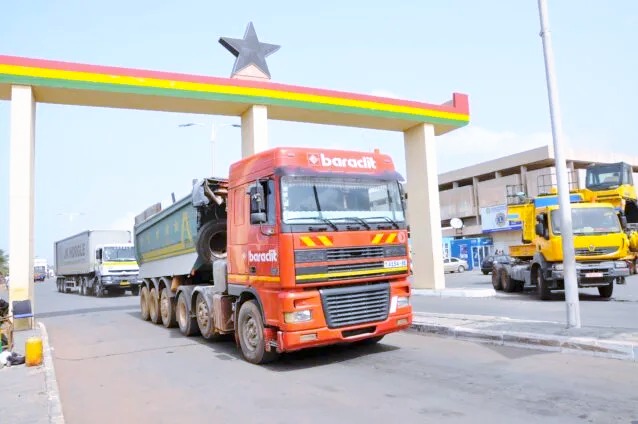
The Minister for the Interior, Mubarak Mohammed Muntaka, has disclosed that Ghana has 48 legitimate entry points but more than 300 unapproved crossing points, raising concerns about the challenges facing the country’s border security.
He said the numerous unapproved routes posed a security challenge that required stronger cooperation with neighbouring countries, particularly through intelligence sharing and coordinated efforts to address threats across the sub-region.
Speaking on Joy FM’s Super Morning Show, Mr Muntaka said cooperation among countries was essential to tackling security threats that could extend beyond national borders.
“You have to try and share intelligence; you have to work together,” he said.
The Minister’s comments come as he maintains that Ghana’s overall security situation has improved compared with 2025, despite continuing concerns about ethnic conflicts, land disputes, illicit drugs, and border vulnerabilities.
“I can assure you that we are safer today than we were when we took over power. Ghana is much safer even today than it was in 2025,” he said.
Mr Muntaka acknowledged that crime remained a challenge but said the government and security agencies were doing everything possible to protect the public and enable people to go about their daily activities without fear.
“We are doing everything possible to ensure that you can go about your duties without necessarily having to be watching your back,” he stated.
When asked to provide figures to support his assessment of the security situation, the Minister cautioned against measuring progress solely by comparing the number of deaths recorded in different years.
“Well, I always tell people that I hate the situation when I say, oh, last year, 200 people died; this year, 190 died.”
Instead, he pointed to a reduction in the number of curfews imposed across the country. According to him, Ghana began 2025 with about 11 curfews and ended the year with about nine.
“As we speak now, we have only three more curfews,” he said.
He cited developments in Bawku in the Upper East Region, where he said there had been no gunfire for 150 days.
According to the Minister, the relative calm had allowed the authorities to ease restrictions in the town, including adjusting the curfew to between 10 p.m. and 5 a.m. Residents had also been permitted to ride motorbikes between 6 a.m. and 6 p.m.
“They were not riding motorbikes for more than five years. Today, they are riding motorbikes from 6 a.m. to 6 p.m.,” he said.
Mr Muntaka recalled that violence associated with the Bawku conflict had previously spread to other communities, triggering retaliatory attacks and the burning of buses along highways.
“I mean, and I can bet you, these were periods that I could hardly sleep,” he said.
He explained that the authorities had combined security operations with mediation and peacebuilding efforts to contain the conflict.
Despite the improvements he outlined, the Minister said Ghana continued to face security threats that required sustained attention, including ethnic conflicts, land disputes and illicit drug-related activities.
He said addressing these challenges also required effective border management, given the number of unapproved crossing points across the country.
The Minister stressed that Ghana could not tackle transnational security threats in isolation, underscoring the need for neighbouring countries to work together, exchange intelligence and strengthen their collective response.
His disclosure on the number of approved and unapproved crossing points highlights the scale of the border management challenge facing Ghana as the government seeks to sustain improvements in the country’s security situation.
 WhatsApp
Comments (0)
No comments yet. Be the first to share your opinion!