



Ghana Institute of Architects proposes structured partnership to protect Ghana’s architectural heritage
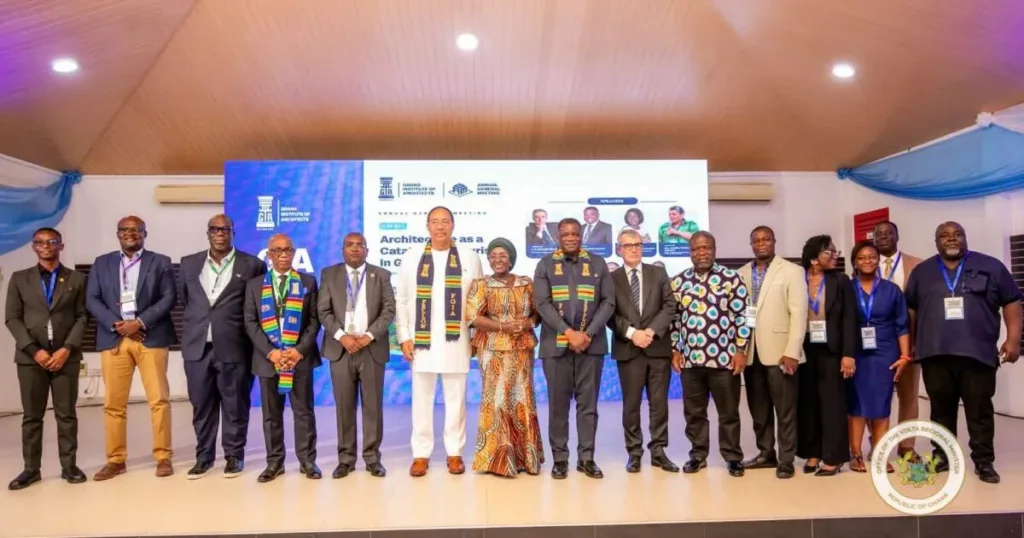
The Ghana Institute of Architects (GIA) has proposed the introduction of a legislative instrument to strengthen the protection and preservation of Ghana’s architectural heritage as part of efforts to position architecture as a key driver of tourism and socioeconomic development.
The proposal includes a review of existing policies and the introduction of new legislation to establish a structured partnership between government, architects and other stakeholders in the built environment.
The proposal was made at the GIA’s 2026 Annual General Meeting (AGM), held in Ho, Volta Region, under the theme, “Architecture as a Catalyst for Tourism in Ghana.”
Addressing the opening ceremony, GIA President, Tony Asare called for deliberate efforts to preserve the country’s architectural heritage, particularly historic buildings and structures, while harnessing their potential to attract tourists and stimulate economic growth.
He stressed the need for architects to play a central role in national development, particularly in town planning, urban design and infrastructure development.
Mr Asare proposed that all Metropolitan, Municipal and District Assemblies (MMDAs) engage qualified architects in managing planning and development processes.
He further advocated that major public infrastructure projects, including airports, transport terminals, cultural centres, museums, waterfronts, parks and markets, should be designed under the leadership of qualified architects.
National programme for heritage conservation
The GIA President also called for a national programme to guide the conservation, adaptive reuse and interpretation of Ghana’s built heritage.
He said the programme should establish design standards for tourism corridors, town gateways, rest stops, signage and public amenities.
Mr Asare proposed pilot projects in selected tourism destinations, beginning in the Volta Region, to demonstrate how quality architectural design could enhance the attractiveness and functionality of Ghanaian communities.
He emphasised that a shared national vision was needed to position architecture at the centre of tourism development, job creation, cultural preservation and sustainable development.
“Ghana’s next great tourism asset will not emerge by chance. It must be designed, built, and protected by Ghanaians,” he said.
Malta proposes architectural exchange programme
The Malta High Commissioner to Ghana, His Excellency Ronald Micallef, highlighted how Malta has leveraged its architectural heritage to promote tourism and stimulate economic growth.
He proposed an architectural exchange programme between the Ghana Institute of Architects and a counterpart institution in Malta to facilitate knowledge-sharing and strengthen professional development.
Mr Micallef also encouraged Ghanaian architects to embrace climate-responsive architecture by incorporating features such as natural ventilation, shading and water conservation into building designs.
Government commits resources to tourism infrastructure
The Minister for Roads and Highways, Kwame Governs Agbodza, said the government was investing in road infrastructure to improve access to tourism destinations across the country.
He disclosed that GH¢30 billion had been committed to the Big Push initiative to improve selected roads, with an additional GH¢10 billion allocated to the road sector in 2027.
According to him, the government was working closely with the Ministry of Tourism, Culture and Creative Arts to improve road networks serving tourism destinations.
He noted that the journey to a tourist destination should itself form part of the visitor experience, stressing the importance of incorporating architectural expertise into infrastructure development.
Mr Agbodza also disclosed that the government had allocated US$1 billion to the tourism sector under the New Economy initiative.
He described tourism as the fifth pillar of the initiative and urged architects to collaborate with the Ministry of Tourism to identify innovative ways of unlocking the sector’s potential.
Tourism Minister pledges collaboration with GIA
The Minister for Tourism, Culture and Creative Arts, Dzifa Abla Gomashie, pledged her ministry’s commitment to working with the Ghana Institute of Architects to strengthen the country’s tourism industry.
She expressed concern about encroachment on buffer zones around heritage sites, warning that uncontrolled development and other human activities were threatening historic buildings and their surrounding environments.
“I am looking forward to deepening our partnership with the Ghana Institute of Architects in several important areas,” she said.
Her remarks highlighted the need for stronger collaboration between government and professional institutions to safeguard heritage sites while promoting sustainable tourism development.
Volta Regional Minister highlights architects’ role in nation-building
The Volta Regional Minister, James Gunu, also acknowledged the significant contribution of architects to national development.
He described architects as nation-builders whose expertise was essential to shaping the country’s infrastructure, communities and economic future.
He called for stronger collaboration between the government and the architectural profession to advance Ghana’s development agenda.
The discussions at the AGM reinforced the importance of integrating architectural expertise into national planning and tourism development, while protecting historic structures and promoting sustainable design.
The proposed legislative instrument, if pursued, could provide an important framework for strengthening heritage conservation, improving the quality of public infrastructure and ensuring that Ghana’s architectural identity remains an integral part of its tourism appeal.
 WhatsApp





Comments (0)
No comments yet. Be the first to share your opinion!