



Africa disappointed with COP31 outcome – Zanetor
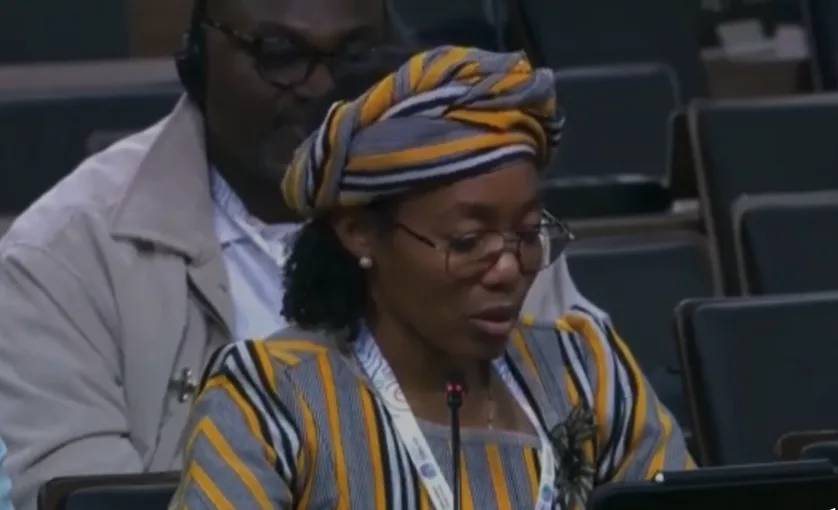
Ghana’s Minister for Environment, Science and Technology, Dr Zanetor Agyeman-Rawlings, has expressed disappointment with the outcome of COP31, saying African countries leave the conference without meaningful progress on key climate priorities, particularly adaptation finance.
Speaking at the closing plenary in Antalya, Türkiye, on behalf of the African Group of Negotiators (AGN), she said the continent had entered the negotiations seeking an ambitious outcome that addressed Africa’s needs and delivered on existing commitments.
“Africa has demonstrated its ambition and is doing its part. However, ambition cannot be sustained by promises alone,” she said.
Dr Zanetor Agyeman-Rawlings said Africa was particularly disappointed with the outcome on the Global Goal on Adaptation, warning that exceeding the 1.5°C warming threshold would expose vulnerable countries to irreversible climate impacts.
She stressed that adaptation support must reflect the growing needs and costs faced by vulnerable countries, but said the negotiations failed to deliver meaningful progress on the commitment to at least triple adaptation finance by 2035.
“We were disappointed that we didn’t get a meaningful outcome on the means of implementation, particularly the tripling of adaptation finance. We see this as a regression from the progress made in Belém,” she said.
“Belém made a promise to the most vulnerable. Antalya should have been about delivering on it, not reneging or renegotiating.”
On National Adaptation Plans, she said the issue did not receive adequate attention during the negotiations, leaving little room for meaningful engagement.
She called for adequate, predictable and accessible support for the plans and urged Parties to give them a permanent place on the agenda of the UNFCCC subsidiary bodies.
Dr Agyeman-Rawlings also described the outcome on mitigation as disappointing, saying further work had been deferred under Rule 16.
She urged Parties to ensure the mitigation work programme remained facilitative rather than prescriptive or punitive.
On just transition, she said Africa had joined the consensus in the spirit of compromise but regretted the further postponement of a promised just transition mechanism.
She welcomed the continuation of the work programme for three years and the phased process leading to COP32, scheduled to take place in Addis Ababa, Ethiopia, in 2027.
In an appeal to world leaders, Dr Agyeman-Rawlings warned that the consequences of inaction would be borne by future generations.
“The future will not ask leaders why they were silent. Farmers will be questioned about why their lands were turned to desert, and children who drink floodwater, as well as coastlines whose cities have disappeared,” she said.
She added that failure to finance climate action today would leave a heavier burden for children.
“When leaders refuse to pay for the climate today, they’re simply borrowing a much bigger debt from our children.”
Dr Agyeman-Rawlings concluded by commending the COP31 Presidencies, the Government and people of Türkiye, the UNFCCC Secretariat and participating countries for their efforts during the two-week conference.
 WhatsApp



Comments (0)
No comments yet. Be the first to share your opinion!