



Billboard Politics: State Signage Agencies Must Remain Neutral Ahead Of 2027
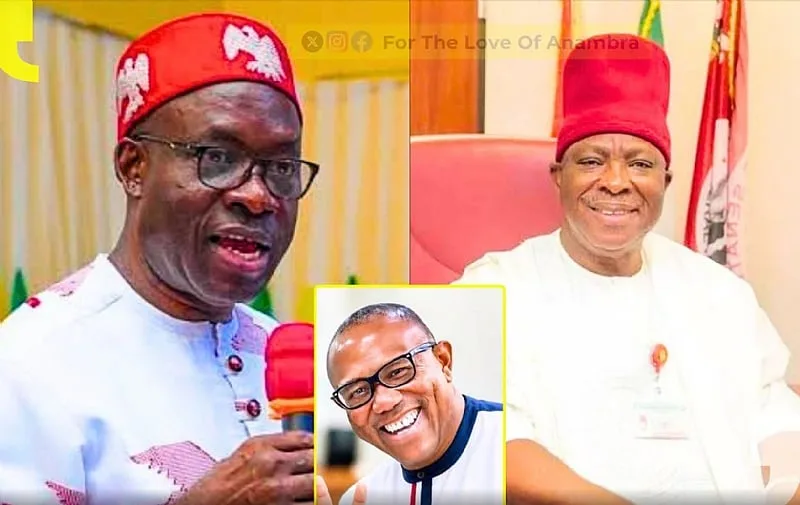
Such conduct is unprofessional and fundamentally inconsistent with the principles of democratic governance. It also represents a dangerous trend in Nigeria’s outdoor advertising industry, where routine commercial transactions and professional practices are increasingly exposed to political interference.
The outdoor advertising sector is not an extension of any political party's propaganda machinery, nor should state signage agencies become tools through which incumbents determine which candidates deserve visibility in public spaces. Their statutory mandate is clear: to enforce legitimate planning and safety requirements, administer permits, and maintain environmental standards. These duties must be discharged strictly on merit, without regard to the political affiliations of advertisers or the electoral interests of officeholders.
Unfortunately, recent developments across several states suggest that political considerations are becoming deeply entangled with outdoor advertising regulation.
Lagos State witnessed comparable controversy in August 2026 following the removal of more than 50 campaign banners belonging to the NDC and its House of Representatives candidate in Surulere. The reported survival of All Progressives Congress (APC) campaign materials along the same corridor fueled widespread allegations of selective enforcement.
In Kwara State, the September 2026 dismantling of billboards belonging to Peoples Democratic Party (PDP) governorship candidate Sulaiman Kawu at AdabataJunction and Agaka in Ilorin was similarly defended on regulatory grounds, including road-setback rules and the use of unapproved structures. Meanwhile, Plateau State has experienced recurring disputes between the PDP and APC over the removal and alleged vandalism of campaign displays, including a hand-painted political artwork at British America Junction in Jos.
While respective state agencies may offer technical explanations for individual enforcement actions, recurring allegations of selective treatment cannot be ignored. Regulatory authorities cannot expect the public to accept their neutrality merely because they cite statutory provisions; credibility must be earned through consistent, transparent, and even-handed enforcement.
At the 41st Annual General Meeting of the Outdoor Advertising Association of Nigeria (OAAN), held in Abeokuta in August 2026, industry leaders openly expressed concern about political pressure, regulatory inconsistencies, and unequal access to advertising platforms ahead of the 2027 general elections.
Delivering the keynote address, Hon. Theodore Ekechi warned that the industry must not compromise professional standards under political pressure. Identifying vandalism, disputes over advertising rights, and preferential treatment as major threats to the sector, he maintained that access to outdoor inventory must be governed by transparent commercial principles rather than partisan loyalty.
"Elections should be contests of ideas rather than contests of unequal access to communication channels," Ekechideclared, questioning the fairness of introducing abrupt regulatory hurdles mid-campaign: "Why enact a new rule while the match is in play? Why change the goal post while the match is in play?"
His warning underscores a vital economic truth: regulatory predictability is essential for business survival. Outdoor advertising companies cannot make sound investment decisions if operational rules shift suddenly the moment an opposition candidate books a prime location. Ekechifurther urged OAAN to guard its political neutrality, noting that impartiality remains one of a professional association's greatest assets, a sentiment echoed by OAAN President Dr Sola Akinsiku, who reaffirmed the body's commitment to strengthening professional credibility through initiatives like audience measurement.
In fact, these concerns extend beyond industry revenue to fundamental questions of institutional boundaries and statutory authority. The Advertising Regulatory Council of Nigeria (ARCON), under its Director-General, Dr Olalekan Fadolapo, has also raised strong objections to regulatory overreach by state signage bodies.
ARCON’s intervention confirms that disputes over political billboards are not merely partisan grievances; they strike at the heart of the rule of law, commercial certainty, and democratic fairness.
As Nigeria approaches the 2027 general elections, state governments and their signage agencies must resist the temptation to weaponize regulation for short-term political advantage. Democracy thrives when ideas compete freely in the public square. Ensuring transparent fees, predictable rules, and equal access to outdoor media is not a favour to opposition parties, it is a constitutional obligation essential to credible elections.
 WhatsApp






Comments (0)
No comments yet. Be the first to share your opinion!