



Afadjato South: Taking Healthcare Beyond the City, Bringing Hope Closer to Home
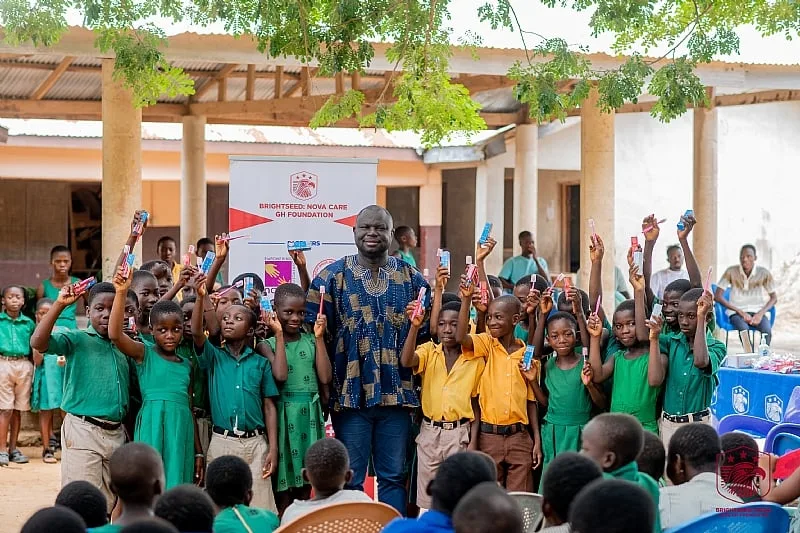
When essential healthcare services reach communities beyond urban centers, the impact extends far beyond medical consultations. In Afadjato South, an outreach initiative demonstrated how access to healthcare, early detection, and educational support can make a meaningful difference in people's lives.
For many communities beyond Ghana's major urban centers, accessing essential healthcare remains a challenge shaped by distance, affordability, and the availability of medical services. For residents in such areas, a routine dental examination, an eye screening, or a consultation with a medical professional can sometimes require considerable time, travel, and financial resources.
Against this backdrop, the 2026 community outreach initiative in the Afadjato South District stands out as a significant intervention to extend essential services beyond the city.
Recording 2,806 reported service impacts, Afadjato South emerged as the location with the highest overall community impact among participating locations. The achievement reflects the scale of the intervention and underscores the importance of taking healthcare and complementary support directly to communities where access can be particularly challenging.
However, behind the numbers lies a more important story: the opportunity to address health concerns, identify conditions that may otherwise go unnoticed, and provide children with resources that support their educational journeys.
Bringing Essential Healthcare Within Reach
The Afadjato South outreach brought together a range of interventions designed to respond to different community needs.
The initiative recorded 1,437 dental and oral healthcare services, 267 eye-screening services and 661 medical and medication services. Beyond healthcare, 441 backpacks were distributed to schoolchildren as part of the educational support component.
The scale of these interventions highlights the value of an integrated community outreach approach. Rather than focusing on a single aspect of wellbeing, the initiative recognized that healthier communities are built by addressing multiple needs.
Dental and oral healthcare, for instance, remains an important but sometimes overlooked aspect of general health. By bringing dental services closer to residents, the outreach created an opportunity for individuals to receive attention for oral health concerns without necessarily having to travel to larger urban centers.
Similarly, the medical and medication component recorded the highest total across participating locations, demonstrating substantial demand for accessible medical support.
These services were not merely about attending to immediate health concerns. They also created opportunities for individuals to seek medical attention, receive guidance, and take steps towards better health management.
Beyond Screening: The Importance of Early Detection
One notable component of the Afadjato South intervention was the eye-screening exercise conducted on 15 and 16 October 2026.
The eye team recorded 1,229 condition-level findings across a range of eye conditions. The findings provide an important perspective on the eye-health needs identified during the exercise and reinforce the value of making eye-care services accessible at the community level.
Among the recorded findings, dry eye disease accounted for 267 cases, making it the most frequently recorded condition. Presbyopia followed with 243 cases, while refractive errors, including myopia and hyperopia, accounted for 202 cases. Allergic conjunctivitis represented another 181 cases. The team also recorded 179 cases of cataracts, both mature and immature, alongside 84 cases of glaucoma and 36 cases of corneal scars. Other findings included 16 cases of bacterial conjunctivitis, 9 cases of diabetic retinopathy, 6 cases of hypertensive retinopathy, 3 cases of arcus senilis, 2 cases of toxoplasmosis, and 1 case of macular hole.
Taken together, these findings reveal the diverse nature of eye-health concerns identified during the outreach. More importantly, they demonstrate why community-based eye screening matters. Some eye conditions can develop gradually, with symptoms that individuals may overlook or mistake for normal changes associated with aging or everyday fatigue. Others may require timely clinical attention to prevent further complications.
The identification of cataracts and glaucoma, for example, highlights the importance of appropriate follow-up and access to further eye-care services. Similarly, the recorded cases of diabetic and hypertensive retinopathy point to the relationship between eye health and broader health conditions.
The findings should therefore be viewed not simply as statistics but as an indication of the importance of accessible screening, appropriate referral and continued healthcare engagement.
A Healthier Future Begins with Access
The significance of the Afadjato South outreach lies not only in the number of services delivered but also in the possibilities created by bringing these services closer to residents.
For someone experiencing blurred vision, an eye-screening exercise could represent an important first step towards understanding the cause of the problem. For another individual living with an untreated dental concern, access to oral healthcare could provide an opportunity to seek attention that might otherwise have been postponed.
Such interventions are particularly important in communities where access to specialized healthcare may involve additional logistical and financial challenges. However, screening is only one part of the healthcare journey. The long-term value of these interventions depends on whether individuals with identified conditions can access the necessary treatment, specialist assessment and follow-up care.
This makes sustained partnerships between healthcare professionals, community institutions, and other stakeholders essential to translating outreach findings into lasting health outcomes.
Investing in Children Beyond the Classroom
While healthcare formed a central part of the initiative, distributing 441 backpacks introduced another important dimension to the outreach: educational support.
For schoolchildren, access to basic learning materials can contribute to a more positive and productive school experience. A backpack may seem modest compared with the complexity of healthcare interventions, but for a child preparing for school, it is a practical resource and a sign of encouragement. The inclusion of educational support also reflects a broader understanding of community development.
Health and education are closely connected. Children who are supported in their learning and growing environments are better positioned to pursue opportunities that can shape their futures.
By combining healthcare services with educational assistance, the Afadjato South initiative acknowledged that investing in communities requires attention to both present needs and future possibilities.
Taking the Commitment Beyond Urban Centers
The Afadjato South experience offers an important reminder that meaningful community impact should not be measured exclusively by the concentration of services in urban areas.
Communities outside major cities deserve access to quality healthcare, opportunities for early diagnosis and interventions that respond to their everyday realities.
The 2,806 reported service impacts recorded in Afadjato South make it the highest-impact location in the 2026 initiative. Nevertheless, the true significance of this achievement extends beyond its ranking.
It lies in the dental and oral healthcare services, the medical and medication support delivered, the eye-health findings that brought attention to conditions requiring further care, and the educational resources placed in the hands of schoolchildren.
Each intervention represents an opportunity to make essential services more accessible and to remind communities that their wellbeing matters.
Ultimately, taking healthcare beyond the city is about more than extending the geographical reach of medical services. It is about reducing barriers, strengthening community wellbeing, and creating opportunities for people to receive attention before health concerns become harder to manage.
Afadjato South demonstrates what can be achieved when community needs become central to service delivery.
Healthcare should not be determined by how close someone lives to a city. It should be accessible wherever people live, work, learn, and build their futures.
BrightSeed Nova Care GH Foundation expresses its gratitude to Hon. Manfred Tawiah, District Chief Executive for Afadjato South, and his team; the Volta Regional Minister, Hon. James Gunu; Ms. Lady Josephine Kpodo; and Mr. Bright Tawiah for their collaboration and support during the Foundation's 2026 healthcare outreach in the district. The Foundation recognizes the importance of regional and district-level leadership and community engagement in reaching underserved populations. Special appreciation goes to local stakeholders, community representatives, volunteers, and all individuals whose contributions helped make the outreach possible.
Thank you for making a difference in the lives of the communities we serve!!
 WhatsApp




Comments (0)
No comments yet. Be the first to share your opinion!