



2027 Budget Neglects Ghanaian Businesses – Patrick Boamah
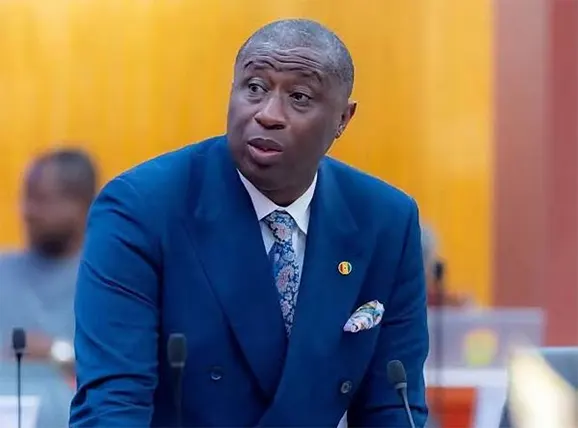
The Member of Parliament (MP) for Okaikwei Central, Patrick Yaw Boamah, has accused the government of neglecting Ghanaian businesses in the 2027 Budget, saying the fiscal policy lacks deliberate incentives to support local entrepreneurs and stimulate job creation.
He said although the government had repeatedly identified the private sector as the engine of economic growth, the budget had failed to address the concerns of Ghanaian business people seeking support to expand their operations.
Contributing to the debate on the 2027 Budget in Parliament, Mr. Boamah argued that domestic businesses must be deliberately supported to grow into major enterprises capable of creating jobs and competing across the African continent.
He cited Nigerian businessman, Aliko Dangote, as an example of how deliberate government support could help local entrepreneurs build successful businesses with investments across several countries.
He said Ghana had its own successful entrepreneurs in real estate, pharmaceuticals and the petroleum industry who deserved similar policy support.
He mentioned Dr. Theresa Oppong of Manet, the Addos of Devtraco, Kwaku Bediako of Imperial Homes and Kevin Okyere, who has invested more than US$300 million in the upstream petroleum sector.
He also cited Ernest Chemist, Tobinco and Kinapharma as examples of Ghanaian businesses that had contributed to the development of the pharmaceutical industry.
According to him, supporting such businesses through fiscal incentives, tax waivers and other concessions would enable them to expand their operations and employ more people.
Mr. Boamah noted that the words “private sector” and “employment” featured prominently in the budget, but questioned the absence of concrete measures to translate the government’s stated commitment into meaningful support for businesses.
He said unemployment was close to 13 percent and argued that the government should have prioritised policies that would enable domestic businesses to absorb more young people into the labour market.
“How do we help the Ghanaian business person to grow like Aliko Dangote?” he asked, adding that Nigeria had taken deliberate steps to support its entrepreneurs.
He further questioned a directive from the Ministry of Finance asking more than 164 state-owned enterprises and companies to stop paying monthly sitting allowances to board members.
According to him, a letter dated October 12, 2026, signed by the Deputy Minister of Finance on behalf of the Finance Minister, directed the affected institutions to discontinue the payments.
He described the directive as a matter of concern, arguing that regular board meetings were necessary for the effective management and development of state-owned enterprises.
Mr. Boamah said the government should rather focus on creating an enabling environment for businesses, including state-owned companies, to operate efficiently and contribute to economic growth.
He maintained that the private sector remained critical to addressing unemployment and that the government needed to demonstrate its commitment to local businesses through practical policies and incentives.
He said the 2027 Budget had not provided the deliberate package required to help Ghanaian entrepreneurs expand and create the jobs the country’s youth needed.
By Ernest Kofi Adu, Parliament House
 WhatsApp





Comments (0)
No comments yet. Be the first to share your opinion!