



“Dr Mbuyiseni Ndlozi Has Failed Thabo Mbeki For Refusing To Vote In The Election” Malema Hit Out
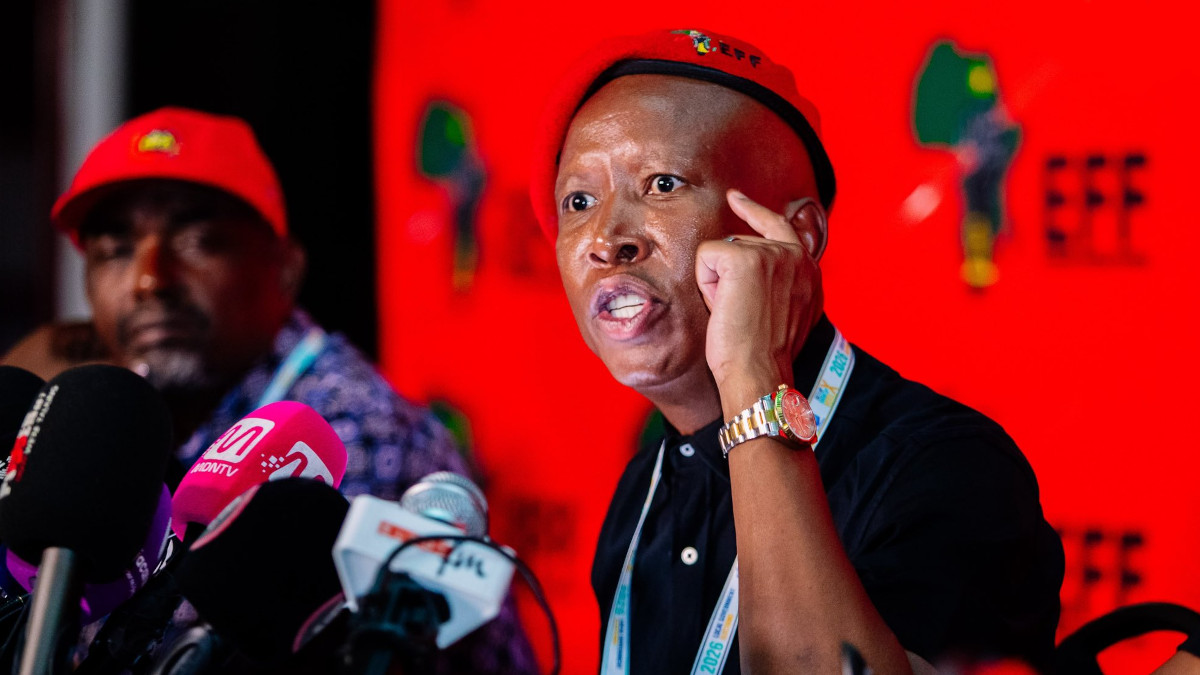
Economic Freedom Fighters (EFF) leader Julius Malema has taken a swipe at former party spokesperson Dr Mbuyiseni Ndlozi, accusing him of failing former South African president Thabo Mbeki by choosing not to participate in the 2026 Local Government Elections.
Malema made the remarks while addressing the controversy surrounding Ndlozi’s position on voting, which has generated considerable political discussion amid the EFF’s electoral challenges.
The EFF leader’s comments appeared to challenge Ndlozi’s decision not to cast his ballot, suggesting that refusing to participate in elections undermines the democratic principles and political struggles associated with South Africa’s liberation history.
According to the remarks attributed to Malema, Ndlozi had failed Mbeki by not voting, bringing the former president into a debate that has increasingly centred on the importance of democratic participation and the responsibilities of citizens in a constitutional democracy.
The comments come after Ndlozi questioned the value of voting, reportedly arguing that South Africans should not necessarily go out to cast their ballots because voting was useless.
His position has attracted attention, particularly because of his previous prominence within the EFF and his reputation as one of the party’s most recognisable public communicators.
Ndlozi’s comments have also raised questions about political accountability and whether citizens who become dissatisfied with political parties should express their frustration by staying away from polling stations or participating in elections to influence the outcome.
Malema’s response suggests that he strongly disagrees with the idea of abandoning the electoral process, even amid widespread dissatisfaction with political leadership and the performance of political organisations.
South Africa’s democratic system was established following decades of resistance against apartheid, with the 1994 elections marking a historic transition to democratic governance. The right to vote remains one of the most significant achievements of that transition.
Former president Thabo Mbeki, who succeeded Nelson Mandela as South Africa’s second democratically elected president, played a prominent role in the country’s post-apartheid political development. His name therefore carries considerable historical and political significance in discussions about democratic participation and the responsibilities of citizens.
The disagreement between Malema and Ndlozi also comes at a particularly difficult moment for the EFF following its performance in the 2026 Local Government Elections.
The party now faces renewed scrutiny over its electoral strategy, political messaging and ability to retain public support. Its performance has also intensified discussions about the direction of the organisation and the challenges confronting its leadership.
Against this background, the disagreement over voting has become more than a personal difference of opinion. It touches on a fundamental question about how political dissatisfaction should be expressed in a democratic society.
While some South Africans may view staying away from elections as a form of protest against political parties, others believe that refusing to vote weakens citizens’ ability to influence who governs them.
Malema’s criticism of Ndlozi has therefore added another layer to the ongoing conversation about political participation, democratic responsibility and the future of opposition politics in South Africa.
The central question remains whether citizens should withdraw from the electoral process when political parties disappoint them or continue participating in elections to demand change through the ballot box.
Source: https://x.com/Absolute_Kganki/status/2119037333567873465?s=19
Reported by News Hub Creator.
Read Original Report at news hub creator ↗ WhatsApp
Comments (0)
No comments yet. Be the first to share your opinion!